 Fairhaven Siding
 Why Bellingham's Climate Changes the Window Equation
Bellingham sits close enough to the water that salt-laden air, wind-driven rain, and a long stretch of damp, mossy weather each year all work against ordinary windows. In Whatcom County, that combination shows up first at the window opening — the point where the wall gets cut open and sealed back up. A window that performs fine in a dry inland climate can start failing here within a few years if the flashing, sealant, or frame material wasn't chosen with this exposure in mind.
Fairhaven and the surrounding Bellingham neighborhoods have a mix of housing ages and styles, from older wood-frame homes to newer construction, and each brings its own window quirks. What doesn't change is the climate: months of low sun angle and standing moisture that let moss and algae get a foothold on horizontal surfaces, including window sills and trim, plus driving rain that finds any gap in a poorly sealed opening.
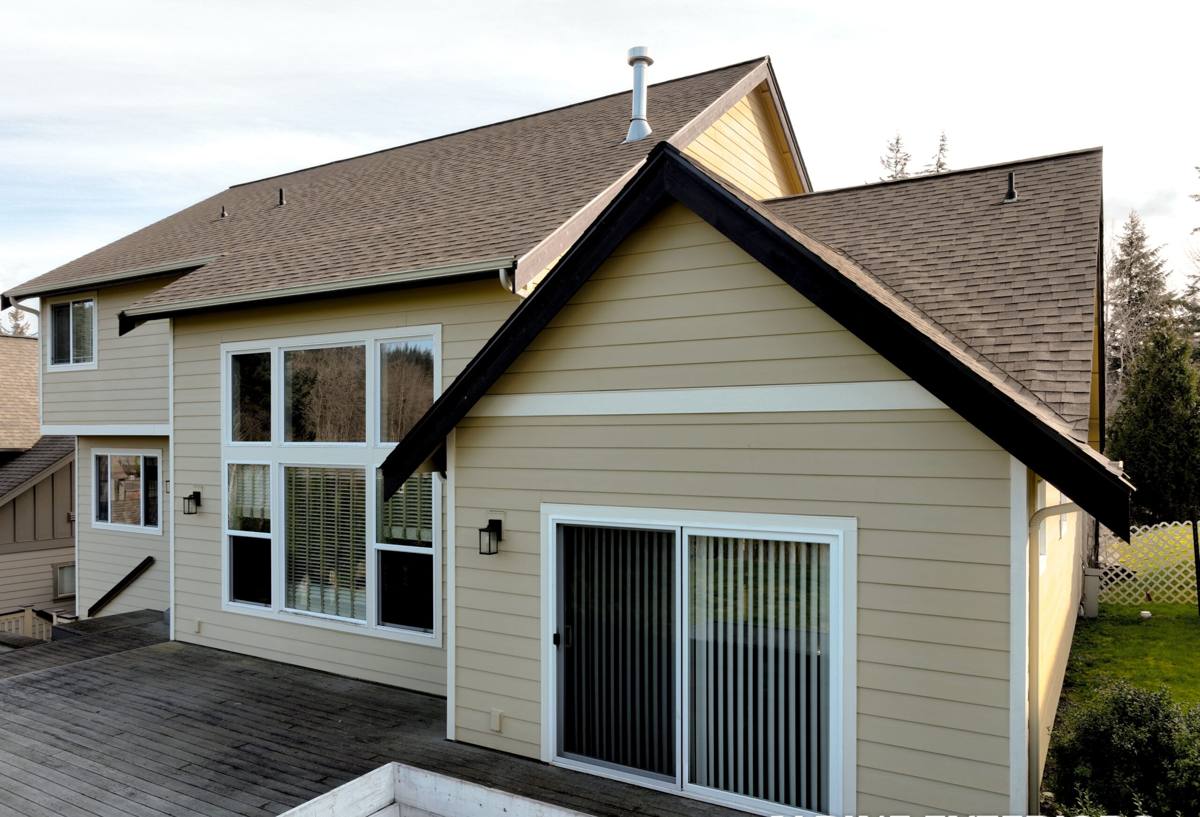
What "Custom" Actually Means on a Window Job
Custom windows aren't just special shapes or oversized glass. On most Bellingham homes, "custom" means the window is built to fit an opening that isn't a standard modern size — common in older houses where framing has settled slightly over the decades, or where a homeowner is changing the window style entirely, such as combining a pair of smaller windows into one larger unit. It also means matching sightlines, sash proportions, and trim profiles so a new window doesn't look out of place next to the openings that are staying as they are.
Retrofit (Insert) Windows vs. Full-Frame Replacement
Most window jobs fall into one of two categories:
- Retrofit/insert windows — the new window is built to fit inside the existing frame, which stays in the wall. Faster, less invasive, and less expensive, but it only makes sense if the existing frame is still sound and dry.
- Full-frame replacement — the old frame comes out down to the rough opening, exposing the sheathing and framing underneath. This is the right call whenever there's any sign of water damage, rot, or a frame that's out of square, which shows up often on older Bellingham homes that have taken decades of coastal weather.
Choosing between the two isn't a sales decision — it's a moisture decision. Covering a wet or rotted frame with a new insert window just hides the problem behind new trim instead of fixing it.
Frame Material: What Actually Holds Up Near the Water
Frame material matters more here than in a drier climate, because the frame is what stands between the glass and years of salt air and rain. Here's how the common options compare for this specific exposure:
| Material | Moisture & Salt-Air Behavior | Maintenance | Typical Cost Tier |
|---|---|---|---|
| Vinyl | Won't rot or corrode; handles coastal exposure well | Low — occasional cleaning | Lower |
| Fiberglass | Very stable in wet, salty air; resists warping over time | Low | Mid to higher |
| Wood (unclad) | Needs a sound paint or finish barrier or moisture gets in fast | Higher — repainting or refinishing on a cycle | Mid to higher |
| Wood-clad (vinyl or aluminum exterior) | Performs well as long as the cladding and flashing are detailed correctly at every joint | Moderate — exterior is low-maintenance, interior wood still needs occasional attention | Higher |
| Aluminum | Conducts cold and can condense heavily in our damp winters unless thermally broken | Low | Varies |
None of these is automatically the wrong choice — it depends on the home's style, the budget, and how exposed that particular wall is to prevailing wind and rain. We'll walk through the honest trade-offs for your specific openings rather than defaulting to one material for every job on the street.
Glass and Sealing Choices That Matter in This Climate
Two things matter more in Whatcom County than in most places: how the glass handles condensation through our long damp season, and how well the whole unit is sealed against wind-driven rain.
- Double-pane vs. triple-pane — double-pane with a good low-E coating is the standard for most Bellingham homes and performs well. Triple-pane adds cost and weight for a modest efficiency gain, and it's worth considering mainly on north- or west-facing walls that take the brunt of winter storms.
- Low-E coatings — help control both summer heat gain and winter heat loss, and reduce interior condensation on cold, damp mornings, which in turn cuts down on the moisture that feeds mold and mildew around sills and trim.
- Weatherstripping and hardware — matters as much as the glass itself. A well-built window with worn weatherstripping or a weak lock mechanism will still let wind-driven rain push moisture past the sash.
Installation Details That Prevent Moisture and Moss Problems Later
Most window failures we run into aren't glass failures — they're installation failures. This is where a crew's attention to detail either protects the wall for decades or sets up a repair job five years down the road.
Flashing and Sill Pans
A proper installation includes a sloped sill pan and correctly lapped flashing tape integrated with the house wrap, so any water that gets past the window sheds outward instead of soaking into the framing. This step matters everywhere, but it's non-negotiable on a wall that takes direct driving rain off the water.
Sealant, Not Just Caulk
The exterior perimeter needs the right sealant for the material and gap size, applied so it can flex with temperature and moisture changes rather than cracking open within a season or two and giving water a new path in.
Moss and Algae on Sills and Trim
Bellingham's long moss season isn't just a roof and driveway problem — it shows up on horizontal window sills, sloped trim, and anywhere moisture sits without enough sun or airflow to dry out. Correct sill slope, drip caps above the window, and trim details that shed water instead of holding it all reduce how much moss and algae take hold, which matters both for appearance and because trapped moisture under that growth speeds up wood decay underneath.
Our Process for a Custom Window Job
- On-site assessment — we look at each opening individually, check for existing water damage or rot, and measure for true size and squareness rather than assuming a stock size will fit.
- Material and glass selection — we walk through frame material, glass package, and style options against your budget and that wall's actual sun and rain exposure.
- Careful removal — old windows, and any damaged framing found underneath, come out without unnecessary damage to the surrounding siding and trim.
- Flashing and sill pan installation — built and lapped correctly before the new window ever goes in.
- Window setting and sealing — shimmed level and square, fastened per the manufacturer's instructions, and sealed with products suited to a coastal climate.
- Interior and exterior trim — finished to match the surrounding wall, inside and out.
- Final check — operation, locks, and weatherseal get tested before we call the job done.
Signs It's Time to Look at Your Windows
- Sashes that are hard to open, stick, or won't stay up on their own
- Visible fogging or moisture trapped between panes of double-pane glass
- Soft or discolored wood at the sill or bottom corners of the frame
- Persistent moss or dark staining on the sill even right after cleaning
- A noticeable draft or cold spot near the window in winter
- Exterior paint that keeps failing on the trim no matter how often it's redone
Any one of these on its own can be minor. Several together, especially soft wood combined with fogged glass, usually mean water has already found its way into the frame.
Why a Crew That Already Works in Bellingham Matters
Window work in this area comes with local realities that don't show up on a spec sheet: older homes with framing that's settled slightly out of square, a permitting process that has its own local expectations for window replacement, and a weather window for exterior work that narrows fast once the rainy season sets in. A crew that regularly works Fairhaven and the rest of Bellingham has already seen the common framing quirks in this area's housing stock, knows how to sequence a job around the rain instead of fighting it, and stands behind the work with a warranty that means something because we're still local when you need us.
What Drives the Cost of a Custom Window Job
| Factor | Why It Matters |
|---|---|
| Retrofit vs. full-frame | Full-frame costs more but is required wherever there's rot or a badly out-of-square opening |
| Frame material | Vinyl is typically the most affordable; fiberglass and wood-clad cost more but bring different maintenance and appearance trade-offs |
| Glass package | Triple-pane and specialty coatings add cost for specific performance needs — not every wall needs them |
| Size and quantity | Larger openings and whole-house jobs bring per-unit efficiencies but a bigger total project cost |
| Trim and siding repair | Any rot found during removal has to be repaired before the new window goes in, which affects the final price |
We give straightforward, itemized pricing so you can see exactly what you're paying for and why — not a single lump-sum number with no explanation behind it.
If your windows are original to the house, fogged, drafty, or just showing their age, we're happy to take a look and give you a straightforward, no-pressure estimate for custom windows built for what Bellingham's weather actually does to a house over time. Use the form below to get started.