 Fairhaven Siding
 Deck Repair for Bow Homes
Bow sits in that stretch of small coastal and rural communities between Fairhaven and the Skagit Valley, close enough to saltwater and low-lying wetlands that decks here take a different kind of beating than decks fifty miles inland. We're a Fairhaven-based crew that already works this corridor regularly, and Bow decks show us the same patterns over and over: soft joists near the house, moss carpeting the shady side of the boards, and fasteners that have started weeping rust stains down the face boards. None of that is unusual for this part of Washington. It's just what happens when a deck sits outside year-round in a climate that rarely gives wood a real chance to dry out.
This page is specifically about repair — patching, replacing, and reinforcing an existing deck rather than tearing it out and starting over. A lot of the decks we look at in Bow don't need a full rebuild. They need someone to identify which parts are actually failing, replace those parts correctly, and leave the structure sound for another decade or two.
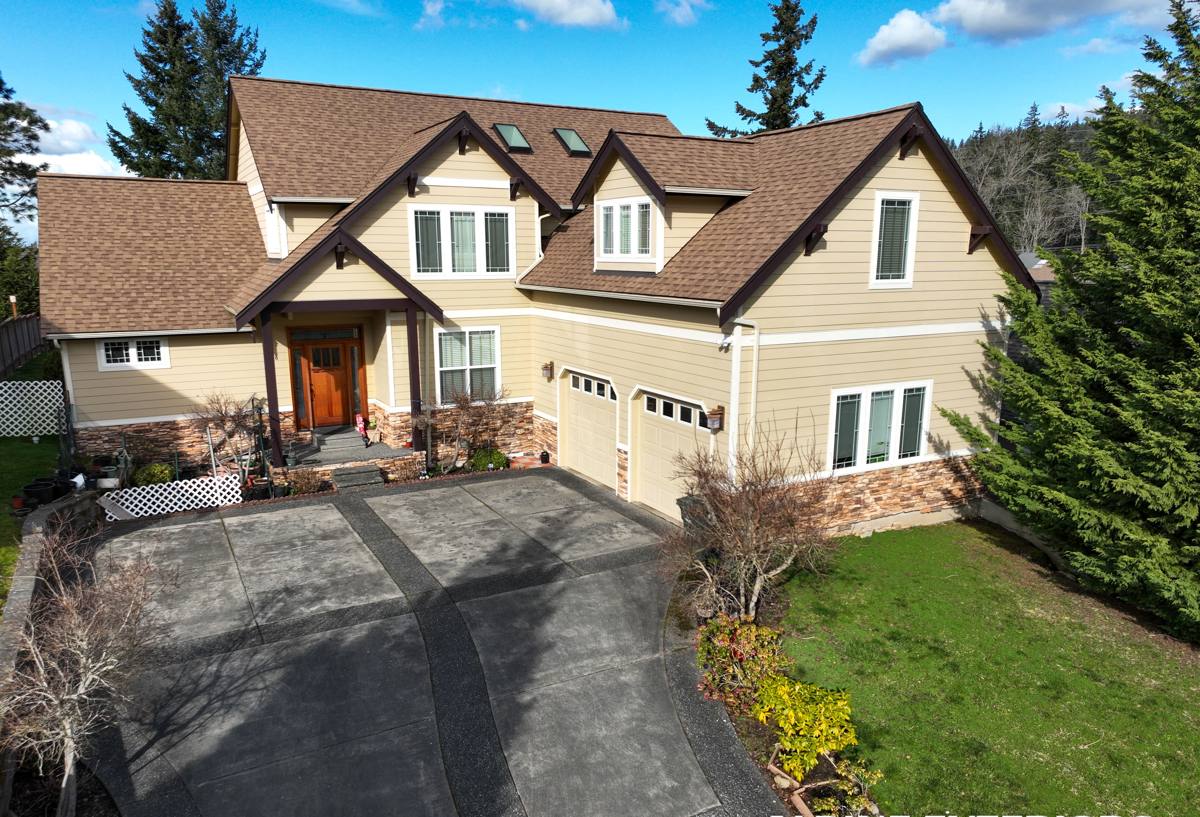
What the Climate Does to a Deck Out Here
Whatcom County's marine climate is generous with moisture almost every month of the year, and Bow's proximity to the water adds a salt-air element on top of the rain. Together, that combination attacks a deck in three specific ways:
- Driving rain finds every gap. Wind-driven rain off the water doesn't just fall straight down — it gets pushed sideways into ledger connections, stair stringers, and any spot where two boards meet without proper flashing or spacing.
- Moss and algae hold water against the wood. A long moss season means shaded boards, north-facing stairs, and areas under trees stay damp for weeks at a time even when it isn't actively raining. That constant dampness is what actually causes rot — not a single storm.
- Salt air accelerates fastener corrosion. Nails and screws that aren't rated for coastal exposure corrode faster here than they would inland, and a corroding fastener loses grip long before it visibly breaks, which is why boards can feel "loose" before they look damaged.
None of this means a deck in Bow can't last. It means the repair has to account for these three things specifically, not just replace a board with a board and call it done.
Where We Find the Damage First
On every deck we inspect around here, certain areas fail well before the rest of the structure:
- The ledger board where the deck attaches to the house — the single most common source of hidden rot, because water tends to collect right where the deck meets the siding.
- Stair stringers and the bottom two or three steps, which take the most foot traffic and the most standing water runoff.
- Joists directly under gaps between decking boards, especially if the gaps have closed up over the years from swelling and no longer drain properly.
- Any post base set in or near soil contact, where moisture wicks upward even if the surface looks fine.
- Railings and baluster connections, which loosen from repeated wet/dry cycling and wind load.
What a Correct Repair Actually Involves
A deck repair done right isn't just "replace what looks bad." It's a sequence, and skipping steps is how a repair fails again in three years instead of lasting.
1. Probe, Don't Just Look
Surface staining or gray, weathered wood doesn't tell you much. We probe suspect boards, joists, and ledger connections with an awl or screwdriver to find actual soft spots, because rot often starts from the underside or inside a joint where it's invisible from above.
2. Trace the Water, Not Just the Rot
Replacing a rotted board without figuring out why it rotted just buys you a few more years before the same spot fails again. We look at drainage, flashing at the ledger, gaps between boards, and grading around posts to find the actual moisture source before we cut anything out.
3. Match Structural Repairs to Code, Not Just Looks
Ledger attachment, joist hangers, and railing height/spacing are structural, not cosmetic — this is where we won't cut corners even if a homeowner just wants the deck to "look fixed." A deck that looks solid but has an under-fastened ledger is a safety issue, not a maintenance item.
4. Use Fasteners and Hardware Rated for Coastal Exposure
Given the salt air here, we use hot-dip galvanized or stainless hardware on connections that matter, rather than standard exterior-rated fasteners that corrode faster this close to the water.
5. Rebuild Drainage Into the Repair
Where moss and standing water were part of the original problem, we adjust board spacing, clear debris paths, and address grading so the fix doesn't just recreate the same wet conditions.
Our Process, Start to Finish
- Free on-site inspection. We walk the whole deck, probe questionable areas, and check the ledger, stairs, and post bases — not just the spot the homeowner called about.
- Written scope and estimate. We tell you what's actually failing versus what's cosmetic, and give you options if there's a range of ways to address it.
- Repair. We remove only what needs removing, replace with matched or compatible material, and correct the underlying drainage or fastener issue that caused the damage.
- Structural check before close-up. Anything involving the ledger, joists, or railings gets verified before decking goes back down over it.
- Walkthrough. We show you what was replaced and why, and flag anything worth watching over the next year or two.
Repair vs. Replacement: How to Think About It
Homeowners often assume any rot means the whole deck needs to go. That's rarely true if the framing is sound. The table below is a general guide, not a quote — actual scope depends on what we find during inspection.
| Condition | Usually Repairable | Usually Needs Larger Rebuild |
|---|---|---|
| A few soft or discolored deck boards | Yes — spot replacement | No |
| Rot isolated to ledger connection | Yes, if joists/posts are sound | Only if rot has spread into framing |
| Loose or wobbly railings | Yes — re-fasten or rebuild connections | Rarely |
| Multiple joists soft or spongy | Sometimes — sistering joists | Often, if widespread |
| Post bases rotted at soil line | Yes — post base repair/replacement | Only if multiple posts and beam affected |
| Whole deck sagging or bouncy underfoot | Rarely | Yes — structural failure |
Cost Factors Worth Understanding
We don't publish fixed prices because every deck's scope is different, but the factors that actually move the number are consistent:
- How much decking versus structural framing needs replacing — framing work costs more per hour than swapping boards.
- Whether the ledger connection needs to be redone, which involves more careful work than a board swap.
- Material choice for replacement boards — matching existing wood decking is usually less expensive than switching sections to composite.
- Access — decks over slopes, water, or tight side yards take longer to work safely.
- How much of the damage was caught early versus how far it spread before anyone noticed.
Composite, Cedar, or Pressure-Treated Replacement Boards
When we replace decking material, homeowners usually ask about upgrading a section to composite instead of matching the existing wood. Both have a place, and we'll give you the honest tradeoffs rather than pushing one:
- Pressure-treated or cedar is easier to match to existing decking, costs less upfront, and is simple to spot-repair again later — but it needs regular cleaning and periodic sealing to hold up against the moss and moisture here.
- Composite decking resists rot and doesn't need sealing, which appeals in a climate this wet — but it's a different look and thickness than most existing wood decks, so it's usually a better fit for a full deck surface replacement than a patch job, and it still needs proper drainage underneath since some composite products can trap moisture against the framing if installed without gaps.
We'll walk you through which makes sense for your specific repair rather than defaulting to whichever is easier for us to install.
Preventing the Next Repair
A repair is a good opportunity to stop the cycle, not just patch it. A short seasonal routine goes a long way here:
- Sweep leaves and debris out of board gaps before fall rains set in, so water keeps draining instead of pooling.
- Rinse or brush off moss growth on shaded boards and stairs before it packs in and holds moisture against the wood.
- Check railing connections and stair stringers once a year for movement, especially after a windy winter.
- Reseal wood decking on the schedule the product calls for — most people wait too long, and a coating that's failed does less than no coating at all because it can trap moisture underneath.
- Keep an eye on the ledger board area from underneath the deck once a year if you can access it.
Why a Local Crew Matters for This Job
Deck repair is one of those jobs where local experience shows up in small decisions — knowing to check the ledger first because that's where Whatcom County decks fail most often, knowing which fastener grade actually holds up this close to saltwater, and knowing that a deck that looks fine in July can be hiding moss-driven rot that only shows up once fall rain starts again. We're not driving in from out of the area to quote a job we've never seen the local conditions for — we work Fairhaven, Bow, and the surrounding communities regularly, and we bring that same standard to every deck repair, not just the ones on our own street.
Get a Free, No-Pressure Estimate
If your deck has soft spots, loose railings, or areas that stay damp longer than they should, it's worth having someone look before the next wet season makes the repair bigger. We'll give you a straight answer on what's actually wrong, what it takes to fix it right, and what it costs — no pressure, no upsell. Fill out the form below and we'll set up a time to take a look.