 Fairhaven Siding
 Board & Batten Siding in Downtown Bellingham
Downtown Bellingham and the Fairhaven district sit close enough to Bellingham Bay that salt-laden air, wind-driven rain off the water, and long stretches of shade from mature trees and hillside lots are just part of owning a home here. Board & batten siding — with its bold vertical lines, wide flat boards, and narrow battens covering the seams — is one of the most requested looks in this part of Whatcom County, whether it's going on a craftsman near the historic core or a newer build up the hill. Done right, it holds that clean, high-contrast look for decades. Done wrong, or built out of the wrong material, it becomes one of the highest-maintenance siding styles a homeowner can pick.
This page covers what board & batten actually needs to survive Downtown Bellingham's climate, what a correct installation looks like, and why we only install it in James Hardie fiber cement — never vinyl, LP SmartSide, or raw wood — on homes in this neighborhood.
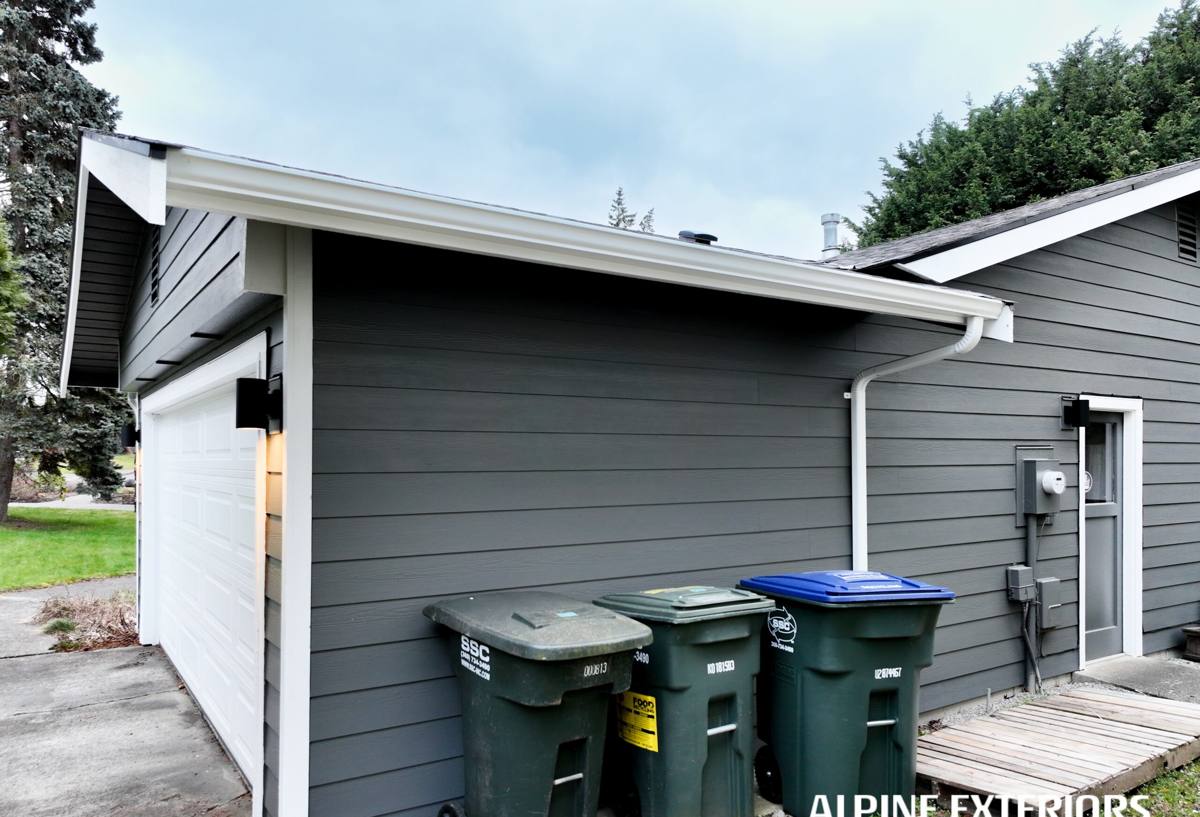
Why Downtown Bellingham's Climate Is Hard on Board & Batten
Board & batten has more seams, more exposed edges, and more vertical joints per square foot than lap siding. Every one of those seams is a place where water can find a way in if the material or the install isn't right. In this part of Whatcom County, three conditions work against that seam network constantly:
- Salt air: Proximity to the bay means airborne salt settles on siding and trim year-round, accelerating corrosion of fasteners and finish breakdown on lower-grade materials.
- Driving rain: Storms coming off the water don't just fall straight down — wind pushes rain sideways into vertical board joints and batten seams, which is exactly where board & batten is most vulnerable.
- Moss season: Shaded lots, mature tree cover, and a long wet season from fall through spring give moss and algae months to establish themselves on any siding surface that holds moisture or lacks a durable factory finish.
None of that means board & batten is a bad choice for Downtown Bellingham — it just means the material and the installation details matter more here than they would in a drier inland climate.
What Happens When the Wrong Material Goes Up
Wood board & batten looks great for the first few years, then the battens start absorbing moisture at the seams, cupping, and needing repaint every few years to keep water out. Vinyl board & batten profiles can't hold a crisp, deep-shadow reveal the way fiber cement can, and they're prone to warping and fading under UV and temperature swings. LP SmartSide is an engineered wood product — it performs better than raw wood, but it still relies on a factory coating and careful sealing of every cut edge to keep moisture out of the wood strand core, which is a real liability in a seam-heavy profile like board & batten.
Our Standard: James Hardie Fiber Cement, No Exceptions
We install James Hardie board & batten siding exclusively. We don't offer vinyl, LP SmartSide, Cemplank, Allura, primed spruce, or cedar board & batten — not because those products don't have a place in the market, but because after years of siding work in this climate, fiber cement from Hardie is the only material we're willing to put our name behind for a profile with this many seams.
| Factor | James Hardie Fiber Cement | Wood / Engineered Wood | Vinyl |
|---|---|---|---|
| Moisture behavior at seams | Non-combustible, dimensionally stable, resists swelling | Wood core can swell/rot if seams aren't sealed and maintained | Doesn't rot, but seams can gap as material expands/contracts |
| Salt air exposure | Factory-cured finish holds up well; use stainless/coated fasteners | Coatings degrade faster near salt air; more frequent repainting | Finish can chalk and fade near salt air over time |
| Moss/algae resistance | Dense, factory-finished surface sheds growth better than raw material | Porous surface, especially at cut edges, invites moss | Smooth surface but seams and J-channel trap debris and moisture |
| Look of the reveal | Crisp, deep shadow lines that hold their shape | Good initially, degrades as boards cup or warp | Flatter profile, can look less authentic up close |
| Maintenance cycle | Occasional wash; repaint on a much longer cycle (if ever, with ColorPlus) | Repaint/reseal every 3-7 years | Low maintenance but limited repair options if damaged |
Hardie's ColorPlus factory finish is baked on under controlled conditions, which gives it far better UV and moisture resistance than field-applied paint — a real advantage in a neighborhood that gets both strong summer sun off the water and months of grey, wet weather. The fiber cement substrate itself is non-combustible and doesn't provide the organic material that wood-based products do, which matters for long-term moss and algae resistance.
What a Correct Board & Batten Installation Involves
Board & batten isn't a style you can install like standard lap siding with different boards — the seam-heavy design demands its own approach to water management, especially in a wet coastal climate like Bellingham's.
Weather-Resistive Barrier and Rainscreen
Every board & batten job we do starts with a proper weather-resistive barrier, correctly lapped and sealed at penetrations, and we install with a rainscreen gap behind the siding wherever the assembly calls for one. That gap lets any moisture that does get past the surface drain and dry out instead of sitting against the sheathing — critical when you're dealing with driving rain and a long damp season.
Vertical Board Layout and Batten Spacing
Batten spacing has to be planned before the first board goes up — not adjusted on the fly — so the reveals stay even across the whole elevation, including around windows, doors, and corners. Boards are fastened according to Hardie's published fastening schedules for the specific HZ climate zone, with attention to blocking at horizontal joints so the assembly stays rigid and doesn't telegraph movement into the finish over time.
Flashing at Every Horizontal Transition
Anywhere a horizontal joint occurs — mid-wall board breaks, window and door heads, transitions to trim or foundation — proper flashing and drip edges are installed to shed water away from the seam instead of letting it pool. This is the single most common shortcut on a rushed board & batten job, and it's the detail that determines whether the wall stays dry ten years from now.
Fasteners and Caulk
Given the salt air exposure this close to the bay, we use corrosion-resistant fasteners rated for the application, and we're selective about where caulk is used at all — caulk is a maintenance item, not a substitute for correct flashing, and over-reliance on it is a sign of a shortcut install.
Our Process on a Downtown Bellingham Board & Batten Project
- On-site assessment: We walk the exterior, check existing sheathing and moisture conditions, and evaluate sun/shade exposure and drainage around the home.
- Product and reveal planning: We select the right Hardie board & batten profile and plan batten spacing and reveal width to fit the home's proportions.
- Weather barrier and rainscreen installation: Barrier goes on first, sealed and lapped correctly, with a drainage gap built into the assembly.
- Flashing at all transitions: Windows, doors, horizontal joints, and roof lines get proper flashing before any siding is fastened.
- Siding installation to Hardie spec: Fastening schedule, spacing, and clearances follow Hardie's published requirements for our HZ climate zone.
- Final inspection and walkthrough: We check reveals, caulking, and trim details, and walk the finished job with the homeowner.
Why Hire a Crew That Already Works This Neighborhood
Downtown Bellingham and Fairhaven have a mix of older homes near the historic core, hillside lots with heavy tree cover, and newer construction closer to the water — each with different exposure, drainage, and access challenges. A crew that already works this area knows which elevations tend to take the worst of the driving rain, which lots need extra attention to moss and shade, and how to sequence a job around the wetter months instead of fighting them. That local pattern recognition is worth more on a seam-heavy profile like board & batten than it is on almost any other siding style.
Board & Batten Maintenance Checklist for This Climate
- Rinse siding annually to remove salt residue and organic buildup before it takes hold, especially on shaded or north-facing walls.
- Inspect caulk joints at trim and penetrations each fall, before the wet season sets in.
- Trim back vegetation and tree limbs that keep sections of siding shaded and damp longer than the rest of the house.
- Check gutters and downspouts near board & batten walls — overflow at seams is a common source of localized moisture damage.
- Watch for early moss growth at the base of walls and in shaded corners, and address it before it spreads across a full elevation.
Cost Factors for Board & Batten in This Area
| Factor | How It Affects the Job |
|---|---|
| Home size and elevation complexity | More corners, gables, and window/door openings mean more flashing detail and batten planning |
| Existing siding removal | Tear-off and disposal of old wood or vinyl adds labor and haul-away costs |
| Sheathing condition underneath | Rot or moisture damage found during removal may require repair before new siding goes on |
| Access and lot conditions | Hillside lots, tight setbacks, or heavy tree cover near the home can add time for staging and protection |
| Trim and color selection | ColorPlus factory finishes and custom trim packages affect material cost |
We give firm, written estimates after an on-site walkthrough — we don't quote board & batten work sight unseen, because the flashing and sheathing details that drive cost vary a lot from one lot to the next in this neighborhood.
Get a Free Estimate
If you're weighing board & batten siding for a home in Downtown Bellingham or Fairhaven, we're glad to walk the property, look at your current siding and sheathing condition, and talk through what a correct install would involve for your specific lot and exposure. Use the form below to request a free, no-pressure estimate.