 Fairhaven Siding
 Downtown Bellingham's Roofs Take a Beating Most Homeowners Don't See Coming
Downtown Bellingham sits close enough to the water that salt-laden air is a constant, even on days when you can't smell it. Add Whatcom County's long stretch of driving rain each fall and winter, plus a moss season that can run eight or nine months out of the year under the region's tree cover and cloud, and you've got a roofing environment that's genuinely harder on materials than most of the country. A roof that would last thirty years in a dry inland climate might start showing real trouble in half that time here if it wasn't built for these conditions in the first place.
We're a local crew based out of Fairhaven, and Downtown Bellingham is part of our regular service area — not a place we drive to occasionally for a one-off job. That matters for a new roof installation more than most exterior work, because roofing mistakes don't show up on day one. They show up two winters later as a leak, a soft spot in the decking, or moss lifting shingle edges. This page covers what a correctly installed new roof actually needs to hold up here, what our process looks like, and what to watch for whether you hire us or someone else.
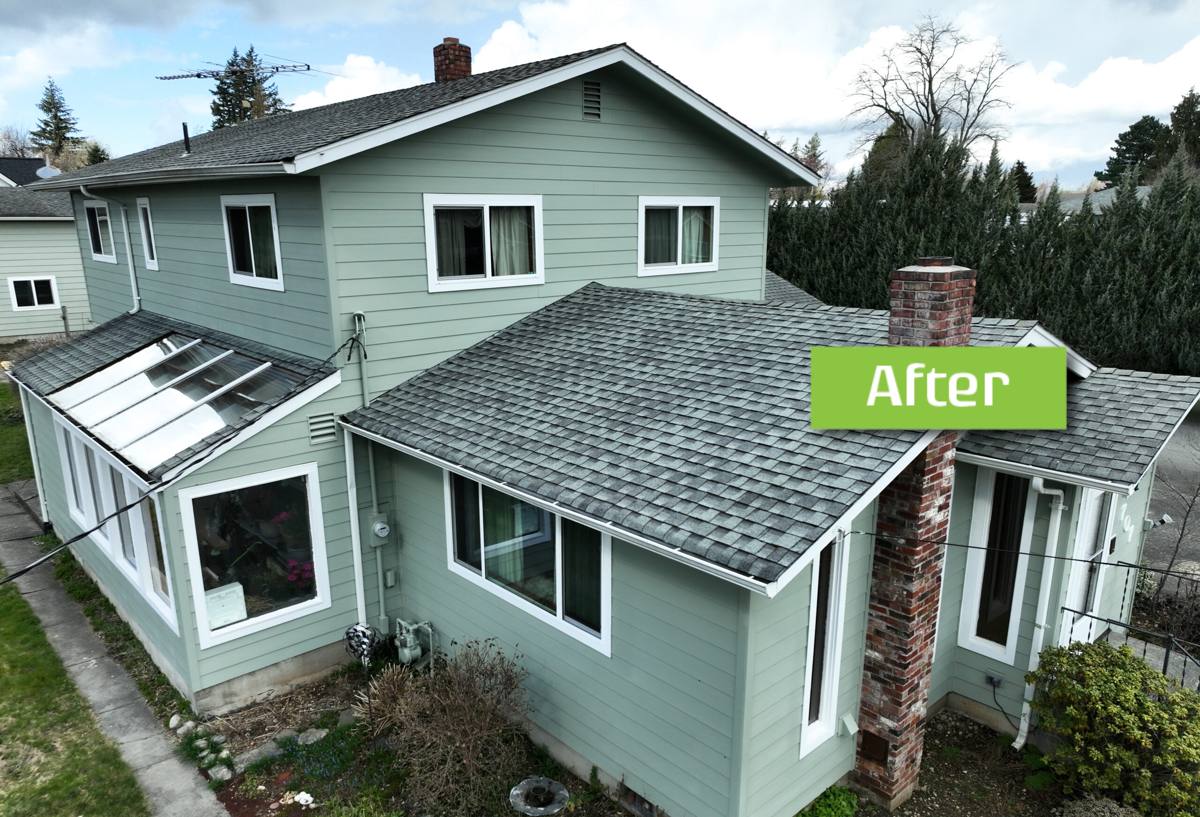
What Bellingham's Climate Actually Does to a Roof
It helps to be specific about the stresses instead of just saying "wet climate," because different problems call for different fixes.
Salt Air and Corrosion
Being close to Bellingham Bay means airborne salt settles on everything, including roofing metal. Cheap fasteners, uncoated flashing, and lower-grade metal roofing or gutter systems corrode faster here than they would twenty miles inland. This is one of the most overlooked factors in a new roof install — the shingles get all the attention, but the flashing, nails, and any metal accents are just as important to get right.
Driving Rain and Wind-Driven Water
Rain in this region doesn't just fall straight down — winter storms push it sideways, which forces water up under shingle edges, around vents, and into any flashing gap that a drier climate would never expose. A roof detailed for a place with gentle, vertical rain will leak here even if every shingle is nailed correctly, because wind-driven water finds the underlayment and flashing weaknesses that never get tested elsewhere.
Moss and Shade
Downtown Bellingham has a lot of mature tree cover and enough north-facing and shaded roof sections that moss growth is close to unavoidable without some planning. Moss holds moisture against the roofing surface, lifts shingle tabs as it grows, and works its way into the granule layer over time. Left unchecked for a few seasons, it shortens the life of an otherwise sound roof significantly.
What "Correct" New Roof Installation Means Here
A new roof is more than shingles nailed to plywood. In this climate, the layers underneath the visible surface are what actually determine whether the roof performs for its full expected life.
- Deck inspection and repair — any soft, delaminated, or water-stained sheathing gets replaced before anything new goes down, not covered over
- Ice-and-water shield at vulnerable points — eaves, valleys, and around every penetration, not just where code minimums require it
- A full synthetic underlayment across the whole deck, sized and lapped for wind-driven rain, not just a basic felt layer
- Corrosion-resistant flashing and fasteners at chimneys, walls, skylights, and valleys — this is where salt air does the most long-term damage if the wrong materials are used
- Balanced intake and exhaust ventilation so moisture from inside the house isn't trapped against the underside of the new decking
- Proper starter strip and drip edge at eaves and rakes, which is a common corner-cutting spot on rushed installs
Roofing Material Options for a Downtown Bellingham Home
There's no single "best" roofing material for every house — it depends on the roof's pitch, exposure, budget, and how much upkeep you want to take on. Here's how the common options actually compare in this specific climate.
| Material | Moss Resistance | Salt-Air Durability | Typical Lifespan Here | Maintenance Load |
|---|---|---|---|---|
| Asphalt composition shingle | Moderate — needs periodic cleaning or zinc/copper strips | Good with proper flashing | 20–30 years | Low to moderate |
| Standing seam metal | Excellent — sheds moss naturally on steeper pitches | Depends heavily on coating quality and fastener grade | 40–60 years | Low |
| Cedar shake | Poor without diligent upkeep — traps moisture | Fair | 20–30 years with maintenance | High |
| Synthetic/composite shingle | Good | Good | 30–50 years | Low |
We install asphalt composition and metal roofing most often on Downtown Bellingham homes because they give the best balance of upfront cost, low maintenance, and long-term performance against moss and salt exposure. Cedar shake can still be the right call on a home where matching an existing architectural style matters, but we're upfront with clients that it asks for more attention over the years in a climate this wet.
Our New Roof Installation Process
Every new roof we install follows the same core sequence. The specifics change with the material and the house, but the order and the standards don't.
1. On-Site Inspection and Estimate
We walk the roof, check the attic or crawlspace for ventilation and moisture signs, and look at flashing points, valleys, and the general condition of the deck from what's visible. This is also when we talk through material options honestly, including trade-offs, not just the option with the highest markup.
2. Tear-Off and Deck Assessment
Full tear-off to bare decking on a new roof install, because you can't properly address deck damage or install correct underlayment over old roofing. Any bad sheathing gets flagged and replaced before we move forward.
3. Underlayment and Flashing
This is the step that determines whether the roof survives a wind-driven rainstorm. Ice-and-water shield goes down at eaves, valleys, and penetrations, synthetic underlayment covers the rest of the deck, and new flashing goes in everywhere metal meets the roof plane.
4. Ventilation Check and Correction
We confirm intake at the soffits and exhaust at the ridge are balanced. Trapped moisture from inside a heated home condensing against a poorly ventilated deck is a slow, quiet way to rot a new roof from underneath, and it's one of the most common reasons a roof underperforms its rated lifespan in this region.
5. Roofing Material Installation
Shingles, metal panels, or shakes go on to manufacturer spec, with attention to nailing patterns and exposure lines — both of which affect wind resistance, which matters here more than in calmer climates.
6. Final Walkthrough
We walk the finished roof and the property with you, confirm gutters and downspouts are clear and functioning, and go over basic care and what to watch for going forward.
Ventilation and Moisture Control Deserve Their Own Conversation
Most homeowners think about the roofing surface and skip past ventilation, but in a climate with this much moisture — both from rain outside and condensation inside — it's often the deciding factor in how long a new roof actually lasts. A roof can be installed with premium shingles and still fail early if the attic space underneath is trapping humid air with nowhere to go. We check this on every new roof install and correct it as part of the job rather than treating it as a separate upsell.
Moss Prevention: What Actually Helps Long-Term
You can't eliminate moss risk entirely on a shaded Bellingham roof, but you can install a roof that resists it and set up habits that keep it from taking hold.
- Zinc or copper control strips near the ridge, which release trace metal ions that discourage moss growth as rain washes over them
- Keeping overhanging branches trimmed back to reduce shade and debris buildup on the roof surface
- Clearing gutters and valleys of needles and leaf litter at least twice a year — this debris holds moisture right where moss likes to start
- Gentle roof cleaning on a reasonable schedule rather than pressure washing, which can strip granules and shorten shingle life
- Choosing a roofing material with better natural moss resistance if a given roof section stays shaded most of the year
Cost Factors for a New Roof in This Area
Every roof is priced based on the specifics of the house, but the factors below are what actually move the number, more than brand names or marketing.
| Factor | Why It Matters |
|---|---|
| Roof size and pitch | Steeper roofs take longer and require more safety setup, which affects labor cost |
| Number of penetrations and valleys | Each chimney, vent, and valley needs individual flashing work — more of them means more labor and material |
| Deck condition | Rotted or soft sheathing found during tear-off adds material and labor that can't be known until the old roofing is off |
| Material choice | Asphalt shingle, metal, and cedar carry different material and installation costs, as shown in the comparison above |
| Access and site logistics | Downtown lots with limited parking or tight setbacks can add setup time compared to a house with open yard access |
We give straightforward, written estimates after seeing the actual roof — not phone quotes based on square footage alone, since deck condition and complexity vary too much to guess accurately.
Why a Crew That Already Works Downtown Bellingham Makes a Difference
Working this neighborhood regularly means we already understand the practical stuff that affects a roofing job before we ever get on a ladder: how tight some of the downtown lots and street parking can be, what the local permitting process typically involves for a re-roof, and how the tree cover and building orientation on a given block tend to affect moss buildup and shading. It also means we're not learning the salt-air and rain patterns for the first time on your house — we've already seen how flashing and fasteners hold up on similar homes nearby over multiple winters. That kind of local pattern recognition is hard to replace with a crew that's just passing through the area for one job.
Signs You Need a New Roof, Not Another Repair
A lot of Downtown Bellingham homeowners call us for a repair estimate and find out the roof is past the point where patching makes sense. These are the signals worth an honest look:
- Granules collecting heavily in gutters, which signals shingles are breaking down
- Shingles that are curling, cracking, or lifting at multiple spots rather than one isolated area
- Daylight visible through the roof deck from inside the attic
- Soft or spongy spots underfoot when walking the roof
- Persistent moss growth that keeps returning within a season or two of cleaning
- A roof already past 20–25 years old, especially with any of the signs above present
If you're only seeing one or two of these, a repair may still be the right call — we'll tell you that honestly rather than pushing a full replacement you don't need yet.
If you're weighing a new roof for a home in Downtown Bellingham, we're happy to come take a look and give you a straightforward, no-pressure estimate — just fill out the form below to get started.