 Fairhaven Siding
 Window Replacement Built for Edgemoor's Exposure
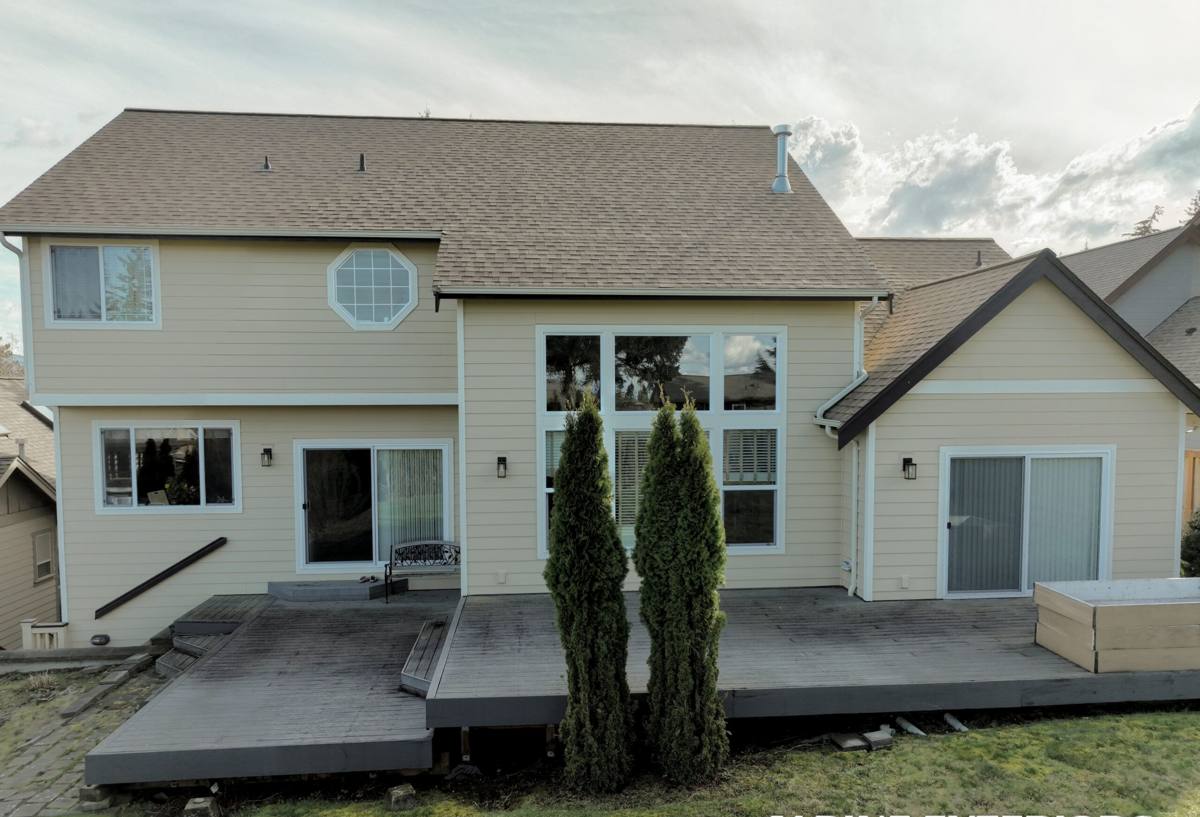
Edgemoor sits on the bluff and shoreline just south of downtown Bellingham, close enough to Fairhaven that the same weather pattern governs both: wind and moisture coming straight off Bellingham Bay, wrapped in the kind of persistent gray drizzle Whatcom County is known for. Homes here tend to be older or custom-built, often with view-oriented window walls, wood siding or trim, and a lot of tree cover that keeps roofs and window sills damp longer than homes further inland. That combination — big glass, coastal exposure, and shade — means window replacement in Edgemoor isn't quite the same job as window replacement in a dry, open subdivision. The materials, the flashing details, and the sequencing all need to account for salt air, driving rain, and a moss season that can run half the year.
This page is about that one job, done right, for that one neighborhood. Not a general product pitch — a straight explanation of what your windows are up against here, what a correct installation actually involves, and how we approach it when we're working on an Edgemoor home.
What Bay-Side Weather Does to Windows Over Time
Salt Air
Homes within a mile or two of Bellingham Bay get a steady, low-level dose of salt-laden air. It's not dramatic, but it's constant, and it accelerates corrosion on anything metal — window hardware, screen frames, and especially older aluminum sashes. Salt air also breaks down cheap seals and gaskets faster than it would inland, which is why a 20-year-old window in Edgemoor often looks and performs more like a 30-year-old window somewhere drier.
Driving Rain
Whatcom County doesn't usually get hard downpours, but it gets wind-driven rain that comes in at an angle for days at a stretch. That matters more than people expect, because a window doesn't have to leak from standing water to fail — it just has to let wind-blown rain past the frame during a storm. Older windows without proper flashing or with worn weep systems let moisture track down into the wall cavity a little at a time, long before anyone sees a stain inside.
Moss and Shade
Edgemoor's tree cover is part of what makes the neighborhood attractive, but it also means less direct sun on siding and window trim, longer drying times after rain, and more moss and algae growth on sills and exterior casing. Moss holds moisture against wood trim and old glazing putty, which is a slow but steady path to rot around window openings that don't get replaced or maintained.
None of this means Edgemoor is a hard place to keep windows in good shape — it just means the details matter more here than they would in a drier part of the state, and cutting corners shows up sooner.
Signs an Edgemoor Home Is Ready for Window Replacement
- Visible condensation or fogging between the panes of a double-pane window — the seal has failed and the gas fill is gone
- Soft or discolored wood at the bottom corners of the window frame or sill, often where moss or debris has been sitting
- Windows that are hard to open, close, or lock, especially older aluminum or original wood sashes
- A noticeable draft or cold spot near the window even with it fully closed
- Paint that keeps failing on the exterior trim around a specific window, even after repainting
- Higher heating bills than similar-sized homes nearby, with no other obvious cause
- Visible daylight or gaps around the frame from outside
Any one of these can be a minor fix. Several at once, especially on a home over 20-25 years old, usually means the windows themselves — not just the caulking or weatherstripping — are due for replacement.
What a Correct Window Replacement Job Actually Involves
Window replacement gets treated like a simple swap — old unit out, new unit in — but on a coastal, shaded lot like Edgemoor, the parts nobody sees are what determine whether the new window lasts. A correct job includes:
Opening Inspection
Before anything goes in, the rough opening gets checked for hidden rot, especially at the sill and bottom corners where water and moss tend to collect. If there's damage, it needs to be cut out and repaired before the new window goes in — installing a new window over a soft sill just hides the problem for a few more years.
Flashing and Water Management
This is the step that matters most in a driving-rain climate. Proper flashing — at the sill pan, jambs, and head — directs any water that gets past the exterior finish back out, rather than into the wall. A house wrap or building paper integration that actually laps correctly with the flashing (not just caulk bridging the gap) is what keeps a wind-driven storm from becoming a slow leak two years later.
Air Sealing and Insulation
The gap between the window frame and the rough opening needs to be sealed and insulated correctly — not overpacked with expanding foam, which can bow the frame, and not left loose, which leaves a draft path. Low-expansion foam or backer rod and sealant, applied evenly, is the standard we hold to.
Exterior Finish Integration
The trim, casing, and any flashing tape need to tie back into the existing siding or trim cleanly, so water sheds away from the window rather than pooling against it. On homes with wood trim, this is also where a treated or properly primed material choice matters, given how long that trim stays damp in the shade.
| Step | Why It Matters in Edgemoor |
|---|---|
| Opening inspection | Catches hidden rot from moss and shade before it's sealed behind a new window |
| Sill pan flashing | Directs wind-driven rain out instead of into the wall cavity |
| Air sealing | Stops drafts and moisture-laden air movement around the frame |
| Exterior trim tie-in | Keeps water shedding away from the window in a shaded, slow-drying spot |
| Hardware and finish selection | Resists corrosion from steady salt air exposure |
Choosing the Right Window for an Edgemoor Home
There's no single "best" window material — the right choice depends on your home's style, your budget, and how much exposure that particular wall gets. Here's how the common options compare for this specific setting.
| Material | Salt Air / Moisture Performance | Maintenance | Best Fit |
|---|---|---|---|
| Vinyl | Good — won't corrode or rot, handles humidity well | Low — occasional cleaning | Most Edgemoor homes, especially budget-conscious full replacements |
| Fiberglass | Very good — dimensionally stable, resists warping in wet-dry cycles | Low | Larger openings, view walls, homes wanting a higher-end feel |
| Wood (unclad) | Poor without diligent upkeep — vulnerable in shaded, damp spots | High — repainting/refinishing on a regular cycle | Historic or architecturally specific homes where matching original wood is a priority |
| Wood-clad (aluminum or vinyl exterior) | Good on the exterior face; interior wood still needs normal care | Moderate | Homes wanting a wood interior look with better weather resistance outside |
| Aluminum (older/original) | Poor — prone to corrosion and condensation in this climate | High | Generally a replacement candidate rather than a recommendation |
Our general standard for Edgemoor is vinyl or fiberglass for most full-window replacements, because both hold up to the salt air and constant moisture cycling without the recurring maintenance a bare wood window demands in a shaded, coastal lot. Where a home's character calls for a wood look, we'll talk through clad options honestly, including the upkeep that comes with the interior wood surfaces.
Glass Package Matters Too
Beyond the frame material, the glass package affects comfort and condensation resistance. Double-pane with a low-E coating and argon fill is the practical baseline for this climate — it cuts heat loss and reduces the interior condensation that shows up on cold, damp Whatcom County mornings. Triple-pane is worth discussing on north- or west-facing walls that take the brunt of the wind off the bay, though it adds cost and weight that isn't always necessary on a sheltered wall.
How Our Process Works
- On-site assessment — we walk the exterior and interior, check existing windows for rot, seal failure, and drafts, and note anything unusual about that specific opening (shade exposure, wind direction, existing damage).
- Written estimate — a clear scope of work and pricing, window by window if needed, so you know exactly what's being replaced and why.
- Material selection — we go over frame material, glass package, and color/finish options based on your home's style and that wall's actual exposure, not a one-size answer.
- Prep and protection — interior and exterior work areas are protected before removal begins, and we check the schedule against the forecast so openings aren't sitting exposed during a rain event.
- Removal and opening repair — old units come out, and any rot or damage found in the rough opening gets addressed before the new window goes in.
- Installation — flashing, air sealing, and the new window are installed to the standard described above, not just set and caulked.
- Exterior and interior finish — trim, casing, and paint or stain are matched back in so the finished opening looks intentional, not patched.
- Final walkthrough — every window is opened, closed, and locked with you present before we consider the job done.
Cost Factors for Edgemoor Window Replacement
Every home is different, and we won't quote a number without seeing the actual openings, but these are the variables that move the price up or down:
| Factor | Effect on Cost |
|---|---|
| Number of windows replaced at once | Per-window cost typically drops with a full-house or multi-window project versus one-off replacements |
| Frame material (vinyl vs. fiberglass vs. wood-clad) | Vinyl is generally the most affordable; fiberglass and clad-wood cost more upfront |
| Glass package (double-pane vs. triple-pane) | Triple-pane adds cost but can be worth it on exposed, wind-facing walls |
| Rot or structural repair at the opening | Hidden damage found during removal adds labor and material not visible in the original quote |
| Window size and shape | Large picture windows or custom shapes cost more than standard operable sizes |
| Access and site conditions | Second-story, bluff-edge, or tight-access openings take more time and equipment |
We'd rather find rot during the estimate walk-through than after removal starts, which is why the on-site assessment matters — it's the best chance to catch issues before they turn into a change order.
Why a Crew That Already Works in Edgemoor Matters
Window replacement done by a contractor who hasn't worked this specific stretch of coastline can miss things that aren't obvious from a spec sheet. Knowing that a west-facing wall two blocks from the water needs a different flashing detail than the same wall three miles inland isn't something you learn from a manufacturer's install guide — it's something you learn by doing the work here, in this weather, on homes with this kind of exposure. That local experience shows up in smaller ways too: knowing which weeks of the year give a realistic weather window for exterior work, knowing how Whatcom County permitting typically handles window replacement versus a full opening resize, and knowing what "normal" wear looks like on an Edgemoor home versus what's actually a problem.
It also means less guesswork on your end. A crew that's already replaced windows on similar homes nearby can tell you, honestly, what's worth spending on and what isn't for your specific situation — rather than defaulting to the most expensive option or the cheapest one.
Questions to Ask Before You Sign a Window Replacement Contract
- Does the quote specify frame material, glass package, and hardware finish, or just "vinyl windows"?
- Is flashing and air sealing described in the scope of work, or only "installation"?
- What happens if rot is found in the opening once the old window is out — is that a separate cost, and how is it communicated?
- What's the warranty on the window itself versus the warranty on the installation labor?
- Is the crew doing the work directly, or is it subcontracted out?
- How is the work area protected, and what's the plan if rain moves in mid-installation?
- Can they speak to specific conditions in your neighborhood, or only general product features?
A contractor who answers these clearly and specifically, without hesitation, is usually one who's actually done the work before — not just sold the product.
Get a Straightforward Estimate
If your Edgemoor home has windows that are fogging, drafting, sticking, or just old enough that you're wondering, we're happy to take a look and give you a straight answer — including telling you if a window doesn't need full replacement yet. Fill out the form below for a free, no-pressure estimate.