 Fairhaven Siding
 Windows in Birchwood Take a Different Kind of Beating
Birchwood sits close enough to Bellingham Bay and the Salish Sea that homes here deal with a specific combination of weather most inland properties never see: salt-laden air, wind-driven rain that hits siding and window frames sideways instead of straight down, and a moss season that can run from October well into spring. None of that is dramatic on its own, but stacked together year after year, it's exactly the kind of slow, steady exposure that finds every weak point in an old window — the seals, the frame corners, the flashing underneath the trim.
Energy-efficient window replacement in this neighborhood isn't just about lowering a heating bill, although that's real. It's about choosing materials and an installation approach that actually holds up to a Whatcom County marine climate instead of one built for a drier part of the country. This page covers what that looks like in practice for a Birchwood-area home.
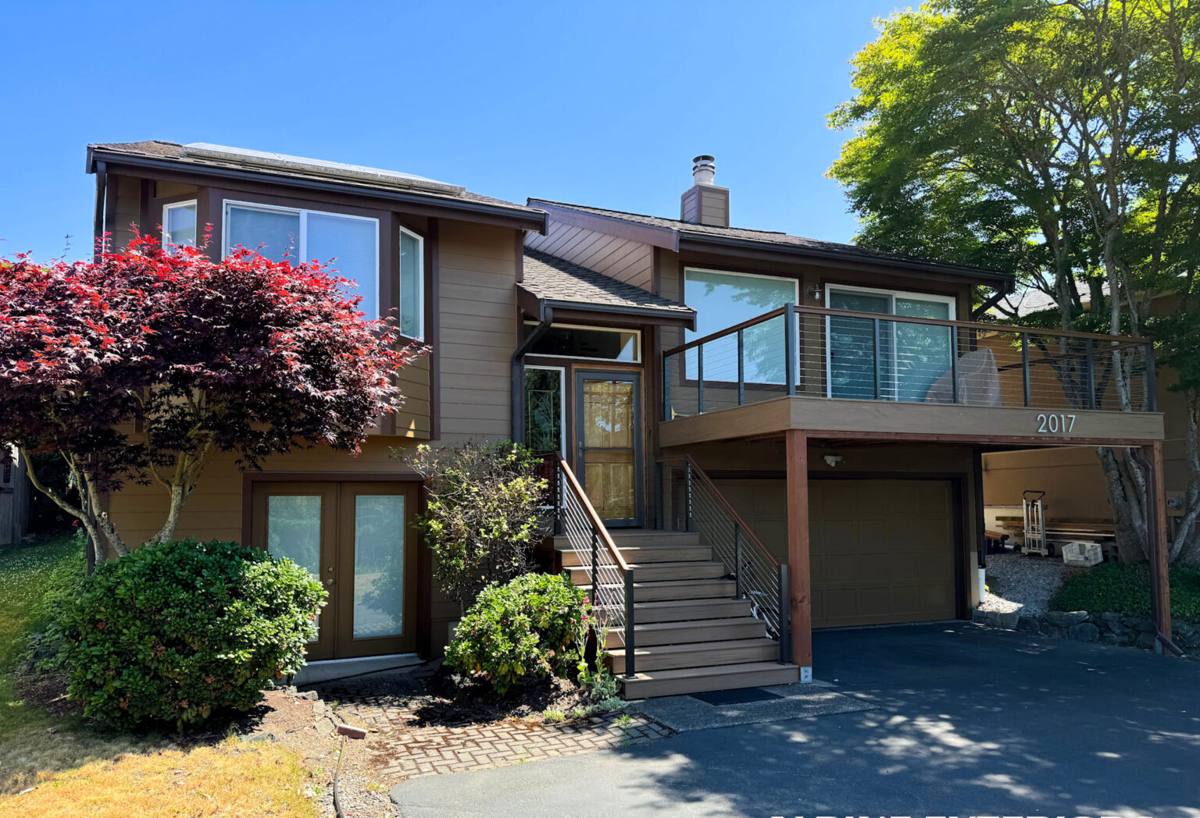
What the Coastal Climate Does to Older Windows
Salt Air and Hardware Corrosion
Homes within a few miles of the bay get a steady, low-level dose of salt in the air. Over time it's hard on unprotected aluminum frames and standard steel hardware — locks, hinges, and cranks that start sticking or pitting years before they should. It's one reason we steer people toward vinyl and fiberglass frames with corrosion-resistant hardware for anything close to the water, rather than bare aluminum.
Driving Rain and Water Intrusion
Storms coming off the water don't just fall — they push. Wind-driven rain gets forced sideways into any gap around a window opening, which is a different (and harder) problem than the light, straight-down rain a lot of window installation details are designed for. Old windows with failed weatherstripping, or ones that were never flashed correctly in the first place, are where we consistently find water staining on interior sills and soft framing underneath.
Moss, Shade, and Slow-Drying Trim
Mature tree cover and a long damp season mean wood trim and sills around windows often don't get much chance to dry out between rain events. Moss and algae hold moisture against the surface, which accelerates rot in wood components and can trap water against frames that aren't detailed to shed it. This is less about the glass and more about everything around it — which is exactly where a lot of "window problems" actually start.
What "Energy-Efficient" Actually Means Here
Energy-efficient windows are rated, not marketed — the numbers on the label matter more than the sales pitch. For a Whatcom County climate, which is heating-dominated with mild, cloudy summers, the priority is usually a low U-factor (how much heat escapes through the window) over an aggressively low solar heat gain coefficient (how much solar heat comes in). You want to hold onto warmth, and around here you don't usually need to fight off intense summer sun the way a homeowner in a hot, sunny climate would.
The Ratings Worth Understanding
- U-factor: Lower is better for heat retention. This is the number that matters most in our climate.
- Solar Heat Gain Coefficient (SHGC): Matters more on south- and west-facing windows with direct sun exposure; less critical on shaded or north-facing elevations common in tree-covered lots.
- Air Leakage rating: Lower means less infiltration — important given how much wind-driven rain and drafts this area sees.
- ENERGY STAR Northern Climate Zone: The relevant certification tier for Western Washington; it's a different threshold than the "Southern" or "North-Central" zones you'll see on national marketing.
Double-pane windows with a low-E coating and argon gas fill are the standard, reliable choice for most Birchwood homes. Triple-pane adds cost and weight for a marginal efficiency gain in this specific climate — it can be worth it on a noisy or particularly exposed elevation, but it's not an automatic upgrade for every opening.
Frame Material Comparison for a Marine Climate
| Material | How It Handles Salt Air & Moisture | Maintenance | Typical Fit |
|---|---|---|---|
| Vinyl | Very good — won't corrode or rot, handles humidity well | Low; occasional cleaning | Most Birchwood replacement projects |
| Fiberglass | Excellent — dimensionally stable, resists moisture and salt exposure | Low | Higher-exposure sites, larger openings, longer-term hold |
| Wood-clad | Good on the exterior clad side; interior wood needs protection from any leaks | Higher — finish and seal maintenance | Homes prioritizing a traditional interior wood look |
| Bare aluminum | Poor near the water — prone to corrosion and heat loss (highly conductive) | Moderate to high | Not something we recommend for this location |
We're not tied to one brand or material — the right choice depends on the specific elevation, sun exposure, and how close the home sits to the water. What we won't do is install a frame material that we know performs poorly against salt air just because it's cheaper up front; that's a maintenance headache we'd rather steer a homeowner away from before the job starts, not after.
Why the Installation Matters More Than the Window
A high-end energy-efficient window installed with poor flashing will leak. A mid-range window installed correctly, with proper drainage and a continuous weather barrier, will outperform it every time. This is the part of the job that doesn't show up in a manufacturer's brochure, and it's where most of our attention actually goes.
Integrating Window Flashing With Your Siding's Weather Barrier
A window opening isn't a sealed box — it's part of a larger drainage system that includes the housewrap or weather-resistive barrier, the sill pan, and the siding around it. Water that gets past the window's own seals needs somewhere to go, and that path has to be built in correctly: sill pan flashing sloped to drain outward, head flashing that laps over the barrier above it (never tucked underneath), and side flashing that ties into the wall's drainage plane. Because we work on siding and windows together, we install and inspect this as one connected system instead of treating the window as an isolated component.
Common Failure Points We Find on Older Homes
- Sill pans missing entirely, or sloped the wrong direction so water pools instead of draining
- Head flashing installed under the weather barrier instead of over it, funneling water into the wall
- Caulk used as the primary water seal instead of proper flashing — caulk fails; flashing shouldn't have to
- Gaps around the window frame left unsealed on the interior, letting moist air condense inside the wall cavity
- Old fasteners or trim holding moisture against the frame instead of shedding it
Our Process for a Birchwood Window Project
- On-site assessment: We look at each opening individually — sun exposure, current condition, signs of past water intrusion, and how it ties into the surrounding siding.
- Product selection: We walk through frame material and glazing options based on that specific opening, not a one-size-fits-all recommendation.
- Careful removal: Old windows and any compromised trim or sheathing come out without unnecessary damage to surrounding siding.
- Sill pan and flashing installation: Every opening gets a properly sloped sill pan and correctly sequenced flashing tied into the existing weather barrier.
- Window installation and shimming: Set level, plumb, and square, with fasteners placed per manufacturer specification to preserve the warranty.
- Insulation and air sealing: Gaps are filled with appropriate low-expansion foam or backer rod — not overpacked, which can bow the frame.
- Exterior trim and siding tie-in: Trim and siding are restored around the new window so the whole wall looks and drains as one unit.
- Cleanup and walkthrough: We go over each window's operation and answer questions before we consider the job done.
What Affects the Cost of a Window Project
| Factor | Why It Matters |
|---|---|
| Number and size of openings | Straightforward driver of material and labor cost |
| Frame material | Vinyl is typically the most budget-friendly; fiberglass and wood-clad cost more upfront |
| Glazing package | Double-pane low-E with argon is standard; triple-pane or upgraded coatings add cost |
| Condition of the existing opening | Rot repair or resizing an opening adds time and materials beyond a straight swap |
| Access and story height | Second-story or hard-to-access windows take longer and may need additional equipment |
| Trim and siding tie-in | Matching existing trim profiles or siding material affects finish work time |
We give a full written quote after seeing the actual openings — broad online estimates rarely hold up once condition and access are factored in, and we'd rather be accurate than fast with a number.
Why a Local Crew Familiar With Birchwood Matters
A crew that regularly works in and around Fairhaven has already seen how this specific stretch of Whatcom County wears on a house — which elevations take the worst of the driving rain, which older homes tend to have flashing shortcuts from a past renovation, and how much shade and moss buildup to expect on a given lot. That familiarity shortens the assessment phase and means fewer surprises once we open up a wall. It also means we're a short drive away if a question comes up after the install, rather than a call center for a company that installed the windows and moved on to the next region.
What to Expect After Installation
New energy-efficient windows should operate smoothly, seal tightly, and show no drafts or condensation between the panes — condensation on the inside of the glass in cold weather is normal humidity behavior, but condensation between the panes means a seal has failed and it's a warranty issue. Exterior maintenance is minimal: periodic cleaning of tracks and weep holes, and keeping moss or debris from building up on sills and surrounding trim, especially going into the wet months.
If you're weighing window replacement for a home in or near Birchwood, we're glad to take a look and give you a straightforward, no-pressure estimate — including an honest read on whether it's the windows themselves or the surrounding flashing and siding that need attention. Use the form below to get started.