 Fairhaven Siding
 Chuckanut's Climate Doesn't Go Easy on Windows
Chuckanut sits right where the wooded hillsides above Fairhaven meet the water, and that combination is tough on a house. Wind off the bay carries salt that works into hardware and finishes over time. Winter storms push rain sideways against south- and west-facing glass hard enough to find any gap in the flashing. And the long wet stretch from late fall through spring — moss season, basically — keeps everything around a window opening damp for months at a time. Wood trim swells, tracks fill with debris, and any weak seal gets tested constantly rather than occasionally.
Older homes in this part of Whatcom County were often built with single-pane wood windows or early-generation aluminum units that were never designed for this kind of sustained exposure. Even newer vinyl windows installed without the right flashing detail can fail early here. Energy efficiency and durability aren't separate issues in Chuckanut — a window that leaks air is usually a window that's also letting in moisture, and moisture is what actually shortens a window's life in this climate.
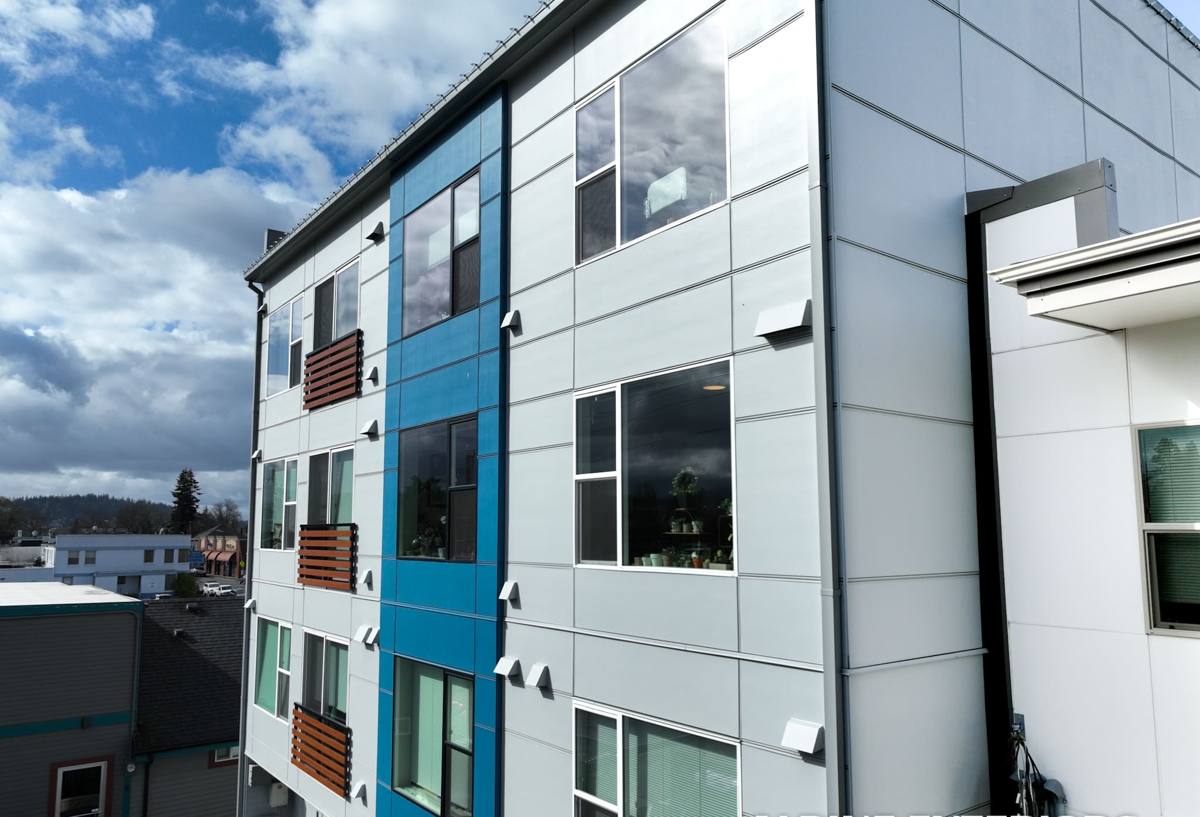
What "Energy-Efficient" Really Means in a Coastal Marine Climate
Energy-efficient windows get marketed with a lot of numbers, but only a couple actually matter for a house like yours in this part of Washington. Because our climate is heating-dominated — mild but persistently damp and cool rather than hot — the U-factor (how well the window resists heat loss) matters more day-to-day than solar heat gain. That's different advice than you'd get for a house in a sunny, cooling-dominated climate, and it's why a generic national window recommendation doesn't always fit here.
The features that actually earn their keep locally
- Low U-factor glazing — keeps heat inside during the long wet, gray stretch of the year
- Warm-edge spacers — the metal or foam strip between panes; a poor spacer is often where condensation and fogging start first in humid coastal air
- Dual weatherstripping and multi-point locks — needed to resist the pressure of driving, wind-blown rain, not just keep out a draft
- Argon or krypton gas fill — adds real insulating value without adding much cost
- Corrosion-resistant hardware — cranks, locks, and hinges rated for coastal or marine exposure hold up; standard hardware can pit and seize within a few seasons this close to salt air
Frame Material: What Actually Holds Up Here
Frame choice matters as much as glass package in this climate. Here's how the common options compare for a Chuckanut property specifically:
| Frame Material | Salt Air / Moisture Resistance | Maintenance | Relative Cost |
|---|---|---|---|
| Vinyl | Good — won't rot or corrode, but poor-quality vinyl can warp with UV and temperature swings | Low | $ |
| Fiberglass | Excellent — dimensionally stable, doesn't corrode, handles moisture cycling well | Low | $$$ |
| Wood, unclad | Poor without diligent upkeep — the material most affected by our long wet season | High | $$ |
| Wood-clad (vinyl or aluminum exterior) | Good on the exterior face if flashed correctly; interior wood still needs normal care | Medium | $$$ |
| Aluminum (non-thermally-broken) | Prone to corrosion and condensation in coastal, cool-climate use | Medium | $$ |
We don't push one material on every job. A view window on an exposed hillside lot facing the bay has different demands than a shaded opening tucked under tree cover. What we do steer clients away from is unclad wood or non-thermally-broken aluminum directly facing prevailing weather — not because the product is bad everywhere, but because the maintenance burden and condensation risk in this specific climate usually isn't worth what you save up front.
Signs Your Current Windows Are Working Against You
A lot of homeowners don't realize their windows are underperforming until we point out what to look for. Walk your house and check for these:
- Visible fogging or moisture trapped between panes (a failed seal — the argon fill is gone)
- Moss or dark staining building up in the sill or bottom track, especially on north- and west-facing openings
- Soft or discolored wood trim around the frame — a sign water is getting behind the window, not just around it
- Noticeable draft or cold spot near the glass on a windy day
- Hardware that's stiff, corroded, or won't lock flush anymore
- Condensation forming on the inside of the glass regularly through fall and winter
Any one of these on its own might just mean a window needs attention. Several at once, especially on the weather-facing side of the house, usually means the flashing or seal has already let moisture into the wall assembly — worth having looked at before it becomes a siding or framing repair too.
What a Correct Installation Actually Involves
Removal and opening prep
We pull the old unit carefully and inspect the rough opening before anything new goes in. In this climate, that inspection matters — we're checking for rot, prior water intrusion, and whether the existing flashing (if any) actually did its job. Skipping this step is how a brand-new energy-efficient window ends up sitting on a compromised opening.
Flashing and weatherproofing
This is the step that separates a window that lasts from one that fails early here. Proper flashing tape integration, a sloped sill pan to direct water out and away, and correct sequencing with the house wrap or weather-resistive barrier are non-negotiable given how much wind-driven rain this area sees. Because we're also a siding contractor, we integrate the window flashing with the surrounding siding and trim as one continuous water-management system, rather than treating the window as an isolated component — that's often where separate window-only installers and siding crews leave a gap, literally.
Setting, sealing, and finish
The unit gets shimmed level and plumb, fastened per manufacturer spec, insulated around the frame (not just caulked), and sealed with exterior sealant rated for our climate. Interior and exterior trim goes back cleanly, and we walk the operation of every window with you before we call the job done.
Our Process for Chuckanut Homes
- On-site assessment — we look at every opening, note sun/wind exposure, existing damage, and access (hillside and view lots sometimes need scaffolding or lift access, which we account for up front)
- Product recommendation and quote — matched to each opening's exposure, not a one-size answer for the whole house
- Ordering and scheduling — we plan around weather windows; installing in a driving rainstorm serves no one
- Install day — one opening finished at a time so the house isn't left exposed overnight
- Cleanup and walkthrough — debris hauled off, hardware demonstrated, questions answered on site
- Warranty documentation — manufacturer product warranty plus our installation workmanship coverage, explained in plain terms
What Affects the Price
Costs vary enough by house that we won't quote a number without seeing the openings, but the honest range for most single-window replacement in this region runs roughly in the low-to-mid four figures per window installed, depending on size, frame material, and glass package — full-frame replacements and larger or custom sizes run higher than pocket replacements into an existing frame. The bigger cost drivers we actually see on Chuckanut jobs:
| Factor | Why It Matters |
|---|---|
| Number and size of openings | Larger view windows and multi-window bays cost more in both glass and labor |
| Access | Hillside lots and upper stories sometimes need staging or lift rental |
| Full-frame vs. insert replacement | Full-frame costs more but is often necessary where existing rot or flashing failure is present |
| Frame material chosen | Vinyl, fiberglass, and clad-wood carry different material costs, as shown above |
| Siding and trim tie-in | If siding around the opening needs to be pulled back and re-flashed, that's additional scope done right, not skipped |
Why a Crew That Already Works Chuckanut Matters
Window installation done wrong doesn't usually announce itself right away — it shows up as a soft spot in the trim eighteen months later, or moisture in the wall that you don't see until siding work exposes it. A crew that already works this specific stretch of Whatcom County knows which elevations take the worst of the weather, how access works on the hillside lots, and what flashing details actually hold up against salt air and driving rain year after year rather than just on a spec sheet. That local track record is worth more than a lower bid from a crew that's never worked this coastline before.
If you're weighing whether your windows need attention, or you already know they do, we're glad to take a look and give you a straightforward assessment — no pressure, no upsell script. Request a free estimate using the form below and we'll walk your home with you.