 Fairhaven Siding
 Why Ferndale Homes Need Siding That's Actually Built for This Climate
Ferndale sits close to the water in Whatcom County, where marine air, farmland moisture, and long stretches of overcast, wet weather all combine to work on a house year-round. Siding here isn't just a cosmetic choice — it's the first line of defense against salt-laden air, wind-driven rain that gets pushed sideways into wall assemblies, and a moss and algae season that can run eight or nine months out of the year. A siding product that performs fine in a dry inland climate can fail early in a Ferndale yard, and a lot of the callbacks we see on older homes trace back to a mismatch between the product and the place it was installed.
This page is about one job done right: fiber cement siding installation for Ferndale homes, using the same product system on every job because we've found it's the one that actually holds up out here.
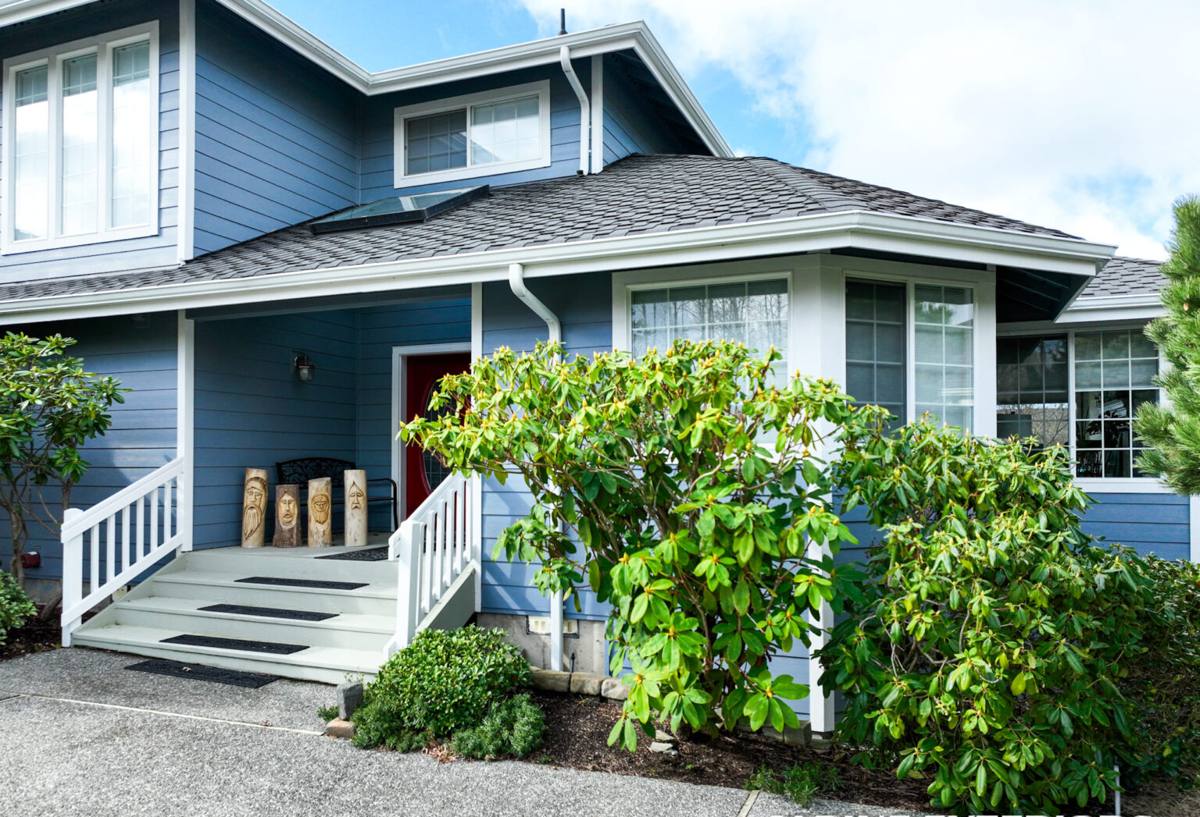
What Ferndale's Climate Actually Does to Exterior Walls
Salt Air and Coastal Drift
Even a few miles inland from open water, airborne salt settles on exterior surfaces and accelerates corrosion of fasteners, trim, and any metal flashing that isn't properly protected. Over years, that steady low-level exposure breaks down finishes and caulk joints faster than a purely inland climate would, which is why fastener choice and finish quality matter more here than they would in, say, eastern Washington.
Driving Rain, Not Just Rainfall Totals
Whatcom County doesn't just get a lot of rain — a good share of it comes in sideways during fall and winter storms. Wind-driven rain finds every gap in a wall assembly: unsealed butt joints, siding installed too tight to the trim, missing kick-out flashing above lower rooflines. It's not the rain itself that damages a home; it's rain that gets trapped behind siding with nowhere to dry out.
A Long Moss and Algae Season
Shaded, north-facing walls and anything near mature trees or gutters that stay damp can grow moss and green algae staining for most of the year in this climate. Some siding materials absorb moisture into the material itself, which feeds that growth from the inside out. Others just get a surface film that can be washed off. That difference matters a lot when you're picking a product that has to look decent between cleanings.
Why We Install Only James Hardie Fiber Cement
We don't install every brand of fiber cement, and we don't install vinyl, LP SmartSide, primed wood, or cedar. That's a deliberate standard, not a sales preference. James Hardie is the one product line we've found consistently holds its finish, its shape, and its warranty terms under exactly the conditions described above — sustained moisture, salt air, and long damp seasons.
Engineered for This Region, Not Just "Fiber Cement in General"
James Hardie makes climate-specific product formulations, and the HZ5 line is engineered for wetter, harsher climates like the Pacific Northwest — different from the HZ10 formulation sold in hot, dry regions. That distinction gets lost in generic siding marketing, but it's the actual reason a product performs differently in Ferndale than it would in Arizona. Fiber cement itself is non-combustible and dimensionally stable, meaning it doesn't swell, cup, or rot the way wood-based products can when they take on repeated moisture cycles.
A Factory Finish That Isn't Fighting the Weather From Day One
ColorPlus, Hardie's factory-applied finish, is baked on under controlled conditions and backed by its own finish warranty, separate from the product warranty. That matters here specifically because field-applied paint on siding installed in a damp climate has less time to cure properly before weather moves back in, which is one of the more common causes of early paint failure on job sites in this part of the state.
What a Correct Fiber Cement Installation Actually Involves
Fiber cement is only as good as the assembly it's installed into. A lot of the siding problems we get called out to inspect aren't product failures — they're installation shortcuts that let water get behind a wall that otherwise would have performed fine.
Drainage Plane and Rain Screen Gap
In a climate that gets sustained wind-driven rain, a proper water-resistive barrier and a ventilated gap behind the siding give any moisture that does get past the surface a way to drain and dry out instead of sitting against the sheathing. Skipping this step is invisible on installation day and expensive five years later.
Fastening, Clearances, and Caulk Joints
Hardie's own installation specifications call for specific fastener types, spacing, and clearances above rooflines, decks, and grade — clearances that matter more in a wet climate because they control how long water sits against the bottom edge of a board. Manufacturer-spec caulking at butt joints and penetrations, done correctly, is what keeps those driving-rain events from finding a way in.
Flashing at Windows, Doors, and Roof Lines
Kick-out flashing where a roofline meets a wall, and proper head flashing above windows and doors, redirect water away from the siding assembly entirely. These are small details that take extra time to do right and are almost always the first thing we check when diagnosing a leak on an older home.
Our Process on Ferndale Projects
Assessment and Product Plan
We start with a walk-around of the home, checking existing moisture damage, trim condition, and any problem areas — shaded walls, low clearances, exposed corners facing prevailing weather — before recommending a specific Hardie product line and profile.
Prep and Removal
Old siding comes off down to the sheathing so we can actually see what's underneath, repair any rot or damaged framing, and install the water-resistive barrier and drainage gap correctly rather than layering new siding over an unknown wall condition.
Installation to Manufacturer Spec
Fastening, clearances, and caulking are done to Hardie's published installation guidelines, not shortcuts that happen to look fine on installation day. This is also where flashing details at windows, doors, and rooflines get addressed.
Final Walk-Through
We go over the finished job with the homeowner, point out any maintenance basics specific to their home's exposure, and make sure trim, caulking, and touch-up work are complete before calling it done.
Cost Factors on a Ferndale Fiber Cement Project
Every home is different, but the same handful of factors tend to move the price on any Ferndale siding job. This isn't a quote — it's what actually drives the number up or down.
| Factor | Why It Matters Here |
|---|---|
| Extent of existing damage/rot | Wet climates hide moisture damage behind old siding; more repair means more labor before new siding goes up |
| Home size and wall complexity | Dormers, multiple gables, and cut-up wall lines take more time and material to flash and fit correctly |
| Product profile chosen | Lap siding, shingle-style panels, and board-and-batten all price differently and suit different home styles |
| Trim and accessory scope | Fascia, soffits, and trim boards replaced at the same time affect both cost and how well the finished job seals up |
| Access and site conditions | Tight lots, mature landscaping, or difficult grade near the foundation affect labor time |
Maintaining Fiber Cement Siding in a Salt-Air, High-Moss Climate
Fiber cement is low-maintenance compared to wood, but "low-maintenance" isn't "no-maintenance" in this climate. A little seasonal attention keeps it looking right and catches small issues before they become repairs.
- Rinse siding annually, focusing on shaded north-facing walls where moss and algae build up fastest
- Inspect caulk joints at trim, corners, and penetrations every year or two and re-caulk any that have cracked or pulled away
- Keep gutters clear so overflow isn't running down the siding face during heavy rain events
- Trim back vegetation and tree cover that keeps a wall section shaded and damp longer than the rest of the house
- Check that deck ledger boards, exterior fixtures, and other penetrations still have intact flashing and sealant
- Watch clearances at grade and hardscaping — soil, mulch, or pavers that have crept up over time reduce the gap siding needs to stay dry
Why Hiring a Crew That Already Works Ferndale Matters
A siding crew that mostly works dry-climate jobs can install a technically fine-looking wall that still fails here, because the details that matter in Ferndale — drainage planes, clearances, flashing at low rooflines, fastener choice — aren't optional extras, they're the difference between a job that lasts and one that doesn't. Working this area regularly means we've seen what actually goes wrong on older homes exposed to this same salt air, rain, and moss cycle, and we build every installation around avoiding those specific failure points rather than a generic spec sheet.
If you're weighing siding options for a Ferndale home, we're happy to take a look, walk the exterior with you, and put together a straightforward, no-pressure estimate for a correctly installed James Hardie fiber cement system.