 Fairhaven Siding
 New-Construction Windows in Happy Valley: What the Term Actually Means
"New-construction" windows aren't a style or a brand — they're a window built with a nailing flange around the frame, installed before the siding goes on and integrated directly into the wall's weather-resistive barrier (WRB). That's different from a replacement or "pocket" window, which gets inserted into an existing frame after the fact with no flange to tie into the wall assembly. If you're building or framing a home in Happy Valley, your windows should almost always be new-construction units, because they let us build a proper drainage plane around every opening from the start instead of working around one later.
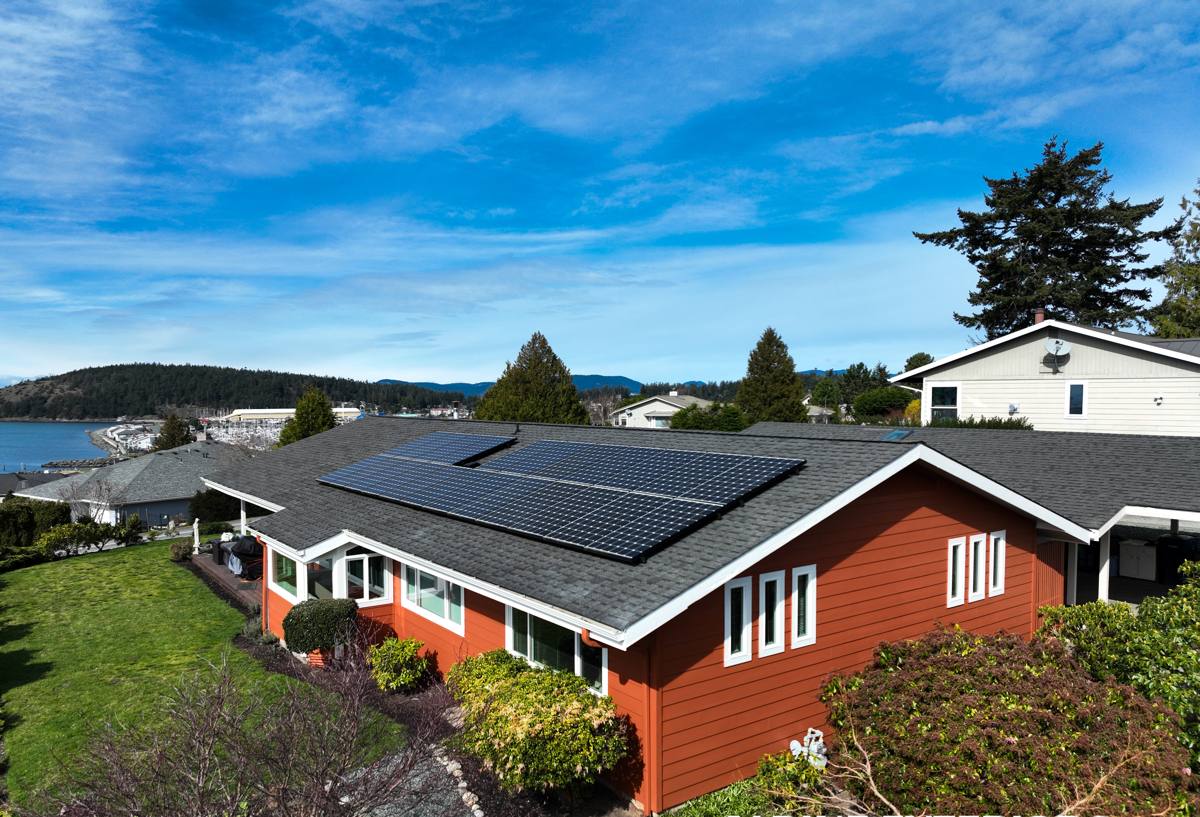
This matters more here than in a lot of places. Whatcom County sits right on the water, and Happy Valley's mix of mature tree cover and proximity to Bellingham Bay means homes deal with salt-laden air, long stretches of driving rain off the Sound, and a moss season that can run most of the year in shaded spots. A window opening that's flashed correctly on day one will handle all of that quietly for decades. One that isn't will show it — usually as staining, soft trim, or a slow leak that doesn't show up until well after the builder's warranty is gone.
Why Happy Valley's Site Conditions Change the Job
Every neighborhood in Fairhaven has its own combination of exposure, tree canopy, and drainage, and Happy Valley's is worth planning around specifically:
- Wind-driven rain: storms coming off the water push rain sideways into wall openings, not just straight down — that means sill pans and head flashing have to actually shed water outward, not just sit there decoratively.
- Shade and moisture retention: mature trees keep siding and trim damp longer after a storm, which is exactly the condition moss and mildew need. Window trim in shaded exposures needs backprimed material and full sealant coverage, not just a bead where two surfaces meet.
- Salt air: even a few miles inland, airborne salt accelerates corrosion on fasteners, hardware, and lower-grade metal flashing. We spec fasteners and flashing rated for it rather than whatever's cheapest at the yard.
- Freeze-thaw swings: Whatcom County doesn't get brutal winters, but it does get enough freeze-thaw cycling that any water trapped behind an improperly flashed window will find the weak point over a few seasons.
None of this changes the window itself — it changes how the opening around it gets built and flashed, which is where most long-term window problems actually start.
What a Correct New-Construction Install Involves
A new-construction window installation is really a sequence, and skipping or reordering a step is how leaks get built into a house. On a Happy Valley job, our sequence looks like this:
- Rough opening check: confirm the opening is square, level, and sized correctly before the window ever shows up on site — cutting corners here causes shimming and sealant problems later.
- Sill pan flashing: a sloped, sealed pan at the bottom of the opening that directs any water that gets past the window back outside, not into the framing. This is the single most-skipped step we see on framed-but-not-yet-covered homes in this area, and it's the one that causes the most damage.
- Jamb and head flashing, integrated with the WRB: flashing tape and housewrap have to be layered shingle-style — each layer overlapping the one below it — so water always drains down and out, never behind the layer underneath.
- Window set and shim: the unit is set into the pan, shimmed plumb and level without racking the frame (a racked frame binds hardware and voids manufacturer warranties), and fastened through the flange per the manufacturer's schedule.
- Insulation and air sealing: low-expansion foam or backer rod and sealant around the frame, sized to avoid bowing vinyl frames inward.
- Exterior trim and final sealant: trim installed over properly lapped flashing, with sealant as a second line of defense, not the only line of defense.
Every one of those steps is inspectable before siding closes it up — which is exactly when we want a homeowner or GC to have questions answered, not after.
Frame Material Choices for This Climate
New-construction windows come in several frame materials, and the right call depends on budget, exposure, and how much upkeep you want going forward. Here's how the common options stack up for a salt-air, high-rain environment like Happy Valley:
| Frame Material | Upfront Cost | Salt Air / Moisture Resistance | Maintenance | Typical Lifespan |
|---|---|---|---|---|
| Vinyl | Lowest | Good — won't rust or rot, but dark colors can fade faster in coastal UV | Low — occasional cleaning | 20-30 years |
| Fiberglass | Mid to high | Very good — dimensionally stable, holds paint well in coastal exposure | Low to moderate | 30-40+ years |
| Wood-clad (aluminum or vinyl exterior) | Highest | Good on the clad exterior, but any cladding breach exposes wood to rot risk | Higher — cladding seams and interior wood need periodic checks | 25-35 years, dependent on maintenance |
We don't push one material on every job. Vinyl is a sound, honest choice for most new builds and budgets. Fiberglass earns its price on larger openings or high-exposure walls where frame stability matters more. Wood-clad has real appeal for certain architectural styles, but we're upfront that it asks more of the homeowner over time in an area with this much rain — that's a maintenance trade-off, not a defect, and it's worth knowing before you commit to a whole house of it.
Working With Your Builder or GC
Most new-construction window jobs in Happy Valley come to us through a homeowner building a custom home or working alongside a general contractor. Either way, timing matters: windows need to go in after the WRB is up and before siding starts, and the flashing sequence needs to be inspected — ideally by you or your GC — before it's covered. We coordinate directly with framers and GCs on scheduling, walk the rough openings before ordering, and are glad to be on site for a flashing walkthrough if your builder wants a second set of eyes. We're not trying to take over someone else's build — we're trying to make sure the one system we're responsible for is done right and documented.
Mistakes We See on New Construction Around Fairhaven
We get called in on repairs and second opinions often enough to know the patterns. The most common issues we find in new-construction window openings in this area:
- No sill pan, or a sill pan that's flat instead of sloped to drain
- Housewrap taped in the wrong order — bottom flap taped down before the window flange laps over it, trapping water instead of shedding it
- Sealant used as the only water barrier, with no mechanical flashing behind it
- Frames shimmed unevenly, causing hardware to bind within a year or two
- Fasteners that aren't corrosion-resistant, showing rust streaks on trim within a few seasons near the water
Every one of these is fixable if caught early and expensive if it isn't — which is the whole argument for getting the sequence right the first time.
Questions to Ask Before You Sign a New-Construction Window Contract
- Will you install a sloped sill pan at every opening, or just caulk the sill?
- What's your flashing lap order relative to the housewrap — can you walk me through it?
- What fastener type do you use, and is it rated for coastal/salt-air exposure?
- Can I see the flashing before siding covers it, or do you photograph it if I can't be on site?
- What's the manufacturer's warranty, and does your installation method meet its requirements?
- How do you handle shimming to avoid racking the frame during installation?
A contractor who answers these without hesitation has done this correctly many times before. That's what you want on a house that has to hold up to this coastline for decades.
Why a Crew That Already Works Happy Valley Matters
Whatcom County's permitting and inspection requirements, typical framing practices, and building patterns in Happy Valley are things we see week in and week out. That familiarity means fewer surprises on inspection day, flashing details that already account for this area's rain and wind exposure, and a crew that isn't learning the local building department's expectations on your job. New-construction windows are a one-shot installation — once siding closes the wall, the flashing behind it is done, right or wrong, for the life of the house. Hiring a local crew that treats that sequence with the seriousness it deserves is the difference between windows that quietly do their job for thirty years and ones that start causing problems before the warranty runs out.
If you're framing a new build or addition in Happy Valley and want windows installed right the first time, we're happy to walk your rough openings and talk through the plan. Reach out below for a free, no-pressure estimate.