 Fairhaven Siding
 Ferndale's Climate Puts Real Stress on Siding
Ferndale sits in a part of Whatcom County where the weather doesn't do siding any favors. Homes here deal with a marine layer that keeps humidity high most of the year, salt-laced air drifting in off the water, long stretches of driving rain in the fall and winter, and shaded, damp yards where moss and algae get a head start every spring. None of these things are dramatic on their own, but stacked together over a decade or two, they're exactly the conditions that expose weak siding materials and sloppy installation work.
We install James Hardie fiber cement siding exclusively, and this page is about what that looks like specifically for a Ferndale home — not a generic overview of the product, but the details that matter for houses in this climate zone.
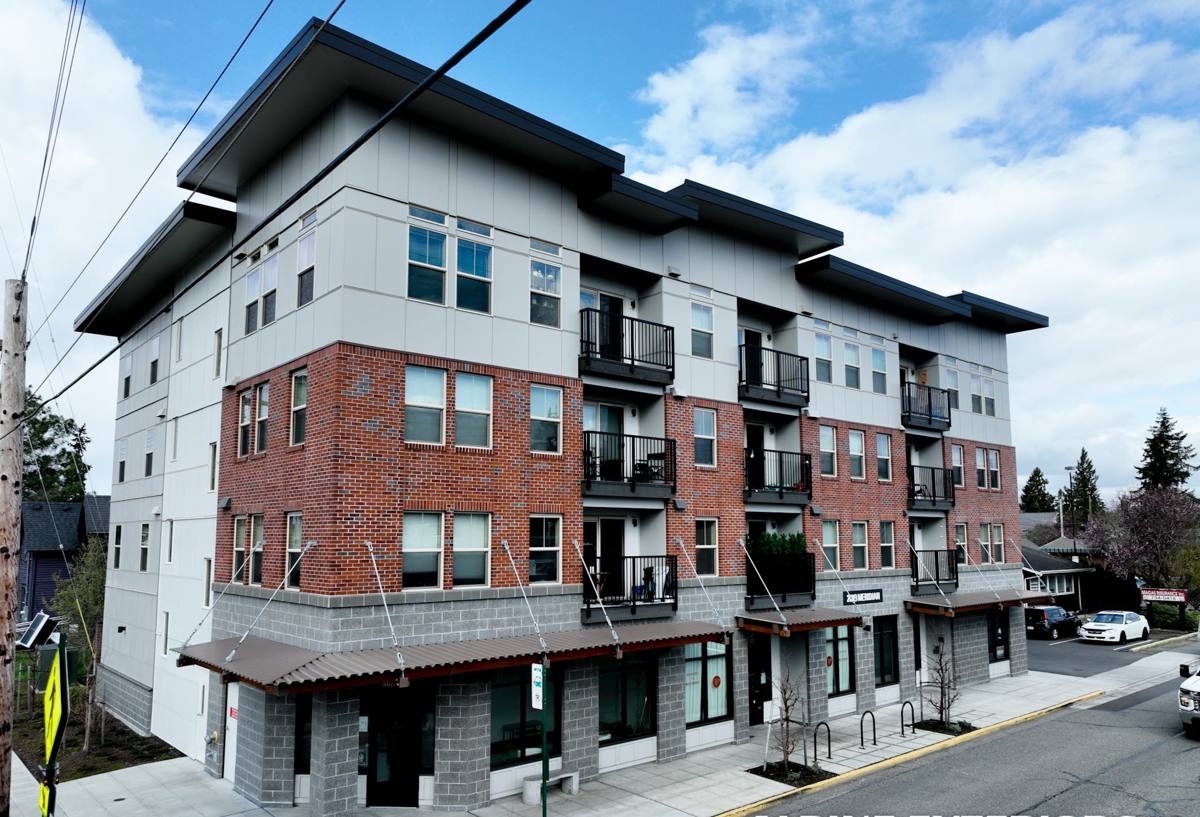
What Salt Air, Rain, and Moss Actually Do to a House
Salt Air
Homes closer to the water pick up airborne salt that settles on exterior surfaces. Over time it accelerates corrosion of exposed metal fasteners and trim, and it can degrade paint films and lesser siding materials faster than manufacturers' ratings assume. Fiber cement is inert to salt in a way that wood and some engineered wood products simply aren't.
Driving Rain
Whatcom County doesn't just get a lot of rain — it gets wind-driven rain that hits siding at an angle, which pushes water into laps, seams, and fastener penetrations that a straight-down rain would never reach. This is a water-management problem more than a material problem: the siding itself matters less than the flashing, house wrap, and lap details behind it.
Moss and Algae Season
Shaded north and west-facing walls, damp landscaping, and long gray stretches from fall through spring create ideal conditions for moss and algae growth on siding. This is mostly a cosmetic and maintenance issue, but on porous or poorly finished materials it can also hold moisture against the wall longer than it should.
Why James Hardie Fits This Climate
James Hardie fiber cement is cement, sand, and cellulose fiber — it doesn't rot, it isn't a food source for moss or fungus the way wood-based products can be, and it doesn't swell or delaminate from repeated wetting and drying cycles. Hardie's HZ5 product line is engineered specifically for climates with freeze-thaw cycling and sustained moisture exposure, which describes Whatcom County reasonably well. The factory-applied ColorPlus finish is also relevant here: it's baked on under controlled conditions and holds up to UV and moisture exposure noticeably better than field-applied paint, which matters when a house is going to spend eight or nine months a year damp.
None of that means Hardie siding is maintenance-free. It means the material itself isn't the weak link — the installation is what determines whether a Ferndale home actually gets the performance the product is capable of.
What a Correct Installation Involves Here
Water Management Behind the Siding
This is the part homeowners never see and the part that matters most in a wet climate. Correct installation means a properly lapped weather-resistive barrier, flashing at every window, door, and roof intersection, and kick-out flashing wherever a roofline meets a wall. Hardie siding installed over a house wrap that's torn, taped wrong, or missing flashing will eventually let water in no matter how good the siding itself is.
Clearances and Gaps
James Hardie's installation instructions specify minimum clearances from grade, roofing, decks, and other horizontal surfaces, plus gaps at butt joints and around penetrations that get sealed with the right sealant — not caulked shut where they should be left to move. Skipping these clearances is one of the most common ways an otherwise good installation traps moisture against the bottom of the siding.
Fastening
Hardie requires corrosion-resistant fasteners driven to a specific depth and pattern. In a salt-air environment, using the wrong fastener — or overdriving/underdriving it — creates a failure point years before the siding itself would ever be an issue. We fasten to Hardie's published specs, not to whatever's fastest.
Caulking and Sealant Choices
Not every gap should be caulked, and not every sealant holds up to constant damp-dry cycling. Using the right sealant in the right places — and leaving the right joints open per Hardie's guidance — is a small detail that has an outsized effect on long-term performance in a climate like this one.
Our Process on a Ferndale Job
- On-site inspection. We look at existing siding, sheathing condition, trim, flashing at penetrations, and any signs of past moisture intrusion before we quote anything.
- Written estimate. You get a clear scope: product line, color, trim details, and what's included — no vague allowances.
- Tear-off and sheathing check. Once old siding is off, we inspect the sheathing underneath. Any soft or water-damaged sheathing gets addressed before new siding goes on — covering a problem doesn't fix it.
- Weather barrier and flashing. This is the step that determines whether the house stays dry for the next 30-plus years, and it happens before a single piece of Hardie board goes up.
- Installation to spec. Correct fastening, clearances, and lap details, following James Hardie's published installation requirements for our climate zone.
- Final walkthrough. We go over the finished job with you, including care and maintenance basics for the product and color you chose.
Cost Factors on a Ferndale Project
Every house is different, but the same handful of variables drive the price on almost every job we quote in this area:
| Factor | Why It Matters Here |
|---|---|
| Existing siding removal | Tear-off complexity depends on what's currently on the house and whether damaged sheathing is found underneath |
| Home size and wall complexity | Dormers, gables, and cut-up wall lines take more time than a simple rectangular elevation |
| Product line and profile | Lap siding, shingle-style panels, and board-and-batten all price differently, and HZ5 is specified regardless of profile in this region |
| ColorPlus vs. field-applied finish | Factory finish costs more up front but removes a repaint cycle from the maintenance schedule |
| Trim and accessory work | Corner boards, fascia, and soffit work often get bundled into a siding project and add to scope |
| Access and site conditions | Slopes, tight side yards, and landscaping near the walls affect labor time |
We'd rather walk your specific house and give you real numbers than throw out a broad range that doesn't mean much either way.
Why a Crew That Already Works Ferndale Matters
Fiber cement installation isn't exotic, but doing it correctly for this specific climate takes local judgment: knowing where moss buildup on a north wall usually starts, recognizing which flashing details tend to fail first on homes exposed to wind off the water, and understanding how much clearance actually makes sense given how wet the ground stays here for months at a stretch. A crew that's put Hardie siding on Whatcom County homes before isn't guessing at any of that — they've already seen how the last ten jobs held up.
It also matters for warranty support. James Hardie's product warranty is strong, but it's paired with installation requirements — if the installation doesn't meet spec, coverage can be affected. Working with a contractor who installs Hardie exclusively, and installs it correctly for this region, protects the warranty you're paying for.
Caring for Hardie Siding in a Wet, Mossy Climate
Hardie siding is genuinely low-maintenance compared to wood or engineered wood alternatives, but "low-maintenance" doesn't mean "no maintenance" in a climate like this one. A short annual routine keeps it looking right and performing the way it's supposed to:
- Rinse siding gently once or twice a year to keep moss, algae, and grime from building up, especially on shaded walls
- Keep gutters clear so overflow doesn't run down the siding face repeatedly
- Trim back shrubs and landscaping so air can circulate and walls can dry between rains
- Check caulking at trim and penetrations every year or two and have it touched up if it's cracking or pulling away
- Watch for any staining or discoloration near ground level, which can signal a drainage or grading issue worth addressing early
None of this is heavy work, but skipping it is how a house ends up with a moss problem that looks worse than it is, or a small caulking gap that turns into a real one.
Get a Free Estimate for Your Ferndale Home
If you're weighing a siding replacement or dealing with an aging exterior that's finally losing the battle against the rain and moss, we're happy to come take a look. The estimate is free, there's no pressure, and you'll walk away with a clear, honest picture of what your home actually needs — fill out the form below to get started.