 Fairhaven Siding
 Building Decks for Marietta's Coastal Conditions
Marietta sits close enough to the water that every outdoor structure in the neighborhood deals with the same three things year-round: salt-laden air, driving rain that comes in sideways more often than straight down, and a moss season that can stretch from October well into spring. A deck built the way it might be built in a drier inland climate simply doesn't hold up here. Fasteners corrode faster, framing that isn't detailed for drainage traps water against wood, and any horizontal surface that doesn't shed water and get some sun exposure will grow moss and algae within a season or two.
None of that means you can't have a deck that lasts decades in Marietta. It means the framing, fastener selection, flashing details, and material choices all need to account for the environment from the start, not get patched later. That's the difference between a deck that needs real attention every few years and one that just needs normal upkeep.
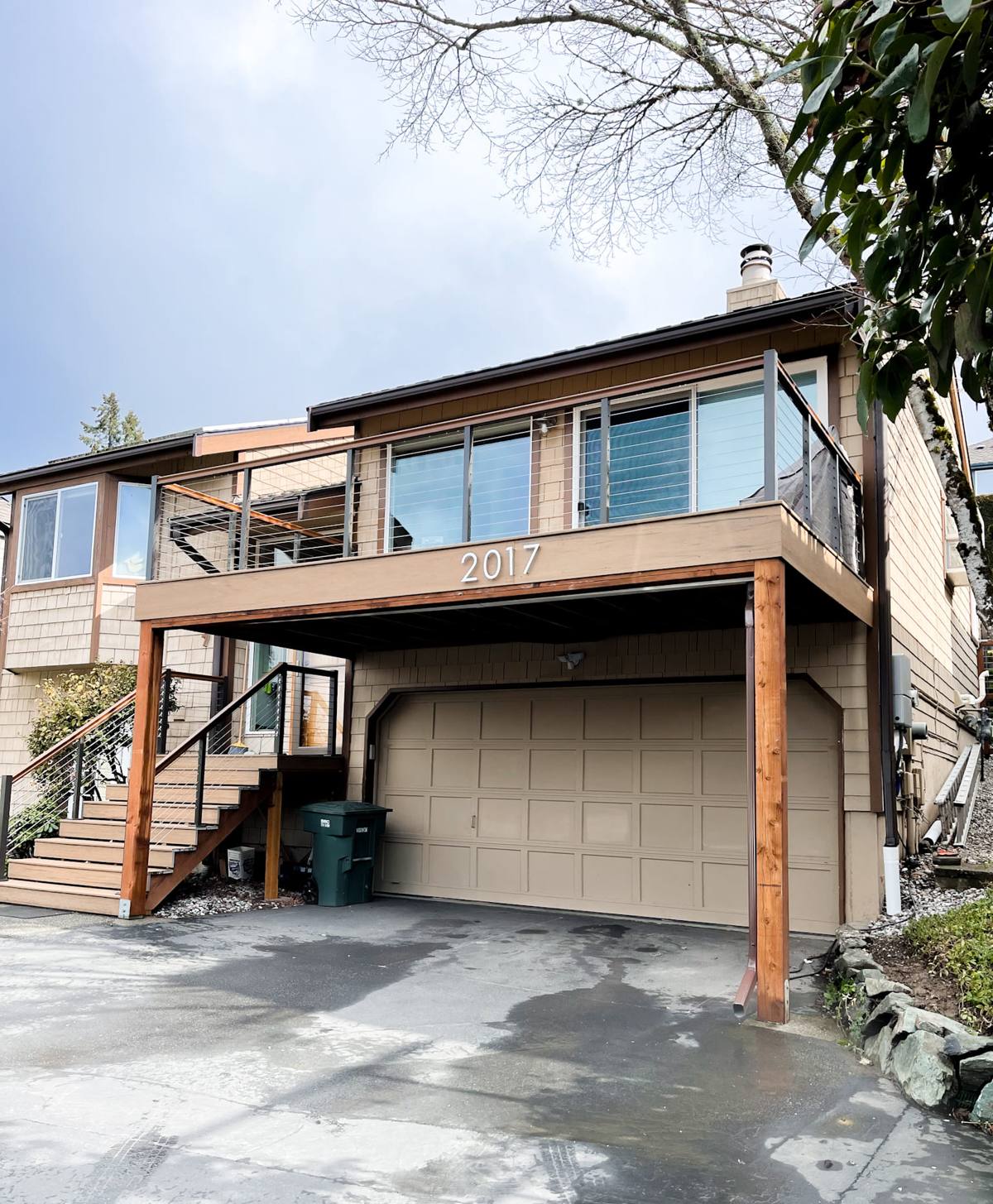
What Goes Into a Deck Built to Last Here
A deck is a system — framing, fasteners, the connection to the house, the footings underneath, and the decking surface all have to work together. In a coastal Whatcom County environment, a few of those pieces matter more than they would somewhere drier.
Framing and Fasteners
Standard galvanized fasteners can start showing surface rust within a couple of seasons this close to salt air, and once a fastener starts corroding it weakens the connection it's holding. We use fasteners and structural hardware rated for coastal or treated-lumber exposure — heavier hot-dip galvanized coatings or stainless steel at ledger connections and other critical points — because replacing a corroded joist hanger after the decking is already down is a much bigger job than specifying the right hardware up front.
Ledger Board and Flashing
The ledger board — where the deck attaches to the house — is the single most common point of failure on decks in wet climates. If water gets behind the ledger and into the rim joist or wall framing, it can rot structure that's hard to inspect and expensive to repair. Correct ledger flashing means metal flashing integrated with the house's water-resistive barrier, proper fastener spacing and type, and a gap or drainage path so water that does reach the connection has somewhere to go instead of sitting against the wood. This is the detail we spend the most time on, because it's the one that's invisible once the deck boards are down and the one that causes the most expensive problems when it's skipped.
Footings and Drainage
Whatcom County's frequent, sustained rain means standing water around footings and posts is a real concern, especially on lower or shaded parts of a lot where moss and saturated ground are common. Footings need to be sized and set to local frost and soil conditions, and post bases should keep wood posts elevated off concrete and out of standing water rather than embedded directly, which traps moisture against the post base.
Choosing Decking Material for Salt Air and Moss
There's no single "right" decking material for every Marietta project — it depends on your budget, how much maintenance you're willing to do, and how much sun exposure the deck gets (shaded decks under trees will always be more moss-prone than open, sunny ones, regardless of material). Here's how the common options actually compare in this climate:
| Material | Moisture & Moss Behavior | Maintenance | Typical Lifespan |
|---|---|---|---|
| Pressure-treated wood | Absorbs moisture; needs a breathable finish to shed water and resist mildew | Cleaning and re-staining/sealing every 1-3 years | 15-25 years with upkeep |
| Cedar | Naturally more rot- and insect-resistant than most softwoods, but still needs finish maintenance in wet climates | Regular cleaning; refinishing every 2-4 years | 20-30 years with upkeep |
| Capped composite | Moisture-resistant surface; can still grow surface algae/mildew film in shaded, damp spots | Periodic washing; no staining or sealing | 25-30+ years, manufacturer-warrantied |
| Cellular PVC | Fully synthetic, doesn't absorb water; least prone to moisture-driven damage | Occasional washing | Comparable to or longer than composite, warrantied |
We install both wood and manufactured decking. Real wood costs less upfront and has a natural look many homeowners want, but in a climate with this much rain and moss pressure, it asks for more of your time every year. Composite and PVC decking cost more to install but shed water at the surface and don't need staining or sealing — the trade-off is mainly upfront cost versus ongoing maintenance, not one being inherently "better." We'll walk through that trade-off honestly based on your specific site and budget rather than pushing one material.
Railings, Stairs, and Local Code
Any deck more than a modest height off grade needs a code-compliant guardrail, and stairs need proper rise/run and handrail details. Requirements are set by the adopted building code and enforced locally, and permitting can run through the City of Bellingham or Whatcom County depending on where in Marietta a property falls and whether it's inside city limits. Getting these details wrong isn't just a code problem — undersized railing posts or improperly spaced balusters are a real safety issue, especially on elevated decks. We handle the permit application and inspection process as part of the job so you're not the one tracking down requirements.
Keeping Moss and Mildew From Taking Over
Even a well-built deck in Marietta needs some seasonal attention — the goal of good construction is to make that upkeep minor instead of a fight. A few habits go a long way:
- Sweep leaves and debris off the deck surface regularly in fall, especially between boards where organic matter collects and holds moisture
- Rinse or wash the deck surface a couple of times a year to remove the algae film that salt air and shade encourage
- Keep gutters and downspouts near the deck clear so overflow isn't dumping extra water onto the structure
- Trim back overhanging branches where practical to let more sun and air reach the deck surface
- Check the ledger flashing and any visible fastener heads once a year for early signs of corrosion or gaps
- Re-seal or re-stain wood decking on the schedule the finish product calls for — waiting too long lets moisture back into the wood
Cost Factors for a Marietta Deck Project
Every deck is priced around its own size, height, material, and site conditions, so we won't quote a number without seeing the property — but these are the main things that move the price up or down:
| Factor | Why It Matters |
|---|---|
| Deck height and stairs | Elevated decks need more substantial framing, footings, and guardrail work than ground-level decks |
| Decking material | Wood costs less to install; composite and PVC cost more upfront but less to maintain over time |
| Site access and slope | Sloped lots or limited equipment access add labor and sometimes engineering |
| Ledger and house condition | Older siding or trim at the ledger location sometimes needs repair before the deck attaches correctly |
| Railing style | Cable, glass, or custom railing systems cost more than standard wood or metal baluster railing |
Our Deck Building Process
We keep the process straightforward so you know what's happening at each stage:
- Site visit and design. We look at the specific spot on your Marietta property — sun exposure, drainage, slope, and how the deck connects to the house — and talk through material and layout options.
- Estimate and plan. You get a clear, written scope covering materials, framing approach, and railing before any work starts.
- Permitting. We prepare and submit what's needed for the local jurisdiction and schedule required inspections.
- Framing and flashing. This is where the long-term durability of the deck gets decided — ledger attachment, flashing, and structural framing are done first and correctly, before anything visible goes on.
- Decking, railing, and finish work. The visible surface goes down last, along with railings, stairs, and any trim or fascia.
- Final walkthrough. We go over the finished deck with you, including what maintenance to expect for the material you chose.
Why a Marietta-Familiar Crew Matters
A lot of what makes a deck last in this neighborhood isn't visible on a spec sheet — it's knowing that a particular block tends to stay shaded and damp longer into spring, or that certain lots have drainage that needs extra attention at the footings, or which local inspectors want to see what at framing sign-off. A crew that already works Marietta and the wider Fairhaven area has already worked through those specifics on other projects nearby. That local familiarity shows up in fewer surprises during the build and a deck that's detailed for the actual conditions on your property, not a generic set of assumptions.
We're also nearby if something needs attention down the road — whether that's a warranty question, a maintenance question, or just wanting a second opinion on how a deck is holding up after a wet winter.
Let's Talk About Your Deck
If you're planning a new deck or replacing one that's past its prime, we're happy to take a look and walk through honest options for your property — no pressure, no obligation. Fill out the form below for a free estimate.