 Fairhaven Siding
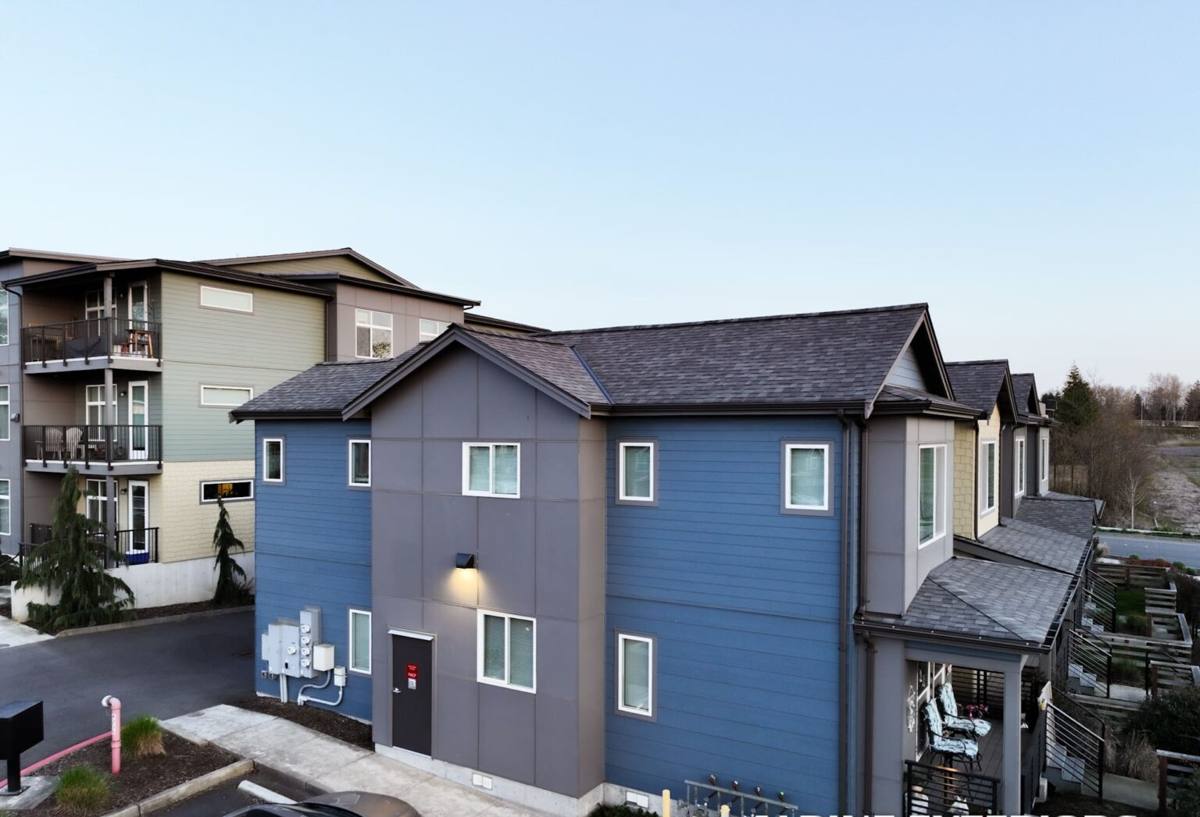
 Marietta sits low and close to the water on Whatcom County's shoreline, and that location shapes everything about how siding ages there. Homes here deal with a steady mix of salt-laden air, wind-driven rain off the bay, and a moss season that runs long into the year — conditions that punish siding faster than they would a few miles inland. We do siding replacement work throughout the Fairhaven area, and Marietta is one of the neighborhoods where getting the details right, not just the material, makes the difference between a job that lasts and one that needs attention again in a few years.
What Marietta's Climate Does to Siding Over Time
The combination of salt air, sustained moisture, and shade from mature trees on many Marietta lots creates conditions that most siding products weren't designed around. It's worth understanding the specific mechanisms at work, because they explain why some replacement jobs hold up for decades and others start failing within a few seasons.
Salt Air and Corrosion
Airborne salt off the water accelerates corrosion on anything metal — fasteners, flashing, trim caps, and hardware. On a lot of homes, the siding itself might look fine while the fasteners or flashing behind it are quietly failing. Once a fastener corrodes and loses its grip, or a flashing joint opens up, water has a path into the wall assembly that wasn't there when the house was built.
Driving Rain and Wall Assembly
Wind-driven rain doesn't fall straight down — it gets pushed sideways into walls, seams, and trim joints. That means the weather-resistive barrier, flashing, and clearances behind the siding matter just as much as the siding material itself. A home in Marietta that catches wind off the water needs those details done correctly the first time, because there's less margin for error than on a sheltered inland lot.
A Long Moss Season
Shade, moisture, and mild temperatures add up to a moss and algae season that can run most of the year on north- and east-facing walls. Moss holds moisture against the siding surface longer than it would otherwise sit, which shortens the life of coatings and, on some materials, contributes to rot at the substrate. Siding that resists moisture absorption and holds a factory finish well handles this pressure far better than siding that depends on field-applied paint to keep water out.
Signs a Marietta Home Needs Replacement, Not Just Repair
Not every siding problem calls for a full replacement, but there's a point where patching stops making sense — either because the underlying material has failed in more places than you can see, or because the cost of repeated repairs starts approaching the cost of doing it right once. Here's what tells us a home has crossed that line:
- Soft, spongy, or crumbling siding when pressed, especially near the bottom courses or around windows and doors
- Persistent moss or algae staining that comes back within months of cleaning
- Visible warping, buckling, or gaps between siding boards or panels
- Paint that's peeling or bubbling repeatedly in the same spots, which usually points to moisture trapped behind the surface
- Water stains, soft drywall, or musty odors on interior walls that back up to exterior siding
- Siding that's more than 20-25 years old and made of a material not built for sustained coastal moisture exposure
- Visible rot or insect damage at butt joints, corners, or anywhere siding meets trim
If a home is showing two or three of these signs at once, that's usually a sign the problem isn't isolated — it's the material or the original installation reaching the end of what it can handle in this climate.
What a Correct Siding Replacement Job Involves
Siding replacement is more than swapping old boards for new ones. In a climate like Marietta's, the parts of the job nobody sees are what determine whether the new siding lasts fifteen years or fifty.
Full Tear-Off and Sheathing Inspection
We remove the existing siding down to the sheathing rather than installing over it. That's the only way to find hidden rot, soft sheathing, or moisture damage that's been building unseen — and in a marine climate, it's common to find at least some damage behind older siding, particularly around windows, doors, and lower wall sections. Any damaged sheathing gets replaced before anything new goes up.
Weather-Resistive Barrier and Flashing
A new, continuous weather-resistive barrier goes on before the siding, with flashing detailed at every window, door, and penetration. This is the layer that actually keeps water out of the wall assembly — the siding is the first line of defense, but the barrier and flashing behind it are what stop a missed seam or a wind-driven storm from becoming a rot problem.
Fastening and Clearances
Fastener spacing, type, and depth all matter, and they matter more in a corrosive, high-moisture environment than they do elsewhere. We also maintain proper clearances between siding and grade, decks, roofing, and other surfaces, since insufficient clearance is one of the most common causes of premature rot on homes near the water.
Trim, Caulking, and Finish Details
Trim boards, caulking joints, and touch-up painting at cut edges are where a lot of lower-quality installs cut corners. Done correctly, these details are what keep water from finding its way in at the small gaps and seams that are otherwise easy to overlook.
Why We Only Install James Hardie Fiber Cement
We install one siding product on every home: James Hardie fiber cement. We don't install vinyl, LP SmartSide, Cemplank, Allura, primed spruce, or cedar. That's a standard we've settled on, not a sales line, and it comes down to how these materials actually perform under Marietta's specific mix of salt air, driving rain, and extended moss season.
| Material | How It Handles Salt Air & Moisture | Ongoing Maintenance | Trade-Offs Here |
|---|---|---|---|
| James Hardie fiber cement | Non-combustible, dimensionally stable, engineered HZ lines for marine exposure | Occasional washing; ColorPlus finish resists fading and chalking | Higher upfront cost than vinyl; installation requires correct technique |
| Vinyl | Can become brittle with UV and salt exposure; not a water barrier on its own | Low, but fading and chalking can't be repainted | Depends entirely on the barrier behind it; cracks are hard to color-match later |
| Wood-based siding (LP SmartSide, primed spruce, cedar) | Vulnerable to rot and swelling if moisture reaches the wood substrate | Repainting and sealing on a recurring cycle | Sustained coastal moisture and a long moss season shorten the maintenance interval |
| Other fiber cement (Cemplank, Allura) | Similar base material to Hardie in concept | Varies by manufacturer finish and warranty terms | We standardized on Hardie for its climate-specific HZ engineering, finish warranty, and consistency of supply |
Hardie's ColorPlus factory finish matters in a place like Marietta because it's baked on and warrantied against fading and chalking, rather than relying on a field-applied coat that has to be redone every several years. The HZ5 product formulation is built for wetter, harsher climate zones, which describes most of western Washington's coastline. Combined with a strong transferable warranty, it's the product we're willing to install our workmanship against — not because every alternative fails, but because we've made a deliberate call about what holds up best in this specific environment.
Our Siding Replacement Process, Start to Finish
- On-site assessment — we walk the exterior, check for soft spots, moisture damage, and problem areas, and talk through what we're seeing before quoting anything
- Written scope and estimate — a clear breakdown of materials, labor, and any sheathing or structural repair we expect to encounter
- Tear-off — full removal of existing siding and trim down to the sheathing
- Sheathing repair — replacement of any damaged sheathing found once the old siding is off
- Weather-resistive barrier and flashing — installed continuously, with careful detailing at every window, door, and penetration
- Hardie siding installation — panels or lap siding installed to manufacturer spec, with correct fastening, spacing, and clearances
- Trim and finish work — trim boards, caulking, and touch-up at any cut edges
- Final walkthrough and cleanup — a final check with the homeowner and full site cleanup
What Siding Replacement Costs: The Real Factors
Every home is different, and we're not going to quote a number without seeing the property, but these are the factors that actually move the price on a Marietta siding replacement:
| Factor | Why It Matters |
|---|---|
| Total square footage and wall complexity | More surface area, corners, and dormers mean more material and labor time |
| Condition of the sheathing underneath | Hidden rot or moisture damage found during tear-off adds repair scope that can't always be predicted in advance |
| Siding style and profile | Lap siding, panel siding, and trim-heavy designs each carry different material and labor costs |
| Trim and detail work | Homes with more window and door trim, corner boards, and architectural detail take more time to finish correctly |
| Access and site conditions | Tree cover, tight lot lines, or difficult scaffolding access can add time to the job |
The one factor we won't cut to save money is what's behind the siding. A lower bid that skips sheathing repair, proper flashing, or correct fastening isn't actually cheaper — it's a cost that shows up again in five or ten years, often bigger than it would have been the first time.
Why a Crew That Already Works Marietta Matters
Whatcom County's coastline isn't uniform, and Marietta's particular exposure to salt air, wind, and shade is something you learn by doing repeat work in the area, not from a general spec sheet. We know which walls in this neighborhood take the worst of a winter storm, which spots hold moss no matter how often they're cleaned, and which flashing and clearance details actually matter here versus what's just a code minimum elsewhere. That shapes how we scope a job before a single board comes off the wall.
It also means fewer surprises with permitting, site access, and the practical realities of working a shoreline lot — things that come up more consistently in Marietta than they would on a typical inland property.
If your Marietta home is showing moss buildup, warped or soft siding, or paint that won't stop peeling, we're happy to take a look and give you a straight answer about what's actually going on. Reach out for a free, no-pressure estimate — there's a form below.