 Fairhaven Siding
 Why Chuckanut Roofs Take a Different Kind of Beating
Chuckanut sits right where the wooded slopes above Fairhaven meet Bellingham Bay, and that location cuts both ways. The tree cover and elevation give the area some of the prettiest sightlines in Whatcom County, but the same setting exposes roofs to a combination of stresses that flatter, more sheltered neighborhoods don't deal with. You've got salt-laden air coming off the bay, driving rain pushed sideways by wind funneling through the Chuckanut ridgeline, and deep shade from evergreens that keeps roof surfaces damp for days after a storm passes. Add in a moss season that, in this part of Washington, is really most of the year, and you have a roof environment that punishes anything installed with shortcuts.
Metal roofing handles this combination better than almost any other material available to homeowners here, but only when it's specified and installed correctly for the site. A metal roof put on the same way you'd do it in a dry inland climate will underperform in Chuckanut. The details that matter here are different, and that's the whole point of this page.
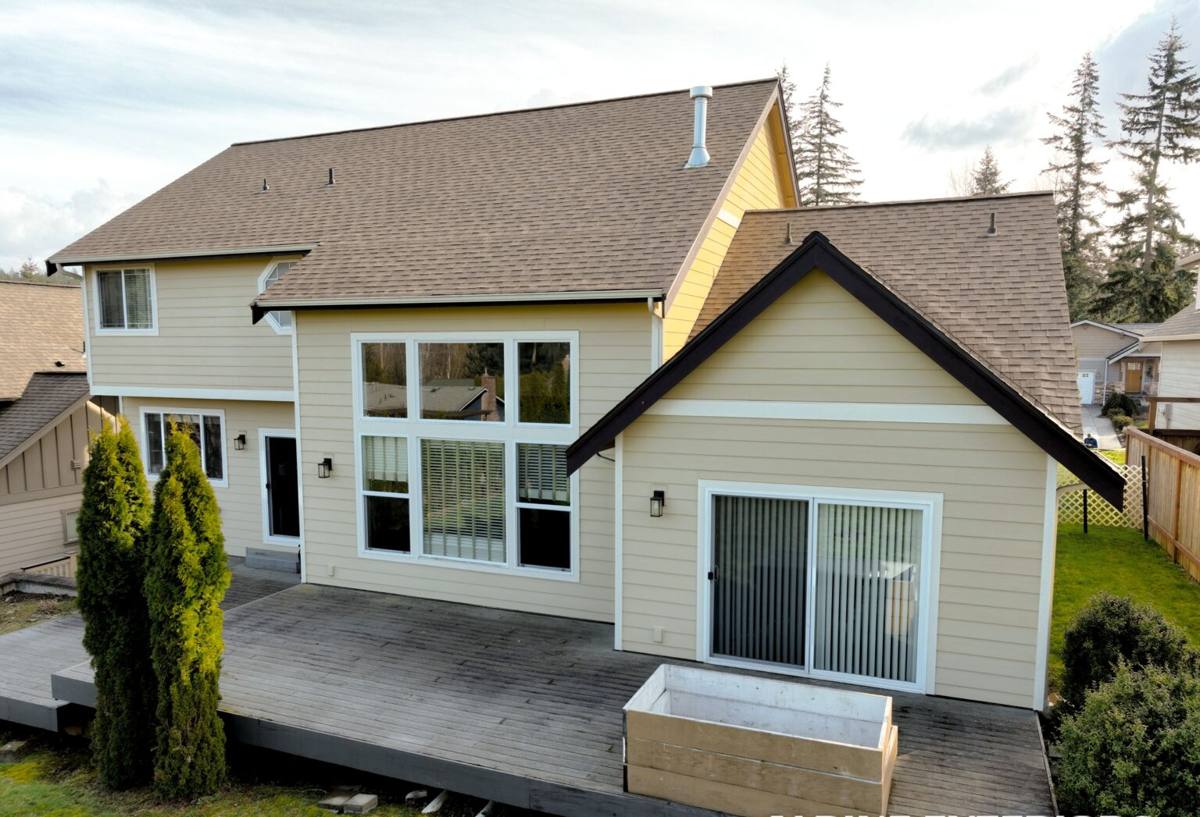
What Salt Air Actually Does to a Metal Roof
Salt air isn't just an inconvenience near the water — it's a chemically active environment. Airborne salt combines with moisture to accelerate corrosion at any point where a metal roof's protective coating is thin, scratched, or absent, and it works fastest at cut edges, fastener heads, and places where dissimilar metals touch. On a property like the ones scattered through Chuckanut, close enough to Bellingham Bay to catch onshore air regularly, this isn't a hypothetical. It's a design constraint.
What that means for material choice
- Steel panels need a marine-grade or coastal-rated coating system, not a standard residential finish, and every cut edge should be sealed or coated in the field, not left bare.
- Aluminum resists corrosion inherently better than steel in salt exposure and is worth the upgrade cost on homes closer to the water or fully exposed to onshore wind.
- Fasteners, flashing, and any exposed hardware need to be metallurgically compatible with the panel material — mixing metals without isolation is one of the most common causes of early coastal roof failure.
Driving Rain: Where Most Metal Roof Leaks Actually Start
Whatcom County rain isn't always heavy, but it's frequently wind-driven, and wind-driven rain behaves differently than a straight-down downpour. It gets pushed uphill under panel laps, forced sideways into ridge caps, and driven into any gap in flashing that would stay dry in calmer conditions. Chuckanut's terrain, with wind channeling off the water and up through the trees, makes this worse than in more sheltered parts of Fairhaven.
Almost every metal roof leak we're called out to investigate in this kind of terrain traces back to one of a small number of causes:
- Underlayment that wasn't rated for high-wind-driven rain, or wasn't lapped correctly against the prevailing wind direction.
- Panel end laps or side laps with insufficient overlap or missing sealant tape at a critical seam.
- Flashing at valleys, chimneys, and wall transitions installed with generic details instead of details matched to the actual roof geometry and exposure.
- Fastener patterns that were spaced for a calmer climate, allowing panels to flex and work loose over time under repeated wind loading.
None of these are metal roofing failures in the general sense — they're installation decisions that didn't account for the site. A correct install for Chuckanut treats wind-driven rain as the default condition, not the exception.
Moss, Shade, and the Maintenance Reality of a Wooded Roof
Homes tucked under mature trees get less direct sun, which keeps roof surfaces cooler and damper for longer after rain. That's ideal growing conditions for moss and algae, and it's a big part of why moss season in this part of Washington can feel like it never fully ends. Metal roofing doesn't eliminate moss risk, but it changes the equation significantly compared to shingles.
Moss struggles to get a foothold on a smooth, properly coated metal panel the way it does on the rough surface of composition shingles, and standing water — the thing moss and algae need to establish — has nowhere to pool on a correctly sloped metal roof. That said, metal roofs in heavily shaded Chuckanut settings still need periodic attention:
- Debris (needles, leaves, seed pods) needs to be cleared from valleys and gutter lines so water doesn't dam up against a panel edge.
- Panel overlaps and closures can still trap organic debris over years, which holds moisture against the coating longer than the panel was designed for.
- Gutters undersized for the tree cover on a property will overflow in a hard rain, sending water back up under the roof edge instead of away from the house.
What a Correct Metal Roof Installation Involves Here
A metal roof is only as good as the system underneath it. On a Chuckanut property, we build the assembly with the site's exposure in mind from the deck up, not just the visible panel.
The layers that matter
| Layer | Purpose on a Chuckanut roof |
|---|---|
| Roof deck inspection/repair | Confirms no hidden rot from prior moisture intrusion before anything new goes on |
| High-wind-rated synthetic underlayment | Second line of defense against wind-driven rain that gets past the panel seams |
| Ice and water membrane at eaves/valleys | Extra protection where wind-driven rain and debris damming are most likely to force water backward |
| Coastal-appropriate panel and coating | Resists salt-air corrosion over the roof's service life |
| Compatible, sealed fasteners | Prevents galvanic corrosion and loosening under wind loading |
| Site-specific flashing details | Closes off valleys, walls, and penetrations against sideways-driven rain |
Skipping or downgrading any one of these layers to save cost is where coastal-adjacent metal roofs run into trouble years down the line. It rarely shows up as a problem on installation day — it shows up as a leak or corrosion spot three to seven years later, once the shortcut has had time to fail.
Panel Types and How They Perform in This Environment
Not every metal roofing profile is a good match for a shaded, salt-exposed, wind-driven-rain site. Here's how the common options stack up for Chuckanut specifically.
| Panel type | Coastal/moisture performance | Best fit |
|---|---|---|
| Standing seam steel/aluminum | Best seam-tightness against wind-driven rain; fewest exposed fasteners | Full roofs, especially on more exposed or higher-wind Chuckanut lots |
| Exposed-fastener steel panels | Good performance if fasteners and gaskets are maintained; more seams to seal | Budget-conscious projects, outbuildings, lower-exposure roof planes |
| Aluminum standing seam | Best corrosion resistance in direct salt air; higher material cost | Homes closest to the bay or fully open to onshore wind |
| Stone-coated steel | Good wind and moss resistance; more surface texture can trap debris in heavy shade | Homeowners wanting a shingle-like appearance with metal durability |
Our Process for a Chuckanut Metal Roofing Project
We work in and around Fairhaven regularly, and Chuckanut projects get the same disciplined process every time, adjusted for the specific lot's wind exposure and tree cover.
- On-site assessment. We walk the roof and the property, checking slope, existing drainage, tree cover, and how exposed the roof is to bay-driven wind and rain.
- Deck and structure check. Before any new roofing goes on, we confirm the deck is sound and check for signs of past moisture intrusion, especially around valleys and penetrations.
- System selection. Based on exposure, we recommend panel type, coating, and underlayment matched to that specific roof — not a one-size-fits-all package.
- Written scope and pricing. You get a clear breakdown of materials, flashing details, and labor before anything is scheduled, no vague allowances.
- Installation. Deck prep, underlayment, ice-and-water membrane at vulnerable areas, panel installation, and site-specific flashing at every valley, wall, and penetration.
- Final walkthrough. We review the completed roof with you, including how to spot early debris buildup or drainage issues given the tree cover on your lot.
Signs your current roof needs attention before winter storms
- Rust streaking below fastener heads or panel seams
- Moss buildup concentrated in shaded valleys or north-facing slopes
- Gutters overflowing during moderate rain, not just heavy storms
- Visible gaps or lifted edges at flashing around chimneys or walls
- Interior ceiling stains that appear only during wind-driven storms, not calm rain
Cost Factors Worth Understanding Before You Get Quotes
We won't quote a price without seeing the roof, but the honest range for a metal roof in this area depends on a handful of factors that are worth understanding upfront so you can compare quotes intelligently.
| Factor | Why it moves the price |
|---|---|
| Panel material | Aluminum and premium coatings cost more than standard steel but pay off in salt-air longevity |
| Roof complexity | Valleys, dormers, and multiple roof planes require more flashing labor and material |
| Tear-off vs. overlay | Removing an existing roof adds cost but lets us inspect and repair the deck underneath |
| Access and tree cover | Steep, heavily wooded lots common in Chuckanut can add setup and safety time |
| Underlayment and flashing spec | Upgraded wind-driven-rain protection at eaves and valleys adds modest cost with real payoff |
Be cautious of any quote for this area that doesn't call out coastal-rated coatings, upgraded underlayment, or site-specific flashing by name. If it's not on the estimate, it's often not in the installation either.
Why Local Experience on This Specific Terrain Matters
Metal roofing is a mature, well-understood product nationally, but installation quality is entirely local. A crew that mostly works drier, more sheltered inland areas doesn't build the same instincts for wind-driven rain off the bay or the moss patterns that show up under Chuckanut's tree cover. We work throughout Fairhaven and the surrounding Whatcom County waterfront, and that repetition matters — it's how you learn which valleys need extra membrane, which lots need upgraded coatings because of wind exposure, and which drainage details actually hold up through a full wet season here rather than just through the installation warranty period.
If you're weighing a metal roof for a Chuckanut property, we're happy to take a look and walk you through what your specific lot needs — no pressure, no generic package pricing. Reach out for a free estimate using the form below.