 Fairhaven Siding
 Why Happy Valley Roofs Take a Different Kind of Beating
Happy Valley sits close enough to the water and to Fairhaven's marine layer that roofs here deal with a combination most inland Washington homes never see: salt-laden air, wind-driven rain that comes in sideways instead of straight down, and a moss season that can run most of the year in shaded, north-facing sections of a roof. None of that is unusual for Whatcom County. What matters is how a roofing system is chosen and installed to handle it, because the roofs that fail early around here almost always fail for one of these three reasons.
Salt Air and Coastal Exposure
Salt in the air accelerates corrosion on any exposed metal — fasteners, flashing, panel edges, gutters. It's not dramatic; it's slow, and it shows up first at cut edges and fastener heads where a protective coating is thinnest or has been compromised during installation. A metal roof that isn't specified with the coastal exposure in mind will show rust streaking and premature fastener failure years before it should.
Driving Rain and Wind-Driven Water
Rain that comes in at an angle doesn't just run off a roof — it gets pushed sideways and can work its way under laps, around penetrations, and into fastener holes that would be fine in a calmer climate. Roof systems here need to be detailed for water that's actively trying to get under the panels, not just water that's falling straight down.
The Long Moss Season
Shaded roof faces, especially those under tree cover or on the north side of a home, stay damp for extended stretches. Moss and algae take hold in that moisture and hold water against the roof surface long after the rest of the roof has dried. On a metal roof this mostly affects appearance and drainage in valleys and low spots, but neglected moss buildup can trap moisture against seams and fasteners over time.
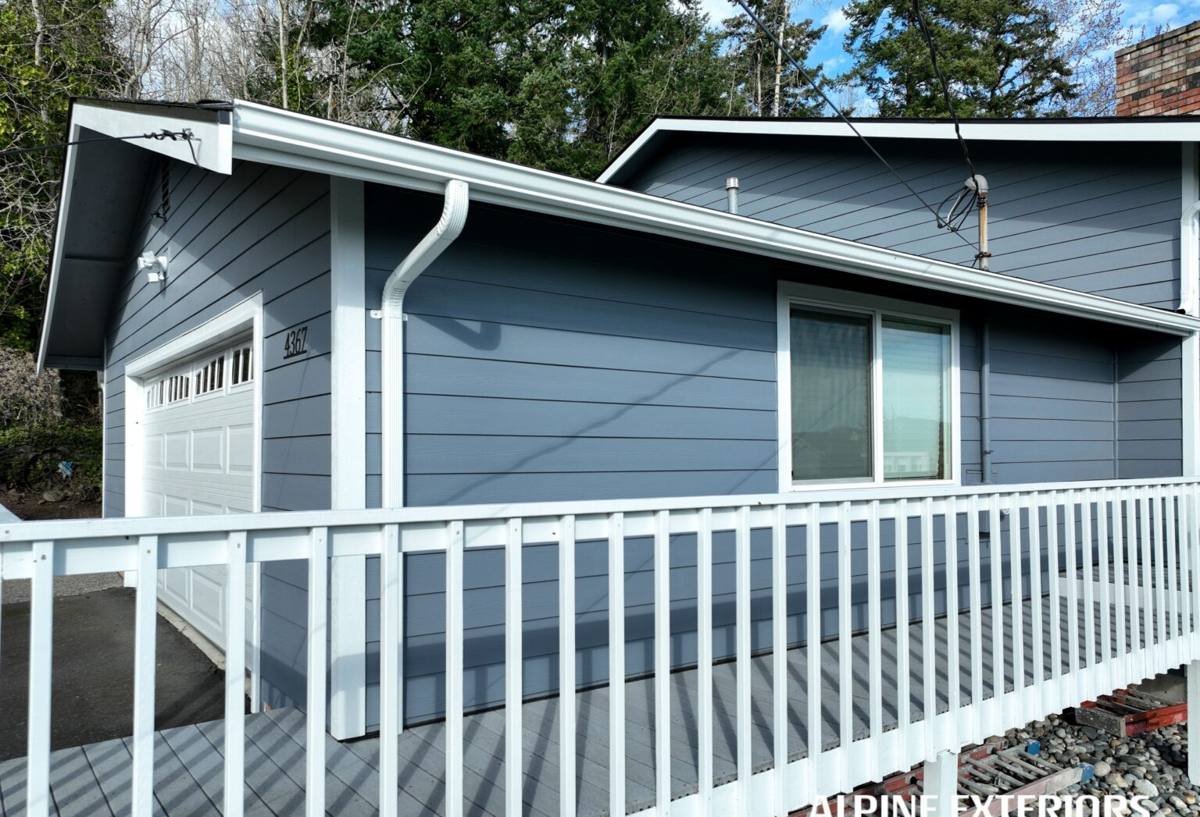
What a Correct Metal Roofing Job Needs to Do Here
A metal roof that's going to hold up in this specific environment isn't just about picking a good panel. It's about a handful of decisions that either account for the local conditions or don't.
Underlayment and Moisture Management
We use a synthetic or self-adhered underlayment rated for the wind-driven rain this area sees, with extra attention to laps, valleys, and any place water can pool or get pushed backward under panels. Ice and water shield-style membrane at eaves, valleys, and penetrations is treated as standard, not an upgrade, given how much of the year this roof will spend wet.
Fastener and Flashing Choices
Fasteners and flashing need to match the panel's coating chemistry — mixing incompatible metals (bare steel screws against aluminum panels, for example) sets up galvanic corrosion that's made worse by salt air. We spec corrosion-resistant fasteners with sealing washers rated for coastal exposure, and we flash penetrations, valleys, and wall transitions with materials built for the same conditions rather than whatever's fastest to install.
Panel Coating
The paint or coating system on a metal roof is what actually stands between the steel or aluminum substrate and the salt air. Lower-grade coatings chalk, fade, and lose their protective ability faster in a marine environment. We steer homeowners toward coatings built for long-term coastal exposure rather than the cheapest finish available, because the coating is doing most of the work over the life of the roof.
Metal Roofing Options for Happy Valley Homes
Not every metal roofing system is a good fit for this climate. Here's how the common options compare for a home in this kind of exposure.
| System | How It Handles Salt Air & Rain | Maintenance | Best Fit |
|---|---|---|---|
| Standing seam (concealed fastener) | Best — no exposed fastener heads for salt to attack, raised seams shed wind-driven rain well | Low | Full re-roofs, homes with direct coastal exposure |
| Exposed-fastener metal panel | Good if fasteners are corrosion-rated and re-torqued over time; more failure points than standing seam | Moderate — fastener washers age and need periodic checking | Budget-conscious full re-roofs, outbuildings, shops |
| Metal shingles / shakes | Good; interlocking profile sheds water well, but more seams than standing seam | Low to moderate | Homes wanting a traditional look with metal's durability |
For most primary homes in this neighborhood, we lean toward standing seam because it minimizes the number of exposed fastener points — which is exactly where salt-air corrosion and wind-driven rain cause the most trouble over time. Exposed-fastener panel is a legitimate option too, especially on shops and secondary structures, as long as the fastener spec and maintenance plan account for the environment.
Our Installation Process
- On-site evaluation — we look at roof pitch, shading and tree cover (moss risk), wind exposure, existing decking condition, and drainage paths before recommending a system.
- Tear-off and deck inspection — old roofing comes off and we check the decking for rot or soft spots, which is common on older Happy Valley homes that have carried moss and moisture for years.
- Underlayment and moisture barrier — self-adhered membrane at eaves, valleys, and penetrations; synthetic underlayment across the field, sized for this climate's rain load.
- Panel or shingle installation — panels run and fastened to manufacturer spec, with corrosion-rated fasteners and correct spacing for wind uplift resistance.
- Flashing and detail work — valleys, chimneys, vents, and wall transitions get flashed individually rather than relying on sealant alone, since sealant is the first thing to fail in this climate.
- Final walkthrough — we go over drainage, any moss-prone areas to watch, and basic care so the homeowner knows what normal aging looks like versus something worth a call.
Maintenance in a Moss-Prone, Salt-Air Climate
Metal roofing needs far less upkeep than composition shingles, but "low maintenance" isn't "no maintenance" in this environment. A short annual routine keeps a correctly installed metal roof performing the way it should for decades.
- Clear gutters and valleys of needles, leaves, and moss debris before the fall rains set in
- Rinse shaded, moss-prone sections in late summer before moss has a chance to establish for the wet season
- Walk the roofline visually (or have us do it) for any lifted flashing, loose fasteners, or coating wear at edges and penetrations
- Check that downspouts are directing water away from the foundation and not backing up against fascia
- Avoid pressure washing the panels directly — it can drive water under laps and damage coatings; a soft rinse and brush is enough for moss
Common Mistakes We See on Older Metal Roof Jobs
A lot of the metal roof problems we get called out to inspect trace back to installation shortcuts rather than the material itself.
Sealant Used in Place of Flashing
Caulk and sealant break down under UV and salt air faster than they should, especially when they're doing the job that a properly formed flashing piece should be doing. We treat sealant as a backup, not the primary water barrier.
Mismatched Fasteners
Steel screws on aluminum panels, or the wrong washer material, sets up corrosion that shows up as rust bleed and eventually a loose fastener that lets water in. It's a cheap mistake to avoid and an expensive one to fix later.
Skipping Ice-and-Water Membrane at Valleys
Valleys concentrate water flow more than any other part of a roof. Skipping enhanced membrane there to save cost is one of the fastest ways to get a leak in a driving-rain climate like this one.
Cost Factors for a Happy Valley Metal Roof
Metal roofing costs more upfront than asphalt shingles, and the final number depends on more than just square footage. The main variables we walk homeowners through are roof complexity, panel system, and current roof condition.
- Roof pitch and complexity — more valleys, dormers, and penetrations mean more flashing detail and labor
- Panel system — standing seam runs higher than exposed-fastener panel due to material and labor, but with fewer long-term maintenance costs
- Tear-off and deck repair — moss and moisture-related deck damage found during tear-off adds cost but is far cheaper to fix now than after new roofing is installed over it
- Coating grade — a coating built for coastal exposure costs more than a standard finish but holds its color and corrosion resistance much longer here
We give straightforward, itemized numbers rather than a single lump figure, so homeowners can see exactly what they're paying for and where there's room to adjust scope if budget is a factor.
Why Hire a Crew That Already Works Happy Valley
A metal roof installed by a crew unfamiliar with this specific stretch of Whatcom County coastline is still just a metal roof on paper — the difference shows up in the details that don't make it into a spec sheet. Knowing which roof faces in this neighborhood hold moss longest, how far wind-driven rain typically pushes under an eave, and which fastener and flashing choices actually hold up against the salt air here comes from doing this work locally, not from a manufacturer's install guide alone. That local knowledge is what keeps a metal roof performing the way it's supposed to for its full service life instead of needing early repairs.
If you're considering a metal roof for a home in Happy Valley, we're happy to take a look and walk you through what your specific roof needs — no pressure, no obligation. Fill out the form below and we'll set up a free estimate.