 Fairhaven Siding
 Why South Hill Roofs Take a Different Kind of Beating
South Hill sits close enough to Bellingham Bay that salt-laden air is a daily fact of life, not an occasional nuisance. Add Whatcom County's long wet season, driving rain that comes in sideways off the water, and tree cover thick enough to keep roofs shaded and damp for months at a time, and you've got a climate that's genuinely hard on a roof. Asphalt shingles shed granules faster here. Wood shakes hold moisture. And any roofing material with exposed fasteners or marginal flashing detail work eventually finds the weak spot.
Metal roofing, done right, handles this combination better than almost anything else on the market — but "done right" is doing a lot of work in that sentence. A metal roof installed with the wrong fastening pattern, the wrong underlayment, or coatings not rated for coastal exposure will corrode, leak, or loosen years before it should. This page is about what a correct metal roof installation looks like specifically for a South Hill home, and why the details matter more here than they would somewhere fifty miles inland.
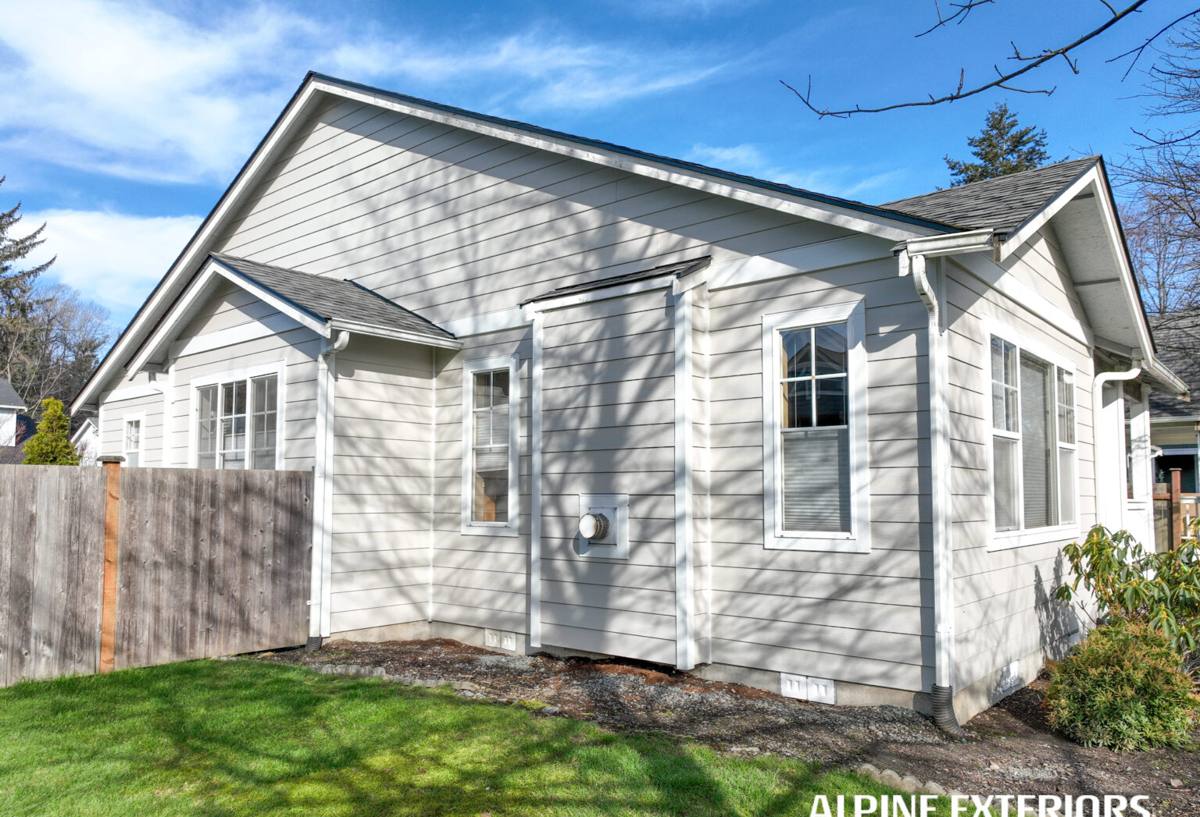
What Fairhaven's Climate Actually Does to a Roof
Salt Air and Corrosion
Airborne salt accelerates corrosion on any metal it contacts, especially at cut edges, fastener heads, and dissimilar-metal contact points. This doesn't mean metal roofing is a bad choice near the water — it means the coating system, fastener metallurgy, and panel finish need to be matched to a marine-influenced environment rather than a generic inland spec sheet.
Driving Rain
Wind-driven rain doesn't just fall straight down — it pushes sideways under laps, around penetrations, and into any gap in flashing. A roof that would shed water fine in a calmer climate can leak here if the underlayment, lap spacing, and flashing details aren't built for wind-driven moisture specifically.
Moss and Prolonged Dampness
Whatcom County's shaded, wet stretches from fall through spring give moss and algae months to establish themselves. On porous roofing materials this means gradual surface degradation. On metal, the concern is different: moss holding moisture against the panel surface or in valleys can accelerate localized corrosion and staining if the roof wasn't designed with adequate slope and drainage in the first place.
What a Correct Metal Roof Needs to Include Here
A metal roofing job that's right for South Hill isn't just "install metal panels." It's a system, and every layer matters:
- Underlayment rated for high-moisture, long-exposure conditions — not the minimum-grade felt some jobs get away with in drier climates
- Corrosion-resistant fasteners matched to the panel metal, to avoid galvanic reaction at contact points
- Properly lapped and sealed flashing at every valley, penetration, chimney, and wall transition
- Ventilation detailing that lets the roof deck dry out between wet stretches instead of trapping moisture
- Panel and seam spacing that accounts for wind-driven rain, not just gravity drainage
- A finish/coating system suited to coastal air, not just a standard inland-grade coating
Skip any one of these and you don't get a cheaper version of the same roof — you get a roof that fails at a different point, usually sooner than expected.
Panel and Coating Options: What the Trade-Offs Actually Are
There's no single "best" metal roofing product for every South Hill home — it depends on the roof's exposure, slope, and how long the owner plans to be in the house. Here's an honest look at the main factors we weigh:
| Factor | What It Affects | Coastal Consideration |
|---|---|---|
| Panel gauge (thickness) | Dent resistance, longevity | Slightly heavier gauge holds up better to wind-driven debris near the water |
| Coating type | Fade resistance, corrosion protection | Marine-grade coatings resist salt-air breakdown longer than standard finishes |
| Fastener style | Long-term watertightness | Concealed-fastener systems reduce the number of exposed penetration points exposed to salt and rain |
| Seam type | Water shedding under wind | Standing seam sheds wind-driven rain better than exposed-fastener panel systems |
| Color/finish | Heat retention, appearance | Lighter finishes show less chalking over time in this climate's UV and moisture cycle |
We don't push one system on every roof. A smaller outbuilding or garage roof often does fine with a simpler exposed-fastener panel. A primary roof taking full weather exposure toward the water usually justifies the extra upfront cost of a standing-seam system with concealed fasteners. We'll walk through which makes sense for your specific roof rather than defaulting to whatever's easiest to sell.
How We Approach a South Hill Metal Roofing Job
1. On-Site Assessment
We look at slope, exposure direction, existing decking condition, ventilation, and any moss or moisture staining already present. A roof facing prevailing wind and rain off the bay gets different flashing and fastening attention than a more sheltered slope on the same house.
2. Deck and Structure Check
Metal roofing is only as good as what's underneath it. If the decking has soft spots, moisture damage, or inadequate ventilation from a prior roof's long, damp life, we address that before panels ever go on — otherwise you're sealing a problem inside the new roof instead of fixing it.
3. Underlayment and Flashing First
This is the layer that actually keeps water out if wind or ice ever gets under a seam. We take the time here that a rushed job skips — proper laps, sealed penetrations, and flashing that's formed to the actual roof geometry rather than a generic bent piece forced to fit.
4. Panel Installation
Fasteners matched to the panel metal, correct spacing for wind uplift resistance, and attention to expansion/contraction so panels aren't installed so tight they buckle with temperature swings.
5. Final Detail Work and Walkthrough
Ridge caps, trim, sealant at penetrations, and a walkthrough so you understand what was done and what maintenance, if any, it'll need going forward.
Where Rushed Metal Roofing Jobs Go Wrong
We get called out to look at metal roofs installed by crews that don't work this area regularly, and the failure points are consistent:
- Standard-grade fasteners corroding at the head within a few years in salt air
- Flashing that was caulked instead of properly formed and lapped — caulk fails, laps don't
- Panels fastened too rigidly, leading to oil-canning or seam stress from thermal movement
- Inadequate ventilation trapping moisture against the underside of the panels
- Moss buildup in valleys that was never designed with enough slope or drainage to shed it
None of these show up on install day. They show up two, three, five years later — which is exactly why the install details matter more than the panel brand printed on the invoice.
Maintenance: What South Hill Homeowners Should Actually Expect
A correctly installed metal roof in this climate is genuinely low-maintenance compared to shingles or wood — but "low" isn't "none." Plan on:
- An annual visual check of valleys and penetrations for debris or moss buildup, especially after the wet season
- Keeping overhanging branches trimmed back to reduce shade and debris that feed moss growth
- Gentle cleaning if moss or algae staining appears — pressure washing directly against seams and fasteners isn't recommended
- A periodic check of fastener and flashing condition if the roof is more than a decade old
Why Hiring a Crew That Already Works South Hill Matters
Roofing crews that don't regularly work this stretch of Whatcom County tend to spec and install the way they would anywhere else — because that's what they know. A crew that works South Hill roofs routinely already knows which slopes take the worst of the wind-driven rain, which yards hold shade long enough to grow moss fast, and which detailing choices actually hold up against salt air over years, not just on install day. That local pattern recognition is the difference between a roof that's still tight in fifteen years and one that starts showing corrosion or leaks in five.
Cost Factors to Understand Before You Get Quotes
| Factor | Why It Moves the Price |
|---|---|
| Panel/seam system chosen | Standing seam with concealed fasteners costs more upfront than exposed-fastener panel |
| Roof complexity | More valleys, penetrations, and transitions mean more flashing labor |
| Existing deck condition | Repair or replacement of damaged decking adds cost but prevents sealing in a problem |
| Coating/finish grade | Marine-grade coatings cost more but last longer in salt air |
| Tear-off vs. overlay | Full tear-off costs more but lets us properly inspect and address the deck and ventilation |
We won't quote a number without seeing the roof — anyone who does is guessing, and on a coastal roof, guessing is how corners get cut.
Getting a Straight Answer on Your Roof
If you're weighing metal roofing for a South Hill home, the honest starting point is an on-site look at your specific roof — its exposure, slope, current condition, and what it actually needs versus what a generic quote might assume. We're happy to walk through options, trade-offs, and a realistic cost range with no pressure to sign anything. Use the form below to request a free estimate.