 Fairhaven Siding
 Building New in Sudden Valley Means Getting the Windows Right the First Time
When you're building new, you get one shot at the window install before siding, trim, and interior finish close everything in behind it. There's no tearing out drywall to fix a flashing mistake two years later without real cost and disruption. That's the main thing that separates new-construction window work from a replacement job, and it's why the sequencing and detailing matter as much as the windows themselves.
Sudden Valley sits back from the water among trees around Lake Whatcom, which changes the exposure picture compared to a waterfront lot in Fairhaven proper. You get less direct salt air here, but the tree canopy holds moisture longer on north and shaded elevations, and that combination of shade and dampness is exactly what feeds moss on trim, sills, and anything with a horizontal surface. Add in the driving rain that comes through Whatcom County in fall and winter storms, and a window that isn't flashed correctly will find a way to let water in — slowly, and usually in a spot you can't see until there's already damage.
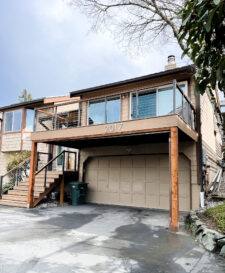
New Construction vs. Retrofit: A Different Job Entirely
New-construction windows almost always use a nailing fin, installed before the weather-resistive barrier (house wrap) and siding go on, rather than the flush-fin or block-frame units used in a retrofit into an existing wall. That means the window has to go in at the right point in the framing sequence — after the rough openings are framed and before the wrap is run, so the flashing can be woven into the wrap in the correct shingle-lap order.
It also means timing matters in a way it doesn't for a replacement job. Rough openings get framed to a specific size based on the window units that were ordered, so the window selection and order have to happen early — often before framing is even complete — to avoid a mismatch that costs the builder time. We'd rather have that conversation with you and your general contractor in week one than find out at delivery that the openings don't match what was ordered.
Why Early Coordination Saves Money
Custom sizes, upgraded glass packages, and certain frame colors can carry lead times of several weeks. On a new build in Sudden Valley, where site access and scheduling around a GC's other trades already adds complexity, getting window specs locked early keeps the whole build on schedule instead of waiting on a single missing unit.
What a Whatcom County New Build Actually Needs From Its Windows
Not every window sold at a big box store is built for this climate, and "code minimum" is a floor, not a target. For a new build in this area we look at:
- Dual-pane, argon-filled glass as the baseline — the sealed gas fill is what actually gives you the insulating value, and a failed seal (visible fogging between panes) means that value is gone even though the window still looks fine.
- Low-E coating tuned to the lot's sun exposure — a shaded, tree-covered lot doesn't need the same solar-heat-gain coefficient as a lot with long afternoon sun, and Sudden Valley has both within the same neighborhood depending on tree cover and orientation.
- Condensation resistance — with the humidity and temperature swings common here, a poorly rated window will sweat on the interior in winter, which shows up as mold risk on sills and trim long before it shows up as a comfort complaint.
- Tempered safety glass where code requires it — near stairs, doors, low sills, and wet areas, and for egress sizing in bedrooms — non-negotiable items that still get missed on rushed orders.
Frame Material Options for New Construction
There's no single "best" frame material — each comes with real trade-offs in maintenance, cost, and how it holds up to years of Whatcom County wet weather. Here's how the common options compare for a new build:
| Frame Material | Moisture/Rot Resistance | Maintenance | Typical Cost Tier | Best Fit |
|---|---|---|---|---|
| Vinyl | Very good — won't rot, doesn't need painting | Low — occasional cleaning | Entry to mid | Budget-conscious builds, rental or spec homes |
| Fiberglass | Excellent — dimensionally stable in wet/dry cycles | Low | Mid to upper | Long-term owners who want minimal upkeep |
| Wood-clad | Good on the exterior clad face; interior wood needs care | Moderate to high — sealant and finish checks | Upper | Homeowners who want a wood interior look and will keep up maintenance |
| Aluminum | Fair — prone to condensation without a thermal break | Low | Varies | Specific architectural applications, less common for residential in this climate |
We install across these categories depending on the build's budget and the owner's tolerance for upkeep. Where we push back is on any assembly that traps moisture against untreated wood without a real drainage path — that's a maintenance burden and a callback risk regardless of brand, and we'd rather tell you that up front than sell you a product we know will cost you more in five years.
Flashing and Weather-Barrier Details That Actually Prevent Leaks
This is the part of the job nobody sees once siding goes up, and it's also the part that determines whether the window performs for the next thirty years or starts leaking in five. The sequence we follow:
- Sill pan flashing installed first, with a back dam so any water that gets past the window has a path back out, not into the wall cavity.
- Window set, shimmed level and plumb, and fastened per the manufacturer's schedule — under-fastening or over-fastening both cause problems over time.
- Jamb flashing applied up the sides, followed by head flashing, each lapped over the layer below it — the same shingle-style order that keeps water moving down and out, never trapped behind a lap that runs the wrong way.
- Integration with the house wrap so the wrap laps over the head flashing and behind the jamb flashing, keeping the whole water path continuous from wrap to window.
- Sealant used only at the points the manufacturer specifies — sealing the wrong gap can trap moisture that was designed to drain out through a weep path.
Rushing this step to keep a framing schedule moving is the single most common cause of the "mystery leak" we get called out to diagnose in homes that are only a few years old. We document this stage with photos before it's covered, so there's a record of what's actually behind the siding if a question ever comes up.
Our New-Construction Window Process
For a Sudden Valley build, the process generally runs like this:
- Plan review — we look at the window schedule with you and your builder before rough openings are framed, so sizes and specs match what's actually being ordered.
- Order and lead-time planning — standard sizes move faster; anything custom gets flagged early so it doesn't hold up the framing crew.
- Rough opening verification — we check openings against the confirmed unit sizes before install day, catching framing mismatches while they're still cheap to fix.
- Install with full flashing sequence — sill pan, window set, jamb and head flashing, wrap integration, documented with photos.
- Pre-siding sign-off — a check with the builder before siding closes in the work, since this is the last point anyone can visually confirm the flashing without opening the wall.
- Final walkthrough — operation, hardware, weatherstripping, and trim checked with you once the home is finished.
Why a Crew That Already Works Sudden Valley Matters
Sudden Valley is a planned community, and many lots fall under community architectural guidelines that touch exterior materials, colors, or trim details — worth confirming with your HOA before ordering, since a wrong color or frame finish can mean a return trip. A crew that's worked in the neighborhood before also has a feel for how tree cover and lot orientation change sun and moisture exposure lot to lot, which affects the glass and coating recommendation, and knows how Whatcom County's permitting and inspection process typically runs for a new build in the area — one less thing for you or your builder to manage.
Checklist: What to Confirm Before Your Windows Are Closed In
Whether we're doing the install or you're general-contracting the build yourself, this is worth confirming before siding goes up:
- Rough opening sizes match the confirmed window order, not just the original plan set
- Sill pan flashing is in place with a back dam, not just sealant alone
- Flashing laps follow shingle order — wrap over head flashing, jamb flashing over the sill pan
- Fastening follows the manufacturer's schedule, not a generic nailing pattern
- Low-E glass package matches the lot's actual sun exposure, not a one-size default
- Tempered glass is placed everywhere code requires it near stairs, doors, and low sills
- Photos exist of the flashing work before it's covered by siding
After Move-In: Living With Sudden Valley's Moss Season
Once the home is finished, the tree cover that makes the neighborhood shaded and quiet also means moss and organic buildup on sills, trim, and anywhere water sits. A quick annual check — clearing debris off sills, confirming sealant lines haven't cracked, and keeping nearby vegetation trimmed back from the wall — goes a long way toward protecting the install for the long run, especially through the wetter months when Whatcom County gets its heaviest driving rain.
If you're planning a new build in Sudden Valley and want window specs, sizing, or flashing details reviewed before your rough openings are framed, we're happy to take a look. Reach out for a free, no-pressure estimate using the form below.