 Fairhaven Siding
 New Roofs Built for Columbia's Coastal Conditions
Columbia sits close enough to Bellingham Bay that salt-laden air is part of daily life, and that air is harder on a roof than most homeowners realize. Add in Whatcom County's long, wet winters and the moss season that follows, and a roof here is working under conditions that inland Washington roofs never see. A new roof installation in this neighborhood isn't just about swapping old shingles for new ones — it's about choosing materials and installation details that hold up to salt corrosion, wind-driven rain, and sustained moisture.
We've installed and repaired roofs throughout Fairhaven and the surrounding Columbia area long enough to know which failure patterns show up here again and again. This page covers what a correct new roof install looks like for a Columbia home, what to expect from our process, and what to check for when you're vetting a roofing contractor.
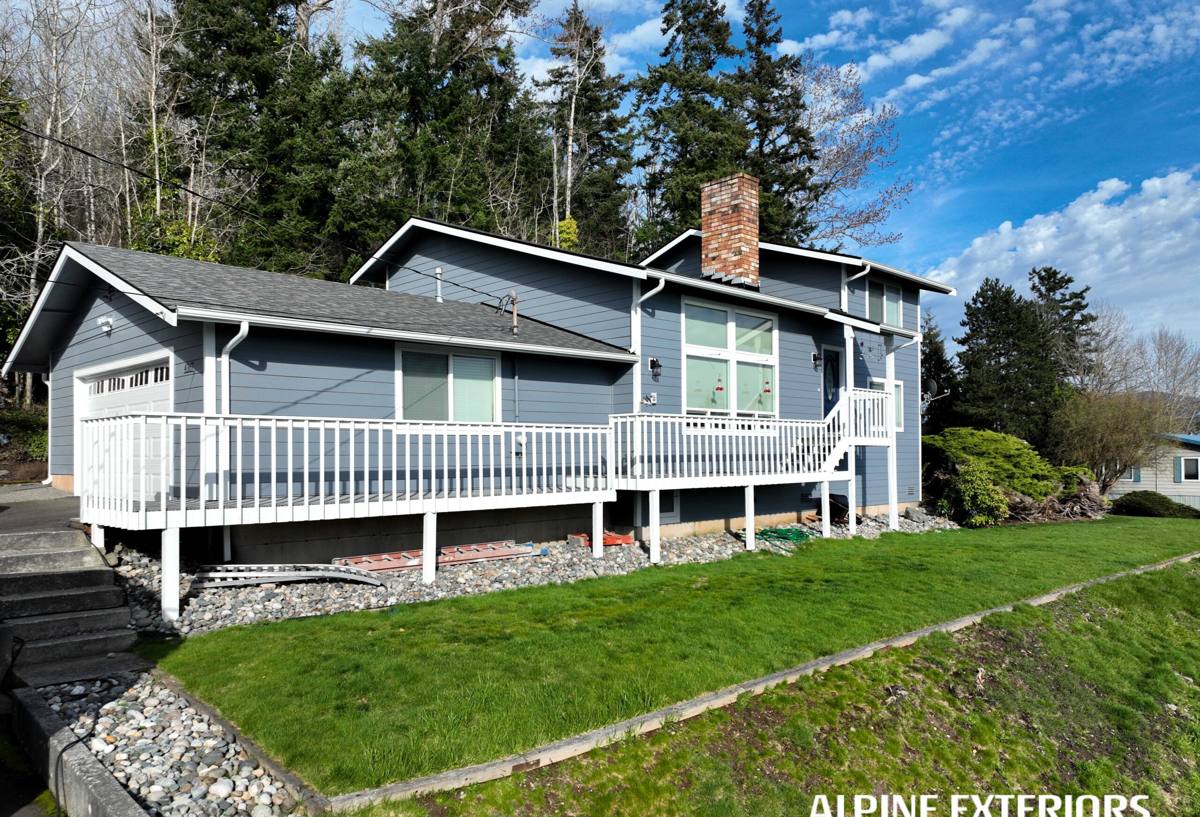
Why Columbia's Climate Is Hard on Roofs
Salt Air and Metal Corrosion
Homes within a few miles of the water take on airborne salt that accelerates corrosion of exposed metal — flashing, fasteners, vents, and gutter hardware. Standard fasteners and untreated flashing can start showing rust and pitting years before they would inland. Roofing metal near Columbia needs to be corrosion-rated, not just standard-grade.
Driving Rain
Storms off the water often bring rain in sideways, not straight down. That means water can get pushed up under shingle tabs, around chimney flashing, and into valleys that a straight-down rain would never reach. Underlayment coverage and flashing detail matter more here than in drier, calmer parts of the state.
Moss Season
Whatcom County's wet season runs long, and shaded, north-facing roof slopes in particular stay damp for months at a stretch. That's exactly the environment moss needs to take hold. Moss isn't just cosmetic — it holds moisture against the roofing material, lifts shingle edges as it grows, and can work its way under flashing over time.
Signs a Roof Needs Replacing, Not Just Repairing
Not every roof problem calls for full replacement, but there's a point where patching stops making financial sense. Signs worth a professional look include:
- Granule loss showing bare, shiny patches on asphalt shingles
- Shingles that are cupping, curling, or cracking at the edges
- Moss growth that keeps returning after cleaning, especially on shaded slopes
- Soft or spongy decking felt underfoot in the attic or during a walk-on inspection
- Rust staining or streaking below metal flashing or vents
- Daylight visible through the roof deck from inside the attic
- A roof approaching or past 20-25 years old (for standard asphalt shingle)
- Recurring leaks around the same chimney, skylight, or valley despite past repairs
If a roof is showing two or more of these at once, repair usually becomes a short-term fix rather than a real solution.
What a Correct New Roof Installation Involves
A new roof is only as good as the layers homeowners never see once it's finished. For a Columbia home, we pay particular attention to:
Tear-Off and Deck Inspection
We remove the old roofing down to bare decking rather than layering over it. That lets us inspect the plywood or OSB underneath for soft spots, rot, or water staining — problems that are common on older Whatcom County roofs where moisture has been working its way in slowly for years. Any damaged decking gets replaced before anything new goes down.
Ice and Water Shield at Vulnerable Points
Valleys, eaves, and areas around chimneys and skylights get a self-adhering waterproof membrane underneath the primary underlayment. This is the layer that stops wind-driven rain from finding its way in even if it gets past the surface roofing — critical given how often rain here comes in at an angle rather than straight down.
Full Synthetic Underlayment
Over the rest of the deck, we use synthetic underlayment rather than older felt paper. It holds up better to the extended wet exposure that's normal during a Pacific Northwest install, and it resists tearing during the install process itself.
Corrosion-Rated Flashing and Fasteners
Given the salt air in Columbia, we specify flashing and fastener materials rated for coastal exposure rather than the minimum-grade hardware that's fine further inland. This is one of the details that separates a roof that looks right for a few years from one that actually holds up for its full service life.
Ventilation
Proper intake and exhaust ventilation keeps the attic space at the right temperature and humidity, which reduces condensation on the underside of the deck and helps prevent the kind of trapped moisture that feeds rot and moss growth from below. We check existing ventilation on every replacement and correct it where it's inadequate rather than just reinstalling roofing over a bad setup.
Material Installation and Detail Work
The final layer — shingles, metal panels, or another material — goes on according to the manufacturer's specifications for nail pattern, exposure, and overlap. Rushed installs cut corners here, and it's usually invisible until the first hard storm finds the weak point.
Comparing Roofing Materials for a Columbia Home
There's no single "best" roofing material — the right choice depends on budget, roof slope, how much shade the roof gets, and how long you plan to own the home. Here's how the common options stack up for this specific climate:
| Material | Moss Resistance | Salt Air Durability | Typical Lifespan | Relative Cost |
|---|---|---|---|---|
| Asphalt composition shingle | Moderate — needs periodic cleaning on shaded slopes | Good with corrosion-rated flashing/fasteners | 20-30 years | Lower |
| Standing seam metal | Very good — sheds moisture quickly, little for moss to grip | Requires marine-grade coating/fasteners near the water | 40-50+ years | Higher |
| Synthetic/composite shingle | Good — resists moisture absorption better than wood | Good, minimal exposed metal | 30-50 years | Mid-to-higher |
| Cedar shake | Poor without regular treatment — holds moisture | Fair; requires ongoing maintenance | 20-30 years with upkeep | Mid-to-higher |
For most Columbia homes, we steer people toward asphalt composition shingle or standing seam metal. Cedar shake can look great, but its moisture-holding tendency is a poor match for a neighborhood that already fights a long moss season — it's a maintenance commitment more than most owners want to sign up for.
Cost Factors Homeowners Should Know
Every roof is priced individually after an inspection, but the main variables that move the number are consistent:
| Factor | Why It Matters |
|---|---|
| Roof size and pitch | Steeper roofs take longer to work safely and use more material per square foot of coverage |
| Number of layers to remove | Tear-off of multiple old layers adds labor and disposal cost |
| Deck condition | Rotted or soft decking sections need replacement before new roofing goes on |
| Material choice | Asphalt, metal, and composite carry different material and labor costs |
| Roof complexity | Valleys, dormers, chimneys, and skylights each add flashing detail and time |
| Ventilation upgrades | Adding or correcting intake/exhaust vents is worth doing during a full replacement |
Our Process for a Columbia Roof Replacement
- On-site inspection and estimate: We walk the roof (or use a lift for steep pitches), check the decking where accessible, and give you a written estimate with no pressure to decide on the spot.
- Material selection: We talk through the trade-offs above based on your budget, how shaded your roof is, and how long you plan to stay in the home.
- Scheduling around weather: We plan installs around Whatcom County's rain patterns as much as possible and use dry-in materials that protect the deck if weather moves in mid-project.
- Tear-off and deck repair: Old roofing comes off, decking gets inspected and repaired as needed.
- Underlayment and flashing: Ice and water shield at vulnerable points, synthetic underlayment across the field, corrosion-rated flashing throughout.
- Material installation: Shingles or panels go on to manufacturer spec, with attention to exposure and fastening pattern.
- Ventilation check: Intake and exhaust ventilation confirmed or corrected.
- Cleanup and walkthrough: Site cleaned of debris and nails, magnetic sweep of the yard, final walkthrough so you can see the finished work.
Why It Matters to Hire a Crew That Already Works Columbia
A roofing crew that works Fairhaven and Columbia regularly already knows which slopes in this area hold onto moss the longest, how far the salt air's effect reaches from the water, and which flashing and fastener grades actually hold up here versus what's sold as "standard" at a big-box supplier. That local pattern recognition shows up in fewer callbacks and a roof that's specified correctly the first time, rather than one built to a generic spec sheet that assumes drier, calmer conditions.
Local logistics matter too — knowing which streets and driveways in the area limit truck or dumpster placement, and being able to respond quickly if a storm exposes a problem partway through a project, both come from having done the work here before.
Choosing a Roofing Contractor: A Homeowner's Checklist
- Are they licensed and insured in Washington State, and will they provide proof without hesitation?
- Do they inspect the deck, not just the surface roofing, before quoting?
- Does the estimate specify underlayment type, flashing material, and ventilation — not just "new roof, shingle color"?
- Do they mention corrosion-rated hardware for homes near the water, unprompted?
- Is the warranty in writing, covering both material and workmanship separately?
- Do they have local references or examples of work in Fairhaven or Whatcom County?
- Will they put a start date and estimated completion window in writing?
Get a Free, No-Pressure Estimate
If your Columbia home's roof is showing its age or you just want an honest read on how many years it has left, we're glad to take a look. The estimate is free, there's no pressure to commit, and you'll get a clear explanation of what we find and what your real options are. Fill out the form below to get started.