 Fairhaven Siding
 Roofing on Lummi Island Is Its Own Job
A new roof on Lummi Island isn't the same project as a new roof a few miles inland. The island sits out in the marine air of Whatcom County, which means every roof up there deals with a heavier dose of salt, wind-driven rain, and shade-grown moss than a typical mainland home in Fairhaven or Bellingham. None of that is a reason to over-engineer a simple job — but it is a reason to get the details right the first time, because a callback on the island costs everyone more time than a callback in town.
This page covers what a correct new roof installation looks like specifically for Lummi Island homes: what the climate actually does to a roof out there, what a properly done tear-off and install involves, the material trade-offs worth understanding, and why local logistics matter as much as workmanship on a job like this.
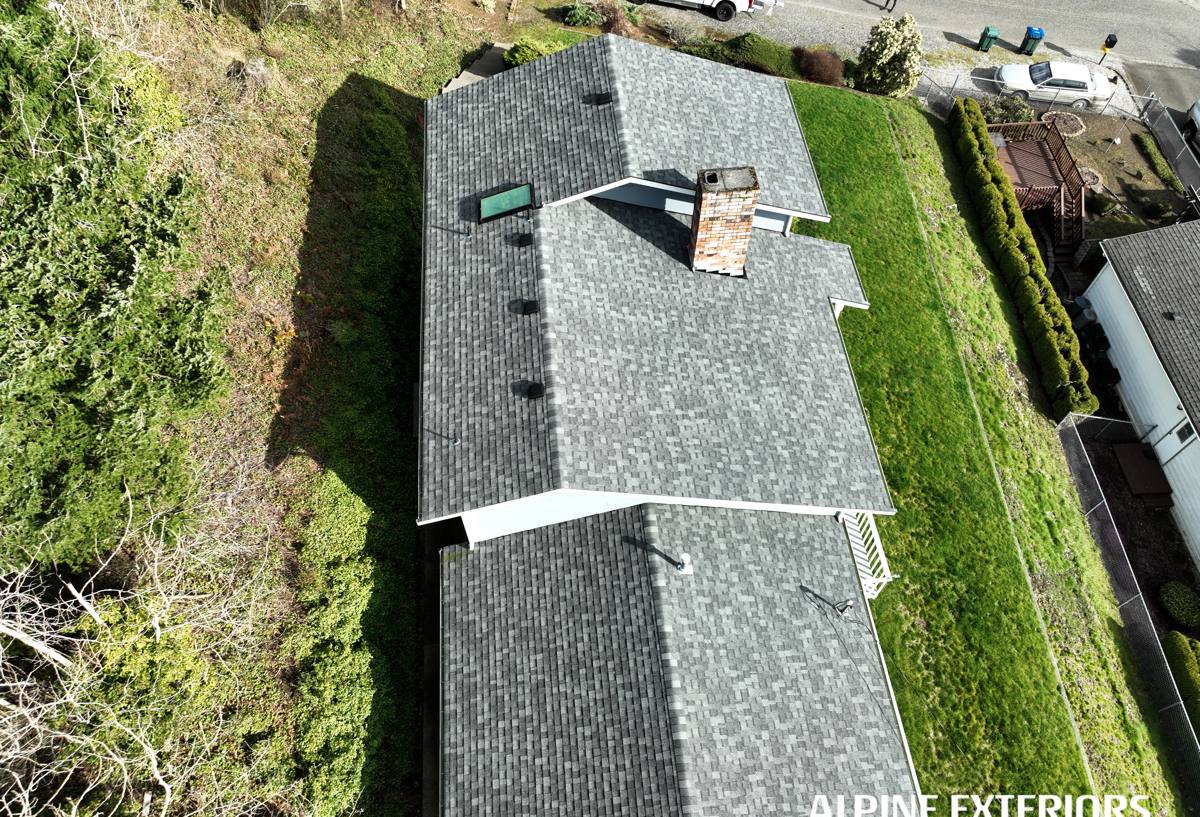
What Salt Air and Driving Rain Do to an Island Roof
Salt Exposure and Metal Components
Homes near the water pick up airborne salt that settles on every exposed surface, including the roof. Over years, that salt accelerates corrosion on unprotected fasteners, cheap flashing, and lower-grade metal trim. It's rarely dramatic — you don't see a roof fail overnight from salt — but it shows up early as rust streaking at flashing edges, pitted fastener heads, and metal trim that looks tired well before the shingles around it do. The fix isn't complicated: use corrosion-resistant fasteners and flashing rated for coastal exposure, and don't cut corners on the metal details just because they're a small part of the material list.
Wind-Driven Rain and Wet Fetch
Lummi Island sits exposed to weather coming off the water, and storms here tend to drive rain sideways rather than straight down. That matters at every horizontal seam, valley, and penetration on the roof — anywhere water can be pushed uphill by wind instead of just running off. A roof built for a sheltered inland lot with standard lap coverage can leak on the island in conditions that a mainland roof would shrug off. Correct underlayment coverage and properly lapped, sealed flashing aren't optional upgrades out here; they're the baseline.
Shade, Moisture, and Moss
Much of Whatcom County has a long moss season, and Lummi Island's tree cover and damp air make it worse in shaded spots and on north-facing slopes. Moss holds moisture against the roofing material, lifts shingle edges, and — left unaddressed for years — works its way under the surface and into the deck below. A new roof doesn't make a home immune to moss, but the right material choice, proper ventilation, and a few maintenance habits go a long way toward slowing it down.
Signs a Lummi Island Home Needs a New Roof, Not Another Patch
Not every roof problem calls for full replacement. But when several of these show up together — especially on an older roof — patching stops being cost-effective and a new installation becomes the honest recommendation.
- Shingles curling, cupping, or losing granules across large sections rather than one isolated spot
- Heavy moss or algae staining that keeps returning after cleaning
- Soft, spongy spots underfoot on the roof deck, or visible sagging between rafters
- Water stains, discoloration, or musty smells on interior ceilings, especially near valleys or chimneys
- Roof is original to the home and at or past 20–25 years, particularly with standard asphalt shingles
- Multiple existing layers of roofing already in place, limiting further repair options
- Rusted, lifting, or missing flashing around valleys, chimneys, and skylights
If your roof shows one or two of these in isolation, a repair is often the right call. If several are present at once, a new roof installation typically costs less over time than repeated patch work.
What a Correct New Roof Installation Actually Involves
Tear-Off and Deck Inspection
A proper job starts with a full tear-off down to the deck, not a layer-over-layer install. That's the only way to actually see the plywood or plank sheathing underneath, catch rot or soft spots caused by long-term moisture, and replace damaged decking before new material goes down. Skipping this step to save time is exactly how new roofs end up with problems that trace back to an old, hidden issue nobody checked.
Underlayment and Water-Entry Points
Given how much wind-driven rain the island sees, underlayment coverage matters more here than in a sheltered inland yard. That means synthetic or felt underlayment across the full roof, with self-adhered ice-and-water barrier at the eaves, valleys, and around every penetration — chimneys, vents, skylights — where water pressure has the best chance of finding a way in.
Flashing Details
Flashing is where most roof leaks actually start, not in the field of the shingles. Valleys, chimney step flashing, skylight curbs, and wall-to-roof transitions all need to be done with corrosion-resistant metal, properly lapped shingle-style so water is always shed downhill, and sealed at the right points — not sealant used as a substitute for correct lapping.
Ventilation
Balanced intake and exhaust ventilation keeps the attic dry and temperature-regulated, which does two things: it protects the new roof deck from the underside, and it helps keep the shaded, damp conditions that feed moss from getting worse inside the attic space itself. A new roof without adequate ventilation is set up to age faster than it should, regardless of material quality.
Roofing Material Options for Island Conditions
There's no single "best" material for every home — it depends on budget, roof style, and how much long-term maintenance an owner wants to take on. Here's an honest comparison for a marine, moss-prone environment like Lummi Island:
| Material | Salt Air / Moisture Behavior | Moss Resistance | Typical Lifespan | Maintenance Needs |
|---|---|---|---|---|
| Architectural asphalt shingle | Good with proper flashing and fasteners | Moderate — benefits from algae-resistant granules | 25–30 years | Periodic moss/debris removal |
| Standing seam metal | Very good when using coastal-rated fasteners and coatings | Strong — sheds moss more easily than textured surfaces | 40–50+ years | Low, occasional inspection |
| Cedar shake | Sensitive — needs consistent maintenance to manage moisture | Weak without regular treatment and cleaning | 20–30 years with upkeep | High — regular treatment and moss control required |
We're upfront with homeowners about cedar shake specifically: it can look great, but in a damp, shaded, moss-heavy climate like this one it demands a level of ongoing maintenance — regular cleaning, treatment, and vigilant moisture management — that most owners underestimate going in. That's not a knock on the material itself, it's a maintenance-burden and moisture-behavior trade-off we think homeowners deserve to hear plainly before they commit to it. For most Lummi Island homes, a quality architectural asphalt shingle or a standing seam metal roof delivers better performance for the climate with a lower long-term maintenance load.
Cost Factors for a Lummi Island Roof Project
Every roof is priced on its own specifics, but the factors that move the number on an island project are fairly consistent:
- Roof size and pitch — more square footage and steeper pitches mean more labor and material.
- Number of tear-off layers — removing multiple existing layers adds time and disposal cost.
- Roof complexity — valleys, dormers, skylights, and multiple penetrations each add flashing work.
- Material choice — asphalt, metal, and cedar carry meaningfully different material and labor costs.
- Deck condition — any rotted or damaged sheathing found at tear-off adds replacement cost.
- Access and logistics — ferry scheduling and material staging on an island job take more planning than a mainland driveway delivery.
We walk through each of these on-site during the estimate so the number you get reflects your actual roof, not a generic average.
Why Ferry Logistics Shape How We Run the Job
Lummi Island is only reached by a short ferry crossing, and that changes how a roofing project needs to be planned compared to a job in Fairhaven proper. Material deliveries, dumpster drop-off and pickup, and crew scheduling all have to work around ferry timing rather than being handled with a same-day run to the yard. A crew that hasn't planned for that will lose days to logistics that a crew already used to working the island accounts for up front — staging enough material on the first trip, coordinating tear-off and disposal timing, and not leaving a roof half-open waiting on a supply run that has to wait for the next crossing.
That planning matters for a straightforward reason: an open roof deck is vulnerable to the same driving rain that makes correct flashing so important in the first place. Good scheduling around ferry access isn't a nice-to-have on this job — it's part of doing the roof correctly.
Why It's Worth Hiring a Crew That Already Works Lummi Island
General roofing skill gets you most of the way to a good roof anywhere. What's different for an island job is everything around the actual installation — knowing to build in ferry time rather than promise a mainland-speed schedule, defaulting to coastal-rated fasteners and flashing without being asked, and recognizing moss and shade patterns specific to the island's tree cover instead of applying a one-size-fits-all approach. A crew that's already done this work on Lummi Island isn't guessing at any of that — it's just how they plan the job from the first estimate.
It also shows up in communication. Island projects run more smoothly when the homeowner isn't the one managing ferry timing, material staging, or disposal logistics — that coordination should be the contractor's job, handled quietly in the background.
Keeping a New Roof Sound After Install
A correctly installed roof still benefits from basic upkeep in this climate, especially where moss and salt air are concerned:
- Clear debris — needles, leaves, branches — from valleys and gutters at least twice a year
- Have moss growth removed gently before it spreads, rather than waiting for heavy buildup
- Keep gutters and downspouts flowing freely so water isn't sitting against roof edges
- Have flashing and fastener points visually checked every couple of years, particularly after major storms
None of this is intensive, but skipping it is how a well-installed roof loses years off its service life for avoidable reasons.
If you're weighing repair versus replacement on a Lummi Island home, or you're ready to plan a new roof install around the island's climate and logistics, we're glad to take a look and put together a straightforward, no-pressure estimate — just fill out the form below.