 Fairhaven Siding
 Why Decks in Puget Take a Beating
Puget sits close enough to the water that salt-laden air is part of daily life, and that air doesn't just make things smell like the sea — it corrodes metal. Deck fasteners, joist hangers, and hidden hardware that would last decades inland can start rusting and weakening in half that time here. Add Whatcom County's long wet season, where driving rain comes in sideways off the water instead of falling straight down, and you get moisture pushed into places a deck was never designed to handle: end grain, ledger connections, and the underside of boards that never fully dry out.
Then there's moss. Fairhaven's tree cover and marine humidity mean shaded and north-facing decks stay damp for weeks at a stretch, especially from October through April. Moss and algae don't just look bad — they hold moisture against the wood surface and turn decking slick and dangerous underfoot. A deck built without this climate in mind will show it within a few seasons: soft spots, black staining, rust streaks bleeding through the boards, and a general look of exhaustion well before the structure is actually done.
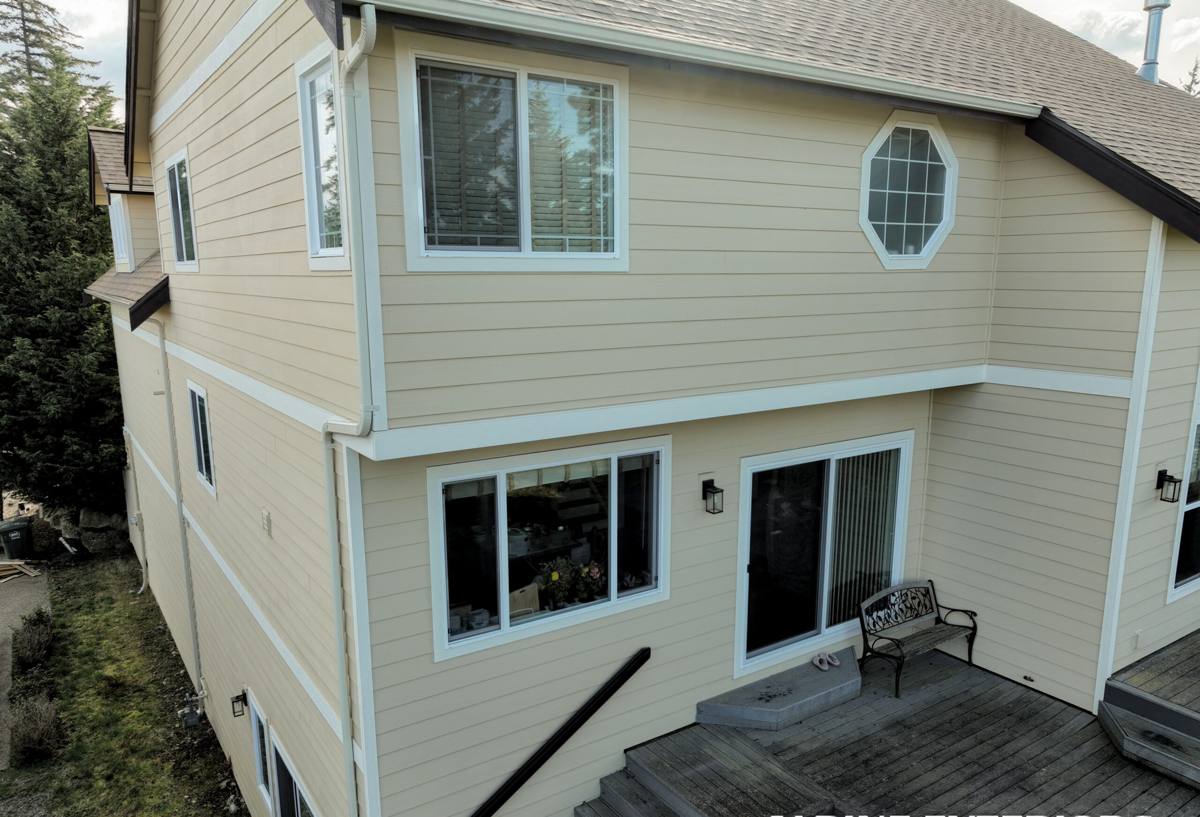
Repair or Replace? What We Actually Look For
Not every tired deck needs a full teardown. But there's a point where patching individual boards is throwing money at a structure that's failing underneath. Here's what we check before recommending replacement over repair:
- Soft, spongy, or spring-back decking when you walk across it — usually means the joists underneath are compromised, not just the surface boards
- Rust streaks running down from screw heads or bolts, which signal the fasteners themselves are corroding
- Visible gaps or rot at the ledger board where the deck attaches to the house — the single most common failure point in wet climates
- Posts or footings that have shifted, settled, or show cracking at ground level
- Persistent moss or dark staining that comes back within weeks of cleaning, indicating the wood is holding moisture rather than shedding it
- A deck older than 15-20 years built with standard lumber and no upgraded flashing details
If two or more of these apply, replacement is almost always the more honest recommendation — both for safety and for what you'll actually spend over the next decade.
What Goes Into a Proper Deck Replacement
Structural Framing
The framing is where a deck's real lifespan is decided, and it's the part homeowners never see once the decking goes down. We use pressure-treated lumber rated for ground contact where posts and beams meet the soil, and we size joists for the actual load the deck will carry, not the bare minimum. In a climate this wet, joist spacing and proper cross-bracing matter more than they would somewhere dry — sagging framing shows up faster here.
Ledger Board and Flashing
This is the detail that separates a deck that lasts from one that rots from the house outward. The ledger board bolts directly to your home's rim joist, and if it isn't flashed correctly — with a proper drip cap and membrane behind it — water works its way behind the board and into the house framing itself. Given how much driving rain this area gets, we flash every ledger connection as if the deck's entire lifespan depends on it, because it does.
Fasteners and Hardware
Given the salt air, we don't use standard galvanized hardware. Stainless steel or heavy-duty coated fasteners cost more up front but resist the corrosion that eats through cheaper hardware in a fraction of the time near the water. This is one of those places where cutting corners is invisible for the first year or two and expensive by year five.
Choosing the Right Decking Material for This Climate
There's no single "best" decking material — it depends on how much upkeep you want to do and how the deck sits relative to sun, shade, and moisture. Here's how the common options actually perform in Puget's conditions:
| Material | Moss/Algae Resistance | Maintenance | Typical Lifespan Here |
|---|---|---|---|
| Pressure-treated wood | Low — needs regular cleaning and sealing | Annual cleaning, re-stain every 2-3 years | 12-20 years |
| Cedar | Moderate — naturally rot-resistant but still needs care | Sealing every 1-2 years to hold color and resist moisture | 15-20 years |
| Composite decking | Higher — but can still grow moss in deep shade if not cleaned | Periodic washing, no staining or sealing | 20-30 years |
| PVC/capped polymer | Highest — non-porous surface sheds moisture and resists staining | Occasional washing only | 25-30+ years |
For decks in heavy shade or facing the water directly, we usually steer homeowners toward composite or capped polymer, simply because the maintenance burden of wood in those spots is a lot to keep up with. For sunnier, more sheltered decks, cedar or treated wood remains a solid, less expensive choice — we just make sure clients know what upkeep it actually requires before they commit, rather than after.
Cost Factors in a Puget Deck Replacement
Every deck is different, so we won't quote a number without seeing the site, but these are the factors that move a project up or down in price:
| Factor | How It Affects Cost |
|---|---|
| Decking material | Composite and PVC cost more upfront than wood but less over the deck's life |
| Deck size and shape | Multi-level decks and non-rectangular layouts add labor and material waste |
| Height off grade | Taller decks need more substantial railing, stairs, and structural bracing |
| Ledger and flashing condition | Rotten rim joists behind the ledger add repair scope before the new deck can go up |
| Footing access | Difficult site access or poor drainage can add excavation and footing work |
| Railing style | Cable, glass, or custom railing systems cost more than standard wood balusters |
Permits and Whatcom County Requirements
Most deck replacements in and around Fairhaven require a permit, especially if the deck is attached to the house, elevated more than a couple feet off grade, or being rebuilt to a different footprint than the original. Permits verify footing depth, railing height, guardrail spacing, and ledger attachment — all things that matter more in a wet climate where a poorly built deck fails faster and more visibly. We handle the permit process as part of the job so you're not stuck deciphering county code language on your own, and so the final structure is something that'll pass inspection without a second trip.
Our Process, Start to Finish
- On-site assessment — we look at the existing deck, the ledger connection, framing condition, and drainage around the footings before recommending anything
- Written estimate — material options, scope, and a clear price range with no vague allowances buried in the fine print
- Permit and material ordering — we pull permits where required and order materials sized to your actual deck, not a generic template
- Demolition and disposal — old decking, framing, and hardware removed and hauled off
- Framing and flashing — new structural work, with ledger flashing done to hold up against driving rain, not just pass a quick glance
- Decking, railing, and finish work — installed to manufacturer spec, with fastener choice matched to the salt-air exposure of the site
- Final walkthrough — we go over the finished deck with you before calling the job done
Keeping Moss and Algae From Taking Over
A new deck built right will resist moss far better than an old one, but no decking material is completely immune in a climate this wet. A few habits go a long way: sweep off standing debris and fallen leaves regularly so moisture doesn't sit trapped against the surface, rinse shaded areas more often than sunny ones, and avoid pressure-washing wood decking at high pressure, which can strip fibers and actually open the surface up to more water absorption. For composite or PVC decking, a simple soap-and-water wash a couple times a year is usually enough to keep growth from establishing.
Why a Crew That Already Works Puget Matters
A contractor who's only ever built decks in a dry climate will make different assumptions than one who's dealt with this area's rain and salt air for years — assumptions about flashing details, fastener selection, footing depth, and how much maintenance to actually recommend. We've seen what happens to decks built without those adjustments: the rust streaks, the soft ledger boards, the moss that won't quit. Building for this specific stretch of Whatcom County coastline isn't an upsell — it's just what a correct deck replacement looks like here. That local familiarity also means fewer surprises during permitting and a better sense of how a given lot's drainage and sun exposure will treat different materials over time.
If your deck in Puget is showing its age — soft spots, rust, moss that keeps coming back — we're happy to take a look and give you a straight, no-pressure estimate on what a proper replacement would involve. Use the form below to get started.