 Fairhaven Siding
 Decks in Sehome Face a Specific Set of Conditions
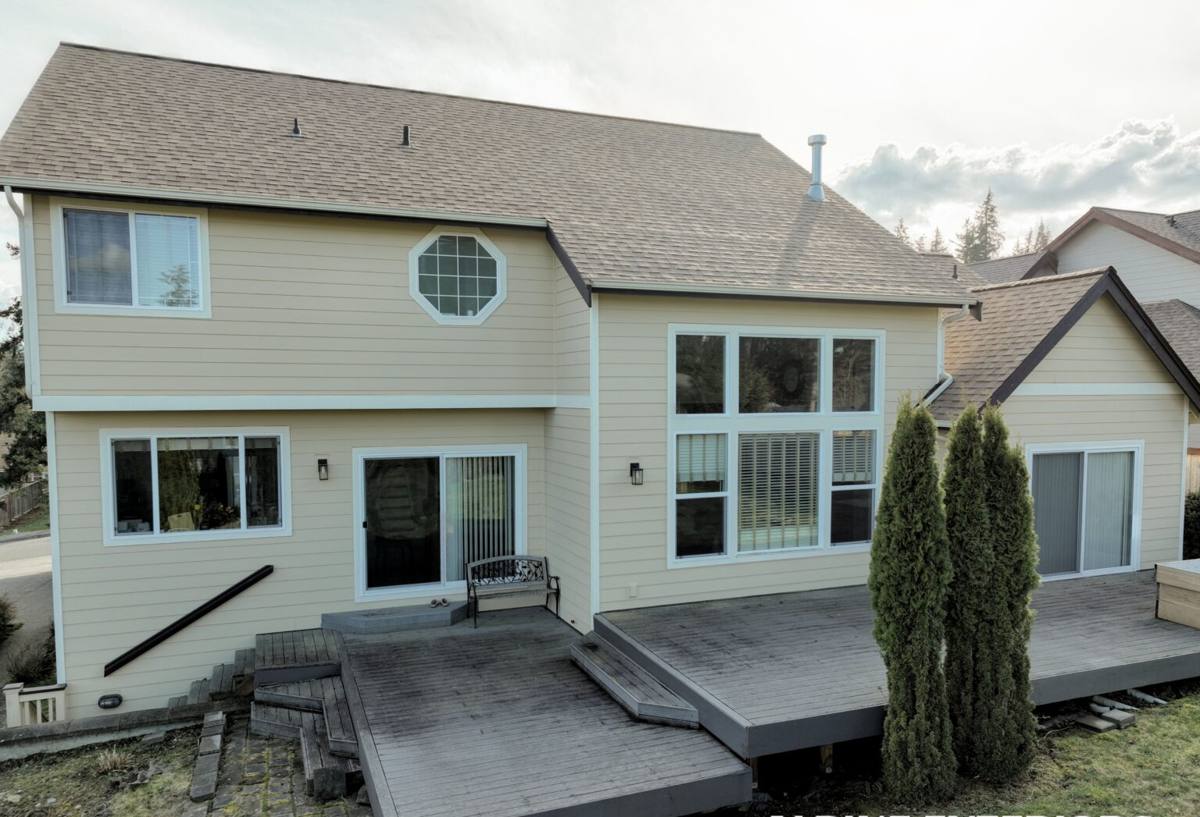
Sehome sits close enough to Bellingham Bay that salt-laden air, wind-driven rain, and long stretches of overcast, damp weather are just part of owning a home here. A deck that would hold up fine in a drier inland climate can start failing years early in this part of Whatcom County if it wasn't built or replaced with those conditions in mind. We work on decks throughout the Fairhaven area, and Sehome's mix of older homes, mature tree cover, and proximity to the water means we see the same failure patterns over and over: soft ledger boards, corroded fasteners, moss-slicked surfaces, and framing that looks fine from a distance but is quietly rotting underneath.
A deck replacement done right in this neighborhood isn't just about swapping old boards for new ones. It's about building something that sheds water instead of holding it, resists the moss and algae that thrive in our shoulder-season damp, and uses hardware that won't corrode in salt-influenced air. That's the standard we hold every replacement to.
What Local Weather Does to an Aging Deck
Three things drive most of the deck failures we find in this area, and they compound each other over time.
Salt Air
Proximity to the bay means airborne salt settles on exposed metal — fasteners, joist hangers, railing brackets — and accelerates corrosion well beyond what you'd see further inland. Standard galvanized hardware that might last decades elsewhere can start rusting and weakening in a fraction of that time here. Once fasteners corrode, they lose holding strength, and that's a structural problem, not a cosmetic one.
Driving Rain
Storms off the water tend to come in sideways as much as straight down. That means water gets pushed into joints, under flashing, and behind ledger boards that would stay dry in a calmer climate. Any gap in flashing or any spot where two deck boards butt together without proper drainage becomes a place for water to collect and linger.
A Long Moss Season
Cool, wet, low-light conditions for much of the year create ideal growing conditions for moss and algae on horizontal wood surfaces. Beyond making a deck slippery and unattractive, moss holds moisture against the wood surface for extended periods, which speeds up rot in untreated or poorly ventilated decking.
Signs a Sehome Deck Needs Replacement, Not Just Repair
Not every deck problem calls for a full tear-out. But there's a point where patching individual boards is throwing money at a structure that's already compromised underneath. Here's how we make that call on site:
- Soft or spongy spots when you walk across the deck, especially near the house or around post bases
- Visible rot, splitting, or delamination at the ledger board where the deck attaches to the house
- Rust streaking from fasteners or visibly corroded joist hangers
- Persistent moss or algae that returns within weeks of cleaning, even in shaded spots
- Railings or posts that flex or wobble under normal weight
- A deck more than 20-25 years old built with older lumber grades and fastening methods that don't meet current code
- Standing water or slow drainage after rain, rather than water sheeting off
If the framing and ledger are sound and it's just the surface boards showing wear, a resurfacing or targeted repair can make sense. If the problems are structural or the deck is old enough that code and hardware have moved on since it was built, replacement is usually the more honest recommendation — and the safer one.
What a Correct Deck Replacement Actually Involves
Structure First
Everything starts below the decking boards. That means checking or replacing footings, posts, beams, and joists, and confirming the structure meets current spacing and sizing requirements for the loads it needs to carry. In this climate, we pay particular attention to post bases and any wood-to-concrete contact points, since that's where moisture tends to wick upward and cause rot from the inside out.
The Ledger Connection
The ledger board — where the deck attaches to the house — is the single most common source of hidden rot and the single most important structural connection on the whole deck. It needs proper flashing that directs water away from the house rather than behind the ledger, and fasteners sized and spaced to hold the deck safely even under full load and seismic conditions.
Fasteners and Hardware
Given the salt exposure common to this area, we use corrosion-resistant fasteners and connectors rated for the pressure-treated or composite materials being installed. Mismatched or undersized hardware is a shortcut that shows up as rust stains and loosening connections within a few years — exactly the kind of premature failure a proper replacement should prevent.
Drainage and Airflow
Proper board spacing, ventilation underneath the deck, and grading that moves water away from the structure all matter more here than in drier climates. A deck that traps moisture underneath it, whether from tight board spacing or poor under-deck airflow, will grow moss and develop rot faster regardless of what decking material sits on top.
Choosing Decking Material for This Climate
There's no universally "best" decking material — it depends on budget, maintenance tolerance, and how the deck will be used. Here's how the common options actually perform under Whatcom County's wet, salt-influenced conditions:
| Material | Moisture Behavior | Moss/Algae Resistance | Maintenance |
|---|---|---|---|
| Pressure-treated wood | Resists rot when properly sealed and maintained; needs re-sealing on a regular schedule | Moderate — moss grows unless kept clean and dry | Higher — annual cleaning and periodic sealing |
| Cedar | Naturally moisture-resistant but still needs finish maintenance over time | Moderate to good, especially with regular cleaning | Higher — finish upkeep to preserve appearance and protection |
| Composite decking | Does not rot or absorb water like wood; some early-generation products could trap surface moisture | Good with modern capped composite products | Lower — periodic washing, no sealing or staining |
| PVC decking | Fully moisture-resistant, does not absorb water | Good, though surface cleaning is still needed | Lowest — washing only |
We'll walk through these trade-offs honestly during your estimate rather than pushing whatever's most profitable to install. Wood costs less upfront but asks more of you over time; composite and PVC cost more upfront but ask less of you every year after. In a climate with this much moisture and moss pressure, that maintenance difference matters more than it would somewhere drier.
Our Process From Estimate to Final Walkthrough
We keep the process straightforward because homeowners deserve to know what's happening and why at every stage.
- On-site assessment — we inspect the existing deck's framing, ledger, footings, and hardware to determine what's actually salvageable versus what needs to go.
- Honest estimate — you get a clear scope of work and pricing, including material options and the reasoning behind our recommendation, with no pressure to decide on the spot.
- Permitting — deck replacements typically require a permit; we handle that process so the finished structure is code-compliant and inspection-ready.
- Demolition and structural work — full removal of the old decking and any compromised framing, followed by rebuilding footings, posts, beams, and joists as needed.
- Ledger, flashing, and hardware — the connection to your home gets rebuilt properly with correct flashing and corrosion-resistant fasteners.
- Decking, railing, and finish work — installation of your chosen decking material, railings, and any stairs, with attention to board spacing and drainage.
- Final walkthrough — we go over the completed deck with you, point out anything you should know for maintenance, and make sure you're satisfied before we consider the job done.
Why a Crew That Already Works in Sehome Matters
A deck replacement isn't just a carpentry project — it's a structural project happening in a specific climate, under a specific permitting jurisdiction, on homes that often have their own quirks from being built decades ago. A crew that regularly works in and around Fairhaven and greater Bellingham already knows how local moisture and salt exposure affect material choices and hardware, what Whatcom County's permitting and inspection process looks like in practice, and how to plan around the wet stretches of the year so a project doesn't stall out. That local familiarity translates into fewer surprises mid-project and a deck that's actually built for the conditions it has to survive, not a generic spec that happens to have been installed here.
Caring for Your New Deck
Whatever material you choose, a little regular attention goes a long way toward getting the full lifespan out of a new deck in this climate. A simple seasonal routine helps:
- Sweep debris and fallen leaves off regularly, especially in fall, so they don't trap moisture against the surface
- Clean moss and algae as soon as it appears rather than letting it establish and spread
- Check and clear gaps between boards periodically to keep drainage paths open
- Inspect railings and stair connections once or twice a year for looseness
- If you chose wood, keep to a re-sealing schedule rather than waiting until the finish visibly fails
- Trim back overhanging vegetation that keeps the deck surface shaded and damp longer than necessary
None of this is complicated, but skipping it is exactly how a well-built deck ends up needing early repairs in a climate that doesn't give wood or hardware much of a break.
If your deck in Sehome is showing signs of rot, corrosion, or age, we're happy to take a look and give you a straightforward assessment of what it actually needs. Reach out using the form below for a free, no-pressure estimate.