 Fairhaven Siding
 Metal Roofing for Sehome Homes: Built for Whatcom County's Wet Side
Sehome sits close enough to Bellingham Bay that salt-tinged air, wind-driven rain, and a moss season that can run eight months or longer are just part of owning a home here. A roof in this neighborhood doesn't fail because the material is bad — it fails because it wasn't detailed for this specific climate. Metal roofing, installed correctly, handles all three of those stresses better than most other roofing systems available to homeowners. This page covers what that actually means for a Sehome property: what the climate demands, what a correct installation looks like, and how our process is built around the realities of this part of Whatcom County.
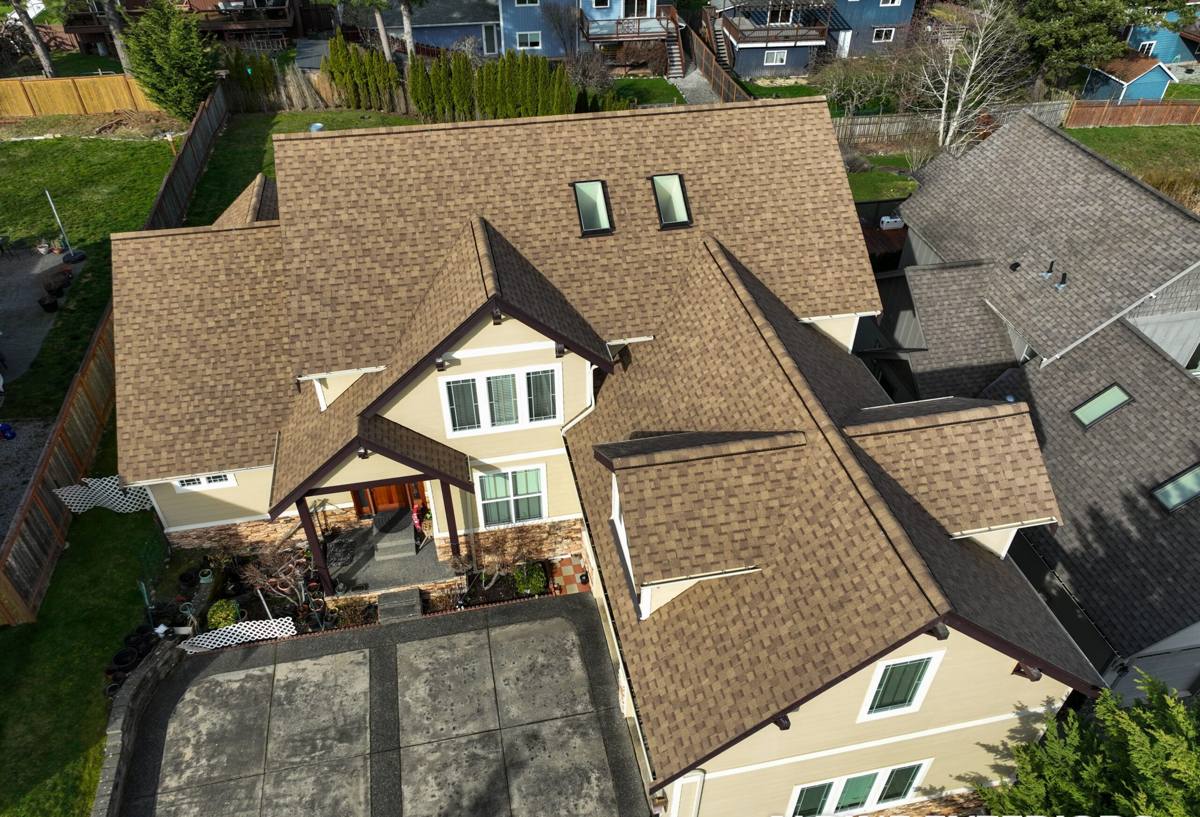
Why Sehome's Climate Is Hard on a Roof
Salt Air and Corrosion
Proximity to the Bay means airborne salt settles on exterior surfaces year-round, and it's most aggressive on anything metal — fasteners, flashing, gutters. Bare or poorly coated steel will show surface rust within a few years in this kind of exposure. It's not a reason to avoid metal roofing; it's a reason to be specific about the coating system, the fastener metallurgy, and the flashing material used, so corrosion resistance is built in rather than assumed.
Driving Rain
Storms coming off the water don't just drop rain straight down — wind pushes it sideways and up under laps, ridges, and penetrations. A roof that only sheds water well in calm conditions will still leak in a Sehome winter. Every seam, fastener pattern, and flashing detail has to assume rain is going to hit it from an angle at some point during the year.
Long Moss Season
Mild temperatures and near-constant moisture from fall through spring give moss and algae a long window to establish themselves, especially on shaded, north-facing, or tree-covered sections of roof that are common in this neighborhood's older tree canopy. Moss holds moisture against the roof surface and works into laps and fastener heads over time, which is a bigger problem for some roofing materials than others.
What a Correct Metal Roof Installation Involves
A metal roof is only as good as the details underneath the panels. Most of the problems we get called out to fix on other contractors' metal roofs trace back to shortcuts in this stage, not the panels themselves.
Underlayment and Water Barrier
A high-quality synthetic underlayment, with self-adhered ice-and-water membrane at eaves, valleys, and any low-slope transitions, gives the roof a real second line of defense. In a climate where wind-driven rain is routine, this layer matters as much as the metal itself.
Fastener and Panel Compatibility
Mixing incompatible metals — for example, the wrong fastener alloy against a steel or aluminum panel — sets up galvanic corrosion that shows up as staining and eventual fastener failure. We match fastener material to panel material and specify corrosion-resistant hardware throughout, not just at the visible edges.
Flashing at Every Transition
Chimneys, skylights, vent stacks, sidewalls, and valleys are where roofs actually leak. Custom-formed flashing, properly lapped and sealed in the correct sequence with the underlayment, is what keeps wind-driven rain out at these points. Off-the-shelf flashing that doesn't match the panel profile is a common source of slow leaks that don't show up until a heavy storm.
Ventilation
Metal roofs perform best with balanced intake and exhaust ventilation in the attic. In a damp climate, poor ventilation traps moisture under the deck, which can cause condensation issues that have nothing to do with the roof surface itself but get blamed on it anyway.
Metal Roofing Options for Sehome Properties
Not every metal roofing system is the right fit for every house. Here's how the common options compare for a coastal, moss-prone setting like this one.
| Type | Best For | Moss/Debris Shedding | Coastal Durability | Relative Cost |
|---|---|---|---|---|
| Standing seam (concealed fastener) | Most Sehome homes, especially steeper or visible roofs | Excellent — smooth panel, no exposed fastener heads to trap debris | Very good with proper coating and clip system | Higher |
| Exposed-fastener panel | Outbuildings, garages, budget-conscious re-roofs | Fair — fastener heads and laps can hold moisture and moss | Good, but fasteners need periodic inspection | Lower to mid |
| Metal shingle/shake profile | Homes wanting a traditional look with metal's durability | Good — interlocking design sheds well | Good with quality coating | Mid to higher |
For most Sehome homes, we lean toward standing seam because the concealed fastener design removes the weak points that salt air and moss tend to exploit first. It costs more up front, but it's also the lowest-maintenance option over the life of the roof, which matters in a climate this wet.
Our Process
- On-site assessment. We look at slope, exposure, existing deck condition, ventilation, and how much shade and tree cover the roof gets — that last point drives a lot of the moss conversation.
- Material and profile selection. We walk through panel type, gauge, and coating options based on the home's exposure and your budget, being upfront about the trade-offs of each.
- Tear-off and deck inspection. Old roofing comes off and we check the deck for rot or soft spots before anything new goes down — this is where hidden moisture damage from a previous leaky roof usually shows up.
- Underlayment and flashing installation. This is the stage that determines whether the roof actually keeps water out in a driving rain, so we don't rush it.
- Panel installation. Panels go on with the correct fastener spacing, clip system, and expansion allowance for temperature movement.
- Final walkthrough. We review the completed roof with you, including what routine maintenance will look like going forward.
Maintenance in a Moss-and-Salt Climate
Metal roofing needs less upkeep than most materials, but "less" isn't "none" in this environment. A short annual routine keeps a well-installed metal roof performing for decades.
- Clear debris and overhanging branches that keep sections of roof shaded and damp longer than the rest.
- Rinse off moss or algae growth before it establishes rather than after — a soft wash, never pressure washing directly on seams or coatings.
- Check gutters and downspouts each fall so water isn't backing up against eave flashing during heavy rain.
- Inspect flashing around chimneys, vents, and skylights annually for sealant wear or lifted edges.
- Watch for any staining at fastener heads or laps, which can signal an incompatible metal or a failing coating.
What Affects Cost
Every Sehome roof is different, and we won't quote a number without seeing the property, but the main cost drivers are consistent:
- Panel type — standing seam runs higher than exposed-fastener panel for the same square footage.
- Roof complexity — valleys, dormers, and multiple penetrations add labor and flashing work.
- Deck condition — rot or soft sheathing found during tear-off adds repair cost before new roofing goes on.
- Coating and gauge — heavier gauge steel or aluminum and premium coatings cost more but last longer in salt exposure.
- Access — steep pitch, tree cover, or tight lot access can affect labor time.
As a broad range, homeowners in this area should expect metal roofing to cost more upfront than asphalt shingles, with the difference typically paid back through a much longer service life and lower maintenance over time.
Why a Crew That Already Works in Sehome Matters
A roofer who works this neighborhood regularly already knows which sections of a given block sit in more shade, which lots get harder wind-driven rain off the Bay, and how a Whatcom County winter actually treats a roof over several seasons — not just on installation day. That local pattern recognition shows up in small decisions: where we add extra underlayment, how we detail a north-facing valley, which coating we push back on for a heavily shaded lot. It's the difference between a roof that's technically installed to code and one that's actually built for the block it's on.
Signs an Existing Roof Needs Attention
If you're not sure whether you need a repair, a recoat, or a full replacement, a few signs are worth a look before the next storm season:
- Visible rust or staining at fastener heads, laps, or flashing.
- Moss or dark streaking concentrated on one section of roof, usually the shadiest.
- Loose, lifted, or oil-canning panels, especially after high wind.
- Water stains on interior ceilings near chimneys, skylights, or exterior walls.
- Gutters holding onto granules, moss, or metal shavings after a storm.
If you're weighing metal roofing for a home in Sehome, we're happy to take a look and walk through what your specific roof needs — no pressure, no obligation. Use the form below to request a free estimate.