 Fairhaven Siding
 Why Edgemoor Homes Wear Differently
Edgemoor sits on the bluffs and shoreline above Bellingham Bay, right next door to Fairhaven, and that waterfront position is a mixed blessing for siding. The same views that make the neighborhood desirable also mean homes here take a steady diet of salt-laden air, wind-driven rain off the Sound, and long stretches of shade under mature evergreens. In Whatcom County's marine climate, siding doesn't fail because of one dramatic storm — it fails slowly, from years of moisture that never fully dries out between rains and from salt air that accelerates corrosion on fasteners, trim, and anything not built to handle it.
We've replaced siding on enough homes in this part of Fairhaven to know the failure patterns are predictable: north- and west-facing walls that stay damp longest, lower courses near grade or retaining walls where splash-back keeps wood or composite siding wet, and shaded elevations where moss and algae get a head start every fall and never fully die back before spring. A siding replacement done right in Edgemoor has to account for all of that, not just match the old material.
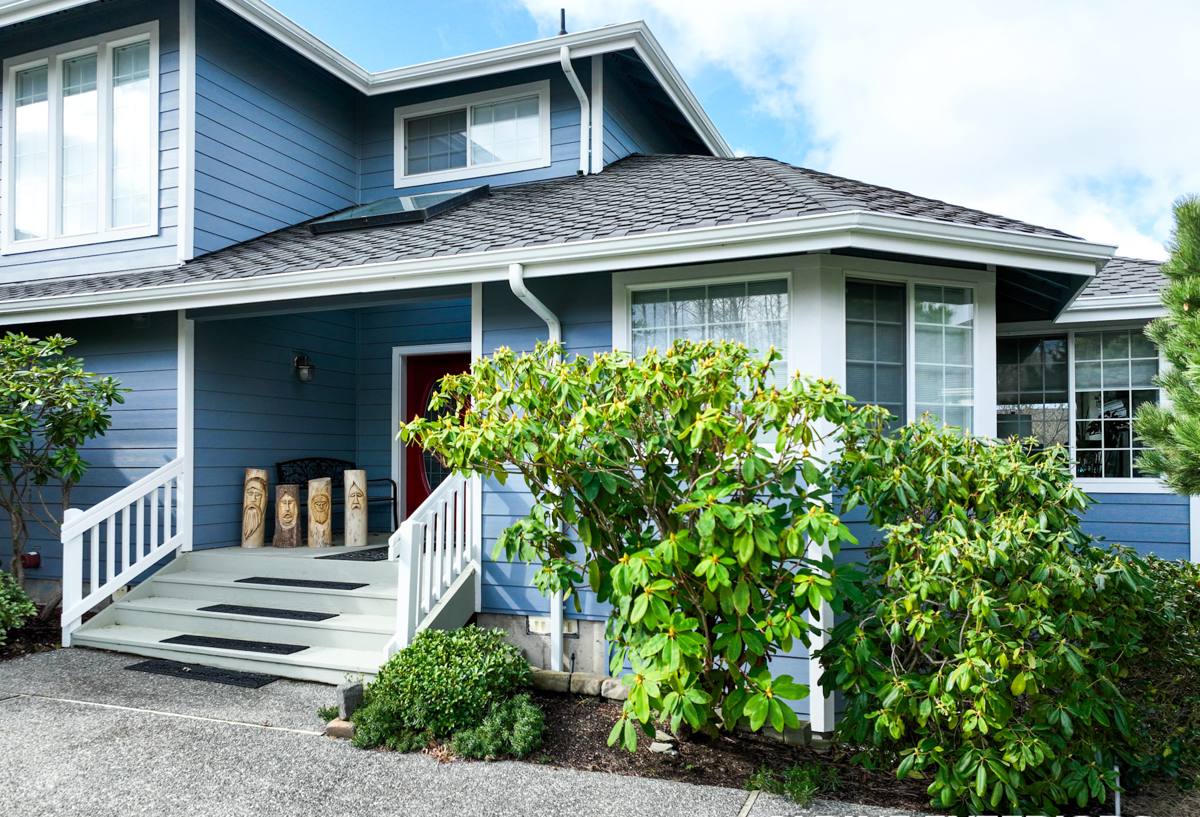
Signs an Edgemoor Home Needs Siding Replacement
Most homeowners call us after noticing one or two of these, but by the time siding shows visible damage, moisture has usually been working on the wall assembly underneath for a while.
- Soft or spongy spots when you press on siding, especially near the bottom courses and around window and door trim
- Paint that won't hold — blistering, peeling, or needing repainting every two to three years instead of every seven to ten
- Persistent moss, algae, or black streaking that comes right back within a season of cleaning
- Visible cupping, warping, or buckling panels, particularly on shaded north and west walls
- Rusted or bleeding fasteners, a common issue in salt-air exposure once nail heads or staples start to corrode
- A musty smell in adjacent interior rooms, or drywall/trim damage that lines up with an exterior wall
Any one of these on its own might just need a repair. Several at once, especially on a home more than 15-20 years old, usually means the siding and possibly the water-resistive barrier behind it have reached the end of their service life.
What a Correct Siding Replacement Actually Involves
Full Tear-Off and Sheathing Inspection
A proper replacement starts with removing the old siding down to the sheathing, not installing new material over the old. That's the only way to actually see what's happening behind the wall — soft or delaminated sheathing, rusted fasteners, or a water-resistive barrier that's torn, sagging, or missing in spots. In a climate like this one, skipping that step just seals existing moisture problems inside the wall.
Water-Resistive Barrier and Flashing
Everything behind the siding matters as much as the siding itself. That means a continuous, properly lapped weather-resistive barrier, correctly flashed window and door openings, and drip caps or kick-out flashing wherever water needs to be directed away from the wall rather than into it. On homes exposed to driving rain off the bay, flashing details at penetrations and butt joints are where most future leaks originate if they're rushed.
Fastening, Clearances, and Finish
Fastener choice and spacing matter more here than in a drier inland climate — corrosion-resistant fasteners installed to the manufacturer's schedule, correct nailing height so panels aren't over-driven or under-driven, and proper clearance between the bottom of the siding and grade, decks, or roof lines so water has somewhere to go. Skipping ground clearance is one of the most common shortcuts we see on older installs, and it's a direct cause of the soft bottom courses homeowners call us about.
Why We Install Only James Hardie Fiber Cement Here
We install James Hardie fiber cement exclusively, and Edgemoor's climate is a big part of why. Fiber cement doesn't absorb water the way wood-based products do, so it doesn't swell, cup, or rot from the sustained dampness this area sees for much of the year. It's also non-combustible, which matters given how many Edgemoor properties back up to trees and vegetation. James Hardie's ColorPlus factory finish is baked on and warranted against fading and peeling, which counts for a lot in an area where UV combined with salt air and moisture is hard on ordinary field-applied paint.
We don't install vinyl, LP SmartSide, Cemplank, Allura, or unfinished wood siding, and it's worth being upfront about why. Vinyl can warp under sustained UV and heat cycling and doesn't hold paint if a homeowner ever wants to change the color. Wood-based composite products like LP SmartSide use an engineered wood core that, while treated, is still an organic material that can swell or deteriorate at cut edges and joints if moisture gets past the finish — a real risk in a climate this wet. Other fiber cement brands may be reasonable products, but we've standardized on James Hardie because of its specific engineered lines for marine and high-moisture climates, the strength of its factory finish, and a warranty that's proven straightforward to use.
| Material | Moisture Behavior | Salt Air / Corrosion Resistance | Typical Repaint Cycle |
|---|---|---|---|
| James Hardie fiber cement | Doesn't swell or rot; engineered for wet climates | Strong; factory ColorPlus finish resists salt exposure | 15+ years (ColorPlus), longer than field paint |
| Vinyl siding | Doesn't absorb water, but can warp/distort with heat cycling | Moderate; can chalk and fade | Not repaintable in most cases |
| Wood-based composite (e.g. LP SmartSide) | Engineered wood core; vulnerable at cut edges/joints if finish fails | Moderate; depends on finish integrity | 5-8 years |
| Cedar or primed spruce | Absorbs moisture; prone to cupping, splitting, rot over time | Weak without ongoing maintenance | 3-5 years |
Cost Factors for an Edgemoor Siding Replacement
Every home is different, but the same handful of variables drive most of the cost swing we see on Edgemoor projects. This isn't a quote — it's what actually moves the number up or down.
| Factor | Why It Matters |
|---|---|
| Condition of sheathing underneath | Rot or delamination found during tear-off means repair before new siding goes on |
| Home size and wall complexity | More corners, gables, and trim detail means more labor and cut waste |
| Access and site conditions | Bluff-lot and sloped-yard homes common in Edgemoor can require extra staging or scaffolding |
| Siding profile chosen | Lap, shingle-style, and panel systems carry different material and labor costs |
| Trim and accessory scope | Replacing trim, fascia, and soffits alongside siding affects total project cost |
| Existing moisture damage | Homes with long-neglected leaks may need more sheathing and framing repair than a routine job |
Our Process, Start to Finish
- On-site assessment — we walk the exterior, check problem areas you've noticed, and look for the moisture patterns typical of this neighborhood's exposure
- Written scope and estimate — clear about what's siding replacement versus what's repair, with no vague allowances
- Tear-off and inspection — old siding removed, sheathing and framing checked and repaired as needed before anything new goes on
- Water-resistive barrier and flashing — installed and lapped correctly at every penetration, window, and door
- James Hardie installation — installed to manufacturer fastening and clearance specifications, not shortcuts
- Trim, caulking, and final finish — details buttoned up so water has a clear path away from the wall
- Final walkthrough — we go over the finished work with you before calling the job done
What to Ask Before Hiring a Siding Contractor in Edgemoor
Siding work is easy to do halfway and hard to inspect once it's covered up. A few questions up front save a lot of grief later.
- Will you do a full tear-off, or are you proposing to cover the existing siding?
- Who inspects the sheathing once the old siding is off, and what happens if there's rot?
- What water-resistive barrier and flashing details do you use at windows and penetrations?
- Are you a manufacturer-recognized installer for the siding product you're proposing?
- What does the warranty actually cover, and is it transferable if you sell the home?
- Do you have current experience working in this specific area's climate and lot conditions?
Why Local Experience in Edgemoor Matters
A crew that already works this stretch of Fairhaven and Edgemoor isn't guessing at how the weather behaves here — they know which elevations stay wet longest, how far moss season typically runs, and what fastening and flashing details actually hold up against wind-driven rain off the bay. That local pattern recognition is the difference between a siding job that looks good on installation day and one that's still performing correctly a decade later.
If your Edgemoor home is showing signs of wear, or you just want an honest read on whether you're looking at repair or full replacement, we're glad to take a look. Reach out for a free, no-pressure estimate using the form below.