 Fairhaven Siding
 Lummi Island Walls Work Harder Than Inland Walls
A home on Lummi Island sits in a different weather system than a home a few miles inland in Whatcom County. Being surrounded by the Salish Sea means constant exposure to salt-laden air, wind-driven rain that hits siding sideways instead of running straight down, and a shaded, damp understory on wooded lots that keeps moss and algae growing for most of the year. Siding that would hold up fine on a sheltered inland street can fail early out here, and it usually fails from the inside out — moisture gets behind the cladding long before anything looks wrong on the surface.
We work throughout Fairhaven and the surrounding Whatcom County coastline, and Lummi Island jobs come with their own set of considerations: how the home is oriented to wind and water, how materials and crews get to the site, and which siding products can actually take the marine environment without turning into a maintenance project. This page is about siding replacement specifically for Lummi Island homes — what the climate demands, what a correct job looks like, and why the crew doing the work matters as much as the material.
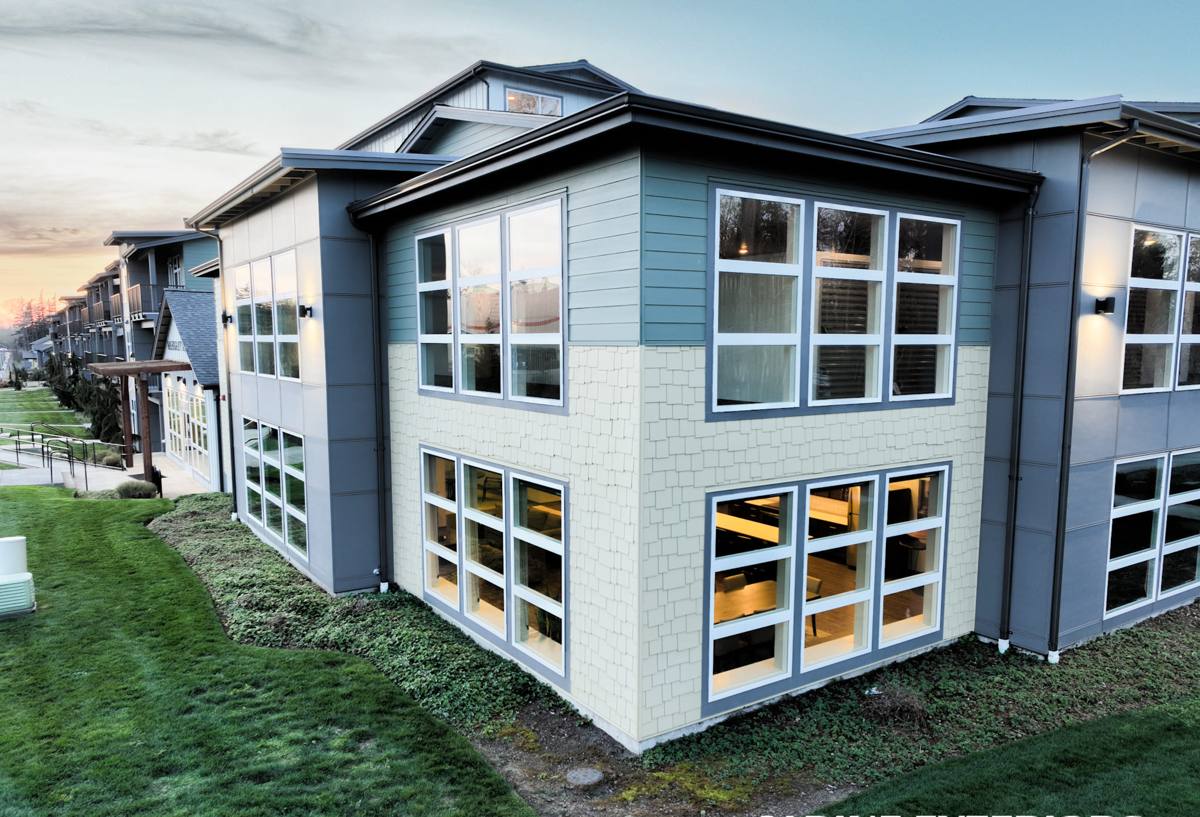
What the Marine Climate Actually Does to Siding
Salt Air and Corrosion
Airborne salt doesn't just sit on the surface of a wall — it works into fasteners, trim joints, and any exposed metal. Over years, this accelerates corrosion of nails, flashing, and hardware that isn't rated for coastal exposure. Siding systems that rely on softer metals or standard fasteners tend to show rust streaks and loosening well before their expected service life is up.
Driving Rain and Wind Exposure
Because Lummi Island has open water exposure on multiple sides, wind-driven rain is a bigger factor here than it is a few miles inland. Rain that's pushed horizontally finds gaps, laps, and seams that would never see water in a calmer setting. This is a water-management problem as much as a material problem — the housewrap, flashing, and lap details behind the siding matter just as much as the siding itself.
Moss, Algae, and a Long Wet Season
Many island lots sit under fir and cedar canopy that keeps north- and west-facing walls shaded and damp for much of the year. That combination is exactly what moss and algae need to take hold. Siding that absorbs moisture or has a rough, porous surface gives moss more to grip; a hard, factory-finished surface gives it much less.
Signs a Lummi Island Home Needs Replacement, Not a Repair
Coastal siding failure is often gradual and easy to miss until it's significant. Before we recommend full replacement, we look for patterns like these:
- Soft or spongy spots when you press on the siding, especially near the bottom courses and around windows
- Paint that keeps failing in the same spots within a year or two of repainting
- Persistent moss or black streaking on shaded walls that comes back within months of cleaning
- Visible cupping, warping, or delamination in wood-based or engineered wood siding
- Rust bleeding from nail heads or trim fasteners
- Gaps opening at butt joints, corners, or where siding meets trim and flashing
- A musty smell or visible staining on interior walls that share an exterior wall with problem siding
One or two of these can sometimes be addressed with targeted repair. Several at once, especially combined with soft sheathing underneath, usually means the wall assembly has been taking on water for a while and full replacement is the honest recommendation.
Why We Only Install James Hardie Fiber Cement
We don't install vinyl, LP SmartSide, cedar, primed spruce, or other fiber cement brands. That's a standard we hold across every job, not just Lummi Island ones, but the reasoning matters even more in a marine environment. Fiber cement is non-combustible, dimensionally stable, and doesn't feed moss the way wood-based products can. Within fiber cement, we install James Hardie specifically because of its factory-applied ColorPlus finish, its HardieZone engineering for different climate demands, and a warranty structure that's held up in the field.
| Material | Behavior in Salt Air & Rain | Maintenance Burden | Our Position |
|---|---|---|---|
| James Hardie fiber cement | Non-combustible, doesn't rot or feed moss; factory finish resists fading and moisture intrusion at the surface | Occasional wash-down; no repainting on ColorPlus finish for the length of its coverage | What we install on every job |
| Vinyl siding | Won't rot, but can warp or crack under wind loading and UV/salt exposure over time; seams can allow water behind the panel | Low, but limited repair options once panels fade or crack | We don't install it |
| Cedar / wood siding | Absorbs moisture, is a natural food source for moss and algae, needs a sound finish to resist rot | Regular refinishing and moss treatment | We don't install it |
| LP SmartSide (engineered wood) | Treated to resist moisture better than raw wood, but still wood-based and dependent on correct field sealing at cuts and joints | Field-applied finish needs monitoring, especially at end cuts | We don't install it |
None of these products are "bad" products in a general sense — they each have a place. Our position is that on homes facing this much sustained moisture and salt exposure, we'd rather stand behind one system we know performs than install several we'd have to caveat.
What a Correct Siding Replacement Job Involves Here
Tear-Off and What's Underneath
Every replacement starts with removing the old siding down to the sheathing, not overlaying on top of it. That's the only way to actually see what condition the wall is in — soft sheathing, missing or torn housewrap, and old flashing failures are invisible until the old siding comes off.
Water Management Before Any Siding Goes Up
On a wind-and-rain-exposed site, the weather-resistive barrier and flashing details do more work than the siding itself. That means correctly lapped housewrap, flashing at every window and door that directs water out and down, and careful attention to any penetration through the wall — vents, hose bibs, light fixtures.
Fastening and Clearances
James Hardie specifies fastener types, spacing, and clearances (ground clearance, roof-to-wall clearance, deck-to-wall clearance) for a reason — get these wrong and you create the exact moisture traps that cause early failure. In a marine environment we're also deliberate about corrosion-resistant fasteners at every point, not just where it's visually exposed.
Product Line Selection
James Hardie's HZ5 product line is engineered for climates like this one — freeze-thaw cycling combined with high moisture. We select lap profile, exposure, and trim details based on how exposed a given wall or elevation is to wind and rain, not a one-size answer for the whole house.
Our Process for a Lummi Island Project
- On-site inspection — we look at existing siding, trim, flashing, and any interior signs of water intrusion before quoting anything.
- Scope and material plan — we specify the HardiePlank, panel, or trim combination for each elevation based on exposure, and walk through color and profile options.
- Scheduling around access and weather — material deliveries and crew transport to the island are planned around ferry schedules and forecast weather windows so the wall isn't left open to rain mid-job.
- Tear-off and sheathing/moisture barrier repair — any soft sheathing or compromised barrier gets addressed before new siding goes up, not covered over.
- Installation to manufacturer spec — correct fasteners, clearances, and flashing at every transition.
- Final walkthrough — we go over the finished job with you, including basic care for the new siding.
What Drives Cost on a Job Like This
Every quote is specific to the home, but these are the factors that most often move the number on a Lummi Island siding replacement:
| Factor | Why It Matters on the Island |
|---|---|
| Ferry-based logistics | Materials and crews travel by county ferry, which affects scheduling and delivery timing more than it does on the mainland |
| Tear-off condition | Rotted sheathing or failed housewrap discovered during tear-off adds repair scope beyond the siding itself |
| Wind/water exposure by elevation | Water-side and west-facing walls often need more robust flashing and trim detailing than sheltered elevations |
| Trim and detail work | Homes with more windows, dormers, or architectural trim take more time per square foot than a simple rectangular wall |
| Product selection | HardiePlank lap siding, HardieShingle, and HardiePanel carry different material and labor costs |
| Color choice | Factory-applied ColorPlus finishes cost more up front than field-painted primed siding but remove the repainting cycle |
Why a Crew That Already Works Lummi Island Matters
Working on the island isn't the same as working a mainland Fairhaven street. Getting a crew, equipment, and a full load of James Hardie material onto the island means planning around the ferry schedule, not just a drive time. A crew unfamiliar with that reality can end up with delayed starts, staged material sitting exposed longer than it should, or a job that stretches out because logistics weren't planned for up front. There's also a real difference in knowing, from repeat experience, which elevations on island homes tend to take the worst of the wind and rain and need extra attention at flashing and trim — versus figuring that out for the first time on your house.
Living With Hardie Siding After Installation
One of the practical benefits of switching to James Hardie on a home like this is how little upkeep the ColorPlus finish demands compared to painted wood or worn vinyl. You'll still want to rinse off accumulated salt spray and check for moss on shaded, damp walls periodically — the climate doesn't change — but you're not repainting on a multi-year cycle or chasing rot at butt joints. Keeping gutters clear and landscaping trimmed back from walls goes a long way toward keeping moss from getting a foothold in the first place.
If your Lummi Island home is due for new siding, or you're not sure whether what you have needs repair or replacement, we're happy to come take a look. A free, no-pressure estimate gets you a straight answer on the condition of your walls and what correct James Hardie siding would look like on your home — no obligation attached.