 Fairhaven Siding
 Silver Beach Sits Right at the Edge of Bellingham Bay
Silver Beach is one of the closest residential neighborhoods to the water in the Fairhaven area, and that proximity shapes everything about how a house ages here. Homes on or near the bluff face onshore wind carrying salt spray, while homes set back a few blocks still get the same driving rain and long stretches of damp, low-light weather that define a Whatcom County winter. Add in the tree cover common throughout the neighborhood and you get one more variable: shade that keeps siding wet longer after every storm and feeds a moss season that can run from October through May.
None of that is unusual for coastal Whatcom County. But it does mean the siding on a Silver Beach home is doing more work than siding on a house twenty miles inland. We install James Hardie fiber cement exclusively, and on this page we're talking specifically about what that looks like for homes in this neighborhood — not siding in general.
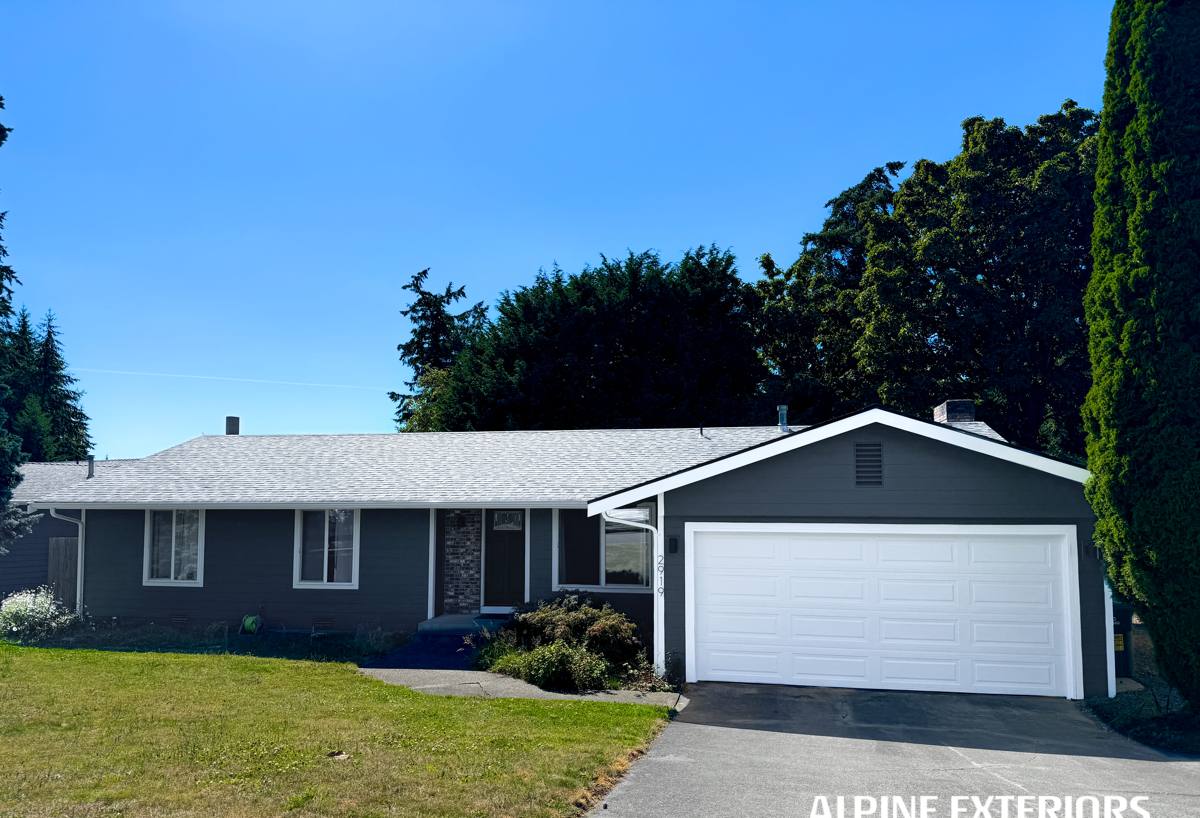
What Salt Air, Rain, and Moss Actually Do to a Wall
Salt Air
Airborne salt doesn't just sit on the surface — it works into microscopic cracks, seams, and fastener heads, holding moisture against the substrate longer than plain rainwater would. Over years, that accelerates corrosion on exposed metal trim and fasteners, and it speeds up the breakdown of paint films that aren't built to handle it. Fiber cement itself doesn't corrode, but the finish and the fasteners used with it absolutely matter near the water.
Driving Rain
Fairhaven's storms frequently come in sideways off the water rather than falling straight down. That pushes water into laps, seams, and butt joints that would stay dry in a calmer climate. If those details aren't flashed and caulked correctly, water finds its way behind the siding — and once it's behind the cladding, the sheathing and framing are what's at risk, not just the siding face.
Moss and Sustained Dampness
Moss doesn't damage fiber cement the way it can degrade wood or some composite products, but it does hold moisture against the surface for extended periods and creates a green, patchy look that most homeowners don't want on a house they just paid to re-side. North-facing walls, shaded elevations, and anything under overhanging trees are the areas that need the most attention during installation and the most attention afterward.
Why This Matters More for Some Silver Beach Homes Than Others
Not every home in the neighborhood faces the same exposure. A few factors we look at on every estimate:
- Elevation and orientation — homes with a direct, unobstructed line to the bay take the brunt of wind-driven salt spray and rain on their windward wall.
- Tree cover — mature trees common in this neighborhood create shade that slows drying time after every rain event, which is exactly what moss needs.
- Age of the current siding — homes with older wood or early composite siding often already have hidden moisture damage at trim, corners, and butt joints that needs to be addressed before new siding goes on, not covered up.
- Roof overhang and gutter condition — shallow overhangs and undersized or clogged gutters push more water directly onto the wall assembly.
We walk every one of these factors with the homeowner before we talk about siding at all, because the correct installation approach depends on them.
Why We Install James Hardie and Nothing Else
We standardized on James Hardie fiber cement for every job we take, including every job in Silver Beach. It's non-combustible, it doesn't absorb and swell the way wood-based products can, and the ColorPlus factory finish is baked on and warranted separately from the substrate — which matters directly in a salt-air environment where field-applied paint is under more stress than it would be inland. Hardie also engineers specific product lines (the HZ5 line, for example) for regions with more moisture exposure, which is the category coastal Whatcom County falls into.
We don't install LP SmartSide, vinyl, Cemplank, Allura, primed spruce, or cedar. That's a deliberate standard, not a marketing line — we've made a judgment call about what holds up correctly in this climate with the least long-term maintenance burden, and we only put our name on the product we trust to back that judgment up.
What a Correct Hardie Install Looks Like Here
The product is only half the equation — installation detail is what actually determines whether a home stays dry for the next 30-plus years. In a neighborhood like Silver Beach, we pay extra attention to:
Water Management Behind the Siding
A drainable weather-resistive barrier and correctly lapped flashing at every window, door, and penetration is non-negotiable here. Rain that gets past the face of the siding needs a clear path down and out, not a place to pool against the sheathing.
Fastener and Trim Selection
Near the water, fastener corrosion resistance isn't optional. We use fasteners rated for the exposure and pay close attention to any exposed metal trim, drip edges, and flashing to make sure nothing in the assembly becomes the weak point.
Clearances and Gaps
Hardie's own installation instructions call for specific clearances from grade, roofing, decks, and other siding — and for gaps at trim and butt joints that get properly caulked, not gapped tight and hoping. Those clearances keep splash-back and standing water away from the bottom edge of the siding, which is one of the first places failure shows up on coastal homes.
Caulking and Sealant Choice
Sealants that stay flexible in cold, wet weather and bond properly to fiber cement matter more here than in a drier climate, because the joints are wet more often and for longer stretches of the year.
Our Process for a Silver Beach Project
- On-site walk and assessment — we look at exposure, existing damage, trim condition, and drainage before we talk product or price.
- Scope and product plan — we specify the Hardie products, colors, and trim details appropriate to that specific home's exposure.
- Written estimate — a clear breakdown of materials and labor, no surprise add-ons buried in fine print.
- Prep and removal — old siding comes off, and we inspect the sheathing underneath for any moisture damage before covering anything back up.
- Weather barrier and flashing — installed to manage water before a single piece of siding goes up.
- Hardie installation — installed to manufacturer spec, with the clearances and fastening approach suited to a coastal property.
- Final walkthrough — we go over the finished work with the homeowner directly.
Cost Factors for Silver Beach Homes
Every home is different, but these are the variables that most often move the price on a Silver Beach project:
| Factor | Why It Affects Cost |
|---|---|
| Extent of hidden moisture damage | Sheathing or framing repair found during tear-off adds labor and material beyond the siding itself |
| Home size and wall complexity | More corners, gables, and trim details mean more labor and cutting |
| Hardie product line selected | Lap siding, panel systems, and shingle-style products carry different material costs |
| Trim and accent work | Custom trim boards, fascia, and soffit work add to the scope beyond field siding |
| Access and site conditions | Steep lots, limited driveway access, or dense tree cover near the home can add setup and staging time |
We give homeowners a real number for their specific house after the on-site walk — not a rough range pulled from a website.
What to Check Before You Hire Anyone for This Job
Coastal siding work rewards experience with this exact climate. Before hiring a contractor for a Silver Beach re-side, it's worth confirming:
- They can explain, specifically, how they'll handle flashing and water management at windows, doors, and butt joints — not just "we'll caulk it."
- They're licensed and insured to work in Washington, and can show proof without you having to ask twice.
- They have direct experience with James Hardie installation, not general siding experience applied to a product they rarely use.
- They'll inspect and address any sheathing or framing damage found during tear-off rather than siding over it.
- Their written estimate spells out product lines, colors, and trim details rather than a vague lump-sum number.
A crew that already works in this neighborhood has seen how the salt air and shade patterns on these specific lots behave over a full year, not just on install day.
Maintenance After Installation
Correctly installed Hardie siding is low-maintenance, not no-maintenance. In a Silver Beach setting, that means periodically rinsing salt residue off the surface, keeping gutters clear so water isn't sheeting down the wall, trimming back vegetation that shades the siding and slows drying, and having any caulking or trim checked every few years since sealants are usually the first thing to wear out in a coastal climate, well before the siding itself does.
If you own a home in Silver Beach and your current siding is showing moss staining, cracked caulk lines, or soft spots at the trim, we're glad to walk the property with you and give you a straight, no-pressure estimate for what correct James Hardie installation would look like on your specific house. Use the form below to get started.