 Fairhaven Siding
 New-Construction Windows, Built Into the Envelope From Day One
Silver Beach sits close enough to open water that its homes take weather most inland Whatcom County lots don't see in the same combination: salty, moisture-laden air off the water, wind-driven rain that hits walls sideways instead of falling straight down, and a shoulder season that runs damp and shaded long enough to grow moss on anything that stays wet. New-construction windows aren't just a product choice for a house going up here — they're one of the first waterproofing decisions the building makes, and they're made before the siding ever goes on.
"New construction" is a specific term in this trade, not a marketing phrase. It means the window has a nailing flange (or fin) that gets integrated directly into the wall's weather-resistive barrier and flashing system while the wall is still open — as opposed to a replacement or retrofit window, which gets set into an existing finished opening after the siding is already there. Get the new-construction install right, and the window becomes part of a wall that sheds water the way it's supposed to for decades. Get it wrong, and you've built a leak path into the framing that won't show itself until there's rot, stain, or mold behind the drywall — often years later.
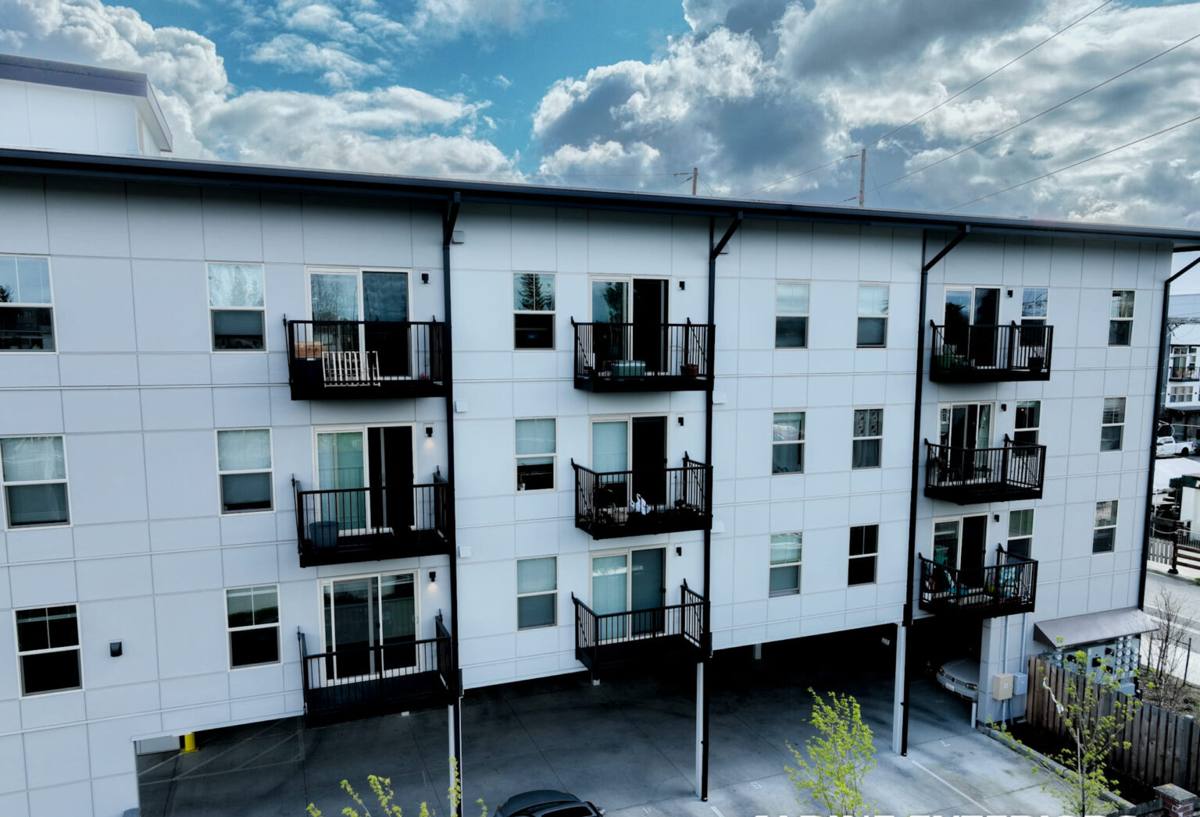
What Silver Beach's Climate Actually Does to a Window Opening
Salt Air and Hardware Corrosion
Proximity to the water means airborne salt settles on everything outdoors, including window hardware, fasteners, and flashing metal. Standard steel fasteners and low-grade flashing tape adhesives break down faster in this environment than they would on a lot further inland. We spec corrosion-resistant fasteners and flashing components for anything within reach of that salt exposure, because a fastener that rusts and loosens under a nailing fin is a slow leak waiting to happen.
Wind-Driven, Sideways Rain
Water off the Sound doesn't just fall on a wall — storms push it sideways and upward under eaves, around trim, and into any gap in the flashing sequence. A window flashing detail that would pass fine on a sheltered, inland lot can still fail here if the sill pan doesn't have a positive slope to the exterior, or if the head flashing doesn't lap correctly over the weather-resistive barrier above it. We treat every Silver Beach opening as a wind-driven-rain detail by default, not an upgrade.
Moss Season and Trapped Moisture
The long stretch of grey, wet weather that lets moss take hold on roofs and north-facing walls also means window openings stay damp longer between dry spells. Any water that does get past a flashing gap has more time to sit and do damage before conditions dry things out. That makes drainage — not just water exclusion — part of a correct install: sill pans and weeps that let incidental moisture escape instead of pool.
What a Correct New-Construction Window Install Actually Involves
There's a sequence to this, and skipping or reordering steps is where most failures start. Every opening gets treated the same way, whether it's a single bedroom window or a full wall of glass facing the water:
- Rough opening is checked for square, level, and correct size before anything else happens.
- A sloped sill pan flashing is installed at the bottom of the opening so any water that reaches the sill drains back out, not into the framing.
- Weather-resistive barrier (house wrap) is cut and prepped around the opening in the correct shingle-lap order.
- The window is set, shimmed plumb and square, and fastened through the nailing fin per the manufacturer's schedule.
- Side and head flashing tape is applied in the correct lapping order — sides before head — so every layer sheds water down and out, never into a seam.
- Interior air-sealing is done separately from exterior water-sealing; they're two different jobs with two different materials.
That order matters more than any single material used. A premium window installed out of sequence will leak. A mid-range window installed correctly, in the right order, with the right laps, will not.
Choosing a Frame and Glass Package for This Site
There's no single "best" window material — there's a best fit for the exposure, budget, and look of the specific build. For a Silver Beach lot, the trade-offs usually come down to how the frame handles moisture and temperature swings over time versus upfront cost.
| Frame Material | How It Handles This Climate | Maintenance | General Cost Position |
|---|---|---|---|
| Vinyl | Good moisture and salt-air resistance; won't rot or corrode | Low — no painting or sealing | Most affordable |
| Fiberglass | Very stable in temperature swings, holds up well to coastal exposure | Low; factory finish holds up long-term | Mid to upper-mid |
| Wood-clad | Exterior clad protects the wood from rain and salt, but any breach in the cladding exposes wood to moisture | Higher — cladding seams and interior wood finish need periodic attention | Highest |
We don't push one material over another. We do steer clients away from bare wood exteriors on anything exposed to this kind of weather — not because wood is a bad material, but because unclad exterior wood in a damp, salt-air climate demands a maintenance schedule most homeowners don't want to keep up with. That's a climate trade-off, not a knock on the product.
On the glass side, the detail that matters most locally is the U-factor (how well the glass resists heat loss) rather than solar heat gain coefficient, which matters more in sunnier climates. In this part of Whatcom County, keeping heat in during long grey stretches does more for comfort and energy bills than blocking solar gain.
Timing the Window Install With Your Build Schedule
New-construction windows go in at a specific point in the build — after the wall sheathing and weather-resistive barrier are up, before siding or trim starts. On a Silver Beach build, we also pay attention to weather windows: setting windows during a stretch of dry weather gives flashing tape and sealants a chance to adhere properly before the next system moves in and encloses the wall. Rushing a window install ahead of a storm, or working through steady rain, is one of the more common ways corners get cut on a job site — not necessarily on purpose, but because the schedule pressure is real. We build weather contingency into the timeline rather than betting against it.
What to Check Before Siding Covers the Windows Up
Once siding goes on, the flashing behind it is hidden for the life of the house. This is the last point where problems are cheap and easy to fix — worth a walk-through before that happens:
- Sill pan flashing is visible and properly sloped at every opening, with no gaps or reverse laps
- Flashing tape is fully adhered — no wrinkles, no lifted edges, no exposed staples or fasteners
- Head flashing laps over the weather-resistive barrier above it, not under it
- Windows are shimmed and fastened with no racking or bowed frames
- Weep holes and drainage paths on the sill are clear and unobstructed
- All flashing and fasteners are rated for coastal/salt-air exposure, not standard interior-grade hardware
Why It Matters That We Already Work Silver Beach
A crew that mostly installs windows on sheltered, inland lots can do a technically correct job and still under-build for what a water-facing property in Whatcom County actually experiences over a winter. We size up flashing details, fastener grade, and sill drainage for this specific exposure because we've seen what happens when those details are treated as optional here — the failures show up as stains, soft trim, or drafts two or three winters later, not on install day. Building it right the first time costs less than diagnosing and repairing a hidden leak path after the siding's already up.
We also coordinate directly with builders and general contractors on new construction, working the window package into the existing framing and siding schedule rather than treating it as a separate, disconnected trade. That coordination is part of what keeps a new build's envelope consistent from the sheathing all the way through to the finished siding.
Get a Straight Answer for Your Build
If you're framing a new home or addition in Silver Beach and want a window package suited to this stretch of coastline, we're happy to look at your plans and talk through frame options, glass packages, and flashing details before the walls close in. Reach out for a free, no-pressure estimate — there's no obligation, and it's easier to plan this correctly before the siding goes on than after.