 Fairhaven Siding
 Roofing Silver Beach: A Different Set of Rules
Silver Beach sits close enough to the water that every roof up here is doing more work than a roof ten miles inland. Salt-laden air corrodes exposed metal faster, driving rain off the Strait finds every weak lap and nail head, and the shade from mature trees keeps roofs damp long after a storm has passed — which is exactly what moss needs to take hold. If you're planning a roof replacement in this neighborhood, the job isn't just "install new shingles." It's choosing materials and details that can stand up to a marine climate for the long haul.
We've replaced roofs across Fairhaven and the rest of Whatcom County long enough to know which shortcuts show up as problems in year three, not year one. This page walks through what a Silver Beach roof actually needs, what a correct installation involves, and how we run the job from first look to final walkthrough.
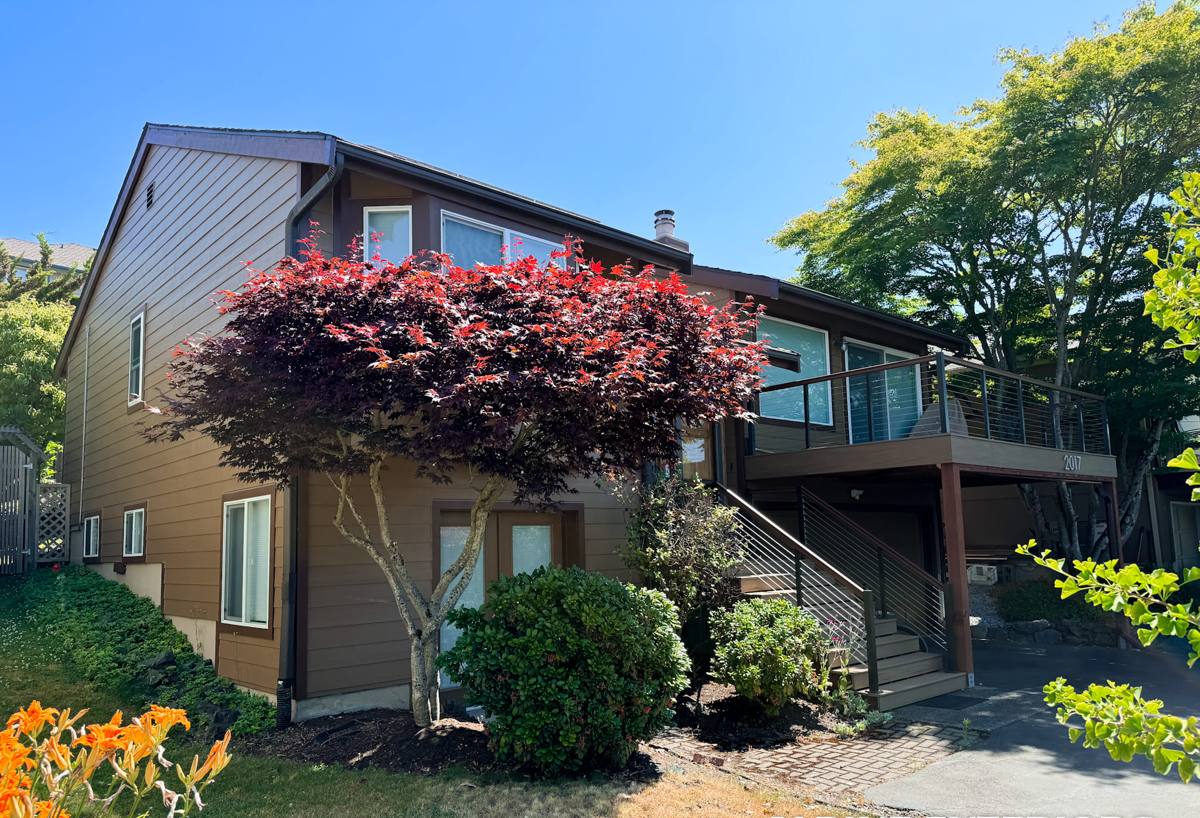
What Salt Air, Rain, and Moss Actually Do to a Roof
Salt Air and Metal Fatigue
Fasteners, flashing, and vents are usually the first casualties near the water. Standard galvanized nails and low-grade flashing can start showing surface corrosion well before the shingles around them are due for replacement. Once a fastener weakens or a flashing seam pits through, water finds its way in long before you'd notice a leak on the ceiling below.
Driving Rain and Wind-Driven Water
Wind off the water doesn't just fall on a roof — it pushes rain sideways and up under the edges of shingles and around penetrations. That means underlayment quality, valley details, and edge metal matter more here than they would on a calmer, more sheltered lot.
Moss and Sustained Moisture
Whatcom County's long wet season combined with tree shade gives moss months at a time to establish itself, especially on north-facing slopes. Moss holds moisture against the roofing material, lifts shingle edges as it grows, and accelerates granule loss. A roof that looks "mostly fine" from the ground can have moss working under the surface for years.
Signs a Silver Beach Roof Is Due for Replacement
- Granules collecting in gutters or at downspout outlets
- Shingles that are cupping, curling, or visibly bald in patches
- Moss or dark algae streaking that keeps returning after cleaning
- Rusting or pitted flashing around chimneys, vents, and skylights
- Soft spots in the decking, especially near valleys or eaves
- Daylight visible through the attic sheathing or recurring attic moisture
- A roof approaching or past the manufacturer's expected service life for this climate
Any one of these on its own isn't necessarily an emergency. Two or three together, especially on a roof that's 15-20+ years old, usually means it's time to stop patching and start planning a replacement.
What a Correct Roof Replacement Includes
A roof is a system, not a single product. Skipping any layer of that system is where most premature failures start — and it's usually invisible until something goes wrong.
Tear-Off and Deck Inspection
We remove the old roofing down to the deck rather than layering over it. That's the only way to actually see the condition of the sheathing — soft, rotted, or delaminated decking has to be replaced, not covered up, or the new roof has nothing solid to grip.
Underlayment Built for Wet Climates
Given how much sustained moisture this area sees, we use underlayment suited to marine conditions rather than the bare minimum. This is the layer that protects the deck if wind ever drives water past the shingles themselves.
Ice-and-Water Protection at Vulnerable Points
Eaves, valleys, and areas around penetrations get additional membrane protection. These are the spots where wind-driven rain and standing water cause the most damage, and they're the cheapest place to under-spec a job.
Corrosion-Resistant Flashing and Fasteners
Near the water, we don't rely on standard-grade metal for flashing, drip edge, and fasteners. Better-grade materials cost more up front and cost nothing extra in labor to install correctly — the difference shows up ten years down the road, not on install day.
Ventilation That Matches the Climate
Balanced intake and exhaust ventilation keeps the attic dry and temperature-stable, which matters for shingle lifespan and helps reduce the damp conditions moss thrives in. A roof can be installed perfectly and still underperform if the attic underneath it is trapping moisture.
Material Choices for a Marine Climate
| Material | How It Handles This Climate | Maintenance Reality |
|---|---|---|
| Standard architectural asphalt shingle | Good performance with proper underlayment and flashing; moss-resistant options available | Periodic moss/debris removal, especially on shaded slopes |
| Impact- and algae-resistant shingle | Better resistance to moss and streaking in damp, shaded conditions | Lower upkeep than standard shingle, still benefits from periodic inspection |
| Metal roofing | Sheds water fast and handles wind-driven rain well; needs marine-grade coatings near salt air | Low debris buildup, but coating and fastener quality matter more this close to the water |
| Low-grade or builder-basic materials | Not our standard for this area — corrode and degrade faster in salt air and sustained moisture | Higher long-term maintenance and shorter service life offset any upfront savings |
We don't push one product on every home. The right call depends on the roof's exposure, slope, tree cover, and your budget — we'll walk you through the honest trade-offs for your specific roof rather than a one-size-fits-all pitch.
What Drives Roof Replacement Cost Here
| Factor | Why It Matters in Silver Beach |
|---|---|
| Roof size and pitch | Steeper roofs and more complex slopes take longer and need more safety setup |
| Deck condition | Rotted or soft sheathing found during tear-off adds material and labor |
| Material grade | Marine-grade flashing, better underlayment, and algae-resistant shingles cost more but last longer here |
| Ventilation upgrades | Adding or correcting intake/exhaust venting protects the investment but adds scope |
| Access and tree cover | Tight lots and heavy tree canopy affect staging, cleanup, and moss-prevention planning |
We'll give you a real number after we've actually looked at your roof — broad estimates online rarely account for what tear-off reveals underneath.
Our Process for a Silver Beach Roof Replacement
- On-site inspection — we assess the deck, flashing, ventilation, and moss/moisture history specific to your property and its exposure
- Honest scope and estimate — you get a clear breakdown of what's needed and why, with material options that fit your budget and your roof's real exposure
- Tear-off and deck repair — full removal, deck inspection, and replacement of any compromised sheathing before anything new goes down
- System installation — underlayment, ice-and-water protection at vulnerable areas, corrosion-resistant flashing, and ventilation correction, in that order
- Final walkthrough — we go over the finished roof with you, explain what was done, and answer any questions before we consider the job complete
We also do daily cleanup — nails, debris, and old material don't get left for you to find in the yard or garden beds.
Why Local Experience in Silver Beach Matters
A roof replacement in a dry, inland climate and one a few blocks from the water are not the same job, even if the shingle brand on the invoice is identical. Crews who haven't worked this specific stretch of Whatcom County can underestimate how much moss pressure a shaded, north-facing slope takes on, or spec standard-grade flashing where marine-grade is worth the extra cost. We've seen what actually fails on roofs out here versus what holds up, and we build every replacement around that — not around a generic checklist.
Knowing the neighborhood also means knowing realistic timelines around Whatcom County's wet stretches, how tree cover on specific lots affects drying time and moss return, and what permitting and inspection look like locally. None of that is guesswork when it's the area you already work in every week.
Maintaining Your New Roof
- Clear moss and debris from shaded slopes at least once a year, more often under heavy tree cover
- Keep gutters clear so water isn't backing up under the roof edge
- Trim back overhanging branches to reduce shade, debris, and moss pressure
- Have flashing and fasteners visually checked every couple of years, especially this close to the water
- Address any small leak or soft spot immediately rather than waiting for it to spread
A well-installed roof still benefits from a little seasonal attention in this climate — it's a lot cheaper than a premature replacement.
Get a Straight Answer About Your Roof
If you're seeing moss coming back no matter how often you clean it, granules piling up in the gutters, or you're just not sure how much life is left in your roof, we're happy to take a look. We'll give you a clear, no-pressure estimate and tell you honestly whether replacement makes sense now or repairs will hold for a while longer. Fill out the form below to schedule a free estimate for your Silver Beach home.