 Fairhaven Siding
 Decking That Has to Survive South Hill's Weather, Not Just Look Good on Install Day
South Hill sits close enough to the water and the weather patterns that move through Whatcom County that a deck here works harder than a deck almost anywhere inland. Salt-laden air corrodes hardware, driving rain finds every gap in a poorly built substructure, and a long stretch of gray, damp months each year gives moss and algae months to take hold before anyone notices. Composite decking is a strong answer to a lot of these problems, but only when it's specified and installed with this specific climate in mind. A composite deck installed the same way you'd install one in a dry inland climate will disappoint a South Hill homeowner within a few seasons.
This page is about that one job, in this one area: composite decking for South Hill homes, done by a crew that already understands what this neighborhood's weather does to a deck over ten or twenty years, not just what it looks like on the day we drive away.
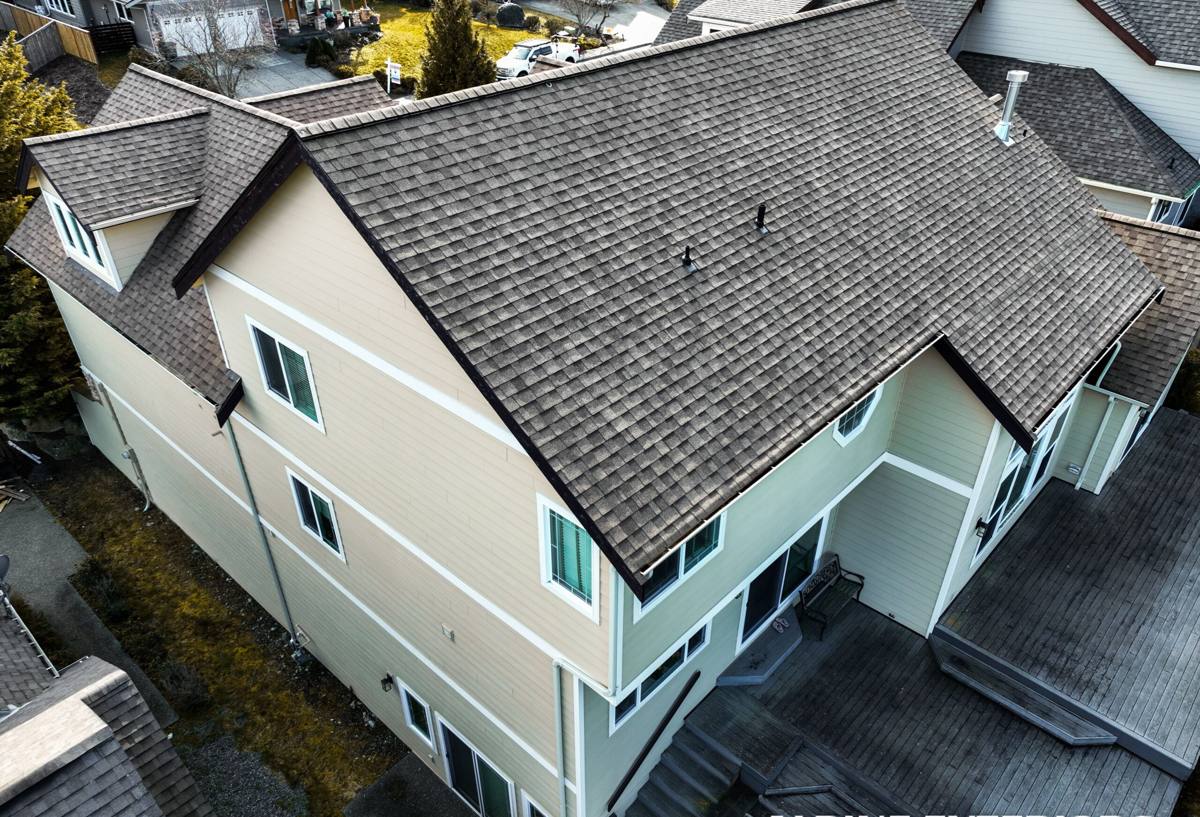
What South Hill's Climate Actually Does to a Deck
Salt Air and Corrosion
Proximity to Bellingham Bay means South Hill homes deal with airborne salt that settles on every exposed surface, including deck hardware. Standard zinc-coated screws and brackets can start corroding faster here than the manufacturer's literature assumes, which is why fastener selection matters as much as board selection. A composite deck can look flawless while the hidden hardware holding it together is quietly failing underneath.
Driving Rain
Whatcom County storms don't always come straight down. Wind-driven rain gets pushed sideways under railings, into ledger board connections, and behind fascia if those areas weren't flashed and sealed correctly. Composite boards themselves resist moisture well, but the framing, flashing, and hidden connections underneath still need to be built for wind-driven water, not just vertical rainfall.
Moss and Algae Season
Between the region's damp, low-light stretch each year and the shade many South Hill lots get from mature trees, moss and algae have a long runway to establish themselves on any horizontal surface that holds moisture. Composite decking resists rot, but moss and algae will still grow on its surface if drainage and airflow underneath the deck aren't handled properly during construction.
What a Correct Composite Deck Installation Involves
Composite decking is often marketed as low-maintenance, and the boards themselves largely live up to that. But the board is only one part of a deck system. The parts homeowners don't see are what determine whether a deck stays solid and dry for decades or starts having problems in year three.
- A properly sized and spaced framing system rated for the actual span and load, not just minimum code
- Corrosion-resistant fasteners and hardware suited to a salt-air environment, not standard-grade hardware
- Correct ledger board flashing and house-side waterproofing where the deck attaches to the structure
- Adequate airflow and drainage beneath the deck so moisture and debris don't sit and feed moss growth
- Hidden fastener systems or properly spaced fasteners that account for composite board expansion and contraction
- Board spacing and end-gapping set for our actual temperature swings, not a generic manufacturer default
- Manufacturer-approved installation methods that keep the product's warranty intact
Skipping any one of these doesn't usually show up right away. It shows up as a soft spot near a railing post, a moss-slick corner that never dries, or a warranty claim that gets denied because the installation didn't follow the manufacturer's requirements.
Composite, Wood, and PVC: An Honest Comparison for This Climate
Homeowners in South Hill often ask us to compare decking materials honestly, not just hear a sales pitch for whichever product we happen to be pushing. Here's how the main options actually perform against Whatcom County conditions.
| Material | Moisture & Salt Air Performance | Moss/Algae Resistance | Maintenance | Typical Lifespan Here |
|---|---|---|---|---|
| Composite decking | Strong — resists rot and won't absorb water into the board itself | Good; still needs periodic cleaning since growth is a surface issue | Occasional wash-down, no staining or sealing | 25-30+ years with correct installation |
| Pressure-treated wood | Moderate — treatment slows rot but doesn't stop it, especially at fastener points | Poor without regular treatment; porous surface holds moisture | Annual cleaning, staining, and sealing | 10-15 years before major repairs typical |
| PVC decking | Very strong — fully synthetic, unaffected by moisture | Good, similar to composite | Low; occasional wash-down | 25-30+ years |
We install composite most often on South Hill projects because it strikes a practical balance: better moisture and moss resistance than wood, a more natural wood-look appearance than most PVC products, and a maintenance routine that fits how people actually want to spend their weekends. That said, PVC is a legitimate option worth discussing for certain budgets and priorities, and we'll walk through the real trade-offs with you rather than steer you toward whichever product carries the best margin.
Our Process, Start to Finish
1. On-Site Assessment
We look at your specific lot conditions — sun exposure, tree cover, drainage patterns, proximity to the water, existing structure if this is a replacement — because those details change how we spec the substructure and hardware.
2. Honest Product Recommendation
We'll walk you through board options and price tiers based on your budget and how the space gets used, not push the most expensive line by default.
3. Permitting and Structural Planning
Whatcom County and City of Bellingham permitting requirements apply to most deck projects of meaningful size. We handle the permit process and design the framing to meet current code requirements for your specific deck size, height, and load.
4. Build
Framing, flashing, drainage, and fastener details get built to the standards outlined above — not shortcuts that only show up as problems later.
5. Walkthrough
We go over the finished deck with you, including basic care guidance specific to our climate, before we consider the job done.
Living With a Composite Deck in a Moss-Prone, Salty Climate
Composite decking is genuinely low-maintenance compared to wood, but "low-maintenance" in Whatcom County still means paying attention to a few things:
- Sweep or blow off leaves and debris regularly, especially under tree cover, so organic material doesn't sit and feed moss
- Wash the deck surface with a soft-bristle brush and mild cleaner once or twice a year to keep algae and mildew from establishing
- Keep gutters and downspouts near the deck clear so runoff isn't dumping extra water onto or under the deck surface
- Check railing posts and stair connections annually for any looseness, since hardware is the first thing salt air affects
- Avoid pressure-washing at close range or high PSI, which can damage the board's surface texture over time
None of this is heavy maintenance. It's the difference between a deck that still looks good in year fifteen and one that starts looking tired by year five, and it's the same reason we build the drainage and airflow details correctly in the first place — good maintenance habits only work if the deck was built to cooperate with them.
Why Local South Hill Experience Actually Matters
A lot of decking companies can install a composite board correctly on paper. Fewer have spent years watching how decks in this specific neighborhood age — which corners collect moss first, which fastener types hold up against the salt air coming off the bay, which lots need extra attention to drainage because of slope or shade. That kind of knowledge doesn't come from a manufacturer's install guide. It comes from having built and later serviced decks in South Hill and seeing what actually happens over time.
When you hire a crew that already works this area, you're not paying for a learning curve on your project. You're getting decisions about framing, flashing, and hardware that are already informed by what this exact climate does to a deck.
Questions Worth Asking Any Contractor Before You Hire
Whether you go with us or someone else, these are fair questions to ask any composite decking contractor bidding on a South Hill project:
- What fastener and hardware grade do you use, and is it rated for coastal/salt-air exposure?
- How do you handle ledger board flashing and waterproofing at the house connection?
- What's your plan for drainage and airflow underneath the deck?
- Will the installation meet the manufacturer's requirements to keep the product warranty valid?
- Are you pulling the required permit, and is your framing design engineered for the actual load and span?
- Can you explain the trade-offs between the composite lines you're recommending, not just push one option?
A contractor who can answer these clearly and specifically, without hedging, is a good sign. Vague answers about any of them are worth pausing on.
Ready to Talk About Your South Hill Deck?
If you're planning a new composite deck or replacing one that's showing its age, we're happy to come take a look, walk the site, and give you a straightforward, no-pressure estimate. Fill out the form below and we'll get in touch to schedule a time.