 Fairhaven Siding
 Why South Hill Roofs Wear Out Differently
South Hill sits close enough to Bellingham Bay that homes here deal with a mix most inland Washington roofs never see: salty, moisture-laden air, driving wind-driven rain off the water, and a moss season that can run eight months or longer. None of that is dramatic on its own, but stacked together year after year, it shortens the life of a roof that wasn't built or installed with this specific exposure in mind. Fasteners corrode faster near salt air. Underlayment and flashing details that would be "good enough" thirty miles inland let water in here. And moss doesn't just look bad — left alone, it lifts shingle edges, holds moisture against the roof deck, and works its way toward rot.
We don't treat South Hill roofs like a generic Whatcom County job. The material choices, the flashing details, the ventilation plan, and the maintenance conversation are all shaped by what actually happens to a roof a few miles from saltwater with a wet Pacific Northwest winter on top of it.
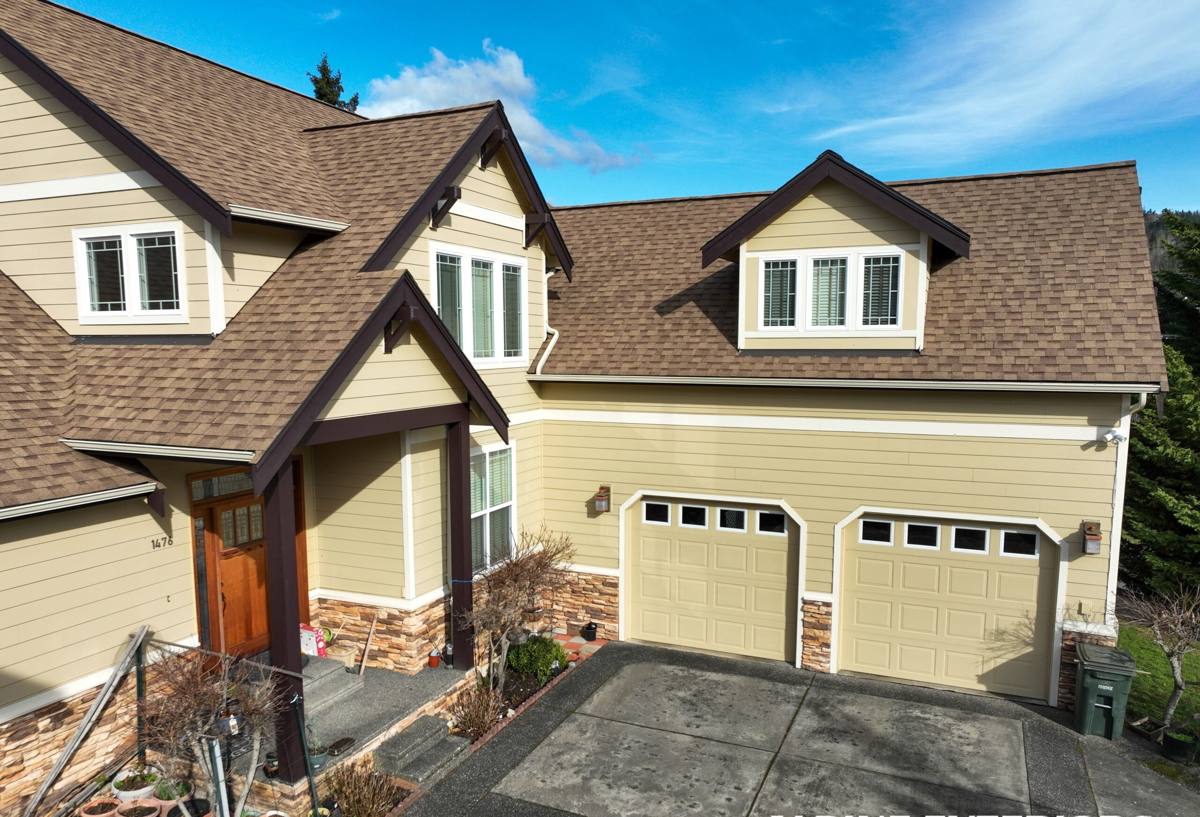
What "Correct" Actually Means on a New Roof Installation
A lot of roof problems trace back not to bad materials but to steps that got skipped or rushed during installation. On a job done right, every one of the following gets real attention, not a checkbox:
Tear-Off and Deck Inspection
We remove the old roofing down to the deck rather than layering new material over old — layering for expedience hides deck damage and voids most manufacturer warranties. Once the deck is exposed, we inspect it board by board for soft spots, delamination, and moisture staining, which is common on older South Hill homes where a slow leak went unnoticed for years.
Underlayment and Ice-and-Water Protection
Synthetic underlayment goes down across the whole roof, with self-adhering ice-and-water shield at the eaves, valleys, and around every penetration — the places wind-driven rain actually finds its way in during a real Pacific storm off the water.
Flashing
Step flashing at walls and chimneys, new valley metal, and properly lapped counterflashing. Flashing failure, not shingle failure, is the most common reason a "new" roof leaks within the first few years.
Ventilation
Balanced intake and exhaust ventilation keeps the attic close to outdoor temperature, which reduces condensation on the underside of the deck and slows both ice buildup and moss growth.
Choosing the Right Material for This Exposure
There isn't one "best" roofing material for South Hill — there's a best material for a given budget, roofline, and how much upkeep the owner wants to sign up for. Here's how the common options actually compare in this climate:
| Material | Moisture & Salt-Air Behavior | Moss Resistance | Maintenance |
|---|---|---|---|
| Architectural asphalt shingle | Good when installed with proper flashing and ventilation; standard warranty | Moderate — benefits from zinc or copper strips and regular cleaning | Low to moderate |
| Standing-seam metal | Excellent shedding of driving rain; needs corrosion-rated fasteners near salt air | High — moss struggles to hold on smooth metal | Low |
| Cedar shake | Attractive but absorbs moisture; needs consistent airflow underneath to avoid rot | Low — moss and algae favor cedar without upkeep | High |
| Composite or synthetic shake | Good moisture resistance, doesn't absorb water like real wood | Moderate to high depending on product | Low to moderate |
We install and stand behind architectural asphalt and standing-seam metal as our default recommendations for South Hill homes, because both hold up to sustained damp weather with a manageable maintenance routine. Cedar shake can still be the right call for a homeowner set on that look, but we're upfront that it asks for more attention here than it would in a drier climate — that's a maintenance-burden trade-off, not a knock on the material itself.
Moss and Algae: Prevention Beats Removal
A long moss season means South Hill roofs need a moss strategy built in at installation, not bolted on later. A few things that make a real difference:
- Zinc or copper control strips installed near the ridge, which release trace metal ions that discourage moss growth every time it rains
- Keeping overhanging branches trimmed back so roof sections get sunlight and airflow
- Choosing a shingle or metal profile that doesn't trap organic debris in valleys and low-slope sections
- Scheduling a gentle roof cleaning — never high-pressure washing, which strips granules and shortens shingle life — every year or two depending on shade and exposure
Algae Streaking vs. Moss
Not every dark patch on a roof is moss. Black or greenish streaking on asphalt shingles is usually algae, which feeds on the limestone filler in the shingle and thrives in humid coastal climates like this one. Algae-resistant shingles with built-in copper granules resist it far better than standard shingles, which is worth asking about specifically when you're comparing shingle products for a South Hill home.
Moss that's allowed to mat down holds water against the roofing material around the clock, which is a much bigger problem in a Whatcom County winter than a few weeks of summer dryness elsewhere.
Our Installation Process
Homeowners generally want to know what actually happens once they sign off on a new roof, so here's the real sequence:
- On-site inspection and measurement, including attic ventilation and deck condition assessment
- Written estimate covering material options, tear-off scope, and any deck repair contingencies
- Material order and a scheduled start date, with protection set up for landscaping, siding, and gutters before tear-off begins
- Full tear-off to the deck, with damaged sheathing replaced as needed
- Underlayment, ice-and-water shield, and flashing installed at all vulnerable points
- New roofing material installed to manufacturer specification, including proper fastener type and spacing for wind and moisture exposure
- Ventilation components installed or upgraded
- Final cleanup, magnetic sweep for nails, and a walk-through
Timing Your Project Around Local Weather
Roofing can be installed nearly year-round in Western Washington with the right crew and materials, but scheduling still matters here more than in a drier climate. Late spring through early fall gives the most consistent dry windows for tear-off and underlayment work, which cuts the risk of exposed decking taking on rain mid-project. That said, a roof with active leaks or failed flashing shouldn't wait for "the right season" — we install through the wetter months too, working around weather windows and tarping any exposed sections if a job has to span more than one day. If you're planning ahead rather than dealing with an emergency, booking before the fall rains ramp up gives everyone more breathing room.
What Affects the Cost of a New Roof
We won't quote a number here that doesn't apply to your specific roof — a legitimate estimate has to come from an on-site look. What we can tell you is which factors move the price, and how they relate to each other:
| Factor | Why It Matters |
|---|---|
| Roof size and number of layers to remove | More square footage and tear-off layers mean more labor and disposal cost |
| Roof pitch and complexity | Steep or heavily cut-up rooflines take longer and need more safety setup |
| Deck condition | Rotted or delaminated sheathing found during tear-off adds material and labor |
| Material choice | Asphalt shingle, metal, and cedar carry meaningfully different material costs |
| Access and site conditions | Tight lots, steep driveways, or limited staging area can add setup time |
| Ventilation and flashing upgrades | Bringing older ventilation or flashing up to current standards adds scope but pays off in roof life |
Why Local Experience on South Hill Matters
A roofing crew that already works in this part of Fairhaven has already seen how South Hill's exposure to Bellingham Bay plays out on real roofs — which valleys collect moss first, which elevations take the worst of the wind-driven rain, and which older homes tend to have deck damage hiding under original roofing. Prevailing storms in this part of Washington tend to drive in from the southwest, so we pay particular attention to flashing and underlayment on southwest-facing roof planes and around any dormers or additions that create extra valleys catching that wind-driven rain. That's the kind of detail that's easy to miss for a crew that doesn't regularly work this specific exposure, and it also means we're not learning Whatcom County permit requirements and inspection expectations for the first time on your job.
We're also still around after the install. A roof problem that shows up two winters later is a lot easier to resolve with a contractor who's local and has your job on file than with a crew that finished up and moved on to the next county.
Checklist Before You Commit to a New Roof
- Get a written estimate that separates material cost, labor, tear-off, and any deck repair contingency
- Confirm the underlayment and ice-and-water shield plan, not just the visible shingle or metal brand
- Ask how ventilation will be handled — this affects both moisture control and moss resistance
- Check that flashing at valleys, walls, and chimneys is being replaced, not reused
- Ask about fastener corrosion resistance if you're within a few miles of the water
- Get the manufacturer warranty terms in writing, including what voids them
- Confirm cleanup and disposal are included in the price
If your South Hill roof is showing granule loss, moss buildup, curling edges, or a leak you haven't been able to pin down, we're glad to take a look. We'll give you a straightforward, no-pressure estimate based on what we actually find on your roof — fill out the form below to get started.