 Fairhaven Siding
 Why South Hill Roofs Wear Differently
South Hill sits close enough to Bellingham Bay and the Fairhaven waterfront that homes here deal with a combination most inland Washington roofs never see: salt-laden air, driving rain that comes in sideways off the water, and a moss season that can run eight months or longer in a wet year. None of these three things is dramatic on its own. Together, over a decade or two, they're what turns a well-installed roof into one that's leaking at the valleys, staining at the ridge, and losing granules faster than the manufacturer's warranty assumed.
We're not describing anything unique to one street or one subdivision — this is simply what Whatcom County's marine climate does to composition shingles, cedar, and metal roofing alike. What changes house to house is exposure: a roof facing the prevailing wind and rain off the water works harder than one tucked behind a hill or a stand of trees. A repair plan that ignores that difference is guessing. One built around it isn't.
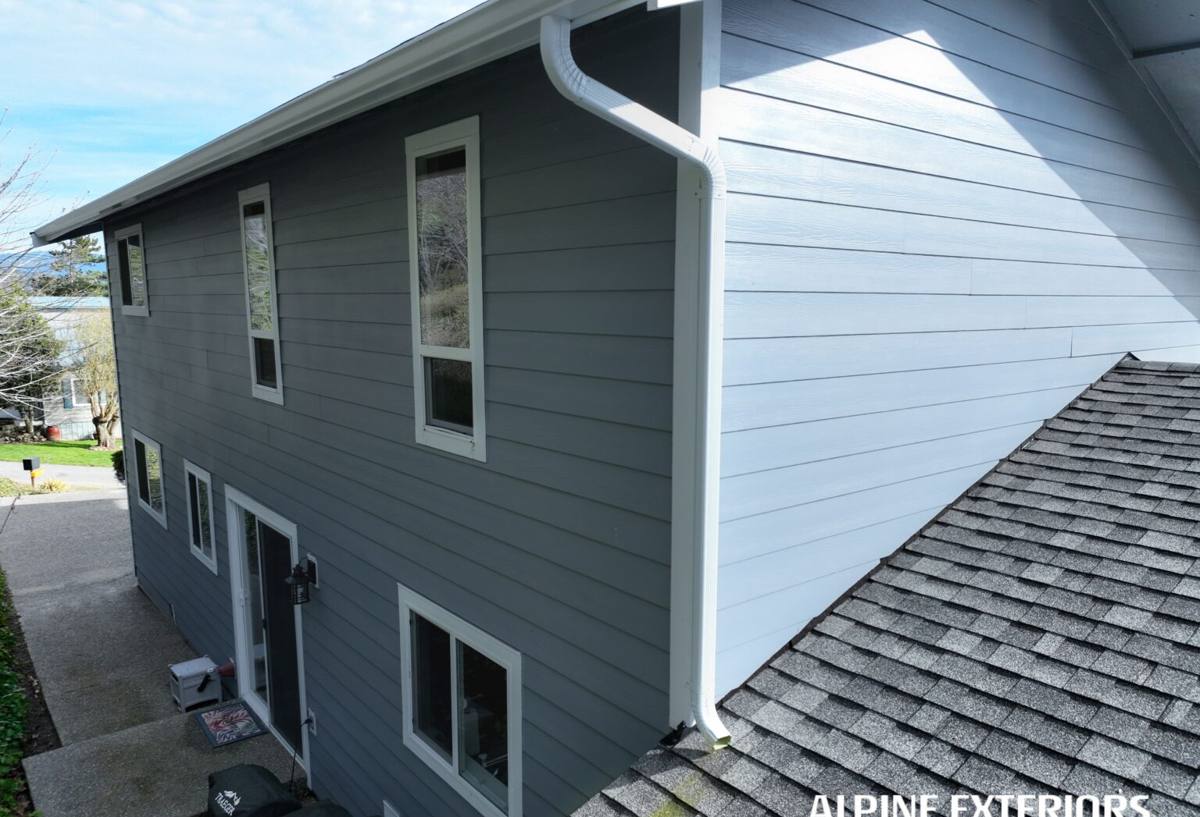
What "Roof Repair" Actually Covers
Roof repair is targeted work — fixing what's actually failing without tearing into a roof that still has useful life left. It's the right call far more often than homeowners assume, and it's the wrong call when the underlying decking or underlayment is compromised. Knowing which situation you're in is the first job, before any shingles come off.
In South Hill, the repairs we're called out for most often fall into a few categories:
- Leaks at valleys, chimneys, skylights, and other flashing penetrations
- Wind and storm damage — lifted, cracked, or missing shingles after a front comes through
- Moss and organic growth that has worked under shingle tabs and lifted them
- Granule loss and premature aging on south- and west-facing slopes exposed to weather
- Fascia, soffit, and gutter damage tied to roof drainage problems
- Soft or spongy decking found under a section of failed roofing
Some of these are quick fixes. Others — especially soft decking — tell you the repair needs to go a layer deeper than the shingles.
Signs Your South Hill Roof Needs Attention
Most roof problems don't announce themselves as a dramatic leak. They show up as small, easy-to-miss signs first. Here's what we tell South Hill homeowners to watch for, especially after the wet season sets in:
- Dark streaking or green-black growth on north-facing or shaded slopes
- Granules collecting in gutters or at downspout outlets
- Shingle tabs that look lifted, curled, or slightly out of plane with the rest of the roof
- Water stains on interior ceilings, especially near chimneys or where two rooflines meet
- Daylight visible through the attic roof deck
- Rust streaking or soft spots around metal flashing and vent boots
- Higher heating bills without another obvious cause, which can point to attic moisture
Any one of these on its own isn't an emergency. But moss and lifted tabs left alone through another wet season usually turn into a leak — and a leak caught early is a patch, while one caught late is a repair job that includes drywall, insulation, and sometimes decking.
Moss, Algae, and Salt Air: The Real Long-Term Threats
Moss Season
Moss doesn't just sit on top of a roof — it holds moisture against the shingle surface and works its rhizoids under the tab edges, which is what actually causes the lift and the leak path. By the time moss is visible from the ground, it's often already doing damage you can't see. Removing it correctly matters as much as removing it at all: aggressive scraping or high-pressure washing strips granules and shortens the roof's remaining life just as surely as the moss would have. We hand-clean growth, treat the surface to slow regrowth, and only replace what the moss has actually compromised — not the whole slope out of caution.
Salt Air and Corrosion
Proximity to the bay means fasteners, flashing, and metal roof components see more corrosion pressure here than they would ten or fifteen miles inland. Galvanized fasteners and lower-grade flashing show rust and pitting years before they would in a drier, saltier-free environment. When we're repairing flashing or replacing fasteners on a South Hill roof, we upgrade to corrosion-resistant hardware as standard practice — not an upsell, just what holds up in this specific environment.
Driving Rain
Wind-driven rain off the water doesn't just fall straight down onto a roof — it gets pushed sideways and up under laps, ridge caps, and flashing that would stay dry in calmer weather. Repairs in exposed areas need to account for that, which means proper lap direction, sealed fastener penetrations, and flashing details that don't rely on caulk as the only line of defense.
Common Repair Types We Handle
| Repair Type | Typical Cause in South Hill | Our Approach |
|---|---|---|
| Flashing leaks | Corroded or improperly lapped flashing at chimneys, valleys, skylights | Remove and rebuild the flashing detail, not just re-caulk it |
| Wind damage | Storm fronts off the water lifting or tearing shingles | Replace damaged shingles, check surrounding fasteners and seal |
| Moss lift | Extended wet season, shaded or north-facing slopes | Hand removal, treatment, spot shingle replacement where lifted |
| Granule loss | UV and weather exposure over the shingle's service life | Assess remaining life; repair or recommend replacement honestly |
| Soft decking | Long-term hidden leak, often discovered mid-repair | Cut back to sound wood, replace decking before re-roofing that section |
| Fastener corrosion | Salt air accelerating rust on lower-grade hardware | Upgrade to corrosion-resistant fasteners during any repair |
How We Actually Do the Work
Inspection First
Every repair starts on the roof, not in a spreadsheet. We look at the specific area you flagged, but also check valleys, flashing, and vent penetrations nearby — a leak reported in one room often traces back to a failure point several feet away. We check the attic side too, where visible staining, dark wood, or damp insulation tells us how long a problem has actually been active.
An Honest Scope
You get a plain explanation of what's actually wrong, what we recommend fixing, and what we'd leave alone. If the underlying decking is sound and it's a flashing or shingle issue, we say so. If we find soft decking or a repair that's really the third patch on the same failing area, we tell you that too, including when replacement is the more honest long-term answer than another repair.
The Repair Itself
We match materials to what's already on the roof where that's possible, rebuild flashing details rather than patching over failed ones, and use fasteners and underlayment suited to this climate rather than whatever's cheapest. Old, brittle sealant gets removed rather than layered over — sealing over a failure point just hides it until the next wet season.
Cleanup and Follow-Through
We clear debris and old material from gutters and the ground, and we walk the repair with you before we call it done. If it's a moss job, we'll also give you a realistic sense of when to expect regrowth and what a normal maintenance interval looks like for your specific slopes and shading.
Repair vs. Replacement: How We Decide
Nobody benefits from a roof getting replaced before it needs to be, and nobody benefits from a roof getting patched past the point where patching makes sense. We weigh a handful of honest factors:
| Factor | Favors Repair | Favors Replacement |
|---|---|---|
| Age of roofing | Under roughly two-thirds of expected service life | Near or past expected service life for the material |
| Extent of damage | Isolated to one slope, valley, or penetration | Spread across multiple slopes or recurring in the same areas |
| Decking condition | Solid, dry decking under the affected area | Soft or water-damaged decking found in more than one spot |
| Granule condition | Consistent coverage, isolated bald spots | Widespread granule loss across most slopes |
| Repair history | First or second repair to this section | Same area patched multiple times already |
Cost is part of this conversation too, but we'd rather walk you through the actual condition of the roof than lead with a number. A roof that's genuinely repairable shouldn't be sold as a replacement, and vice versa.
Materials and Products: Our Standard
We use materials rated for coastal and marine exposure — corrosion-resistant flashing and fasteners, underlayment suited to extended wet seasons, and shingle products with algae-resistant granules where a roof's moss and shade exposure calls for it. We're straightforward about trade-offs rather than pushing any one product as a cure-all: algae-resistant granules reduce staining and slow regrowth, but they don't eliminate the need for periodic cleaning on a heavily shaded slope. Matching material to the specific roof and its exposure matters more than the brand name on the wrapper.
Why a Crew That Works South Hill Matters
A roof repair contractor who mostly works dry, inland roofs will still know how to nail a shingle correctly — but they may not think twice about flashing grade, moss cycle timing, or which slopes on a South Hill roof take the worst of the weather off the bay. We work this part of Fairhaven and the surrounding Whatcom County area regularly, which means we're not guessing at how a repair will hold up here — we're seeing the results of similar repairs on similar roofs across multiple wet seasons. That's the difference between a repair that's technically correct and one that's actually built for where it sits.
After the Repair: Keeping It That Way
A good repair buys you time, but South Hill's climate doesn't stop working on your roof once we leave. A short annual maintenance routine goes a long way toward protecting the work:
- Clear gutters and downspouts before the fall rains start in earnest
- Have shaded or north-facing slopes checked for moss regrowth every year or two
- Trim back branches that keep a section of roof shaded and damp
- After any significant windstorm, do a quick visual check from the ground for lifted or missing shingles
- Address small leaks immediately rather than waiting for a dry stretch to "see if it's still happening"
If you're seeing moss, a stain on the ceiling, or storm damage on a South Hill roof, we're glad to take a look and give you a straight answer on what it needs. Reach out for a free, no-pressure estimate — the form below gets you started.