 Fairhaven Siding
 Why South Hill Windows Wear Differently Than Windows Inland
South Hill sits up above Fairhaven with open exposure to Bellingham Bay, and that position cuts both ways. The views are part of why people love living there, but the same exposure means homes take a steadier beating from salt-laden air, wind-driven rain, and the long stretch of gray, wet months that define a Whatcom County winter. Windows are one of the first parts of a house to show that wear, because they combine several materials — glass, metal hardware, wood or vinyl frames, sealants — that all age at different rates when they're constantly damp and occasionally salty.
Salt Air and Metal Components
Salt air doesn't just affect homes right on the water. Wind carries fine salt spray well up the hill, and over years it accelerates corrosion on window hardware — hinges, cranks, balance mechanisms, and screen frames in particular. Once corrosion sets into a working part, the window stops operating smoothly long before the glass or frame itself fails, and that's often the first real sign of age on a South Hill window.
Wind-Driven Rain and Water Intrusion
Storms coming off the water don't just fall straight down — they drive rain sideways into window openings, which puts far more stress on flashing and sealant joints than a calm, vertical rain ever would. A window that would hold up fine in a sheltered inland yard can leak on South Hill simply because of how the wind hits that side of the house. This is why the installation details around a window matter as much as the window unit itself.
Moss, Shade, and Slow-Drying Trim
Whatcom County's moss season runs long, and on lots with mature trees or north-facing walls, window trim and sills can stay damp for days after a storm. Wood trim that never fully dries is exactly what invites rot, and it's a slow, quiet kind of damage that's often not visible until the frame underneath has already softened.
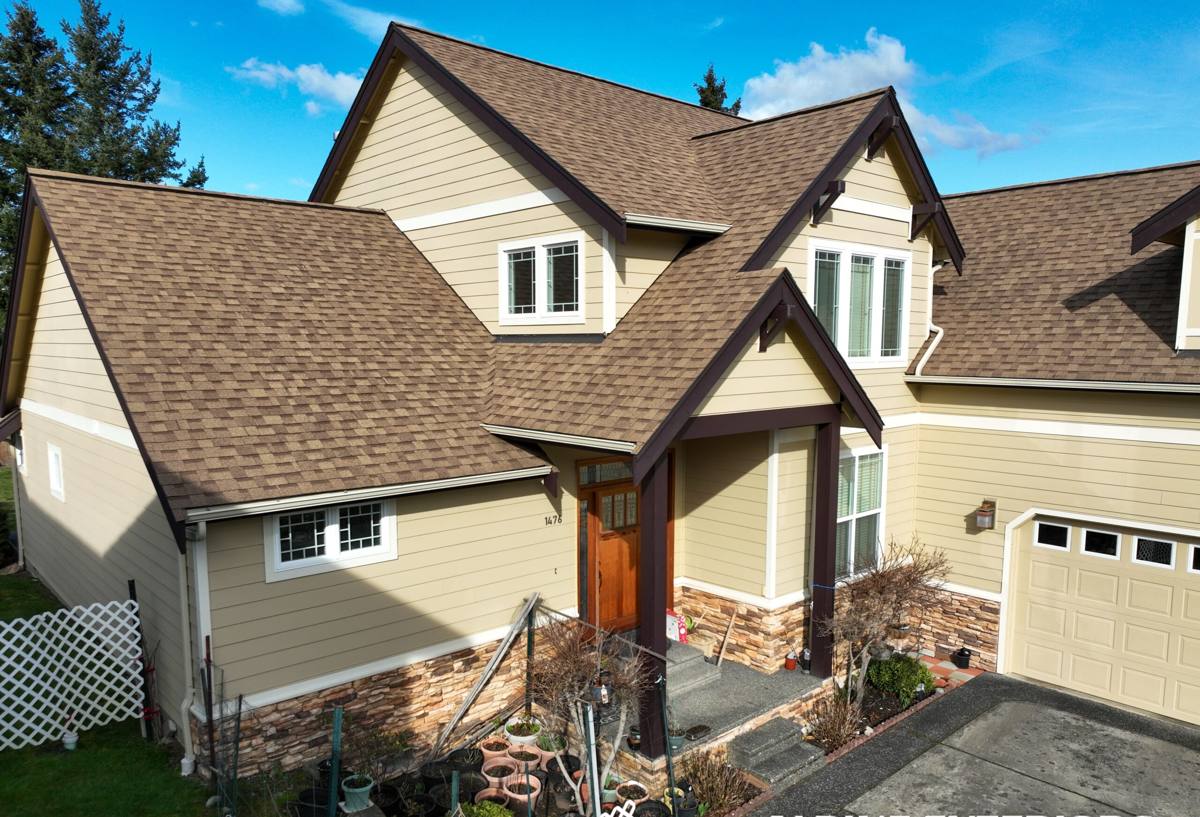
Signs Your South Hill Home Is Ready for Window Replacement
Most homeowners don't wake up one day and decide it's time for new windows — it's usually a slow accumulation of small annoyances that eventually adds up. Here's what we hear about most often on service calls in this neighborhood:
- Windows that are hard to open, or that stay open with a stick or shim because the balance has failed
- Visible fogging or a permanent haze between panes, which means the seal on a double-pane unit has broken
- Soft or discolored wood on the sill, jamb, or exterior trim around the window
- Cold drafts near the window even when it's fully latched
- Condensation forming on the inside of the glass regularly during winter months
- Paint that keeps failing on the exterior trim no matter how often it's redone
- Visible corrosion or a chalky white residue on aluminum frames or hardware
- Noticeably higher heating bills compared to similar homes nearby
Any one of these on its own might be a minor fix. Several of them together, especially on a home with its original windows, usually means replacement is the more honest answer than another round of caulk and weatherstripping.
What a Correct Window Replacement Job Actually Involves
Swapping in a new window is the easy part. The work that actually determines whether the job lasts is everything around the window — the parts a homeowner doesn't see once the trim goes back on.
A proper replacement starts with checking the condition of the rough opening once the old window is out. On older South Hill homes, this is the point where hidden water damage from years of wind-driven rain sometimes shows up, and it needs to be dealt with before a new window ever goes in — not covered over. From there, correct flashing and a sloped sill pan matter more in this climate than almost anywhere else, because they're what redirect any water that does get past the exterior finish back outside instead of into the wall cavity. Sealant placement matters too: sealing only the exterior face and skipping the interior air seal is a common shortcut that leads to condensation and drafts even with a brand-new window installed.
What We Check On Every Installation
- Condition of the framing and sheathing behind the old window before anything new goes in
- Proper shimming so the window is square and doesn't bind or leak at the corners
- Correct flashing sequence — sill pan, jamb flashing, and head flashing integrated with the house wrap or building paper
- Continuous exterior sealant bead at all the right joints, not just where it's easy to reach
- Interior air sealing with low-expansion foam or backer rod, separate from the exterior weatherproofing
- Insulation in the gap between the window frame and rough opening, done without overpacking
- Finish trim reinstalled or replaced so it sheds water rather than holding it against the wall
Choosing the Right Window for a Coastal Whatcom County Home
Frame material is one of the more consequential decisions on a South Hill window project, because it determines how much upkeep the window will need for the next twenty-plus years in this climate.
| Frame Material | How It Handles Salt Air & Moisture | Maintenance | Typical Lifespan |
|---|---|---|---|
| Vinyl | Doesn't corrode or rot; performs well in salt air with no coating to fail | Low — occasional cleaning | 20–30 years |
| Fiberglass | Very stable in wet, salty conditions; dimensionally consistent through temperature swings | Low | 30+ years |
| Aluminum | Prone to corrosion and pitting near the water without a quality anodized or powder-coat finish | Moderate to high | Varies widely with finish quality |
| Wood / Wood-Clad | Handsome and traditional, but exposed wood needs consistent upkeep in a marine climate | High — regular painting or staining | 15–25 years without diligent maintenance |
We're not against wood windows on principle — they suit certain older South Hill homes visually, and wood-clad options with a durable exterior cladding cut down on the maintenance burden considerably. But we're honest with homeowners that any exposed wood in this climate is a standing maintenance commitment, not a one-time purchase. If low upkeep matters more than matching an original historic look, vinyl or fiberglass will simply ask less of you over the years.
Glass Packages and Energy Performance
The glass itself does most of the work of keeping a home comfortable and dry on the inside, and it's worth understanding the basic choices rather than just taking whatever the manufacturer's standard package includes.
- Double-pane vs. triple-pane: Double-pane with a good low-E coating is adequate for most South Hill homes. Triple-pane adds real value on north- or west-facing walls that take the brunt of winter storms, and it also helps cut down on interior condensation.
- Low-E coatings: These microscopically thin coatings reduce heat loss without darkening the glass noticeably, and they're standard on any quality window today.
- Argon or krypton gas fill: The inert gas between panes improves insulation value. It's a minor cost upgrade with a real, if modest, payoff in comfort and energy use.
- Condensation resistance: If you're currently dealing with fogged or dripping interior glass in winter, ask specifically about the condensation resistance rating of any replacement — it's a more useful number for this climate than the general energy rating alone.
Our Process, Start to Finish
- On-site assessment: We measure every opening, check the condition of the existing framing where visible, and talk through what's actually driving the need for replacement — comfort, appearance, leaks, or all three.
- Straightforward proposal: You get a clear, itemized estimate covering the windows, installation, and any trim or repair work — no vague allowances that turn into surprises later.
- Ordering and scheduling: Once you approve the scope, we order the windows and schedule the install around a stretch of workable weather where possible.
- Removal and inspection: Old windows come out carefully, and we inspect the rough opening before anything new goes in. If we find hidden damage, we stop and talk to you before proceeding.
- Installation: New windows are set, shimmed, flashed, sealed, and insulated following the sequence that actually keeps water out in this climate — not just the fastest way to get the trim back on.
- Cleanup and walkthrough: We clean up the work area, operate every window with you, and answer any questions about care before we consider the job done.
Cost Factors for South Hill Window Projects
Every project is different, but a few factors consistently drive the price up or down more than homeowners expect:
| Factor | Why It Matters |
|---|---|
| Number and size of openings | More openings and larger windows mean more material and labor, but per-window pricing often improves with volume |
| Frame material chosen | Vinyl is generally the most budget-friendly; fiberglass and wood-clad cost more upfront but can save on maintenance |
| Condition of existing framing | Hidden rot or water damage found during removal adds repair time before the new window can go in |
| Access and site conditions | Steep lots, tight side yards, or second-story openings common on South Hill can affect staging and labor time |
| Trim and finish work | Matching existing exterior trim or restoring interior casing adds finish carpentry time |
| Glass package upgrades | Triple-pane, upgraded low-E coatings, or specialty tinting add cost per unit |
As a very general sense of scale, installed replacement windows in this region commonly run somewhere in the low-to-mid thousands per opening depending on size and material, with whole-house projects varying widely based on the factors above. We'd rather walk your specific windows and give you real numbers than throw out a figure that doesn't apply to your house.
Why a Crew That Already Works South Hill Makes a Difference
South Hill has its own quirks that matter on installation day. Many lots are steep or narrow, which affects how equipment and materials get staged. A fair number of homes are older builds with framing details and trim profiles that don't always match what's common in newer subdivisions, so matching existing casing or working around non-standard rough openings takes some judgment calls that come from having done it before. And because the hill catches wind and rain differently than more sheltered parts of Fairhaven, a crew that's already worked the area has a feel for which walls need extra attention to flashing and sealant, rather than treating every job the same way regardless of exposure.
None of that replaces doing the fundamentals correctly on every single window. But it does mean fewer surprises, fewer assumptions that don't hold up on site, and a faster, cleaner job overall.
Keeping New Windows Performing in a Marine Climate
New windows are a real investment, and a little seasonal attention keeps them performing well for decades in this climate:
- Rinse hardware and tracks periodically to clear salt residue before it can start corrosion
- Clear moss and debris from sills and nearby trim, especially on shaded or north-facing walls
- Check exterior caulk lines once a year and touch up any that have cracked or pulled away
- Keep nearby shrubs and trees trimmed back so walls and trim can dry out between storms
- Operate every window a few times each season so hardware doesn't seize from disuse
If you're weighing whether it's time to replace the windows on a South Hill home, or you just want a straight answer about what's driving a draft or a leak, we're happy to take a look. Reach out for a free, no-pressure estimate using the form below.