 Fairhaven Siding
 Chuckanut's Wooded, Waterfront Weather Is Hard on Roofs
Homes along the Chuckanut Drive corridor sit in one of the more demanding microclimates in Whatcom County. The tree canopy is heavy, the terrain is steep, and the roofs up there face a mix of conditions that a lot of inland Fairhaven and Bellingham homes never deal with at the same intensity: salt-laden air rolling off the bay, driving rain pushed sideways by wind funneling through the trees, and a moss season that can run eight or nine months out of the year in the shadier spots. When a windstorm or a heavy winter system comes through, the damage on a Chuckanut roof often isn't limited to a few missing shingles — it's usually a combination of wind lift, falling debris, and water finding its way into places it's been slowly weakening for years.
That combination is exactly why storm damage repair here needs to be treated as its own kind of job, not a generic patch. A roof that's been living under fir and cedar canopy with constant moisture and periodic salt exposure behaves differently after a storm than a roof in a dry, open subdivision, and repairing it correctly means understanding that history, not just fixing what's visibly broken on top.
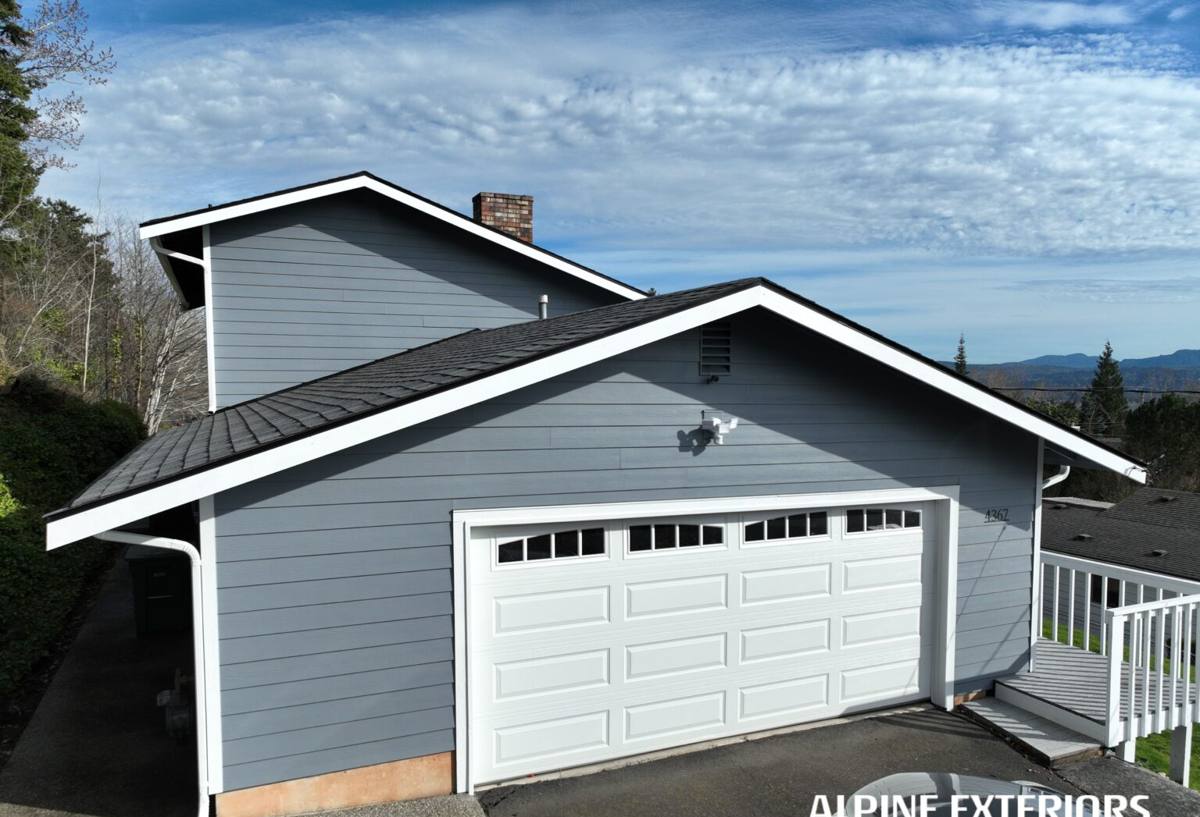
What Counts as Storm Damage on a Chuckanut Roof
Storm damage isn't always obvious from the ground, and it isn't always a dramatic hole in the roof. In our experience working this area, it usually falls into a handful of categories:
- Wind-lifted or torn-off shingles — especially on exposed slopes facing open water, where gusts hit the roof edge and ridge lines hardest.
- Impact damage from falling limbs and debris — common under the mature tree cover that gives Chuckanut its character, but also its risk during windstorms.
- Flashing failures — around chimneys, skylights, and valleys, where wind-driven rain gets pushed uphill under flashing that was fine in a normal rain but not a sideways one.
- Moss and debris damming — storms often dislodge moss mats and needle buildup that's been accumulating, and it piles up at valleys and eaves, backing water up under the roofing.
- Gutter and fascia damage — wind and falling branches tear gutters loose, which then lets water dump straight down the siding and foundation instead of away from the house.
The tricky part is that several of these can happen in the same storm and compound each other. A limb strike that cracks a few shingles is a straightforward fix. That same strike on a roof section already softened by years of moss retention and slow moisture intrusion can mean rotten decking underneath — and that's a different, more involved repair.
Why Salt Air and a Long Moss Season Change the Repair
Two things about this part of Whatcom County shape how we approach every storm repair here. First, the salt air off the bay accelerates corrosion on exposed metal — nails, flashing, gutter hardware, and fastener heads all age faster than they would a few miles inland. A repair that looks fine going in can fail early if it's built with standard fasteners and flashing instead of materials rated for coastal exposure.
Second, the moss. Whatcom County's damp, shaded conditions mean moss and lichen growth is a near-constant maintenance issue, not a seasonal one, on roofs shaded by trees. Moss holds moisture directly against the roofing material, and over time it lifts shingle edges and traps water at seams. When a storm then rips loose a mat of moss that's been growing for a year or two, it frequently takes granules and even shingle tabs with it, and it exposes felt or decking that's already been sitting damp underneath. A repair that just replaces the missing shingle without addressing what's around it — the moss growth, the drainage path, the exposed underlayment — tends to fail again within a season or two.
This is also why we don't treat storm repair and moss treatment as two separate services out here. On a Chuckanut roof, they're almost always connected.
What a Correct Storm Damage Repair Actually Involves
Checking What's Under the Surface
Any storm repair that stops at the visible shingle layer is incomplete. Once damaged material is pulled back, we check the decking underneath for soft spots, delamination, or staining that indicates water has already been getting in gradually — separate from whatever the storm just did. On a roof with heavy tree cover, this step matters more than most homeowners expect, because slow leaks under moss can go unnoticed for a long time.
Matching Materials, Not Just Patching
Shingle color and profile change over the years, and a mismatched patch job stands out and can also perform differently than the surrounding roof. Where an exact match isn't available, we talk through options honestly — including whether a larger section replacement makes more sense than a visibly patched repair, both for appearance and for long-term consistency in how the roof sheds water.
Flashing and Underlayment Done Right
Because wind-driven rain in this area often comes at an angle rather than straight down, flashing details around valleys, chimneys, and roof-to-wall transitions get extra attention. We use fasteners and flashing suited to salt-air exposure rather than whatever is cheapest, since the cost difference is small compared to redoing a repair that corrodes early.
Addressing the Moss and Drainage, Not Just the Hole
If moss or debris contributed to the damage, the repair includes clearing growth back from the repaired area and confirming that valleys, gutters, and downspouts are actually moving water off the roof. Fixing the shingle without fixing the drainage path just sets up the same failure again.
Our Storm Damage Repair Process
- Inspection and documentation. We look at the full roof, not just the obviously damaged section, and take note of anything — moss buildup, aging flashing, soft decking — that could turn into the next problem. This documentation is also what you'll want if you're filing an insurance claim.
- Honest scope and estimate. We explain what's storm damage, what's pre-existing wear, and what we'd recommend addressing now versus what can reasonably wait. No pressure to bundle in unrelated work.
- Safe removal of damaged material. Including checking the decking underneath before anything new goes down.
- Repair with materials suited to this climate. Matched roofing where possible, corrosion-resistant fasteners and flashing, and proper underlayment at the repair area.
- Drainage and moss check. Clearing debris, confirming valleys and gutters are functioning, and flagging any areas trending toward future moss buildup.
- Final walkthrough. We show you what was done and why, in plain terms, before we consider the job finished.
Repair or Replace? Cost Factors to Weigh
Not every storm-damaged roof needs full replacement, but it's worth understanding what pushes a job from a simple repair toward something bigger. These are typical ranges for this area — every roof is different, and a proper quote depends on an actual inspection, not a phone estimate.
| Situation | What Drives the Cost | Typical Range |
|---|---|---|
| Localized wind or shingle damage | Small area, sound decking underneath | $400–$1,200 |
| Flashing or valley leak repair | Access difficulty, extent of water intrusion found | $600–$2,000 |
| Moss-related damage remediation | Size of affected area, drainage corrections needed | $300–$900 |
| Limb impact with decking damage | Structural decking replacement, matching materials | $1,500–$6,000+ |
| Widespread damage across multiple slopes | May approach or exceed partial re-roofing cost | Case-by-case |
As a general rule, if damage is confined to one or two areas and the rest of the roof is in reasonable shape, repair is the right call. If a storm has exposed problems on an already aging roof — widespread moss retention, multiple soft decking areas, flashing that's failing in several places — we'll tell you plainly if you're better off putting that money toward a longer-term fix instead of repeated repairs.
Insurance Claims: What We Can and Can't Do
Many storm damage repairs in this area do go through homeowner's insurance, and we're glad to document damage clearly and provide the kind of detailed inspection notes and photos an adjuster wants to see. What we won't do is inflate a scope of work or write up damage that isn't there to help a claim along — that's not a service we offer, and it's not worth the risk to you or us. An honest, well-documented estimate holds up better with an adjuster anyway.
After a Storm: A Homeowner's Checklist
- Do a visual check from the ground only — don't get on the roof yourself, especially on Chuckanut's steep, tree-shaded lots where footing is often wet or mossy.
- Check gutters and downspouts for debris or separation; a dumped gutter can cause siding and foundation problems fast.
- Look inside the attic or top-floor ceilings for new water staining, even faint ones.
- Photograph any visible damage — missing shingles, dented vents, debris on the ground from the roof — before cleanup.
- Don't ignore a small leak because it seems minor; under heavy tree cover, small leaks tend to be feeding off existing moss or moisture problems.
- Get a professional inspection before the next heavy rain if you suspect any damage at all.
Why a Crew That Already Works Chuckanut Matters
Access on Chuckanut's steep, wooded lots is genuinely different from a flat Fairhaven street — driveways are narrower, staging materials takes more planning, and working safely on a wet, moss-prone roof under tree cover takes a different level of caution than a dry, open roof. A crew that already works in this specific area knows what to expect before the ladder goes up: which slopes tend to hold moisture longest, how tree debris typically collects, and what fastener and flashing upgrades are worth the extra cost given the salt air coming off the water. That local familiarity also means fewer surprises mid-job, and it means we can usually get eyes on storm damage quickly, which matters when water is actively getting into your home.
If you've had storm damage to your roof in the Chuckanut area — whether it's obviously serious or just something you noticed after the last windstorm — we're happy to come take an honest look. There's no pressure and no cost to get a clear picture of what happened and what it would take to fix it right. Use the form below to request a free estimate.