 Fairhaven Siding
 Storm Damage Roof Repair in Ferndale: What This Job Actually Involves
A storm doesn't have to be dramatic to hurt a roof. In Ferndale, the roofs we get called out to most often after a weather event weren't hit by anything a homeowner would call catastrophic — a stretch of sustained wind, a night of driving rain, a branch coming down in a gust. The damage is real, but it's often quieter than people expect: a lifted shingle tab, a flashing seam that opened up just enough to let water in, a soft spot that was already weakened by months of trapped moisture before the storm ever finished the job. Storm damage roof repair here isn't just patching what's obviously broken. It's finding what the storm exposed, including problems that were building underneath the surface long before the wind picked up.
Ferndale sits close enough to the water and open farmland that roofs take a specific kind of beating: salt-tinged marine air that works on fasteners and flashing over time, wind that drives rain sideways and up under shingle edges instead of letting it run off, and a moss season that stretches most of the year on shaded, north-facing slopes. A storm arrives on top of all that background stress, not in isolation, which is why two roofs that look similar can come through the same weather event very differently.
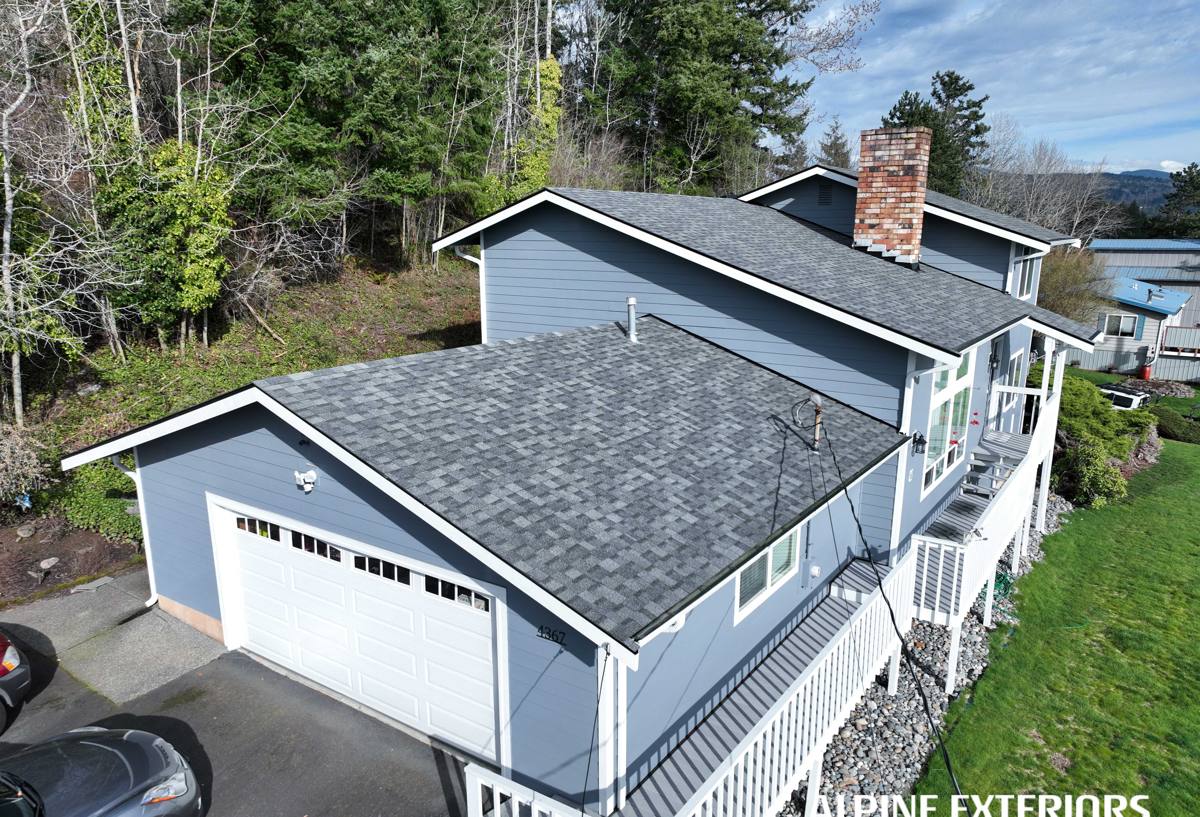
How Storms Actually Damage a Ferndale Roof
Wind Uplift and Lifted or Missing Shingles
Sustained wind gets under the edge of a shingle tab and works it loose, especially where the original nailing pattern was slightly off or the sealant strip never fully bonded. Sometimes shingles blow off outright and the damage is obvious from the ground. More often a few tabs are just lifted or creased, which looks minor but leaves a gap for the next rain to get underneath.
Wind-Driven Rain Intrusion at Flashing and Laps
Most of the leaks we trace back after a storm start at a flashing detail, not out in the open field of the roof — valleys, chimney flashing, skylight curbs, and the line where a roof meets a wall. Wind-driven rain finds its way into these seams from angles a roof built for calmer weather was never really tested against, and a flashing detail that's held up fine for years can still fail during one severe event if it was already marginal.
Tree Limb and Debris Impact
Mature trees are common on Ferndale properties, and a falling limb doesn't need to be large to punch through shingles, crack a ridge cap, or dent and split a section of decking underneath. Impact damage is usually localized, which is good news for repair scope, but it needs a real inspection to confirm the decking underneath wasn't compromised along with the surface material.
Long-Term Moss and Moisture Weakening That Storms Expose
A storm often reveals a problem that was already there. Moss that's been holding moisture against a shaded slope for a season or two softens the shingles and the decking underneath, so when wind and rain finally arrive, that section fails first while the rest of the roof holds. What looks like storm damage is sometimes storm damage layered on top of moisture damage that had been quietly progressing for a while.
Storm Damage Versus Ordinary Wear: Why the Distinction Matters
Insurance coverage typically applies to sudden, storm-caused damage, not to a roof that's simply reached the end of its service life from age and gradual wear. That distinction matters for how a repair gets documented and paid for, and it's also just an honest way to evaluate the roof. A creased shingle from last week's wind event is a different problem than a shingle that's brittle and cupping because it's fifteen years old and past its expected lifespan. A proper inspection separates the two instead of labeling everything storm damage because that's the easier conversation.
We'll tell you plainly which category what we find falls into. Sometimes it's a mix — genuine wind damage on one slope and pre-existing wear on another — and you deserve to know which is which before deciding how to proceed.
Our Storm Damage Repair Process
Emergency Tarping and Stabilization
If a roof is actively letting water in, the first priority is stopping further damage, not scheduling a full repair. A properly installed tarp, secured so wind can't get underneath and turn it into its own problem, buys time to do the rest of the job correctly instead of rushing a permanent fix in bad weather.
Full Inspection and Documentation
Once the roof is stable, we walk the whole roof, not just the area someone pointed to from the ground. Storm damage is frequently more widespread than the one obvious spot, and a thorough inspection with clear documentation of what we find gives you an accurate picture of the actual scope, which matters whether you're paying out of pocket or working with an insurance claim.
Repair Versus Replacement
Most storm damage on an otherwise sound roof is a legitimate repair, not a reason for a full tear-off. We'll section-repair damaged areas, replace compromised decking where impact or trapped moisture has weakened it, and correct any flashing detail that contributed to the failure. A full replacement only makes sense when the roof was already near the end of its useful life or the damage is extensive enough that a patchwork repair would leave you with a roof that looks fixed but isn't reliable.
Matching Materials and Completing the Repair
A repair that stands out visually from the rest of the roof is still an honest fix, but matching shingle color and profile as closely as possible to the existing roof is part of doing the job right. Where an exact match isn't available because the original product has aged or been discontinued, we'll tell you that upfront rather than let you discover it after the work is done.
Working With Your Insurance Claim
If the damage is significant enough to involve your homeowner's insurance, documentation is what makes or breaks a smooth claim. We provide a clear, photographed record of the damage and the repair scope that you can hand directly to your adjuster. We don't inflate a scope to chase a bigger payout, and we don't shrink one to make a quote look better — the goal is an accurate accounting of what the storm actually did, because that's what holds up whether the claim is approved quickly or gets a second look.
We're glad to walk the roof with your adjuster if that's useful, and we'll answer direct questions about our findings. What we won't do is promise a specific claim outcome, since that decision sits with your insurance company, not with us.
Storm Damage Repair Cost Factors
| Factor | What It Affects | Why It Matters in Ferndale |
|---|---|---|
| Extent of shingle and flashing damage | Material and labor scope | Wind-driven rain often damages flashing seams beyond what's visible from the ground |
| Decking condition underneath | Whether repair extends beyond surface materials | Long moss season here means moisture damage under a storm-hit area is common |
| Roof age and remaining material life | Repair versus full replacement decision | Older roofs that take storm damage are more likely to be near end-of-life already |
| Slope and access | Labor time and safety equipment | Steep or hard-to-access roof sections add setup time regardless of storm scope |
| Material match availability | Whether repair blends visually with existing roof | Older shingle lines can be harder to match exactly after years of sun and salt-air fading |
An accurate number depends on an in-person inspection. We don't quote storm repairs off a phone description or a photo alone, because the damage that matters most is often the part you can't see from the ground.
Signs Your Ferndale Roof May Have Storm Damage
- Shingle tabs that look lifted, curled, or creased, even if none are missing outright
- Granules collecting in gutters or at downspout outlets after a windy rain event
- Water staining on an interior ceiling or wall that appeared after a storm
- Visible daylight or gaps at a valley, chimney flashing, or skylight curb
- Dented, cracked, or split shingles in the path of a fallen branch
- A soft or spongy feel underfoot in a section a roofer inspects, which can indicate decking damage
- Moss or dark staining that seems to have worsened suddenly rather than gradually
Why a Local Whatcom County Crew Matters for Storm Repair
After a significant storm, it's common for crews from well outside the area to show up offering fast repairs. Some do fine work. Many aren't around a year later if a repair needs a warranty follow-up, because they were never local to begin with. A crew that works Ferndale and the rest of Whatcom County year-round has a direct stake in the repair holding up, because we're the ones you'll call if it doesn't. We also know how salt air, wind-driven rain, and this region's moss season interact with roofing over a full year, not just how a shingle performs on a spec sheet, which shapes real decisions on repair day: where a flashing detail needs extra attention, which slopes tend to hide moisture damage, and when a quick patch is genuinely enough versus when it's just delaying the real fix.
If a recent storm has left your Ferndale roof with missing shingles, a leak, or damage you're not sure how to categorize, we're glad to take a look. Reach out using the form below to schedule a free, no-pressure estimate.