 Fairhaven Siding
 Why Sunnyland's Siding Takes More Punishment Than It Looks Like
Sunnyland sits close enough to Bellingham Bay that homes here deal with a combination most inland siding never has to survive: fine salt carried in on marine air, wind-driven rain that comes in sideways during Pacific storms, and long stretches of grey, damp weather that never quite dries the north side of a house out. None of that shows up all at once. It shows up over years, as caulk lines crack, paint chalks and peels near the ground, and moss creeps up from the foundation on shaded walls.
Whatcom County's climate isn't harsh in the way a hailstorm or a heat wave is harsh — it's harsh in the way that never lets siding fully recover between wet seasons. That's the real story behind most premature siding failure we see in this neighborhood: not one bad storm, but ten wet winters in a row with no real drying window.
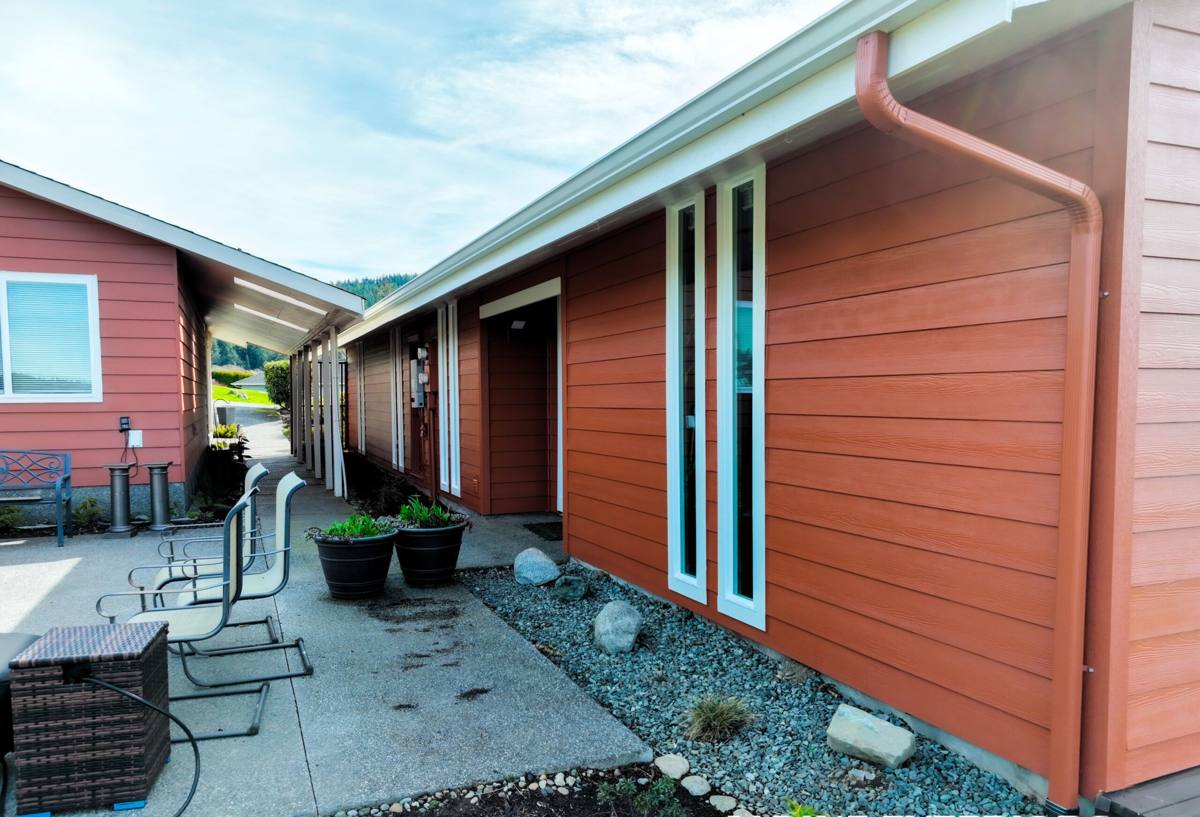
What That Means for a Sunnyland House Specifically
Sunnyland's housing stock is a mix of older bungalows and infill homes built across several decades, with mature tree cover on a lot of streets. That combination — shade plus moisture plus age — is exactly what accelerates siding problems:
- Wood and engineered wood siding lose their paint film faster under salt-laden air, which exposes bare substrate to moisture
- North- and west-facing walls with tree shade stay damp longer, which is where moss and algae take hold first
- Older caulk joints, especially at trim and butt joints, dry out and crack from years of UV and salt exposure, opening a path for water behind the siding
- Homes closer to the water take more direct wind-driven rain on their southwest-facing walls during winter storms
None of this means a Sunnyland home needs anything exotic. It means the siding and the installation both need to be built for sustained moisture exposure, not just rated for "Pacific Northwest weather" on a spec sheet.
Why We Only Install James Hardie Here
We don't install vinyl, LP SmartSide, cedar, primed spruce, or other fiber cement brands. That's not a marketing position — it's a standard we set after seeing how those products actually perform over time in exactly this kind of climate, and deciding we didn't want our name on installations we knew would need premature attention.
Built for Moisture, Not Just Painted Against It
James Hardie's fiber cement is engineered to resist moisture absorption at the material level, not just at the paint layer. That matters in a place like Sunnyland, where the paint layer is under constant assault from salt air and rain. Fiber cement also doesn't feed mold or algae growth the way wood-based products can, which is a real advantage on the shaded, damp walls that are common in this neighborhood.
The HZ5 Climate Engineering
James Hardie makes region-specific formulations, and the HZ5 product line is engineered for climates with significant moisture exposure — which describes Whatcom County's marine environment well. It's built to hold up to sustained wet conditions and temperature swings without the warping, swelling, or cupping that can affect wood-based sidings in the same conditions.
ColorPlus Finish
James Hardie's factory-applied ColorPlus finish is baked on under controlled conditions and backed by its own finish warranty, which means the color and protective layer aren't dependent on job-site weather or a painter's timing. In a salt-air environment where field-applied paint chalks and fades faster, that factory finish is doing real work over the life of the siding.
Non-Combustible
Fiber cement is non-combustible, which is a meaningful consideration for insurance and for peace of mind, independent of the climate discussion — it's simply part of why we standardized on this material.
What a Correct Installation Actually Involves
James Hardie siding is only as good as the installation behind it. In a climate that gives water every opportunity to find a way in, the details behind the panels matter as much as the panels themselves.
Drainage Plane and Flashing
Every correct installation starts with a continuous weather-resistive barrier and proper flashing at every penetration — windows, doors, hose bibs, light fixtures, anywhere something interrupts the wall plane. A drainage gap behind the siding gives any moisture that does get past the cladding a way to escape instead of sitting against the sheathing.
Clearances and Fastening
James Hardie's install specifications call for specific clearances from grade, roof lines, and decks, along with a defined fastening pattern. Skipping these clearances is one of the most common shortcuts that leads to moisture problems down the line — and it's invisible once the siding is up, which is exactly why it matters who's doing the work.
Caulking Done Right, Not Relied On
Caulk should seal specific joints, not act as the primary defense against water intrusion. A correct installation is detailed so that the flashing and drainage plane do the real work, with caulk as a secondary barrier — because caulk is the first thing to fail in salt air and constant rain, and a job that depends on it is a job that's already counting down to a callback.
Signs Your Current Siding Is Already Losing the Fight
- Moss or dark streaking building up on north- or west-facing walls
- Paint that's peeling, bubbling, or chalking, especially near the foundation
- Caulk lines that have cracked, shrunk, or pulled away from trim
- Soft or spongy spots when you press on trim boards or siding edges
- Visible gaps or warping at butt joints and corners
Our Process for a Sunnyland Siding Project
- On-site assessment — we check the current siding, look for existing moisture damage, and evaluate exposure on each side of the house before recommending anything
- Tear-off and sheathing inspection — old siding comes off and we inspect the sheathing underneath for rot or damage that needs to be addressed before new siding goes up
- Weather-resistive barrier and flashing — a continuous barrier and correctly lapped flashing go in at every window, door, and penetration
- James Hardie installation to spec — panels and trim installed with the manufacturer's required clearances, fastening pattern, and joint treatment
- Final walkthrough — we go over the finished work with you before calling the job done
Cost Factors for James Hardie Siding in Sunnyland
| Factor | Why It Matters Here | Typical Impact on Cost |
|---|---|---|
| Square footage and home shape | More corners, dormers, and wall breaks mean more trim and cutting | Moderate to significant |
| Tear-off and disposal | Older Sunnyland homes often have multiple layers of prior siding | Moderate |
| Sheathing or rot repair | Years of moisture exposure can hide damage until old siding comes off | Variable — depends on what we find |
| Trim and corner detail | Detailed trim work takes more labor and material | Moderate |
| ColorPlus vs. field-applied paint | Factory finish costs more up front but avoids repainting cycles | Small upfront increase, long-term savings |
| Site access | Mature trees and tighter older lots can slow staging and material handling | Minor to moderate |
Why Hiring a Crew That Already Works in Sunnyland and Fairhaven Matters
A crew that regularly works this part of Whatcom County already knows which walls in this neighborhood take the worst wind-driven rain in winter storms, which lots hold moisture longer under tree cover, and how local permitting and inspection actually work — not just in theory, but from doing it repeatedly. That local pattern recognition shows up in small decisions: where to be extra careful with flashing, which sides of the house need extra attention to drainage detail, and how to sequence a tear-off around this area's wet stretches instead of guessing.
It also means accountability doesn't end when the crew packs up. A local contractor is still in Fairhaven next year, next storm season, and the one after that — which is exactly when a marine climate tends to expose whatever was done wrong the first time.
Maintenance and What to Expect Long-Term
James Hardie siding installed to spec is genuinely low-maintenance, but "low-maintenance" doesn't mean "no attention." In a salt-air, high-moss climate like this one, a periodic soft wash — not a high-pressure wash, which can force water behind panels or damage the finish — keeps moss and algae from taking hold on shaded walls. It's also worth a yearly look at caulking around windows, doors, and penetrations, since that's the first thing to show wear even on a correctly installed job.
Where James Hardie earns its keep long-term is in the finish. Because ColorPlus is factory-applied and backed by its own warranty, Sunnyland homeowners aren't stuck on the repainting cycle that salt air forces on field-painted wood and some engineered wood products. That's less money and less hassle over the life of the siding, not just at installation.
Questions to Ask Before You Hire
- Are you a certified or experienced James Hardie installer, and can you explain the clearance and fastening requirements you follow?
- Will you inspect and address sheathing damage if you find it during tear-off, and how is that handled in the contract?
- What's your plan for flashing and drainage detail around windows, doors, and other penetrations?
- Do you work in Sunnyland and the greater Fairhaven area regularly, or would this be a one-off project for your crew?
- What does the warranty actually cover — the material, the finish, and the labor — and who backs each part?
If your Sunnyland home's siding is showing its age — or you just want an honest read on what it would take to do it right — we're happy to take a look and put together a straightforward, no-pressure estimate. Use the form below to get started.