 Fairhaven Siding
 Why Sunnyland Siding Wears Differently Than Siding Inland
Sunnyland sits close enough to Bellingham Bay and the Fairhaven waterfront that homes here take on a specific combination of punishment: salt-tinged air off the water, wind-driven rain that hits walls sideways instead of straight down, and long stretches of shade under mature trees that keep siding damp for days after a storm passes. None of those things alone is unusual for Whatcom County. Together, on a daily basis, over years, they add up faster than most homeowners expect.
Salt air is corrosive to fasteners and finishes that weren't built to handle it. Driving rain finds every gap in flashing and caulk that a calmer climate would never test. And the moss season here isn't a few weeks in spring — on shaded, north-facing walls it can run most of the year, holding moisture directly against the siding surface. A product or installation that's marginal in a dry climate becomes a real problem in this one.
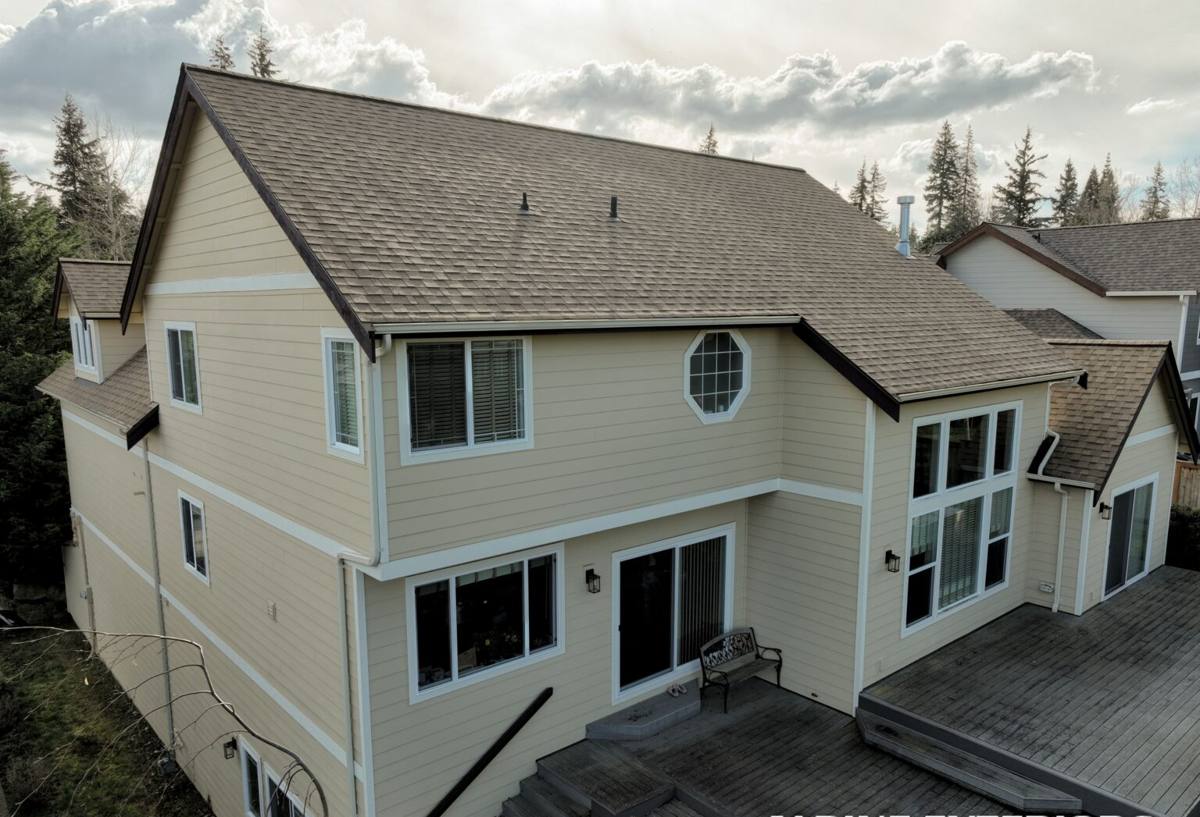
What "Correct" Siding Replacement Actually Involves
Siding replacement isn't just stripping old boards and nailing up new ones. Done right, it's a system, and every layer matters:
- Full tear-off to bare sheathing, not an overlay on top of what's already there
- Inspection of the sheathing itself for rot, soft spots, or water staining before anything new goes up
- A properly lapped weather-resistive barrier (WRB) that sheds water downward and outward, shingle-style
- Correct flashing at every window, door, and penetration — this is where most leaks actually start
- A drainage gap or rainscreen where conditions call for one, so any moisture that does get behind the siding can dry out and escape
- Fastening at the pattern and depth the manufacturer specifies, not "whatever's fast"
- Sealant used only where it's supposed to be used — not smeared everywhere as a substitute for proper flashing
Skip any one of those steps and the new siding can look fine for a year or two while the real problem — moisture getting behind it — keeps building underneath. In a climate like this one, that shortcut shows up sooner than it would somewhere drier.
Why the Tear-Off Step Matters More Here
In a marine climate, sheathing damage hides well. A wall can look and feel solid from the outside while the sheathing behind it has been slowly absorbing moisture for years. The only way to know for certain is to strip the old siding off and look. Any contractor offering to install new siding over old siding or damaged sheathing to save time is skipping the one step that actually protects the house.
Signs a Sunnyland Home Needs Replacement, Not Just Repair
Some siding problems are legitimately fixable with a repair — a cracked board, a failed piece of caulk, a loose panel. Others are signs the whole system is past its useful life. Before deciding which situation you're in, walk the exterior and check for:
- Moss or algae staining that comes back within months of being cleaned
- Soft, spongy, or spreading-when-pressed areas, especially near the bottom courses and around windows
- Paint or finish that won't hold anymore, even after prep and a fresh coat
- Boards that are cupping, warping, or separating at the seams
- Visible rot, especially at corners, butt joints, and anywhere siding meets trim or the foundation
- Rooms that feel drafty or an unexplained rise in heating costs, which can point to a compromised weather barrier
One or two of these on an otherwise sound wall might be a repair. Several of them together, or any sign that water has been getting behind the siding for a while, usually means replacement is the more honest recommendation — and the more cost-effective one long-term, since patched siding on a failing system tends to need patching again.
Why Material Choice Matters Even More in This Climate
We install James Hardie fiber cement siding exclusively. We don't install vinyl, LP SmartSide, primed spruce, cedar, or other fiber cement brands. That's not a marketing position — it's a decision based on what actually holds up under salt air, driving rain, and a long moss season without turning into a maintenance project for the homeowner.
Fiber cement is non-combustible, dimensionally stable, and doesn't feed moss and mildew the way wood-based products can. Hardie's ColorPlus factory finish is baked on and warranted against fading, which matters on a coastal exposure where UV and salt both work against paint. Hardie also engineers different product formulations for different climate zones — homes here fall into a zone where moisture resistance is the priority the product line is built around.
| Material | How it holds up in salt air, rain, and moss | Typical maintenance burden |
|---|---|---|
| James Hardie fiber cement | Engineered for moisture exposure; non-combustible; factory finish resists fading and doesn't feed moss | Occasional rinse; repaint not required for many years with ColorPlus |
| Vinyl siding | Can warp or become brittle with temperature swings; seams are a common water entry point | Low, but limited repair options if a panel cracks or fades |
| Cedar or wood siding | Attractive but organic — moss, mildew, and rot are an ongoing fight in a shaded, damp climate | High: regular staining, sealing, and spot repair |
| Engineered wood (LP SmartSide) | Wood-based core; more moisture-resistant than raw wood but still sensitive to sustained damp exposure and installation quality | Moderate: finish and edge maintenance over time |
Every product on that list has homeowners who like it. Our position is simply that for the amount of sustained moisture this part of Whatcom County deals with, fiber cement gives the best long-term return for the least ongoing worry — which is why it's the only thing we put on a house.
Our Siding Replacement Process
- On-site inspection and estimate. We look at the existing siding, sheathing condition where visible, trim, and any problem areas you've already noticed, and walk you through options in plain terms.
- Tear-off and sheathing check. Old siding comes off completely. Any damaged sheathing is identified and repaired before anything new goes up.
- Weather barrier and flashing. A new WRB is installed correctly lapped, and flashing goes in at every window, door, and penetration.
- Hardie installation to manufacturer spec. Fastening pattern, clearances, and joint treatment follow James Hardie's published requirements — not shortcuts.
- Finish and detail work. Trim, corners, and caulking (only where it belongs) are completed and checked.
- Final walkthrough. We go over the finished job with you before calling it done.
Cost Factors for Siding Replacement in the Sunnyland Area
Every home is different, so we won't quote a number without seeing the house, but these are the variables that actually move a Sunnyland siding estimate up or down:
| Factor | Why it affects cost |
|---|---|
| Home size and wall complexity | More square footage and more corners, gables, or dormers mean more material and labor |
| Condition of existing sheathing | Rot or water damage found during tear-off adds repair work before new siding can go on |
| Number of stories and access | Second- and third-story work requires more scaffolding, staging, and time |
| Siding profile chosen | Lap siding, shingle-style panels, and trim details vary in material and labor cost |
| Trim, soffit, and fascia work | Replacing or repairing these alongside the siding is more efficient than doing it later, but adds to the job |
| Existing paint or finish removal | Older painted wood siding sometimes requires extra care or disposal handling during tear-off |
Why It Matters That This Crew Already Works Fairhaven and Sunnyland
Local experience isn't just familiarity — it changes decisions on the job. A crew that already works this specific corner of Whatcom County knows which walls in this area take the worst of the wind-driven rain off the bay, which shaded, tree-covered lots need extra attention to moss and drainage detailing, and how older homes in this neighborhood were typically built versus newer construction. That knowledge shapes where extra flashing attention goes, how a drainage gap is detailed, and what to expect when the old siding comes off.
It also means realistic scheduling. Whatcom County's wet season isn't a surprise to a local crew — it's something we plan tear-off timing and weather protection around, rather than learning the hard way mid-project.
Keeping New Siding Looking Right Through Moss Season
Even the right material installed correctly benefits from a little basic upkeep in this climate:
- Rinse siding once or twice a year, especially on shaded north- and west-facing walls, to keep moss and algae from establishing
- Keep gutters and downspouts clear so water isn't sheeting down the siding face
- Trim back trees and shrubs so walls get some sun and airflow instead of staying damp
- Check caulking at windows, doors, and penetrations yearly — this is where small failures start
- Avoid aggressive pressure washing directly at the siding, which can drive water behind panels or damage the finish
None of this is heavy maintenance — it's the kind of light seasonal upkeep that keeps a correctly installed Hardie system looking and performing the way it's supposed to for decades.
If your Sunnyland home is showing any of the signs above, or you just want an honest read on whether repair or replacement makes sense, we're happy to take a look. The estimate is free, there's no pressure, and you'll get a straight answer either way — use the form below to get started.