 Fairhaven Siding
 Windows in Sunnyland Face a Different Set of Problems
Sunnyland sits close enough to Bellingham Bay and the Fairhaven waterfront that its homes take on a specific kind of weather stress most window installers never have to think about. Salt-laden air off the bay works its way into metal hardware and unsealed wood over time. Driving rain, pushed sideways by wind off the water, tests every seam and flashing detail a window has. And the long, damp shoulder seasons that Whatcom County is known for keep humidity sitting against exterior walls for weeks at a stretch, which is exactly the environment moss and mildew need to take hold around window frames and sills.
None of this is exotic. It's just consistent. A window that's installed correctly for Sunnyland's climate will handle decades of this without complaint. A window that's installed with shortcuts — even good windows from a good manufacturer — will show problems within a few wet seasons: soft trim, fogged glass, drafts, or paint that won't stop peeling no matter how many times it's redone.
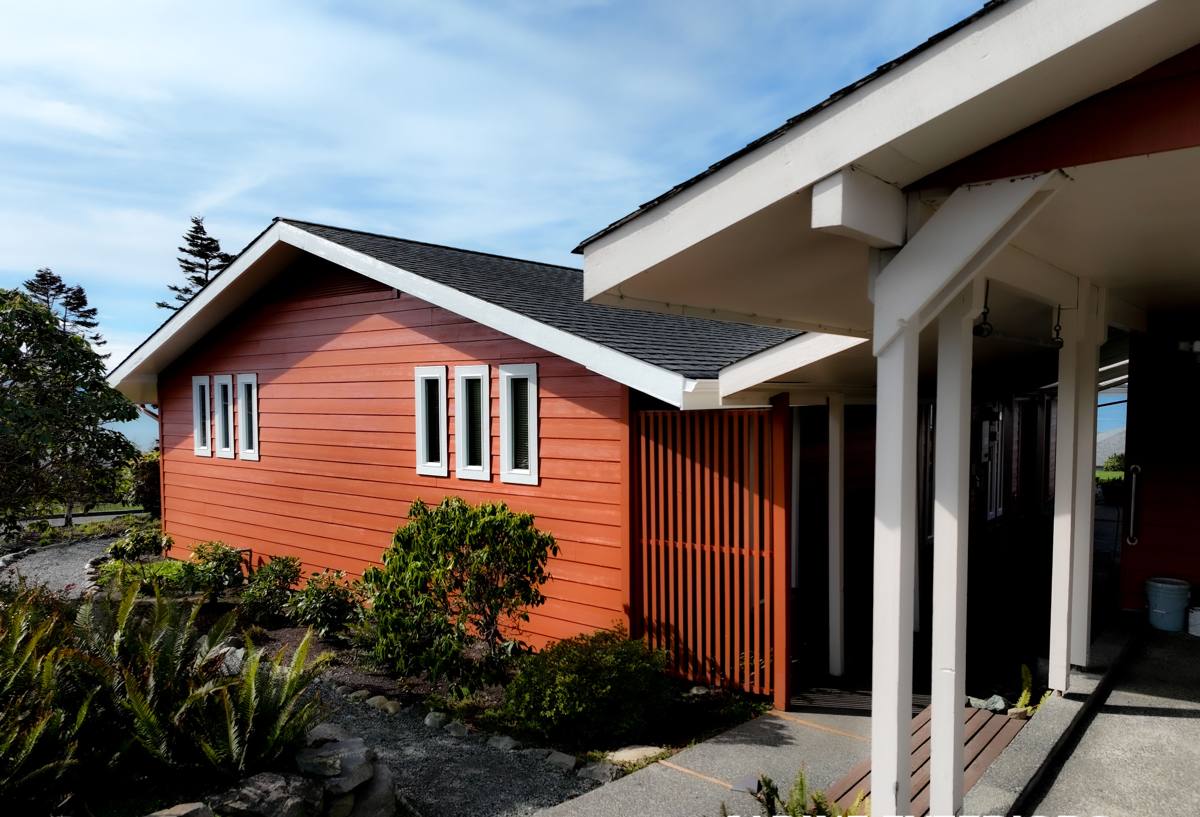
What Correct Window Installation Actually Involves
Homeowners often assume window installation is mostly about the window itself — brand, glass package, frame material. In a climate like this, the installation details matter as much or more than the product. A premium window installed with poor flashing will fail before a mid-range window installed correctly.
The details that actually determine performance
- Proper flashing sequenced correctly with the house wrap or weather barrier, so water is always directed out, never trapped behind the window
- A sloped sill pan under the window opening, so any water that does get past the exterior has somewhere to drain instead of pooling
- Continuous, correctly applied sealant at the right joints — not sealant used as a substitute for proper flashing, which is a common shortcut that fails quietly for years before it's noticed
- Shimming and fastening that keeps the window square and properly supported, so the sash operates smoothly and the seal stays tight as the house settles
- Interior air sealing and insulation around the frame, which affects both comfort and condensation risk
Get these right and a window installation should perform for the life of the window. Get them wrong and you're often looking at hidden water intrusion — the kind that damages framing and sheathing long before it shows up as a stain on the wall.
Signs a Sunnyland Home's Windows Need Attention
Because Whatcom County's wet season is long, problems tend to announce themselves gradually rather than all at once. Homeowners in Fairhaven and Sunnyland should watch for:
- Drafts near the window frame, especially noticeable during wind off the bay
- Condensation building up between panes on double- or triple-glazed units, which usually means a failed seal
- Soft or discolored trim and sills, a sign moisture is getting into the wood
- Moss or dark streaking on the exterior trim around the window — common anywhere in the county, but worth checking closely near openings since it can point to a spot that stays damp longer than it should
- Windows that stick, won't stay open, or don't latch tightly anymore
- Visibly failing or missing caulk lines around the frame
Any one of these on its own might just be normal wear. Several together, especially on a home's weather-facing side, usually mean it's worth having someone look at the installation itself, not just the window.
Our Process for a Sunnyland Window Installation
The steps below are the same ones that keep windows performing through repeated wet seasons rather than just looking finished on install day.
- On-site assessment. We check the existing opening, sheathing, and framing condition before anything is ordered. If there's hidden water damage from a prior installation, we want to know before we start, not after.
- Product selection based on exposure. A window on the bay-facing side of a home doesn't necessarily need the same spec as one on a sheltered side. We talk through frame material, glazing, and hardware based on where the window actually sits.
- Removal and opening prep. We remove the old window carefully to protect the surrounding siding and trim, then inspect and repair the opening — sheathing, sill, and weather barrier — before the new window ever goes in.
- Sill pan and flashing installed in sequence. This is the step that gets skipped most often on rushed jobs, and it's the one that matters most for a climate with this much driving rain.
- Window set, shimmed, and fastened square. Correct fastening keeps the unit performing as designed and keeps the seal intact over time.
- Air sealing and insulation at the interior frame. This step affects comfort, energy use, and condensation risk inside the home.
- Exterior trim, caulking, and final weatherproofing. Finished to match the home, sealed at every joint that needs it.
- Final walkthrough. We check operation, seal, and finish with the homeowner before calling the job done.
Timeline
A single window typically takes a few hours once the opening is prepped. Whole-home replacement projects are usually scheduled over several days, sequenced to keep the house weathertight at the end of every work day — an important detail in a climate where an overnight rain is never a surprise.
Choosing a Frame Material for This Climate
There's no single "best" window material for every home — it depends on exposure, budget, and the look of the house. Here's how the common options hold up under Whatcom County conditions:
| Frame Material | Performance in Salt Air & Rain | Maintenance | Typical Fit |
|---|---|---|---|
| Vinyl | Handles moisture and salt air well; won't rust or rot | Low — occasional cleaning | Budget-conscious replacement, most home styles |
| Fiberglass | Very stable in wet, temperature-swinging conditions; strong resistance to warping | Low | Homeowners wanting durability and a paintable finish |
| Wood (clad exterior) | Good if the exterior cladding is fully intact; exposed wood is vulnerable near the bay | Higher — exterior clad reduces upkeep, but seals must be maintained | Historic or traditional-style homes where wood interior detailing matters |
| Aluminum | Prone to corrosion in salt air unless properly coated; conducts cold, more condensation risk | Moderate to high | Rarely our first recommendation this close to the bay |
We'll walk through which of these fits a specific home rather than pushing one material across every job — the right choice depends on which side of the house the window is on as much as anything else.
What Affects the Cost
Pricing on a window installation varies with the specifics, but the main factors are consistent from job to job:
- Number of windows and whether it's a single replacement or whole-home project
- Frame material and glazing package selected
- Condition of the existing opening — if there's hidden rot or water damage, repair work adds time and cost
- Access and window size, including any second-story or hard-to-reach openings
- Trim and exterior finish work needed to match the rest of the home
We give straightforward, itemized estimates so homeowners can see exactly what they're paying for — including any opening repair, which we always flag before proceeding rather than after the fact.
Why a Crew That Already Works Sunnyland Matters
A window installer who mostly works inland or in drier parts of the state isn't necessarily going to over-flash a window or think twice about sealant choice, because their usual jobs don't punish those shortcuts the way a bay-adjacent Fairhaven home will. A crew that regularly works Sunnyland and the surrounding Bellingham neighborhoods treats flashing, sill pans, and sealant as non-negotiable, because we've seen what happens on the homes where they weren't done right — usually a few years down the road, as a callback for water damage that could have been avoided at the start.
That local pattern recognition also shows up in smaller ways: knowing which exposures in this part of Whatcom County take the worst of the weather, what moss growth around a window frame usually indicates, and how to schedule multi-window projects so a home isn't left exposed overnight during an unpredictable stretch of rain.
After Installation: Keeping Windows Performing
A correctly installed window is largely low-maintenance, but a little seasonal attention goes a long way in this climate:
- Rinse salt residue and grime off exterior frames periodically, especially after storms off the bay
- Check and clean weep holes so water can drain rather than pool at the sill
- Inspect exterior caulk lines once a year and touch up any that have cracked or pulled away
- Remove moss or organic buildup from trim and sills promptly rather than letting it sit through the wet season
- Operate each window a few times through the year so hardware and weatherstripping don't seize or compress unevenly
None of this takes much time, but skipping it is how a well-installed window ends up with an avoidable problem five or ten years in.
Ready When You Are
If windows in your Sunnyland home are drafty, fogged, sticking, or just original to a house that's due for an upgrade, we're glad to take a look and give you an honest read on what's actually needed. We offer free, no-pressure estimates — use the form below to get started.