 Fairhaven Siding
 Windows in Sehome Take a Different Kind of Beating
Sehome sits close enough to Bellingham Bay that salt-laden air is a daily fact of life, not an occasional event. Add Whatcom County's long wet season, wind-driven rain off the water, and months of shade and moss growth on the north and west sides of most lots, and you have a climate that is genuinely hard on windows. This isn't a page about windows in general — it's about what actually happens to window frames, glass seals, and trim in this specific neighborhood, and what it takes to replace them correctly here rather than just anywhere.
A lot of the housing stock around Sehome dates back decades, with older wood-sash windows or early-generation vinyl replacements that were never built for this level of sustained moisture exposure. We see the same failure patterns over and over: swollen sashes that stick in fall and winter, fogged double panes from failed seals, soft wood at the sill from years of standing water, and corroded hardware from salt air working into aluminum tracks and screws. None of that is a surprise once you understand the environment — it's the expected result of ordinary windows doing an extraordinary job for a long time.
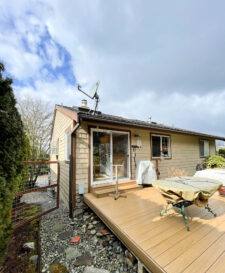
What Fairhaven and Sehome's Climate Demands From a Window
Driving Rain, Not Just Rain
Wind off the bay pushes rain sideways into west- and south-facing walls, which means water is hitting window assemblies at an angle, not just falling straight down onto a sill. A window and its flashing have to shed that water actively, not just tolerate it passively. This is one of the most common places we find problems on older homes — flashing that was adequate for calmer weather patterns simply isn't doing its job anymore.
Salt Air and Hardware Corrosion
Proximity to Bellingham Bay means airborne salt settles on everything, including window hardware, weep holes, and metal fasteners. Over years, this corrodes cheaper aluminum components and can cause vinyl track hardware to bind or crumble. Material choice and hardware grade matter more here than they would fifty miles inland.
Moss, Mildew, and Prolonged Dampness
Whatcom County's moss season isn't limited to roofs. Shaded window sills, especially under eaves or on the north side of a home, stay damp for weeks at a stretch during fall and winter. That constant moisture is what rots wood sills and frames from the inside out, often well before the visible finish looks bad on the surface.
Interior Condensation From a Marine Climate
Cool, humid outside air against a warm interior creates condensation risk on older single-pane or poorly sealed double-pane windows. Persistent condensation doesn't just fog glass — it feeds mold growth on sills and nearby drywall or trim, which is a health and maintenance issue as much as a comfort one.
Signs a Sehome Home Actually Needs Window Replacement
- Visible fog or moisture between the panes of a double-pane window (a failed seal — this cannot be fixed, only replaced)
- Sashes that stick or won't stay open, especially worse in wet months
- Soft, spongy, or discolored wood at the sill or lower frame corners
- Cold drafts near the frame even with the window fully closed and locked
- Visible corrosion or crumbling on hardware, tracks, or screws
- Condensation forming on the inside of the glass regularly through fall and winter
- Paint that keeps failing on the exterior trim around the window no matter how often it's redone
- Noticeably higher heating bills compared to similar-sized homes nearby
Any one of these on its own might just mean a repair. Several together, especially on a home built before energy codes tightened up, usually mean it's time to talk about replacement rather than another round of caulk and paint.
What a Correct Window Replacement Actually Involves
Window replacement done right is mostly about what happens before the new window ever goes in the opening. The window itself is only as good as the assembly around it.
Removing the Old Window Without Hiding Problems
Pulling the old sash and frame is when we find out what's really going on — rot in the framing, a flashing system that was never installed correctly, or water staining that tells us where moisture has been getting in for years. Any of that needs to be addressed before a new window goes in, or the new unit will just fail the same way the old one did.
Flashing and Moisture Barrier Integration
Given how much wind-driven rain this area sees, the flashing detail at the head, jambs, and sill is not optional trim work — it's the actual water management system. The house wrap or building paper needs to lap correctly with the window flange so water is directed out and away, not trapped behind the siding.
Correct Sizing and Insulation
Gaps around a new window frame need to be insulated properly — not stuffed with fiberglass, which settles and stops performing, but filled with a low-expansion foam or backer rod system that stays put and doesn't distort the frame.
Matching the Home's Character
A good number of homes in and around Sehome have real architectural character — older craftsman and bungalow-style details, divided-lite patterns, trim profiles that don't match anything off-the-shelf. Replacement windows should respect that, not flatten every house into the same generic look. We match sightlines, grid patterns, and exterior trim so the replacement reads as a window that belongs there, not an obvious retrofit.
Choosing the Right Window Material for This Climate
| Material | How It Handles Salt Air & Moisture | Maintenance | Typical Cost Position |
|---|---|---|---|
| Vinyl | Good — won't rust or rot, though cheaper hardware can corrode over time | Low; occasional track cleaning | Most affordable |
| Fiberglass | Excellent — dimensionally stable, resists moisture and salt exposure well | Low | Mid to upper |
| Wood-clad (exterior clad, interior wood) | Good if cladding and flashing are done correctly; exposed wood details need upkeep | Moderate; clad exterior is low-maintenance, interior wood may need refinishing over time | Higher |
| Bare wood | Poor in this climate unless meticulously maintained; prone to rot at the sill | High; regular repainting and sealing required | Varies, but ongoing cost adds up |
| Aluminum | Poor to fair — conducts cold, and older aluminum hardware corrodes in salt air | Low, but performance issues remain regardless | Low to mid |
Our standard recommendation for most Sehome homes is vinyl or fiberglass with a good weatherstripping system and stainless or corrosion-resistant hardware. We'll install wood-clad windows where a homeowner wants to preserve a specific architectural look, but we're upfront that it comes with more long-term upkeep in this environment — that's a trade-off, not a flaw in the product, and it's one we walk through honestly before you commit either way.
Energy Performance in a Marine Climate
Washington's energy code sets minimum performance standards for replacement windows, and in a climate like this, U-factor (how well the window resists heat loss) matters more than it would somewhere drier and milder. We also pay attention to solar heat gain coefficient, though it's a smaller factor here than in sunnier regions — Whatcom County homes are usually more concerned with keeping heat in than keeping sun out. Proper glazing selection paired with a tight, correctly flashed install does more for a heating bill than any single spec on a window label.
Our Process for Sehome Window Replacement
- On-site assessment — we look at every window being considered, check for rot, flashing issues, and drafts, and measure openings precisely.
- Honest recommendation — we tell you which windows genuinely need replacement now, which can wait, and which just need minor repair.
- Product and material selection — we walk through material, glazing, and grid pattern options that fit your home's style and this climate.
- Written estimate — clear scope, materials, and timeline before any work starts.
- Removal and structural check — old windows come out carefully, and any hidden rot or damage gets addressed, not covered up.
- Flashing, install, and insulation — the new window goes in with proper moisture management, correct fastening, and insulation that won't settle.
- Exterior trim and finish — trim is finished to match the home, sealed at all joints.
- Final walkthrough — we check operation, seals, and cleanup before calling the job done.
Why It Matters to Hire a Crew That Already Works This Neighborhood
Window replacement in Sehome isn't the same job as window replacement in a dry inland climate, and it's not identical to jobs a few miles away that don't sit as close to the bay. A crew that already works in and around Fairhaven and Sehome knows which flashing details actually hold up to driving rain off the water, understands how fast moss and mildew take hold on shaded sills here, and has seen firsthand how salt air ages hardware over a few winters rather than in theory. That local pattern recognition is what keeps a replacement job from becoming a repeat problem five years later.
We also know the local permitting process for exterior work in Bellingham and the surrounding area, which keeps the paperwork side of a replacement project from becoming a delay. That's not glamorous, but it's part of what "local" is actually supposed to mean.
What to Expect on Cost
Every home and window count is different, so we won't quote a number without seeing the job, but a few honest factors shape the range: the number of windows, material choice (vinyl vs. fiberglass vs. wood-clad), whether any rot repair is needed in the framing, and how much custom trim matching your home's existing character requires. Homes with hidden moisture damage from years of driving rain typically cost more than the window itself would suggest, simply because of the repair work uncovered once the old unit comes out.
If you're noticing drafts, fogged glass, or sticky sashes in your Sehome home, we're happy to take a look and give you a straight answer about what's going on — no pressure, no upsell. Reach out for a free estimate using the form below.