 Fairhaven Siding
 Board & Batten in York: A Look That Fits the Neighborhood
Board and batten siding has a strong, vertical look that suits a lot of the farmhouse, craftsman, and modern-cottage style homes we see around York. It reads as clean and intentional from the street, and it holds up visually in a way that flat lap siding sometimes doesn't on taller gable ends or accent walls. That's the aesthetic case for it. The practical case is separate, and it matters more once you're actually deciding what to put on your walls: board and batten is a joint-heavy siding style, with a batten strip covering every seam between panels. Every one of those seams is a place water can get behind the cladding if the install isn't done right. In a climate like ours, that detail is the whole ballgame.
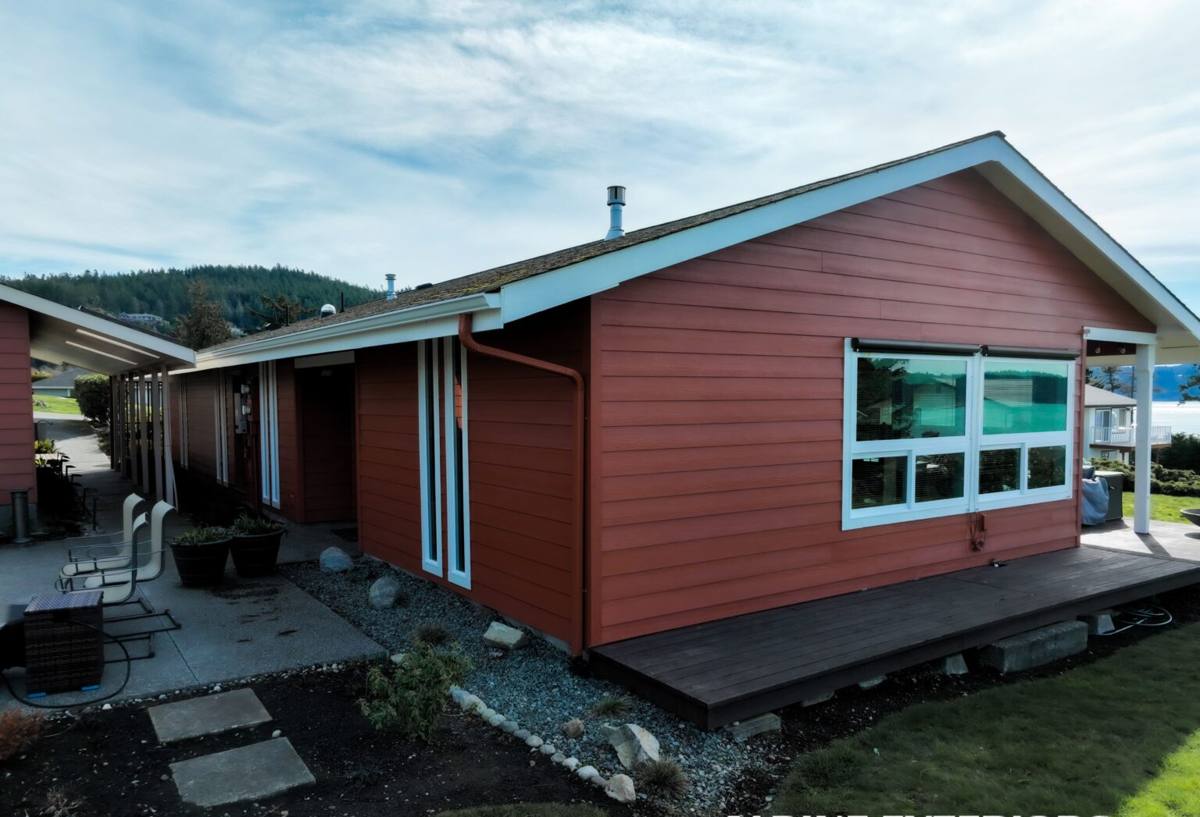
What Fairhaven's Climate Actually Does to Vertical Siding
Fairhaven sits close enough to Bellingham Bay that salt-laden air is a constant, low-grade factor on anything metal or improperly sealed on the exterior of a home. Add in Whatcom County's pattern of driving, wind-pushed rain off the water, and a moss season that can stretch across most of the fall, winter, and spring, and you've got three separate stressors working on your siding at the same time, year-round.
Salt Air and Corrosion
Salt air accelerates corrosion on exposed fasteners, unprotected metal flashing, and cheap trim hardware. On board and batten specifically, that matters because the battens are typically face-nailed or blind-nailed at intervals, and every one of those fastener points is a potential rust streak or failure point over time if the wrong fastener is used.
Driving Rain and Water Management
Wind-driven rain doesn't just fall on siding, it gets pushed sideways into laps, seams, and butt joints. Vertical board and batten has more vertical seams per square foot than horizontal lap siding, and it depends entirely on correct flashing, a drainage plane behind the cladding, and proper batten spacing to keep that water moving down and out instead of soaking into the wall assembly.
Moss and Prolonged Dampness
A long moss season means siding here rarely gets a real chance to fully dry out between rain events for months at a time. Moss and algae growth on siding isn't just cosmetic — sustained dampness against a wall surface is what eventually finds weak caulk joints, failing paint, or swollen substrate and turns a small problem into a rot problem.
Why We Only Install James Hardie for This Application
We get asked fairly often why we don't offer LP SmartSide, vinyl, or cedar board and batten, since all three are marketed for this look. Here's the honest version, not the sales version.
LP SmartSide is an engineered wood product with a resin-treated strand substrate. It performs reasonably well in a lot of the country, but it's still wood-based, which means its long-term performance depends heavily on cut-edge sealing, caulking discipline, and keeping water off the panel face — three things that are harder to guarantee in a climate that stays wet as long as ours does. Vinyl board and batten is affordable and low-maintenance in a general sense, but it's a thinner, more flexible product that can show waviness and doesn't offer the crisp, deep shadow lines that make board and batten look right in the first place; it also becomes brittle and prone to cracking in cold snaps. Cedar and primed spruce look beautiful when new, but real wood siding in a marine climate is a maintenance commitment — repainting, re-caulking, and watching for rot at end grain and joints, indefinitely.
James Hardie fiber cement is what we settled on because it doesn't have wood's moisture-absorption problem or vinyl's flexibility problem. It's non-combustible, it holds paint and factory finish far longer than wood substrates, and Hardie backs it with a strong transferable warranty when it's installed to their spec — which is the part most homeowners never get to see, because most siding failures we're called out to inspect are installation failures, not product failures.
| Material | Moisture/Rot Resistance | Salt Air Performance | Ongoing Maintenance |
|---|---|---|---|
| James Hardie Fiber Cement | High — cement-based, doesn't absorb and swell like wood | Strong; factory ColorPlus finish resists fading and doesn't feed corrosion | Occasional wash, repaint on a long cycle if not ColorPlus |
| LP SmartSide (Engineered Wood) | Moderate — depends on sealed edges and caulk maintenance | Fair; more sensitive to sustained coastal dampness | Regular caulk/paint inspection, especially at cut edges |
| Vinyl Board & Batten | Doesn't rot, but can trap moisture behind it if installed poorly | Fine, but becomes brittle in cold and can crack | Low, but limited repair options if damaged |
| Cedar / Primed Spruce | Low without diligent upkeep — real wood absorbs and swells | Weak without consistent sealing | High — repainting and re-caulking on an ongoing basis |
What a Correct Board & Batten Job Actually Involves
The look of board and batten is simple. The installation is not. A lot of what separates a siding job that lasts 30+ years from one that fails at year eight happens behind the panel, where you can't see it once the job is done.
- A drainage plane / weather-resistive barrier installed correctly behind the panels, with proper overlap and taping at seams
- A rain screen gap where conditions call for it, so any moisture that gets behind the cladding has somewhere to go and dry out
- Correct batten spacing over the vertical panel seams, per Hardie's engineering specs, not just "close enough"
- Stainless steel or hot-dip galvanized fasteners rated for coastal/salt-air exposure, placed at the correct nailing pattern
- Proper flashing at every horizontal transition — window heads, doors, roof-to-wall intersections, and the base of the wall
- A starter strip at the base course set to the correct reveal, so the first panel doesn't sit flush against foundation moisture
- Sealant used only where Hardie's installation instructions call for it — over-caulking traps water in exactly the places it needs to escape
Skip or shortcut any one of these and you can still have siding that looks right for a couple of years before it doesn't. This is also why product choice alone doesn't solve the problem — a Hardie board and batten job installed off-spec can fail in the same ways a lesser product would.
Our Process for a York Board & Batten Project
We walk every job the same way, adjusted for what we find on site:
- Assessment — we look at your current siding, sheathing condition, existing flashing, and any signs of past moisture intrusion before quoting anything.
- Tear-off and substrate check — once old siding is off, we inspect the sheathing underneath. Soft or water-damaged sheathing gets flagged and addressed before anything new goes up.
- Weather barrier and drainage plane — installed and detailed around every penetration, because this layer does more long-term work than the siding itself.
- Panel and batten installation — HardiePanel and battens installed to manufacturer spacing and fastening specs, with corrosion-resistant fasteners throughout.
- Flashing and trim detail — windows, doors, and roof intersections get flashed and sealed at the specific points Hardie's install guide calls for, no more and no less.
- Final walkthrough — we go over the finished job with you before we consider it done.
Maintenance and Longevity in a Marine Climate
Hardie's ColorPlus factory finish is baked on and holds color significantly longer than field-applied paint, which matters here because repainting a house in a climate with this much annual rainfall is its own ordeal. Even with a good finish, plan on an occasional rinse to knock moss and algae spores off the siding face before they get a foothold, and keep an eye on gutters — clogged gutters that overflow onto board and batten walls are one of the more common ways we see premature staining and localized moss growth develop on otherwise sound siding.
Cost Factors for Board & Batten Siding Projects
We won't quote a number without seeing the house, but these are the main variables that move the price on a project like this in the York area:
| Factor | Why It Matters |
|---|---|
| Total wall area and home height | More square footage and multi-story gable ends increase material and labor time, plus scaffolding needs |
| Condition of existing sheathing | Rotted or soft sheathing found during tear-off adds repair work before new siding can go up |
| Amount of trim and batten detail | More corners, window casings, and accent details mean more precision cutting and labor hours |
| Access and site conditions | Tight lots, slopes, or obstructed access can add setup time and equipment costs |
| Factory ColorPlus vs. field-painted finish | Prefinished panels cost more upfront but remove a repainting cycle down the road |
As a very rough starting point, fiber cement board and batten projects in this region commonly land somewhere in the range of $9 to $18 per square foot installed, but the only way to get a real number is a site visit — every one of the factors above can push that range in either direction.
Why It Matters That We Already Work in York
Every neighborhood in Whatcom County has its own combination of wind exposure, tree cover, and moisture patterns, and York is no exception. A crew that's already worked on homes in this specific area knows what the moss growth pattern tends to look like on a north-facing wall here, understands how close you actually are to salt air exposure, and isn't guessing at flashing details for the first time on your house. That familiarity shows up in fewer surprises during tear-off and a finished job that's built for the conditions it'll actually face, not generic conditions from a manual.
If you're considering board and batten siding for a home in York, we're happy to come take a look, walk you through what we'd find, and put together a straightforward, no-pressure estimate — just fill out the form below.