 Fairhaven Siding
 Building Decks That Actually Hold Up in York
York is one of the older, established neighborhoods sitting just up the hill from Fairhaven's historic district, and the houses here run the gamut from early-1900s craftsman bones to additions and remodels put on over the decades. What ties almost every deck project in York together isn't the house style — it's the site conditions. You're close enough to Bellingham Bay to deal with salt-laden air, you're firmly inside the Pacific Northwest's wet season for a good chunk of the year, and the tree cover that makes the neighborhood pleasant to live in also means shade, dampness, and moss on anything horizontal that doesn't get sun or airflow. A deck built to a generic national spec sheet, without accounting for those three things, will show problems within a few seasons: soft spots, corroding fasteners, slick green film on the boards, and rot starting at the ledger board or post bases.
We build custom decks specifically with York's conditions in mind — not as an afterthought, but as the starting point for material selection, fastener choice, drainage detailing, and framing.
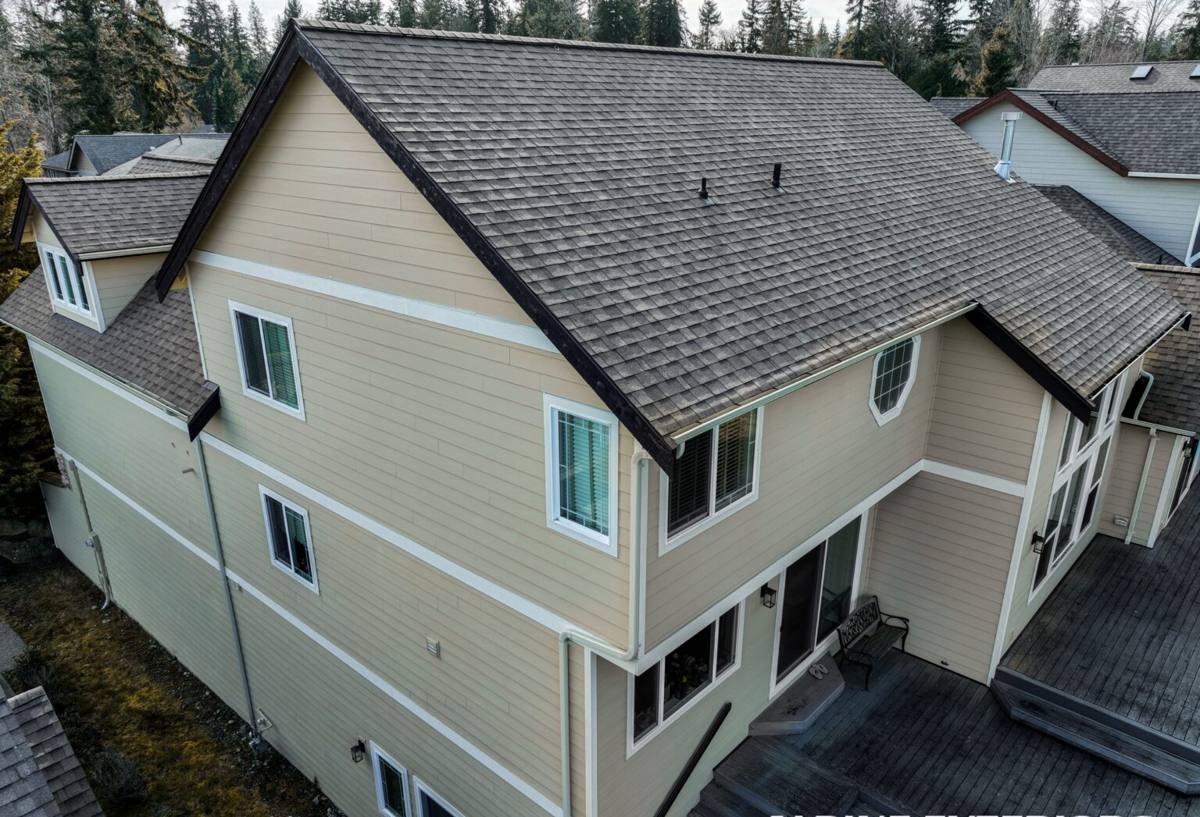
What Fairhaven and Whatcom County Weather Does to a Deck
Salt Air
Proximity to the bay means airborne salt settles on exposed metal continuously, not just during storms. Standard zinc-coated screws and brackets pit and streak rust onto decking within a couple of years in exposed, view-facing locations. It's a slow, cumulative process, which is exactly why it's easy to underbuild for and hard to notice until the damage is already visible.
Driving Rain
Whatcom County doesn't just get steady drizzle — storms off the Strait push rain sideways into ledger connections, stair stringers, and any horizontal surface that isn't sloped or flashed correctly. Water that gets behind a ledger board or pools on a joist top is the single most common cause of structural rot we find when we're asked to repair or rebuild an older deck.
Moss Season
Between the shade from mature trees common in York and roughly eight months a year of damp conditions, moss and algae growth on deck boards is a near-certainty without design choices that promote drainage and airflow underneath the structure. Moss isn't just cosmetic — it holds moisture against the board surface and makes the deck genuinely slick and dangerous underfoot.
What a Correctly Built Deck Requires Here
"Correct" isn't a style choice — it's a set of construction details that either get done or don't. On a York deck, the details that matter most are the ones you can't see once the project is finished.
- Ledger board flashed with a proper cap and lapped water barrier so rain can't track behind it into the house rim joist
- A structural gap or membrane between the ledger and siding, so wall moisture and deck moisture never mix
- Stainless or heavy-duty coated fasteners and structural hardware rated for the corrosion exposure of a coastal Whatcom County site, not the minimum-code option
- Joist tops protected with a self-adhering flashing tape, not left as bare cut lumber under the decking
- Footings set to the frost and bearing depth required for the soil on site — Whatcom County soils vary from sandy to heavy clay block to block, and that changes what a footing needs
- Board spacing and framing height that allow airflow underneath, which is one of the biggest factors in how fast moss and algae take hold
Skip any one of these and the deck will still look fine on the day it's finished. The failures show up in year three, five, or seven — which is exactly why so many older decks in this area need premature repair.
Choosing Decking Material for a Bay-Adjacent Neighborhood
There's no single "best" decking material — there's a best material for your budget, your maintenance appetite, and how much sun versus shade your specific lot gets. Here's how the common options actually perform under York's conditions:
| Material | Salt Air Behavior | Moss/Algae Resistance | Maintenance |
|---|---|---|---|
| Cedar / natural wood | Good if fasteners are corrosion-rated; wood itself handles salt air fine | Needs regular cleaning and re-sealing to resist moss in shaded spots | Annual cleaning, re-stain or seal every 2-3 years |
| Standard composite | Very good — no corrosion, but check hardware | Moderate; can still support surface algae in deep shade without airflow | Periodic washing, no staining/sealing required |
| Capped composite / PVC | Excellent — fully sealed surface | Best resistance of the group, easiest to keep clean | Occasional rinse; highest upfront cost |
| Pressure-treated pine | Fair; more prone to fastener staining and surface checking over time | Poor without diligent maintenance — absorbs and holds moisture | Most maintenance-intensive of the group |
For a shaded, tree-covered York lot, we usually steer homeowners toward composite or capped composite unless they specifically want the look and feel of real wood and are willing to keep up with sealing. For a sunnier, more open lot, cedar can perform very well and ages beautifully if it's detailed and fastened correctly from the start.
Why We're Selective About What We Install
We don't install every product on the market. Our standard is straightforward: if a material or fastener system has a track record of trapping moisture, corroding early, or requiring installation tolerances that are easy to get wrong, we either avoid it or flag the trade-off clearly before you commit. That's not a knock on any specific manufacturer — it's about matching the product to what this climate actually demands and being honest about maintenance burden versus upfront cost.
Framing and Hardware: The Part Nobody Sees
A deck is only as good as what's underneath the boards. In a corrosion-prone, high-moisture area like York, we treat the substructure as the part of the job that determines whether you're calling us back in five years or twenty.
- Fasteners: stainless steel or high-grade coated screws sized and rated for the specific decking material — mismatched fasteners are a common cause of premature staining and pull-out
- Structural connectors: joist hangers, post bases, and ledger hardware rated for exterior/coastal exposure, installed per the hardware manufacturer's nailing or screwing pattern — not "close enough"
- Post bases: set above grade and away from standing water, with post-to-footing hardware that keeps end grain off concrete
- Beam and joist sizing: spanned to the actual load the deck will see, including furniture, hot tubs, or planters if that's part of the plan
Permits, Setbacks, and Local Code
Decks attached to a house, above a certain height off grade, or requiring new footings generally need a permit through the City of Bellingham, since York sits within city limits inside Whatcom County. Guardrail height, baluster spacing, and stair rise/run requirements are all governed by the adopted building code, and a deck that's more than a couple feet off grade needs a compliant guardrail regardless of how the homeowner feels about the look. We handle the permit application and inspection process as part of the build — it's not an add-on, it's part of doing the job correctly from the start.
Our Process for a York Deck Project
- On-site visit: we walk the lot, check sun/shade exposure, existing drainage, and soil conditions before recommending materials
- Design and material selection: you get a clear plan and honest material comparison — no upselling to the most expensive option if it doesn't fit your situation
- Permit submission: we prepare and submit the plan set to the City of Bellingham and handle the inspection scheduling
- Site prep and footings: footings dug and poured to the required depth for the soil on your specific lot
- Framing: ledger flashing, joist protection tape, and corrosion-rated hardware installed before a single deck board goes down
- Decking, railing, and stairs: installed to spec, with attention to board spacing for drainage and airflow
- Final walkthrough: we go over care and maintenance specific to the material you chose before we consider the job finished
Living With a Deck in a Marine Climate
Even a correctly built deck needs some upkeep in a place like Fairhaven — the goal of good construction is to minimize that upkeep and prevent structural problems, not eliminate maintenance entirely. A short, honest maintenance routine goes a long way:
- Sweep leaves and debris off the deck surface regularly in fall — trapped organic matter is what feeds moss and algae
- Rinse or wash the deck surface once or twice a year, more often in heavily shaded spots
- Check that gaps between boards stay clear so water can drain through rather than sitting on top
- For wood decks, re-seal or re-stain on the schedule the product calls for — don't wait until it's visibly gray and dry
- Look at ledger flashing and post bases once a year for any sign of water staining or soft wood
- Trim back overhanging branches where possible to get more sun and airflow onto shaded sections
Why It Matters That We Already Work in York
A crew that's built and repaired decks throughout Fairhaven and the surrounding Whatcom County neighborhoods already knows which lots drain poorly, which blocks tend toward clay soil versus sandier ground, and how much shade a typical York yard actually gets through the year. That's not something you can fully account for from a generic spec sheet — it comes from having done the work here before. It also means we're not guessing about permit requirements or inspection expectations with the City of Bellingham; we've been through that process repeatedly and know what gets a project approved without delays.
Getting Started
If you're planning a new deck or replacing one that's showing its age, we're happy to come take a look, walk the site with you, and put together a straightforward estimate — no pressure, no obligation. Use the form below to get a free estimate started.