 Fairhaven Siding
 Fiber Cement Siding for the York Area, Fairhaven
The York neighborhood sits close enough to Bellingham Bay that its homes take on a specific set of exterior problems: salt-tinged air moving in off the water, driving rain that hits siding sideways more often than straight down, and a moss season that can run from October well into spring. Add in the tree cover common to older Whatcom County lots, and you get siding that stays damp longer than it would in a drier, more open part of the state. That combination is hard on the wrong material and completely manageable for the right one, installed correctly.
We install James Hardie fiber cement siding exclusively, and a meaningful share of our work is within a few miles of York and greater Fairhaven. This page covers what that means specifically for homes in this pocket of Bellingham — not siding in general, but siding for this climate, on this kind of housing stock, done by a crew that already understands the site conditions before we show up.
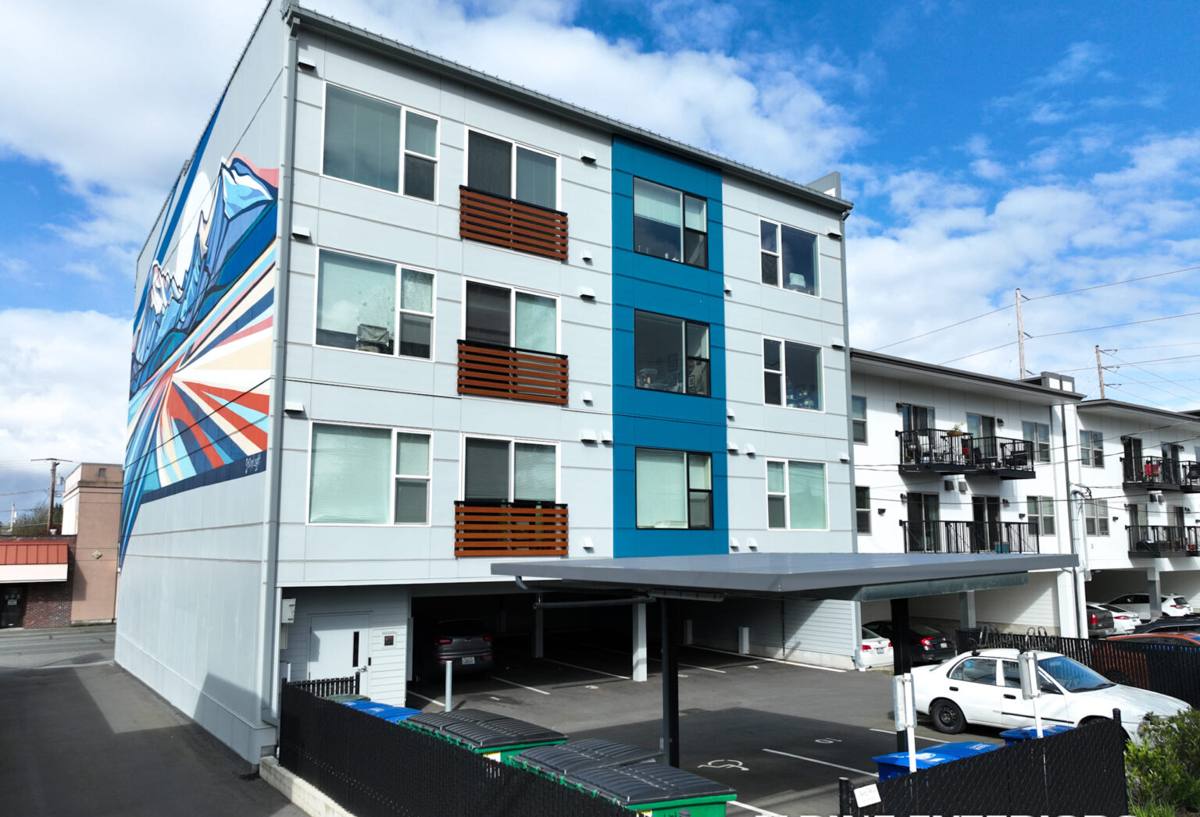
What York's Climate Actually Does to Siding
Salt Air and Metal Fasteners
Proximity to the bay means airborne salt is a real, if slow-acting, factor. It doesn't dissolve siding, but it accelerates corrosion on anything metal that's exposed or improperly coated — fasteners, flashing, trim edges. Fiber cement itself is inert to salt; it's the metal components and the finish integrity around them that need attention. This is why fastener choice and flashing details matter more here than they would fifty miles inland.
Driving Rain and Wind-Driven Moisture
Whatcom County storms frequently come with enough wind to push rain sideways, which means water gets tested against every lap, joint, and penetration in the siding — not just the field of the wall. A siding system that only performs well against straight-down rain is a poor match for this area. Correct lap spacing, properly bedded joints, and sound flashing at windows and penetrations do the actual work of keeping water out; the siding material is only half the equation.
Moss, Shade, and Slow-Drying Walls
Tree cover and marine cloud cover both mean walls in this area can stay damp for extended stretches, especially on north- and west-facing elevations. Moss and algae find a foothold on surfaces that don't dry out or shed water cleanly. Wood-based and some engineered wood sidings are vulnerable here because sustained moisture is exactly what breaks down their bonding agents and coatings over time. Fiber cement doesn't feed mold or rot the way wood-based products can, which is a meaningful difference in a spot like York where a wall might not fully dry for days after a storm.
Why We Standardized on James Hardie for This Area
We don't install LP SmartSide, vinyl, Cemplank, Allura, primed spruce, or cedar. That's a deliberate standard, not a marketing line, and it's worth explaining honestly rather than just asserting it.
- Vinyl can warp and become brittle with UV and temperature swings, and it doesn't hold up structurally the way fiber cement does against wind-driven rain intrusion at seams.
- Engineered wood products (like LP SmartSide) use wood strand cores with protective coatings — they perform fine in many climates, but sustained damp exposure is the one condition where wood-based cores are most at risk, and that's precisely what this area delivers for months at a time.
- Primed spruce and cedar are natural wood — beautiful, but they need ongoing paint and sealant maintenance to keep moisture out, and in a moss-prone, slow-drying microclimate that maintenance burden is constant, not occasional.
- Cemplank and Allura are also fiber cement and share the same base material advantages as Hardie. Our reason for standardizing on Hardie specifically comes down to their ColorPlus factory finish process, their HZ5 climate-engineered product line built for wet marine regions, and a warranty and dealer-support structure we've found to be the most consistent to stand behind long-term.
Fiber cement, done right, is non-combustible, doesn't swell or rot from moisture the way wood-based products can, and holds a factory finish far longer than field-applied paint on wood siding. That's the profile we want on homes exposed to what York and Fairhaven see every winter.
James Hardie's HZ5 Line and Why It Fits This Zone
James Hardie engineers its siding by climate zone. HZ5 is their product designation for wetter, harsher climates — it's the specification we use throughout Whatcom County, including York. The practical difference from a generic fiber cement board is in the formulation's moisture resistance and freeze-thaw tolerance, which matters on a coastline that gets genuine winter cold snaps layered on top of near-constant dampness. Pairing the right climate-zone product with the right installation details is what actually delivers the performance — one without the other falls short.
What a Correct Installation Involves
Fiber cement siding fails early almost exclusively because of installation mistakes, not the material itself. In a climate like this one, the margin for error on water management details is smaller than in drier regions. A correct job includes:
- Proper weather-resistive barrier (house wrap) installed and lapped correctly before any siding goes up
- Rainscreen or drainage gap where conditions call for it, so walls can dry between storms instead of trapping moisture against the sheathing
- Correct fastener type, spacing, and penetration depth — over-driven or corrosion-prone fasteners are a common source of early failure near the water
- Properly flashed and sealed window and door openings, since wind-driven rain finds these spots first
- Correct minimum clearance between siding and grade, decks, and roof lines to avoid wicking moisture from below
- Factory-cut ColorPlus edges kept intact wherever possible, with any field-cut edges properly sealed to protect the finish
- Caulking only where Hardie's installation instructions call for it — over-caulking traps moisture rather than shedding it
Skipping any one of these doesn't necessarily show up immediately. It shows up two, five, or ten years later as staining, buckling, or moisture damage behind the wall — which is more expensive to fix than it would have been to do correctly the first time.
Our Process for York-Area Projects
1. On-Site Assessment
We look at existing siding condition, sheathing condition where accessible, drainage around the foundation, roof and gutter interaction with the walls, and sun/shade exposure on each elevation — since north and west walls in this neighborhood typically need the most attention to drying and drainage.
2. Product and Color Selection
We walk through Hardie's plank profiles, panel options, and ColorPlus palette, factoring in what holds up visually against the area's moss and mildew exposure and what fits the home's style.
3. Tear-Off and Moisture Check
Old siding comes off with an eye on what's underneath — this is often the first real look at sheathing condition in years, and it's the point where hidden moisture damage gets caught before new siding seals it in.
4. Water Management Installation
House wrap, flashing, and drainage details go in before a single piece of visible siding — this stage determines most of the long-term performance of the job.
5. Siding Installation to Manufacturer Spec
Installed to James Hardie's published fastening, clearance, and finishing requirements — the ones that keep the manufacturer's warranty intact.
6. Final Walkthrough
We review the finished work with the homeowner and go over basic care so the siding performs the way it's supposed to for decades.
Why a Crew That Already Works This Area Matters
Fairhaven and the York neighborhood aren't generic Pacific Northwest suburbs — the housing stock includes a mix of older homes with original wood siding, plus more recent builds, sitting on lots with real tree cover and proximity to the water. A crew that's already worked here knows which elevations tend to hold moisture, how local moss growth behaves on a slow-drying wall, and how wind-driven rain typically hits homes on this stretch of the county. That's knowledge that doesn't come from a spec sheet — it comes from having already done the tear-offs and seen what condition the sheathing was in after years of exposure to these exact conditions.
Fiber Cement vs. Other Siding: A Quick Comparison for This Climate
| Factor | James Hardie Fiber Cement (HZ5) | Vinyl | Wood / Engineered Wood |
|---|---|---|---|
| Moisture resistance | Engineered for wet marine climates | Doesn't absorb, but seams are vulnerable to wind-driven rain | Vulnerable to sustained dampness and rot |
| Moss/algae resistance | Inert surface, factory finish sheds better long-term | Can host surface growth in shaded, damp spots | More prone to moss and mildew in slow-drying conditions |
| Salt air exposure | Material inert; needs correct fastener/flashing details | Generally tolerant, but can become brittle over time | Requires more frequent maintenance near salt exposure |
| Finish longevity | Factory ColorPlus finish, long warranty period | Color molded in, can fade with UV over years | Field-applied paint/stain needs recoating on a cycle |
| Fire resistance | Non-combustible | Can melt/deform under heat | Combustible |
Cost Factors Specific to a York-Area Project
Every project is different, but a few local factors tend to move the number more than they might elsewhere:
| Factor | Why It Matters Here |
|---|---|
| Existing sheathing condition | Slow-drying walls mean a higher chance of hidden moisture damage discovered during tear-off |
| Drainage/rainscreen needs | Shaded, damp elevations often warrant added drainage detailing, which affects labor and materials |
| Home age and trim complexity | Older homes in this area often have more intricate trim, window, and eave details to work around |
| Access and lot layout | Tree cover and tighter lots common in this neighborhood can affect equipment access and staging |
| Product line and profile | HZ5 plank vs. panel choices and ColorPlus color selection affect material cost |
Signs Your York-Area Home May Need New Siding Soon
- Persistent moss or algae staining that returns quickly after cleaning
- Soft spots, bubbling, or visible warping, especially on shaded or north-facing walls
- Paint that's failing faster than it used to, or won't hold a fresh coat
- Visible gaps at seams, corners, or around windows where wind-driven rain can get behind the siding
- Rising heating bills that may point to compromised insulation behind failing siding
- Any musty smell near exterior walls, which can indicate trapped moisture
If your home in York or the wider Fairhaven area is showing any of these signs, or you're planning ahead for a siding replacement, we're happy to take a look and talk through what your home actually needs — no pressure, no upsell to a product we wouldn't put on our own homes. Reach out for a free estimate using the form below.