 Fairhaven Siding
 Why Bellingham Roofs Wear Differently Than Roofs Inland
Bellingham sits close enough to Bellingham Bay and the greater Salish Sea that salt-laden air is a real factor in how a roof ages, not just a coastal-town cliché. Add in the region's long stretch of driving rain off the water, persistent shade from mature evergreens on many lots, and a moss season that can run eight or nine months out of the year, and you get a roofing environment that punishes anything installed with shortcuts. A roof that would last three decades in a dry inland climate can start showing granule loss, moss colonization, or corrosion at fasteners in half that time here if it wasn't specified and installed for this exact set of conditions.
Metal roofing, done correctly, handles this combination better than most other roofing materials available to Bellingham homeowners. But "done correctly" is doing a lot of work in that sentence, and it's the part most of this page is about.
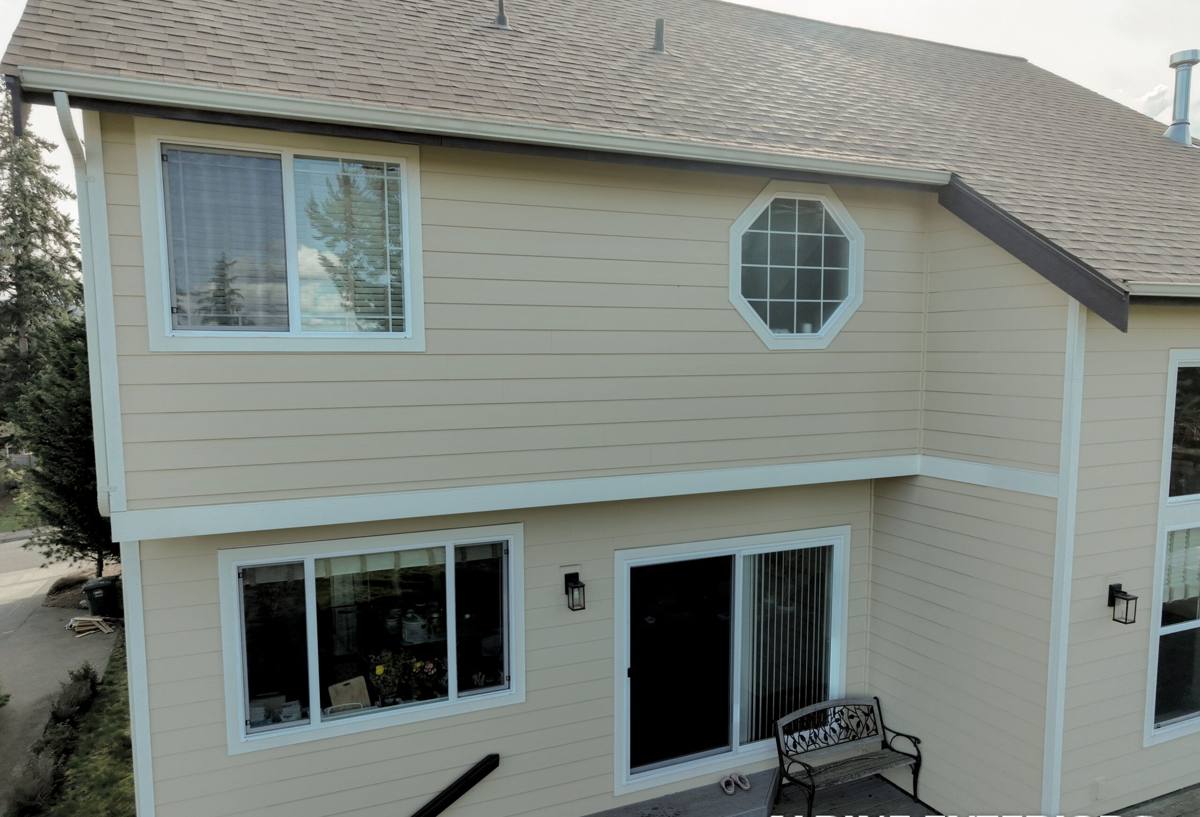
What Whatcom County Weather Actually Demands From a Metal Roof
Salt Air and Corrosion Resistance
Proximity to the bay means airborne salt settles on roofing surfaces, fasteners, and flashing over time. Not every metal roofing product is built to shrug this off. Bare or poorly coated steel, mismatched metals at fastener points, and cut edges left unsealed are where corrosion typically starts. The right panel coating system and the right fastener metallurgy matter more here than they would forty miles inland.
Driving Rain and Wind-Driven Water
Rain in this part of Washington rarely falls straight down. Wind off the water pushes it sideways and up under laps, ridges, and penetrations that a fair-weather installation might get away with elsewhere. Panel overlap, seam type, and underlayment all need to account for wind-driven rain, not just gravity-fed drainage.
Moss, Shade, and Organic Growth
Bellingham's tree cover keeps a lot of roofs shaded and damp for large parts of the year, which is exactly what moss and algae need to take hold. Moss retains moisture against a roof surface, works into laps and fastener penetrations, and can lift or stain roofing material over time. Metal roofing doesn't feed moss the way organic shingle surfaces can, but it isn't immune — debris buildup in valleys and against obstructions still needs to be managed.
Why Metal Roofing Is a Strong Fit for This Climate
We don't push metal roofing as a universal upgrade for every home — it's a specific answer to a specific set of problems, and Bellingham happens to have most of those problems. Here's what it does well in this environment:
- Sheds wind-driven rain efficiently when panels and laps are run correctly, with far fewer horizontal seams for water to find
- Doesn't absorb moisture into the roofing material itself, which reduces the freeze-thaw and rot risk that comes with our wet winters
- Resists moss colonization better than porous or granulated surfaces, though it still needs periodic debris clearing
- Holds up to decades of coastal exposure when the coating system and fasteners are matched to the environment
- Performs well under the region's occasional wind events, when properly fastened to code
None of that is automatic. It comes from correct product selection and correct installation, both of which are covered below.
What a Correct Metal Roofing Installation Involves
Deck Inspection and Prep
Every metal roofing job starts with the roof deck, not the panels. Existing decking gets inspected for rot, delamination, or soft spots — common on homes that have carried moss or trapped moisture for years. Any compromised sheathing gets replaced before anything else happens. Skipping this step is one of the most common ways a metal roof fails early, regardless of how good the panels are.
Underlayment Selection
Given how much wind-driven rain and ice-dam risk this area sees in a normal winter, underlayment isn't a place to cut corners. A synthetic underlayment or self-adhered ice-and-water membrane at eaves, valleys, and penetrations gives the roof a secondary line of defense if wind ever forces water past the panel laps.
Panel Selection and Seam Type
Standing seam and exposed-fastener panels both have a place, but they behave differently in this climate. We walk homeowners through the trade-offs honestly rather than defaulting to whichever product has the best margin — see the comparison below.
Fastening and Flashing
Fastener type and spacing need to match the panel system and the wind exposure of the specific roof. Flashing at valleys, chimneys, skylights, and wall transitions is where most metal roof leaks actually originate, not the field panels themselves. Careful flashing detail work is the single biggest difference between a roof that performs for decades and one that leaks within a few years.
Ventilation
A metal roof over a poorly ventilated attic can trap moisture underneath it just as easily as any other roofing material. We check existing ridge and soffit ventilation as part of the assessment and correct it where needed, because a well-installed roof over a badly ventilated attic still leads to moisture problems.
Comparing Metal Roofing Systems
| System | How It's Fastened | Best For | Maintenance Considerations |
|---|---|---|---|
| Standing seam | Concealed clips, no exposed fasteners on the field | Homes wanting the longest fastener life and cleanest look | Lowest long-term maintenance; higher upfront cost |
| Exposed-fastener panel | Screws driven through the panel face with gasketed washers | Budget-conscious reroofs, outbuildings, garages | Fastener gaskets and seals need periodic inspection and eventual replacement |
| Metal shingle/shake panel | Interlocking panels resembling traditional shingle or shake profiles | Homeowners wanting metal's durability with a traditional look | More seams and laps than standing seam; still low-maintenance overall |
For most Bellingham homes we recommend standing seam or a quality metal shingle system specifically because of the reduced number of fastener penetrations and laps exposed to wind-driven rain and salt air. Exposed-fastener panels can still be a sound choice on secondary structures or budget-driven projects, as long as the homeowner understands the gasket maintenance that comes with it.
What Affects the Cost of a Metal Roof in This Area
| Factor | Why It Matters Here |
|---|---|
| Roof complexity (valleys, dormers, penetrations) | More flashing detail work means more labor, and flashing quality is what prevents leaks in this climate |
| Panel and seam type | Standing seam runs higher than exposed-fastener panel but reduces long-term maintenance and leak risk |
| Deck condition | Moss and moisture retention are common on shaded Bellingham roofs; deck repair adds cost but is not optional |
| Underlayment and flashing package | A climate-appropriate underlayment and full flashing detail cost more upfront than a bare-minimum install, and it shows over time |
| Access and roof pitch | Steeper pitches and tree-crowded lots, common in and around Fairhaven and Bellingham, affect staging and labor time |
We give straightforward, itemized estimates so homeowners can see exactly what they're paying for — deck repair, underlayment, panel material, and flashing detail — rather than one lump number with no explanation of what's driving it.
Our Process on a Bellingham Metal Roofing Project
- On-site assessment — we inspect the existing roof, deck, ventilation, and any moss or moisture issues before quoting anything
- Written estimate — itemized scope covering deck repair (if needed), underlayment, panel system, and flashing detail
- Material selection — we walk through seam type, coating options, and color with the homeowner rather than defaulting to one product
- Deck prep and repair — any compromised sheathing is replaced before underlayment goes down
- Underlayment and flashing install — climate-appropriate underlayment at eaves, valleys, and penetrations, with full flashing detail at every transition
- Panel installation — panels run and fastened to manufacturer spec and local wind requirements
- Final walkthrough — we review the finished roof with the homeowner and explain any maintenance items specific to their property
Maintaining a Metal Roof in a Wet, Shaded Climate
Metal roofing is genuinely low-maintenance compared to most alternatives, but "low-maintenance" isn't "no-maintenance" in a climate like this. A short annual routine keeps a properly installed metal roof performing for its full expected lifespan.
- Clear debris — needles, leaves, moss fragments — from valleys and behind chimneys or dormers where it collects
- Check gutters and downspouts are running clear, since a metal roof sheds water fast and needs somewhere for it to go
- Look for moss or algae staining developing in shaded sections and address it before it spreads
- Have flashing points inspected periodically, especially after major wind events
- Avoid pressure washing directly against seams or fasteners — it can drive water where it shouldn't go
Why Local Installation Experience Matters
Metal roofing performs exactly as well as its installation, and installation quality is where climate-specific experience shows up. A crew that's only worked drier inland climates may not think twice about fastener spacing for wind-driven rain, or about how much flashing detail a shaded, moss-prone valley actually needs. A crew that works Bellingham and the surrounding Whatcom County area regularly has already seen how these roofs age under local conditions — where moss actually collects, where salt air actually causes early corrosion, where wind actually pushes rain sideways — and builds the install around that, not around a generic spec sheet.
We're also positioned to respond quickly if something needs attention after the fact, which matters more with roofing than with almost any other exterior work. A roof issue that sits unaddressed through one more wet Bellingham winter can turn into a deck repair problem it didn't need to become.
Get a Straightforward Estimate
If you're weighing a metal roof for a home in Bellingham or elsewhere around Fairhaven and Whatcom County, we're happy to take a look and walk you through what your specific roof needs — no pressure, no upsell on a system that doesn't fit your house or your budget. Request a free estimate using the form below and we'll set up a time to assess your roof in person.