 Fairhaven Siding
 Roofing in Birchwood Faces a Tougher Job Than Most Neighborhoods
Birchwood sits inside our regular Fairhaven service area, and like the rest of Whatcom County, it deals with a roofing climate that's more demanding than it looks from the ground. The combination of salt-tinged marine air, long stretches of driving rain off the water, and a moss season that can run nine months out of the year means an asphalt shingle roof here works harder than the same roof would in a drier inland climate. A shingle system that's rated for "normal" weather on paper still needs to be installed and maintained with this specific environment in mind, or it will underperform its warranty by years.
We're not describing a different product line — asphalt shingles are still the most practical, cost-effective roofing material for the vast majority of Birchwood homes. What changes is how the roof needs to be detailed: the underlayment choice, the ventilation balance, the flashing work, and the maintenance schedule all need to account for near-constant moisture exposure rather than occasional storms.
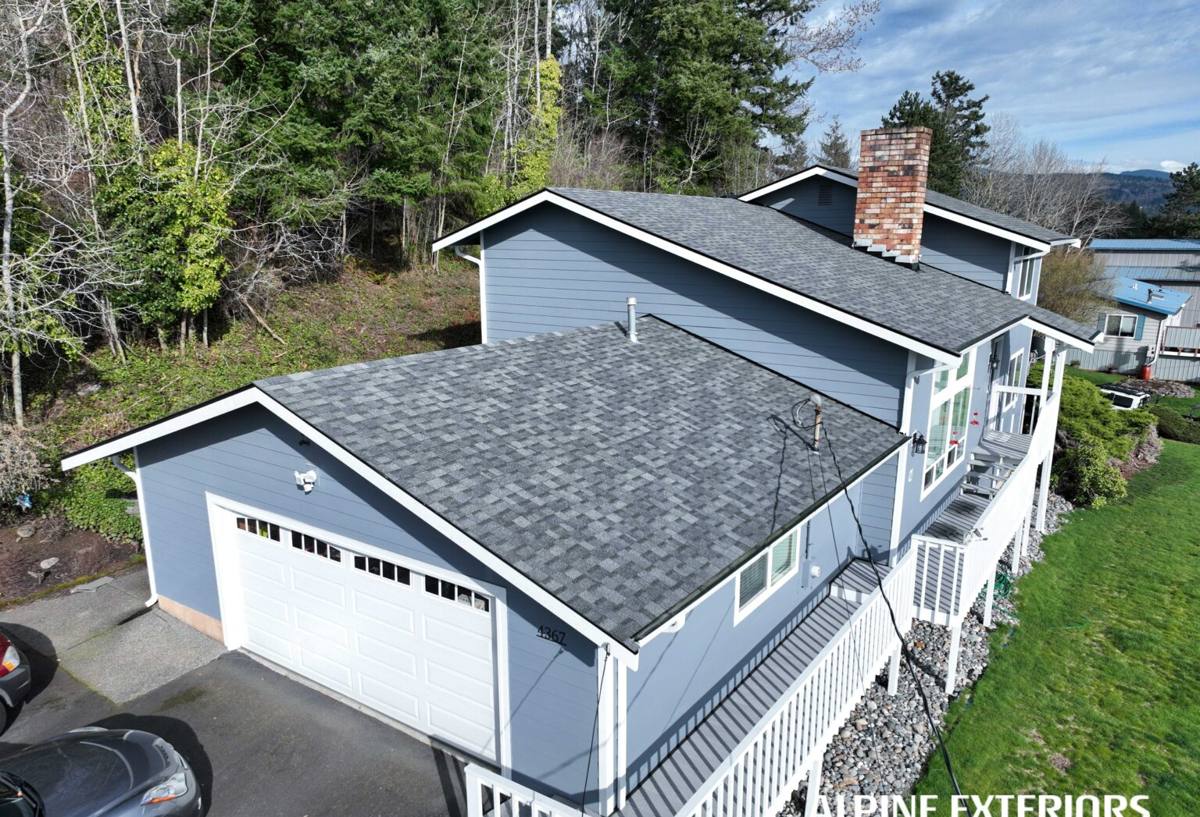
What Salt Air, Rain, and Moss Actually Do to a Shingle Roof
Salt-Laden Air and Metal Components
It's not the shingles themselves that salt air damages first — it's the metal. Exposed fasteners, drip edge, flashing, and roof vents corrode faster in a marine air environment than they would twenty or thirty miles inland. Once a fastener starts to rust, it loses holding power, and once flashing corrodes at a seam, water finds a way underneath the shingle course above it. This is why the grade of metal and fastener we use matters as much as the shingle brand.
Rain Volume and Wind-Driven Water
Whatcom County doesn't just get a lot of rain — it gets a lot of sideways rain. Wind off the water can push water uphill under a shingle edge or through a poorly lapped valley in a way that a calm, straight-down rain never would. Roofs here need extra protection at the vulnerable points — eaves, valleys, and anywhere two roof planes meet — because that's where wind-driven water tests a roof's weak spots first.
Moss, Trapped Moisture, and Shortened Shingle Life
Shade, humidity, and mild temperatures are exactly what moss wants, and Birchwood's tree cover combined with our long damp season gives moss plenty of time to establish. Moss doesn't just look bad — it holds moisture directly against the shingle surface, lifts shingle edges as it grows, and can work its way under tabs and flashing. A roof that's fighting moss year-round loses granules faster, and granule loss is what ages a shingle roof from the inside out.
What a Correctly Installed Shingle Roof Includes in This Climate
A shingle roof is a system, not a single layer of material. In a climate like ours, skipping or under-speccing any one of these components is where roofs start failing early — often well before the shingles themselves are worn out.
- Ice-and-water shield membrane at eaves, valleys, and around penetrations — not just where code requires it, but everywhere wind-driven rain is likely to test the roof
- Synthetic underlayment across the full deck for a consistent water-resistant layer beneath the shingles
- Balanced intake and exhaust ventilation so moist indoor air doesn't condense against the underside of the roof deck
- Corrosion-resistant flashing and fasteners suited to a marine-influenced climate, not standard-grade hardware
- Proper nailing pattern and placement — high-nailing or under-driving fasteners is one of the most common causes of early wind and water damage
- Deck inspection and repair before any new material goes down, since a shingle roof is only as good as the wood underneath it
None of this is exotic. It's standard trade practice done thoroughly instead of rushed — but rushing these details is exactly how a roof that should last twenty-five to thirty years starts leaking at year twelve.
Choosing the Right Shingle for a Damp, Shaded Climate
Not every asphalt shingle product performs the same way once moss, moisture, and wind become regular conditions instead of occasional ones. The table below reflects general trade-offs we walk homeowners through, not brand endorsements.
| Shingle Type | Typical Lifespan Here | Best Fit For | Trade-Offs to Know |
|---|---|---|---|
| 3-Tab Asphalt | 15–20 years | Budget-conscious re-roofs, secondary structures | Lower wind resistance, less algae/moss resistance, thinner profile shows deck imperfections |
| Architectural (Laminate) | 25–30 years | Most Birchwood homes | Higher upfront cost than 3-tab, but better wind rating and moisture shedding |
| Algae-Resistant (Copper/Zinc-Granule) Architectural | 25–30 years | Heavily shaded or moss-prone lots | Slightly higher cost; resistance fades gradually over the shingle's life, not a permanent fix |
| Impact-Rated Architectural | 25–30+ years | Homes wanting storm/debris resistance | Highest material cost; may qualify for insurance discounts worth asking your carrier about |
For most Birchwood homes with any meaningful tree cover, we lean toward an architectural shingle with algae-resistant granules — the upfront cost difference over standard architectural shingles is modest, and it directly addresses the moss and staining issue that's most common in this area.
Our Process, From First Look to Final Walkthrough
Inspection and Honest Estimate
We start on the roof, not on a screen. That means checking the actual deck condition, flashing points, ventilation, and any moss or moisture staining before we quote anything. You get a written estimate that explains what we found and why we're recommending what we're recommending — not just a total.
Tear-Off and Deck Assessment
Full tear-off lets us see the deck itself, which is the only reliable way to catch soft spots, rot, or prior water damage hiding under old shingles. Any deck repair is priced and shown to you before it's covered up, not buried in the invoice afterward.
Installation to Spec, Not to Shortcut
Underlayment, ice-and-water shield, flashing, ventilation, and shingle installation are done in that order, to manufacturer spec, with fasteners and flashing suited to our marine climate. We don't skip courses or reuse old flashing to save time.
Cleanup and Final Walkthrough
Magnetic sweep for nails, full site cleanup, and a walkthrough where we point out anything you should keep an eye on — including realistic guidance on when moss treatment or gutter clearing should happen next.
Repair or Replace? How We Help You Decide
Not every roofing issue in Birchwood means a full replacement. A lot of leaks trace back to a single failed flashing point, a cracked pipe boot, or moss that's been left too long — all repairable if caught early. Here's what we actually check before recommending either direction:
- Age of the roof relative to its expected lifespan for the shingle type installed
- How widespread granule loss is versus isolated to one slope or valley
- Whether moss and moisture damage is surface-level or has reached the underlayment and deck
- Number and location of active leaks — one isolated leak often points to a repair, multiple unrelated leaks usually point to system-wide wear
- Condition of flashing, especially around chimneys, skylights, and roof-wall intersections
- Whether ventilation is adequate, since poor ventilation shortens the life of any repair or replacement you do
If a repair genuinely solves the problem, we'll tell you that. A roof replacement sold to a homeowner who only needed a flashing repair isn't a service — it's a markup, and that's not how we want to be known in this neighborhood.
Maintenance That Actually Extends Roof Life Here
Given our moss season and rain volume, a shingle roof in Birchwood benefits from more attention than the same roof would need in a drier climate. This isn't about constant intervention — it's about a short, regular checklist:
- Moss removal and treatment before it establishes a heavy mat, not after
- Gutter clearing so water isn't backing up under the eave line during heavy rain
- Visual inspection after major windstorms for lifted or missing shingles
- Keeping overhanging branches trimmed back to reduce shade, debris buildup, and physical abrasion on the shingle surface
- Flashing and sealant check every few years, since these fail well before the shingles do
Homeowners who stay on top of this short list routinely get the full expected lifespan out of their roof. Homeowners who don't tend to see moss-related damage and flashing leaks show up five to ten years earlier than they should.
Why a Crew That Already Works Birchwood Matters
Roofing specs written for a national average climate don't automatically hold up in Whatcom County's specific mix of salt air, rain volume, and moss pressure. A crew that works this area regularly already knows which flashing details tend to fail first here, which shingle products actually resist moss versus just claiming to, and how much ventilation a typical Birchwood attic actually needs given our humidity. That local pattern recognition is the difference between a roof that's technically up to code and one that's actually built for the conditions it will live in for the next quarter-century.
It also means faster, more accurate estimates. We're not learning the neighborhood's housing stock and roof pitches on your project — we already have a working sense of what's common here, which lets us focus the inspection on what's actually different about your specific roof.
If your Birchwood home needs a shingle roof inspection, repair, or full replacement, we're glad to take a look and give you a straight answer — no pressure, no inflated scope. Use the form below to request a free estimate.