 Fairhaven Siding
 Windows Built for South Hill's Particular Climate
South Hill sits up above Fairhaven with exposure most neighborhoods in Whatcom County don't deal with in the same combination: steady wind off Bellingham Bay, driving rain that hits window walls at an angle instead of straight down, salt-laden air that works on metal parts year-round, and enough tree cover and shade on older lots to keep moss and moisture around window trim long after a storm has passed. Any window replacement here has to answer to all four of those conditions at once, not just look good on install day.
We've replaced windows on enough South Hill homes — from older wood-frame houses to newer builds with big view glass facing the water — to know where generic "energy-efficient" window installs tend to fall short in this specific setting. This page covers what actually matters for a South Hill home: the glass and frame choices that hold up, the installation details that keep water out, and what a correct job looks like from start to finish.
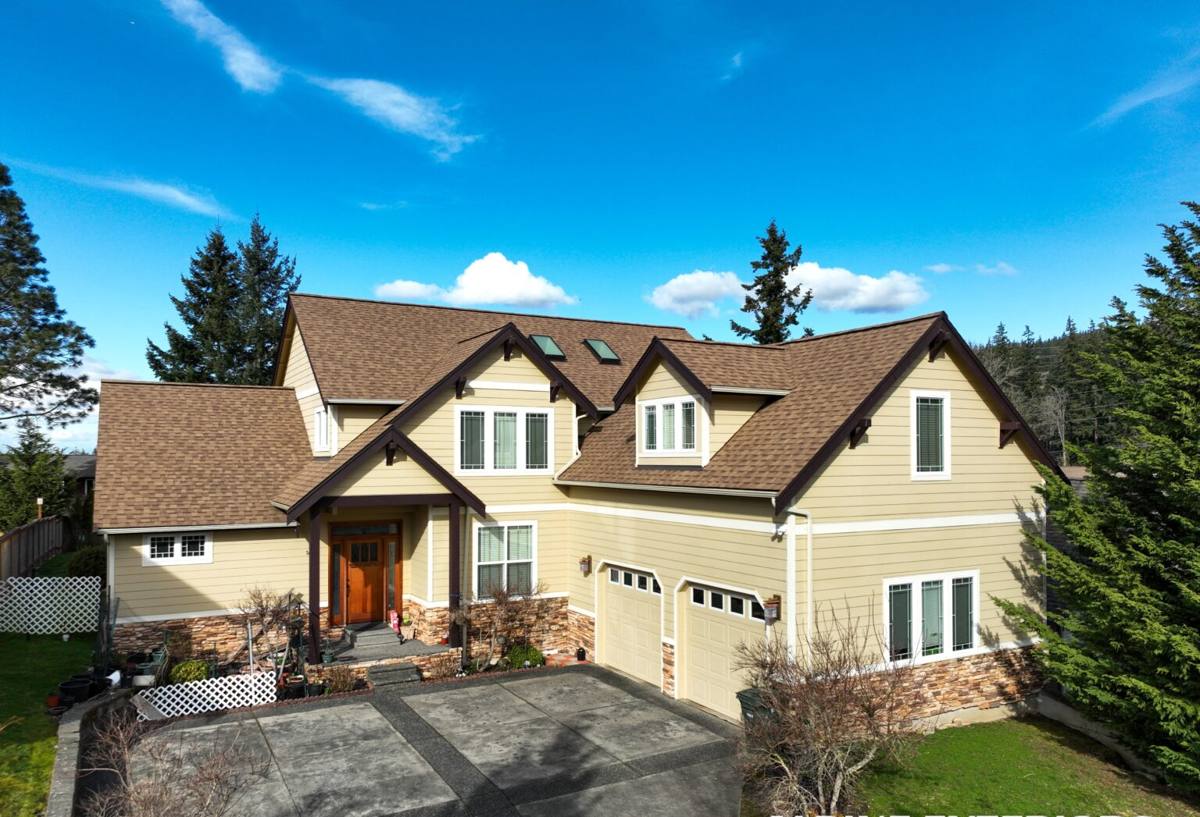
What Fairhaven's Climate Does to Windows Over Time
Salt Air and Metal Components
Homes closer to Bellingham Bay take on a steady low dose of salt in the air, and it doesn't skip South Hill just because it's elevated. Salt accelerates corrosion on anything metal — cheap hardware, unprotected fasteners, and low-grade aluminum components. Over years, that shows up as stiff or failing locks, pitted hinges, and hardware that looks far older than the window itself.
Wind-Driven Rain and Water Intrusion
Rain in this part of Whatcom County rarely just falls — wind pushes it sideways into window walls, especially on exposed or upper-story elevations. A window that would perform fine in a calmer climate can still leak here if the flashing, sill pan, and sealant details weren't built for wind-driven water. Most leaks we find at South Hill homes trace back to installation, not the window unit itself.
Moss, Shade, and Trapped Moisture
South Hill's mix of mature trees and hillside shade means some homes stay damp around window trim and sills far longer after rain than a home in full sun would. That extended damp period is exactly what moss and mildew need to take hold on wood trim, and it's what turns a small gap in caulking into a rot problem within a few seasons.
Signs Your South Hill Home's Windows Are Underperforming
Windows rarely fail all at once — they show small signs first. If you're noticing any of the following, it's worth having them looked at before the problem grows past the glass and into the framing:
- Cold drafts near the window frame even when it's fully latched
- Condensation or fogging between the panes (a sign the seal has failed)
- Visible moss, dark streaking, or soft spots on exterior wood trim
- Windows that are hard to open, close, or lock, especially after rain
- A noticeably colder room, or a heating bill that's climbed without an obvious reason
- Paint or finish peeling from the inside sill, which usually points to moisture getting in from outside
What Actually Makes a Window Energy-Efficient Here
"Energy-efficient" gets used loosely in this industry. For a South Hill home, it comes down to a few specific things working together: the glass package, the frame material, and how tightly the unit is sealed once it's installed. A double-pane window with low-E coating and an argon gas fill will typically land in a U-factor range around 0.25–0.30, which is a meaningful step up from older single-pane or early-generation double-pane units common in this area's older housing stock. But the number on a spec sheet only matters if the installation seals it into the wall correctly — a well-rated window installed loosely will underperform a mid-grade window installed right.
Frame Material Trade-Offs for a Coastal Climate
| Frame Material | How It Handles Salt Air & Moisture | Maintenance | Typical Fit for South Hill |
|---|---|---|---|
| Vinyl | Won't corrode or rot; handles damp, shaded areas well | Low — occasional cleaning | Strong all-around choice for most homes |
| Fiberglass | Very stable in temperature swings and damp conditions | Low | Good for exposed or view-facing elevations |
| Wood-clad | Cladding protects the exterior, but any breach exposes wood to rot | Higher — finish and seals need attention | Best on protected walls, on homes where matching original wood character matters |
| Bare aluminum | Prone to corrosion and heat/cold transfer near salt air | Moderate to high | We generally steer clients away from this for South Hill's exposure |
We're upfront when a homeowner asks about aluminum-framed replacements: aluminum conducts heat and cold directly through the frame, which works against the whole point of an energy-efficient upgrade, and it's more vulnerable to the corrosion this coastal air causes over time. It's not that the material is worthless everywhere — it's that it's a poor match for this specific climate, and we'd rather steer you toward something that will still be performing well in fifteen years.
Our Installation Process
Most of the performance difference between a window installation that lasts and one that leaks within a few years comes down to what happens before and during the install — not the window itself.
- On-site assessment: we check the existing frame, sill, and surrounding siding for hidden rot or water damage before quoting the job, since that's common on older South Hill homes with a lot of shade exposure.
- Removal and opening prep: we remove the old unit carefully to avoid damaging surrounding siding or trim, then inspect the rough opening itself.
- Flashing and sill pan detail: this is the step that actually stops wind-driven rain — proper flashing tape and a sloped sill pan direct water back out instead of letting it sit against the framing.
- Setting and shimming the window: the unit is leveled, plumbed, and shimmed so it operates correctly and seals evenly — a slightly out-of-square install is one of the most common causes of drafts and premature seal wear.
- Insulating and sealing: the gap between the window frame and rough opening is insulated (not just caulked over) to cut air infiltration.
- Exterior trim and weatherproofing: trim is reinstalled and sealed with materials suited to a marine climate, and we check that water has a clear path away from the window, not toward it.
- Final walk-through: we test operation, check the seal from inside and out, and clean up the work area before we consider the job done.
What a Rushed Install Skips
The steps most often skipped by a fast, cheap install are flashing and sill pan detailing and proper insulation of the gap around the frame — because they don't show on the surface right away. A window can look perfectly installed for a year or two before a poorly flashed opening starts letting water into the wall cavity. By the time it shows up as a stain or soft spot, the fix is bigger than it needed to be.
Glass Packages and What They Cost You Over Time
Glass choice affects both comfort and your heating bill, and it's worth understanding the trade-offs rather than just picking the cheapest option.
| Glass Package | Best For | Cost Factor |
|---|---|---|
| Standard double-pane, low-E | Most rooms; solid baseline upgrade from single-pane | Lowest of the efficient options |
| Double-pane, low-E + argon fill | Rooms with heavy heating/cooling use, or exposed elevations | Moderate step up, worth it long-term |
| Triple-pane | North-facing or highly exposed walls, sound reduction | Highest upfront, longest payback period |
| Laminated or impact-rated glass | Ground-floor or high-exposure openings where security or sound matters | Added cost, not primarily about energy efficiency |
For most South Hill homes, a quality double-pane low-E window with argon fill covers the bulk of the benefit without paying for triple-pane performance you won't notice in a moderate coastal climate. Triple-pane earns its keep more on a handful of exposed or north-facing rooms than across an entire house.
Why a Crew That Already Works South Hill Matters
South Hill isn't a flat, uniform lot layout — homes here range from older wood-frame houses to newer construction, sit at different elevations and exposures, and often have mature landscaping that changes how sun, shade, and wind hit each wall. A crew that's worked this neighborhood before knows to check for rot in shaded corners before opening a wall, knows which elevations tend to take the worst of the wind-driven rain, and doesn't need to relearn the local conditions on your dime.
Fairhaven and the wider Whatcom County coastline aren't like an inland climate, and a window package or install method that works fine fifty miles from salt water can underperform here. Hiring locally isn't about loyalty for its own sake — it's about not paying to have someone learn what a local crew already knows.
Maintenance to Protect the Investment
A correctly installed, energy-efficient window is still a long-term investment that benefits from some basic upkeep, especially in a climate that grows moss as readily as this one does.
- Rinse salt residue off frames and hardware a few times a year, especially on wind-exposed sides of the house
- Clear moss and debris from sills and tracks before it holds moisture against the frame
- Check exterior caulking annually and re-seal any cracked or shrunk sections before the rainy season sets in
- Operate locks and hardware periodically so they don't seize from disuse and moisture
- Watch for condensation between panes, which signals a failed seal rather than something you can fix by cleaning
Getting Started
If your South Hill home has drafty, foggy, or hard-to-operate windows — or you're planning ahead for a renovation — we're happy to take a look and give you an honest read on what's worth replacing now versus what can wait. There's no pressure and no cost to get a straightforward estimate; use the form below to get started.