 Fairhaven Siding
 New-Construction Windows for Sehome Homes
New-construction windows are a different product and a different job than a retrofit window drop-in. They install with a nailing fin that ties directly into the wall's weather-resistive barrier before siding goes on, which means the window becomes part of the drainage system for the whole wall — not just a box set inside an existing opening. On a Sehome build or full re-side, that's the moment where a lot of long-term water problems get either prevented or built in for good.
We work new-construction and full-tear-off siding jobs in and around Fairhaven, and Sehome comes up often enough that we know the pattern: builders and homeowners usually get a good window unit, then lose some of its value to a rushed or generic flashing job that doesn't account for how hard this area's weather actually hits a wall.
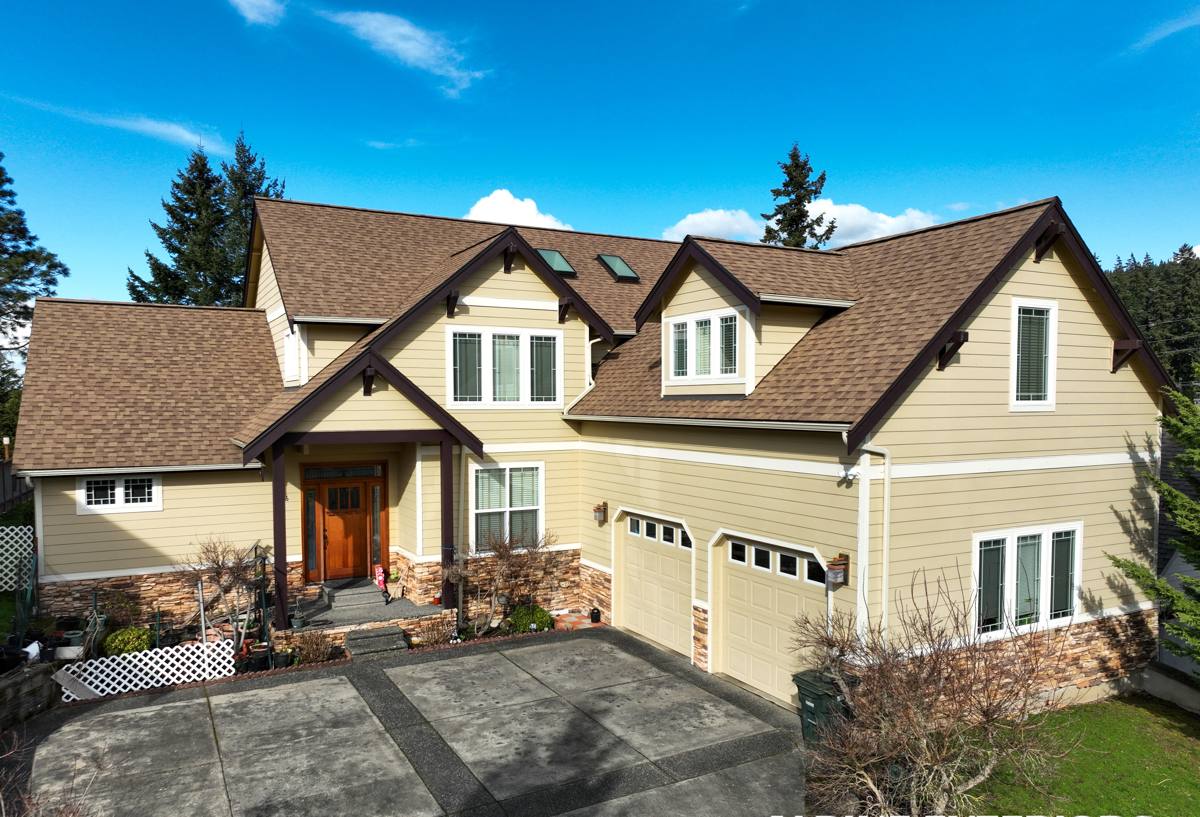
Why the Local Climate Changes the Job
Whatcom County's marine climate isn't just "rainy." For window installation specifically, three things matter more here than in a drier inland market:
- Salt air off the bay accelerates corrosion on cheap fasteners, uncoated flashing, and lower-grade hardware — a problem that shows up years later as staining, seized hardware, or a fastener that's lost its grip.
- Driving rain means water isn't just falling on the glass, it's being pushed sideways into any gap in the flashing or sealant during a storm. A window that would be fine in a calm-rain climate can leak here if the drainage plane isn't lapped correctly.
- A long moss and damp season keeps sills, trim, and the wall assembly around a window wet for extended stretches, which punishes any installation that traps moisture instead of shedding it.
None of that means the job is exotic — it means the ordinary steps of a correct install (sill pan, flashing sequence, sealant, fastener choice) can't be skipped or shortcut the way they might get away with in a milder climate.
What a Correct New-Construction Install Actually Involves
Flashing and the Drainage Plane
Every opening needs a sloped sill pan so any water that gets past the glass or frame drains back out, not down into the framing. The house wrap or building paper has to be integrated shingle-style — meaning each layer overlaps the one below it — so water sheds down and out at every seam. Head flashing goes on last, over the top nailing fin, so it directs water out and away from the top of the window rather than behind it. Skip the order of these layers and you can have a window that looks properly installed but is quietly wicking water into the wall cavity.
Fasteners and Hardware
Given the salt air, we don't treat fastener choice as an afterthought. Stainless or high-grade coated fasteners cost more up front and hold up longer near the water; standard fasteners can start showing surface corrosion within a few years in an exposed location. The same logic applies to any flashing metal — matching materials or using a compatible barrier between dissimilar metals avoids galvanic corrosion at the joint.
Sealant and Backer Rod
Sealant is a backup to good flashing, not a substitute for it. We use backer rod to control sealant depth and joint movement, and we match sealant chemistry to the window frame material — vinyl, fiberglass, and wood-clad frames each move and expand differently with temperature, and the wrong sealant can fail to bond or crack out early in a climate with this much seasonal moisture swing.
Choosing a Frame Material for a Coastal Whatcom County Site
| Frame Material | How It Handles This Climate | Maintenance |
|---|---|---|
| Vinyl | Good moisture resistance, no corrosion risk, budget-friendly | Low — occasional cleaning |
| Fiberglass | Very stable in temperature swings, strong against warping | Low |
| Wood-clad | Attractive interior wood look, but cladding seams need careful sealing near salt air and driving rain | Moderate — watch clad joints and any exposed wood |
| Aluminum | Strong but a poor insulator and more prone to condensation in a damp, cool climate | Moderate |
We don't push one brand or line as the only right answer. What we do insist on is matching the frame to how the opening is exposed — a south or west-facing wall catching direct weather off the bay deserves a different conversation than a sheltered opening on the lee side of the house.
Our Process on a Sehome Job
- Rough opening check — we verify the opening is square, level, and sized correctly before a window ever shows up on site. Catching a framing error here is far cheaper than catching it after the window is set.
- Sill pan and flashing tape — sloped pan flashing goes in first, sealed and lapped with the WRB below it.
- Set and shim the window — the unit gets shimmed square and plumb, not just screwed to whatever the framing gives us, so the sash operates correctly for the life of the window.
- Fasten through the nailing fin — with corrosion-resistant fasteners, following the manufacturer's fastening schedule so the warranty stays intact.
- Integrate the head flashing and WRB laps — sealed and shingled so water is always directed outward and down.
- Seal the interior and exterior per the manufacturer's instructions — including backer rod where called for.
- Final inspection — operation, seal lines, and flashing laps get checked before we move to the next opening or hand off to the siding crew.
On new builds we coordinate directly with the general contractor's schedule so windows go in at the right point relative to the WRB and siding — too early or too late in the sequence is how flashing gaps happen.
What Drives Cost on a New-Construction Window Job
| Factor | Why It Matters |
|---|---|
| Number and size of openings | More openings and larger units mean more flashing detail work, not just more material |
| Frame material and glass package | Fiberglass and upgraded low-E/gas-fill glass cost more than base vinyl |
| Wall exposure | Openings facing prevailing wind-driven rain often warrant extra flashing attention |
| Access and story height | Second-story or hard-to-reach openings add labor time and staging |
| Coordination complexity | New builds mid-framing take more scheduling than a standalone re-side |
We'd rather walk a project and give a real number than quote a range that doesn't match your specific openings — but as a general rule, material grade and the number of openings move the price more than anything else.
Homeowner and Builder Checklist
Whether you're a homeowner watching a build or a GC bringing in a window crew, these are worth confirming before the openings get closed up behind siding:
- Sill pan flashing is sloped to drain outward, not flat or pitched inward
- House wrap or WRB laps are shingled correctly — upper layers over lower layers
- Fasteners are corrosion-resistant, not standard galvanized or bare steel
- Manufacturer's fastening schedule and flashing instructions were followed (this protects the warranty)
- Backer rod is used before sealant on gaps of any real depth
- Windows are shimmed square and operate smoothly before the crew moves on
- Head flashing is installed last, over the top nailing fin
Energy Performance in a Cool, Damp Climate
Washington's energy code sets minimum performance requirements for new-construction windows, and those requirements get checked at permit and inspection. Beyond meeting the code minimum, a lower U-factor and the right glass package matter here specifically because of the long cool, damp season — better glass reduces interior condensation on cold mornings and keeps heating costs down through a Whatcom County winter. We can walk through glass package options and what they actually mean for your project rather than just quoting a spec sheet.
Why a Crew That Already Works Sehome Matters
A window can be installed "correctly" on paper and still be wrong for the specific wall it's going into. Knowing which direction a given lot catches the worst of the driving rain, how much shade and moss buildup a particular site gets, and how local building departments want inspections sequenced all comes from doing this work repeatedly in this specific area — not from a general install checklist. We're not asking you to take that on faith; it's the reason we walk every opening before we quote it, rather than pricing off a plan set alone.
If you're planning new-construction windows for a project in Sehome or elsewhere around Fairhaven, we're happy to come look at the openings, talk through frame and glass options for your site's exposure, and give you a straightforward, no-pressure estimate using the form below.