 Fairhaven Siding
 Board & Batten Siding for Chuckanut's Wooded, Water-Facing Homes
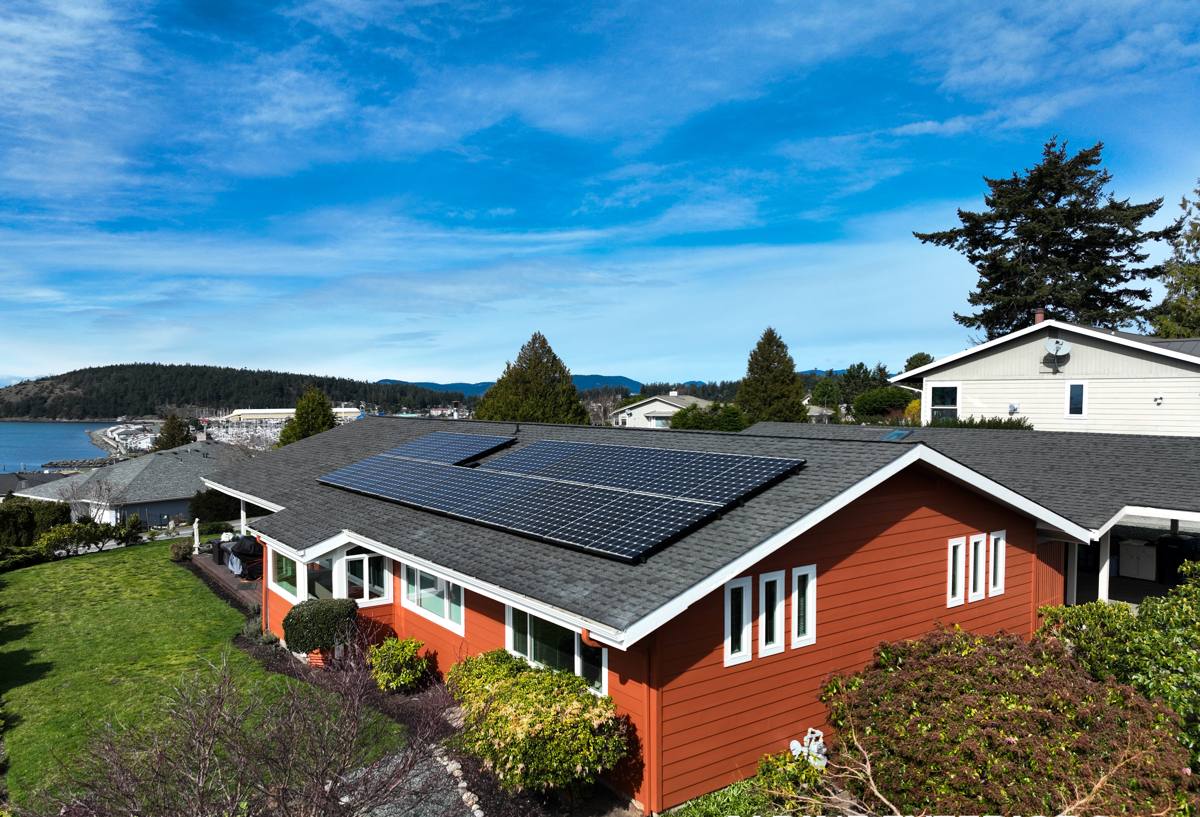
Chuckanut sits in a landscape most siding products were never designed for: steep, tree-covered lots, homes tucked into the hillside above the water, and a marine climate that stays damp for most of the year. It's also one of the few areas around Fairhaven where board and batten siding shows up as much as it does — the vertical lines and wide flat panels suit the craftsman and modern-farmhouse homes built into the hillsides here, and they read well against a backdrop of evergreens and water instead of getting lost in it.
That same setting is exactly why board and batten has to be installed with more care in Chuckanut than in a typical subdivision. The style has more vertical seams than lap siding, the lots are often shaded enough to slow drying after every storm, and the exposure to open water means salt-laden air is a real, daily factor on fasteners and finishes. Get the details right and board and batten holds up beautifully for decades. Get them wrong and the same style traps moisture behind the wall where you can't see it until the damage is already done.
What the Chuckanut Climate Actually Does to Vertical Siding
We don't treat "coastal Pacific Northwest" as one generic climate zone, because it isn't. Chuckanut has three specific conditions stacked on top of each other, and each one puts different stress on a wall assembly.
Salt Air
Homes facing the water pick up airborne salt that settles on siding, trim, and fasteners. Over years, salt exposure accelerates corrosion in lower-grade fasteners and flashing metals, and it degrades paint and caulk faster than it would a few miles inland. Any board and batten job here needs corrosion-resistant fasteners and trim details that don't rely on caulk alone to keep water out.
Driving Rain Off the Water
Wind-driven rain doesn't just fall on a wall, it hits it at an angle and gets pushed into any gap that will take it. Vertical board and batten has more butt joints and more linear feet of seam per square foot of wall than horizontal lap siding, which means more places for driving rain to find a way in if the flashing and drainage details aren't done correctly.
A Long Moss Season
Tree cover keeps large sections of many Chuckanut homes shaded through most of the wet season, so walls dry slower after every rain. That combination — shade plus moisture plus a long Whatcom County wet season — is exactly what moss and algae need to take hold, especially on wood and wood-look surfaces that hold moisture in their grain.
Why We Only Install Board & Batten in James Hardie Fiber Cement
Board and batten is traditionally a cedar look, and we understand the appeal — it's the look a lot of Chuckanut homeowners are picturing when they ask for this style. Real cedar does look right in a wooded setting, but it's also the product most vulnerable to everything Chuckanut's climate throws at it: it absorbs moisture at the grain, it needs re-staining or repainting on a real schedule to keep that moisture out, and in a shaded, damp lot it's the surface most likely to grow moss between maintenance cycles. Engineered wood siding shares some of the same exposure sensitivity at cut edges and panel joints. Vinyl board and batten avoids the moisture-absorption problem but brings its own trade-offs — it expands and contracts more with temperature swings, and the vertical battens are usually molded-in rather than true applied trim, so the look is close but not quite the real, dimensional profile.
James Hardie's fiber cement is what we put on Chuckanut homes instead. It's non-combustible, it doesn't absorb moisture the way wood does, and its HZ5 formulation is engineered specifically for wet, humid climates like ours rather than a one-size-fits-all national product. The ColorPlus factory finish is baked on under controlled conditions, so the color holds up to UV and salt air far longer than a field-applied coat, and touch-up work matches instead of leaving a visible patch. It's also backed by a real transferable warranty, which matters on a product you're installing once and expecting to last.
What a Correct Board & Batten Installation Actually Involves
Board and batten looks simple from the street — wide panels, vertical battens over the seams — but the parts you don't see are what determine whether it lasts fifteen years or fifty.
The Drainage Gap
Any wall assembly will get some moisture behind the siding eventually, whether from a missed seal or normal vapor movement. A rainscreen gap between the weather-resistive barrier and the siding gives that moisture a path to drain and air to circulate so the wall can dry. On a shaded, damp Chuckanut lot, that drainage gap is doing more work than it would on a sunny, open site, because the wall gets fewer chances to dry out between storms.
Flashing at Every Transition
Windows, doors, roof-to-wall intersections, and deck ledgers are where water intrusion actually happens, not in the middle of a flat panel. Correct flashing at each of these transitions, installed in the right order relative to the weather-resistive barrier, is what keeps driving rain from finding its way behind the siding.
Batten Spacing and Fastening
Battens need to land on framing or blocking, be fastened per the manufacturer's spec, and be spaced to allow for the panel's expansion and contraction. Field cuts at panel ends need to be primed and sealed before the batten goes over them — a step that's invisible once the job is done but is exactly where uncaulked or unprimed cuts start absorbing moisture.
Factory Finish, Not a Field Repaint
Because Hardie's ColorPlus finish is factory-applied, the installation crew's job is to protect that finish through handling and installation, then touch up cut edges and fastener heads with matched touch-up paint — not to repaint the whole wall on site. A crew used to working with factory-finished fiber cement treats the material differently than one used to painting raw wood in the field.
Comparing Board & Batten Material Options
| Material | Moisture/Moss Resistance | Maintenance | Typical Lifespan |
|---|---|---|---|
| Cedar | Absorbs moisture at the grain; prone to moss in shaded, damp spots | Re-stain or repaint every few years | Varies widely with upkeep |
| Engineered wood (LP-style) | Sensitive at cut edges and panel joints if not sealed and maintained | Regular inspection of joints and edges | Decades with consistent upkeep |
| Vinyl | Doesn't absorb moisture, but seams and battens are less true to the original profile | Low, but limited repair/color options if damaged | Decades, with visible fading over time |
| James Hardie fiber cement (HZ5) | Doesn't absorb moisture like wood; factory finish resists fading and staining | Occasional wash; touch-up paint on cuts as needed | Decades, backed by a transferable warranty |
Our Process for a Chuckanut Board & Batten Project
- On-site assessment, including a look at sheathing and framing condition — shaded, wooded lots are where we most often find moisture damage that wasn't visible from the outside.
- Careful removal of existing siding and inspection of the wall assembly underneath before anything new goes up.
- Repair of any damaged sheathing or framing, because new siding over a compromised wall just hides the problem for another few years.
- Installation of a proper weather-resistive barrier and rainscreen drainage gap, sized for the moisture load a shaded Chuckanut wall actually sees.
- Installation of James Hardie panels and battens to manufacturer spec, with corrosion-resistant fasteners and flashing at every window, door, and roofline transition.
- Final trim work, sealing, and touch-up of the ColorPlus finish at cuts and fastener heads.
- A walkthrough with you before we call the job done.
Why a Crew That Already Works Chuckanut Matters
A lot of what makes a board and batten job hold up here has nothing to do with the siding itself and everything to do with knowing the site. Chuckanut's hillside lots often mean tight access, steep driveways, and staging that has to be planned around the terrain rather than a flat, open yard. A crew that's already worked this stretch knows what to expect before the trucks show up, instead of figuring it out on day one.
There's also a judgment call built into every board and batten job on a shaded, tree-covered lot: how much drainage capacity does this specific wall need, given how long it stays wet after a storm compared to a sunnier property nearby. That's not something you get right from a spec sheet alone — it comes from having installed and then gone back to inspect siding on similar homes in this exact microclimate, year after year.
What to Ask Any Contractor Before They Touch Your Siding
- Do they install a rainscreen drainage gap on every project, or only when asked?
- Are they a certified James Hardie installer, and can they explain the difference between HZ5 and other Hardie product lines?
- Will fasteners and flashing be corrosion-resistant, given the salt air exposure this close to the water?
- How do they handle flashing at windows, doors, and roof-to-wall transitions — can they walk you through it, not just tell you it's "code"?
- Is the manufacturer's warranty transferable if you sell the home?
- Have they worked on Chuckanut or similarly wooded, shaded lots before, and can they speak to what's different about them?
If your siding is showing moss, soft spots, or peeling paint — or you're planning ahead before it gets that far — we're happy to take a look and talk through what board and batten in James Hardie fiber cement would involve for your specific home. Fill out the form below for a free, no-pressure estimate.