 Fairhaven Siding
 Decks in Bow Take a Different Kind of Beating
Bow sits in the Chuckanut Drive corridor south of Fairhaven, close enough to the water that homes here deal with a combination of stresses most inland decks never see. Salt-laden air off the bay works on fasteners and finishes year-round. Driving rain off Pacific storm systems drives moisture sideways into joints and end grain, not just straight down onto the surface. And the tree cover and marine humidity that make this stretch of Whatcom County so green also mean a moss and algae season that can run eight months or longer. A deck built or maintained without those three factors in mind will show it within a few seasons, whether that's rust bleeding through fastener heads, boards cupping at the ends, or a slick green film that never fully dries out.
Salt Air and Hardware
Even a few miles from open water, airborne salt accelerates corrosion on anything less than true stainless or coated fasteners. On a wood deck this shows up as black staining and streaking around nail and screw heads. On composite decking it matters even more, because the hidden fastener systems and structural screws are load-bearing and buried under the boards — if they corrode, you don't see it happening until the deck starts to feel loose.
Driving Rain, Not Just Rain
Wind-driven rain off the water pushes moisture into places a calm, straight-down rain never reaches: under rail post bases, behind ledger boards, into butt-joint gaps between deck boards. A deck detailed for an inland climate — tight board spacing, no drainage plane, minimal flashing — traps that water instead of shedding it.
The Long Moss Season
Shade, humidity, and mild temperatures mean moss and algae get a long runway here, often starting earlier in fall and hanging on later into spring than homeowners expect. On wood, that moss holds moisture against the surface and speeds rot. On composite decking, moss and algae mostly stay on the surface, but the wrong board texture or a poorly ventilated substructure still gives them plenty to grow on.
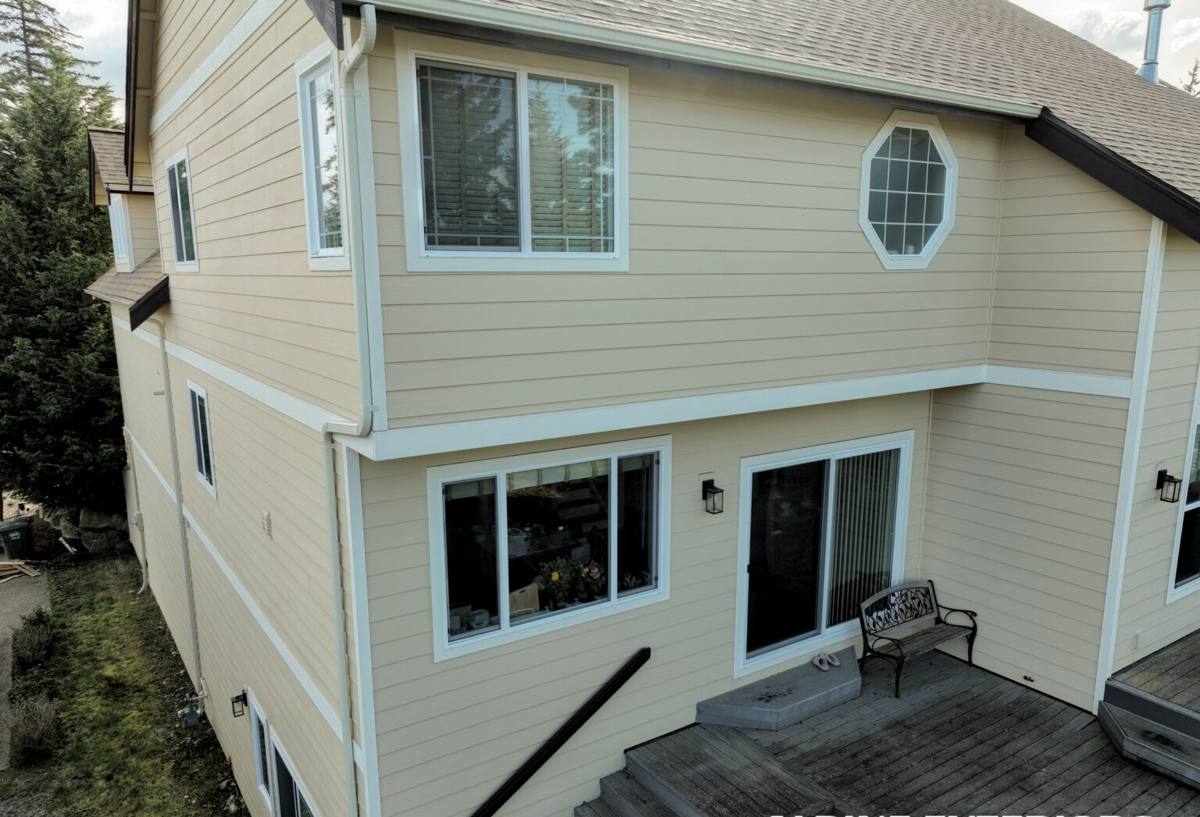
Why Composite Makes Sense for a Bow Deck
We're a siding and exteriors crew first, and we don't push composite decking because it's trendy — we recommend it for this specific climate because it holds up to the three problems above better than wood does, provided it's installed correctly. Composite boards don't need annual staining or sealing, they don't splinter or cup the way wood does when it takes on and releases moisture repeatedly, and the better product lines resist mold and mildew growth on the board surface itself. That doesn't mean composite is maintenance-free — nothing exposed to salt air and rain in this region is — but it shifts the maintenance from "recoat every year or two" to "rinse and brush off a few times a season."
The trade-off is that composite decking is less forgiving of installation mistakes than wood. Wood can hide a lot of sloppy substructure work for a few years before it becomes obvious. Composite boards will telegraph framing problems — squeaks, sagging, gapping — faster, and warranty coverage from the manufacturer is usually conditional on the substructure and fastening being done to spec. That's the real argument for hiring a crew that knows what "done right" looks like in this specific climate, not just a crew that's installed composite somewhere dry.
What a Correct Installation Actually Involves
Substructure and Framing
Everything starts below the boards. Joists need to be spaced correctly for the specific board product — composite typically needs tighter joist spacing than wood, especially on diagonal or picture-frame layouts — and any wood framing exposed to this climate should be pressure-treated and, ideally, wrapped with a joist tape that sheds water instead of letting it soak into the cut ends and fastener holes.
Fastening and Hidden Clip Systems
Most quality composite boards use a hidden fastener or clip system rather than face screws, which gives a cleaner surface and, more importantly for this climate, doesn't puncture the board's cap layer where water and salt could work their way in. The clips and screws themselves need to be corrosion-rated for coastal exposure — this is one of the places we won't cut a corner, because it's invisible once the deck is finished and expensive to fix later.
Drainage, Ventilation, and Ledger Flashing
A deck that can't shed water under the boards will stay damp long after a storm passes, which is exactly what feeds moss and algae growth. That means proper board spacing for drainage, keeping the substructure ventilated rather than boxed in, and flashing the ledger board where the deck meets the house so water is directed away from the wall assembly, not into it. This last point matters as much for your siding as it does for the deck — a poorly flashed ledger is one of the more common causes of hidden moisture damage we find behind exterior walls.
Railings, Stairs, and Fasteners at Grade
Post bases and stair stringers that sit closer to grade or to standing water need the same corrosion-conscious hardware as the deck field, plus attention to how they're sealed where they penetrate the deck surface. This is a common spot for slow leaks that don't show up until framing underneath starts to soften.
Comparing Decking Materials for This Climate
Every material has a role, and being straight about the trade-offs matters more than pushing one product. Here's how the common options stack up for a salt-air, high-moisture, moss-prone site like Bow.
| Material | Moisture & Salt Air Resistance | Maintenance | Typical Lifespan | Upfront Cost |
|---|---|---|---|---|
| Capped composite | Strong — cap layer resists moisture absorption and staining | Periodic rinse/brush; no staining or sealing | 25–30+ years | Mid-high |
| Uncapped composite | Moderate — more prone to surface moisture absorption and fading over time | Occasional cleaning, more sensitive to prolonged wet conditions | 15–20 years | Mid |
| PVC/cellular decking | Very strong — fully synthetic, minimal moisture absorption | Low; rinse as needed | 25–30+ years | High |
| Pressure-treated wood | Weak without diligent upkeep — absorbs moisture, feeds moss/mildew | Annual/biennial staining or sealing required | 10–15 years with upkeep | Low |
| Cedar | Moderate naturally, weak once finish wears | Regular refinishing to resist gray/mildew | 15–20 years with upkeep | Mid |
For most Bow homeowners we talk to, capped composite hits the right balance of upfront cost and long-term performance for this climate. PVC decking is worth considering for full-sun, high-exposure areas where board temperature and stiffness matter more, but it comes at a premium. We'll walk through the honest trade-offs for your specific site and budget rather than defaulting to one product.
Our Process for a Bow Composite Decking Project
- On-site assessment. We look at drainage patterns, sun/shade exposure, existing framing condition, and how close the deck sits to the house's water management (gutters, downspouts, grading).
- Design and material selection. Board layout, railing style, and product tier are chosen based on your site's exposure, not just aesthetics — a shaded, moss-prone corner may steer us toward a different board texture than a full-sun deck.
- Permitting. Deck projects above certain heights or attached to the structure typically require a permit; we handle that paperwork so it's not on you.
- Demo and substructure work. If we're replacing an existing deck, we inspect the framing underneath before building back up — this is often where we find moisture damage that had nothing to do with the old decking surface itself.
- Installation. Framing, flashing, hidden fastening, and board installation, done to the manufacturer's spec so your warranty stays intact.
- Final walkthrough. We go over drainage, any maintenance specific to your board choice, and what normal seasonal weathering looks like versus something to call us about.
Living With a Composite Deck Here: Maintenance That Actually Matters
Composite decking cuts down on maintenance dramatically compared to wood, but "low-maintenance" isn't "no-maintenance" in a climate like this. A short seasonal routine keeps a composite deck looking and performing the way it should for decades.
- Rinse the deck surface and sweep debris out of board gaps a few times through the wet season — trapped leaves and needles hold moisture and feed algae growth.
- Scrub visible moss or algae film with a soft-bristle brush and a mild composite-safe cleaner rather than a pressure washer on high setting, which can damage the board's cap layer.
- Check that board gaps and under-deck ventilation haven't been blocked by planters, storage, or built-up debris.
- Inspect railing posts and stair connections annually for any looseness — this is usually a hardware issue, not a board issue, and it's easy to catch early.
- Keep gutters and downspouts near the deck clear so runoff isn't dumping extra water directly onto or under the deck structure.
- Trim back overhanging vegetation where practical to cut down on shade and debris that prolong the moss season on that section of the deck.
What Drives Cost on a Bow Composite Deck
We don't publish blanket per-square-foot pricing because the honest answer is "it depends," but the factors that actually move the number are consistent:
- Deck size and layout — square footage, plus any diagonal patterns, picture-framing, or multiple levels that add cutting and labor time.
- Board tier — uncapped composite, capped composite, and PVC sit at different price points, as shown above.
- Substructure condition — whether existing framing can be reused after inspection or needs partial or full replacement.
- Railing and stair scope — composite or cable railing systems add cost over basic wood or metal rail.
- Site access and grade — decks on a slope, over a walkout basement, or with limited equipment access take more labor.
- Permitting requirements — height, attachment to the house, and local code all factor into what's required before work starts.
We give a firm, written number after the on-site assessment, not a phone estimate — there's too much variation between properties on this stretch of the coast to price it any other way responsibly.
Why It Matters That We Already Work in Bow
A lot of what separates a composite deck that looks good for two years from one that performs for twenty comes down to details that aren't visible on a spec sheet: how tight to run board gaps for this rainfall pattern, which fastener coatings actually hold up to this air, how much ventilation a shaded substructure needs to keep moss from taking hold underneath. That's the kind of judgment that comes from building and repairing decks and siding on homes in Fairhaven, Bow, and the rest of Whatcom County repeatedly, not from a spec sheet written for a national market. We also know what the local permitting process expects and what kind of exposure a given lot actually gets based on its position relative to the water and tree line — information that saves both time and rework.
Get a Straight Answer for Your Deck
If you're planning a new composite deck or replacing one that hasn't held up to Bow's weather, we're happy to take a look and give you a straightforward, no-pressure estimate — what your site needs, what it'll cost, and why. Fill out the form below and we'll get in touch to schedule a time.