 Fairhaven Siding
 Window Installation Built for Bellingham's Coastal Climate
Bellingham sits where Puget Sound weather meets the edge of the Cascades, and that combination is hard on windows. Homes here deal with salt-laden air off the water, long stretches of driving rain, and a moss season that keeps everything damp for months at a time. A window that's a perfectly good product somewhere else can fail early here if it isn't installed with this climate in mind. That's the difference between a window installation that lasts twenty-plus years and one that starts leaking, fogging, or sticking within five.
We work on homes throughout Bellingham and the surrounding Whatcom County area regularly, which means we're not guessing at how local wood siding, stucco, or fiber cement reacts around a window opening once it's cut. We've seen what goes wrong when a window is installed to a generic national standard instead of a Pacific Northwest one, and we build our process around avoiding those failure points.
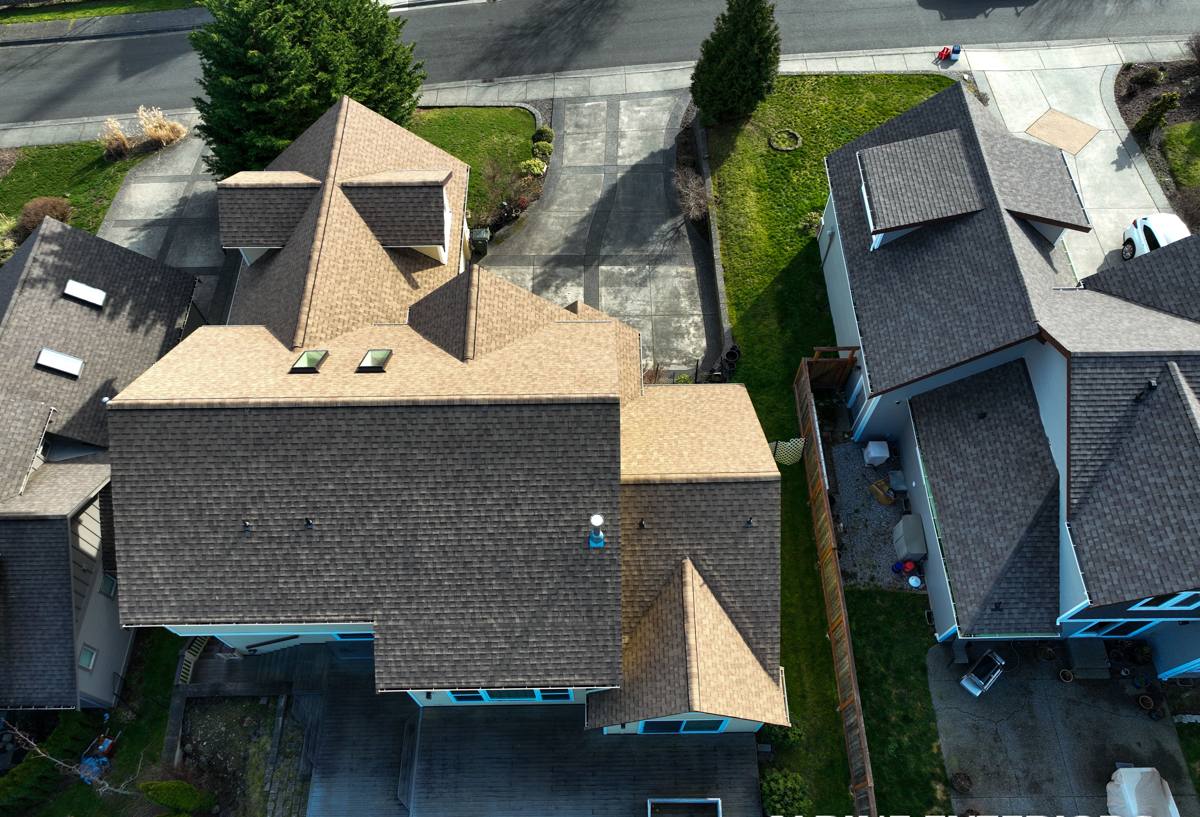
What Salt Air, Rain, and Moss Season Actually Do to Windows
Moisture Intrusion
Whatcom County gets sustained, wind-driven rain rather than short bursts. That means water gets pushed sideways and upward against a window opening, not just straight down. If the flashing, sill pan, and weather-resistive barrier aren't layered correctly — shingle-style, so water always sheds outward and downward — rain works its way behind the trim and into the wall framing. You often don't see this until there's already rot or drywall staining on the interior.
Salt Air Corrosion
Homes closer to the water pick up airborne salt that settles on window hardware, screens, and metal flashing. Over time this accelerates corrosion on lower-grade fasteners, hinges, and cranks, and it can degrade certain finishes faster than the manufacturer's inland warranty testing accounts for. It's a slow process, but it's real, and it's a reason we pay attention to hardware quality and flashing material, not just glass.
Moss and Constant Dampness
Bellingham's moss season isn't just a roof problem. Moss and algae hold moisture against wood trim, sills, and cladding around window openings for weeks at a stretch. Wood that stays wet that long is what rots — and rot at a sill or jamb is one of the most common reasons a window installation fails prematurely, regardless of how good the window unit itself is.
Signs a Bellingham Home Needs New Windows
Not every drafty window needs full replacement, but certain signs point to a problem that's only going to get worse with another wet Whatcom County winter.
- Condensation or fogging between the panes of a double-pane window (means the seal has failed)
- Soft, spongy, or discolored wood at the sill or bottom corners of the frame
- Visible daylight or a noticeable draft around the frame when the window is closed
- Windows that are difficult to open, close, or lock, or that have warped out of square
- Peeling paint or bubbling trim concentrated around the window opening, not the whole wall
- Single-pane glass, especially on a home's west- or south-facing walls that take the brunt of storms
- Noticeable rise in heating costs without another clear explanation
What a Correct Window Installation Actually Involves
Setting a new window in the opening is the easy part. The work that determines whether it lasts happens before and after that step.
Before the Window Goes In
The old window and any damaged trim come out, and we inspect the rough opening for rot, soft framing, or existing water damage. Any compromised wood gets replaced — installing a new window into a wet or rotten opening just locks the problem behind new trim.
Sill Pan and Flashing
A sloped sill pan at the bottom of the opening gives any water that does get past the window a path to drain back out, instead of pooling against the framing. Flashing tape and building paper or house wrap are layered shingle-style around the sides and top so water is always directed outward, never trapped behind the window flange.
Setting and Sealing the Window
The window is set level, plumb, and square, then fastened per the manufacturer's specification — not just where it's convenient. Low-expansion foam or backer rod and sealant fill the gap between the frame and rough opening for insulation, and a high-quality exterior sealant, rated for this climate, seals the perimeter against wind-driven rain.
Interior and Exterior Finish
Interior trim and insulation are finished so there are no gaps for air or moisture to move through the wall cavity, and exterior trim is caulked and painted or capped so water sheds away from every joint.
Window Material Comparison for This Climate
| Material | Moisture & Salt-Air Behavior | Maintenance | Typical Cost Range |
|---|---|---|---|
| Vinyl | Won't rot or corrode; performs well near the coast | Low — occasional cleaning | Lower to mid |
| Fiberglass | Very stable in temperature swings and moisture; strong long-term option | Low | Mid to upper |
| Wood-clad | Attractive, but cladding seams need careful sealing to keep moisture out of the wood core | Moderate to high — needs monitoring at joints | Upper |
| Aluminum | Prone to corrosion and thermal transfer in coastal, wet climates | Moderate | Varies |
We don't push one material on every home. Vinyl and fiberglass tend to be our default recommendations for Bellingham because they hold up to sustained moisture and salt air with the least long-term maintenance, but wood-clad can still be the right call on a home where matching existing trim or a specific architectural look matters more than minimizing upkeep. What we steer away from is any product or installation shortcut that trades short-term appearance for a maintenance headache five years down the road — that's a standard we hold regardless of brand.
Full-Frame vs. Insert Replacement: What Fits Your Home
Bellingham has a mix of older homes with original wood-frame construction and newer builds. Which replacement approach makes sense depends on the condition of the existing frame.
| Approach | Best For | Trade-Off |
|---|---|---|
| Insert (pocket) replacement | Existing frame is sound, dry, and square | Faster, less disruption, but doesn't address hidden rot if it's present |
| Full-frame replacement | Frame shows rot, water damage, or is out of square | More labor and cost, but resets flashing and sealing from scratch |
Given how much moisture Whatcom County homes are exposed to, we don't recommend an insert replacement without first confirming the existing frame and sill are actually dry and sound. Covering up hidden rot with a new insert window is one of the more common corner-cuts we get called out to fix later.
Our Window Installation Process
- On-site assessment — We look at each window opening individually, not just the home as a whole, since sun exposure, wind direction, and drainage vary wall to wall.
- Material and product recommendation — Based on that specific wall's exposure, budget, and the home's existing look.
- Removal and opening inspection — Old window comes out, framing is checked and repaired if needed.
- Sill pan, flashing, and window installation — Set level, plumb, square, and properly fastened.
- Insulation and sealing — Gaps filled, perimeter sealed with climate-appropriate materials.
- Interior and exterior finish work — Trim, caulking, and paint or capping completed to shed water at every joint.
- Final walkthrough — Operation, seal, and finish checked with the homeowner before we consider the job done.
Why a Crew That Already Works Bellingham Matters
Window installation done to a generic national standard often misses details that matter specifically here — how deep to set a sill pan given our rainfall volume, which sealants stay flexible through a wet Whatcom County winter without cracking, or how to detail flashing around the wood or fiber cement siding common on older Bellingham and Fairhaven homes. A crew that works this area regularly has already made the adjustments that come from experience with this exact climate, rather than learning them on your house.
Local experience also means knowing what typically triggers a permit review with the City of Bellingham or Whatcom County, and building the job to meet current energy code glazing requirements from the start — not discovering a problem at inspection.
Cost Factors to Expect
| Factor | Why It Matters | Typical Cost Impact |
|---|---|---|
| Window count and size | More or larger openings mean more material and labor | High |
| Material choice | Vinyl, fiberglass, and wood-clad carry different unit costs | Medium-High |
| Full-frame vs. insert | Full-frame requires more labor and finish work | Medium |
| Glass package | Double vs. triple pane, low-E coatings, and argon fill add cost but improve performance | Medium |
| Existing damage | Rot repair at the opening adds labor beyond the window itself | Variable |
| Trim and finish detail | Custom trim profiles or matching existing woodwork take more time | Low-Medium |
Exact pricing depends on all of the above, which is why we walk each home individually rather than quoting a flat per-window number over the phone.
Caring for New Windows Through Bellingham's Wet Season
A correct installation reduces maintenance significantly, but a little seasonal attention extends the life of any window in this climate. Keep weep holes and sill tracks clear of leaves, moss, and debris so water can drain instead of pooling. Rinse salt residue off exterior hardware and glass periodically if your home is close to the water. Check exterior caulking once a year, typically before the fall rains set in, and have any cracked or separated sealant addressed before winter rather than after a leak shows up on drywall.
If your windows are showing any of the signs above, or you're planning ahead of the wet season, we're happy to take a look and walk you through honest options for your home. Request a free, no-pressure estimate using the form below.