 Fairhaven Siding
 Why Bow's Waterfront Setting Is Hard on Exterior Siding
Bow sits along the water south of Fairhaven, where homes catch a steady mix of salt-laden air off Samish Bay, wind-driven rain rolling in off the Salish Sea, and long stretches of shade from fir and cedar cover. That combination is harder on siding than most homeowners realize. Salt air accelerates corrosion on exposed fasteners and trim. Driving rain doesn't just wet a wall — it forces moisture sideways under laps and around penetrations if the assembly behind the siding isn't built to shed it. And the region's mild, wet winters create a moss season that can stretch six months or more, especially on shaded, north-facing walls that never fully dry out between storms.
None of this is unique to any one house in Bow — it's the baseline condition every exterior surface on this part of the coast has to deal with, year after year. Siding that isn't specifically suited to that environment tends to show it early: paint failure, soft trim, streaking, or moss creeping down from the roofline onto the wall itself.
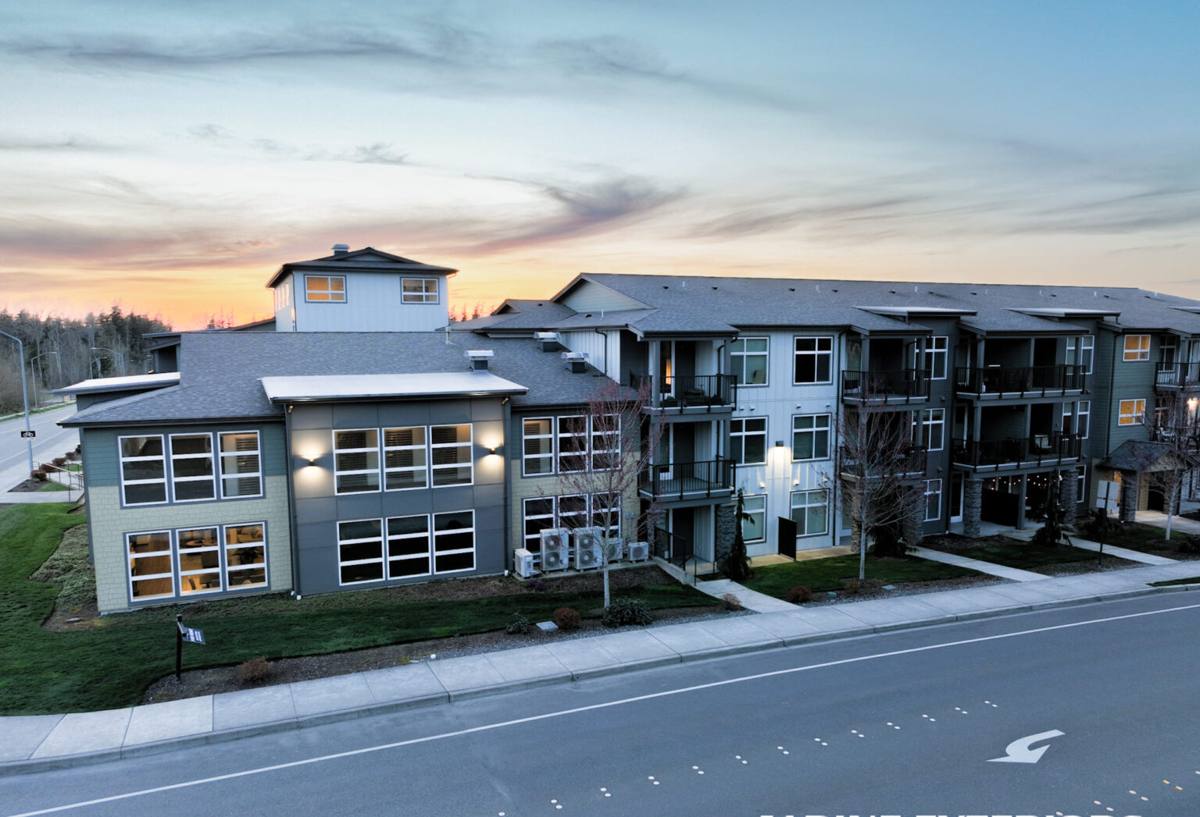
Why We Install Fiber Cement Here — and Only One Brand of It
We install James Hardie fiber cement siding exclusively. We don't carry vinyl, LP SmartSide, primed wood, or other fiber cement brands, and that's a deliberate standard, not a limitation. Fiber cement as a category holds up to salt air and constant moisture cycling far better than wood-based products, because it isn't organic material that swells, rots, or feeds mold when it stays damp. James Hardie's ColorPlus factory finish is baked on under controlled conditions, which gives it better fade and moisture resistance than field-applied paint — a real advantage in an area that sees this much rain and this little sun on shaded elevations.
James Hardie also builds region-specific product lines. Their HZ5 formulation is engineered for climates with more moisture cycling and freeze-thaw exposure, which fits the Pacific Northwest better than a one-size-fits-all product. That engineering, combined with a strong transferable warranty backed by a manufacturer that's been in the fiber cement business for decades, is why we standardized on this one system instead of installing whatever a homeowner asks for.
What Fiber Cement Doesn't Solve on Its Own
It's worth being direct about this: the siding material is only part of the equation. Fiber cement panels installed against a wall with no drainage path, poor flashing, or the wrong fasteners will still trap moisture and fail early — just more slowly than a wood product would. The material buys you margin. Correct installation is what actually keeps a Bow home dry.
What a Correct Installation Looks Like in This Climate
Rainscreen and Drainage Plane
On a site with this much wind-driven rain and shade, we build in a drainage gap behind the siding — typically furring strips over a weather-resistant barrier — rather than nailing panels flat against the sheathing. That gap gives incidental moisture a path to drain and dry instead of sitting against the back of the siding indefinitely, which matters most on the walls that get the least direct sun.
Flashing and Fastener Details
Every window head, sill, and wall penetration gets flashed to shed water outward, not just caulked over. Fasteners are spaced and set to the manufacturer's specification — not overdriven, not placed where they'll split the plank or sit exposed to salt air without adequate coating. These details don't show up in a finished photo, but they're the difference between siding that lasts and siding that fails from the inside out.
Caulking and Touch-Up
Fiber cement joints are engineered to move a little; over-caulking a joint that's designed to stay open can trap moisture instead of releasing it. We use Hardie-approved sealants at the joints that actually need them and Hardie's matched touch-up paint for any field-cut edges, so the factory finish stays consistent instead of showing patchwork over time.
What We Commonly Find on Older Bow Homes
A lot of the siding replacement work we see out here isn't cosmetic — it's structural moisture damage that's been building for years. Common patterns include:
- Wood siding with soft or delaminating boards where paint film trapped moisture instead of letting it escape
- Trim and fascia showing rot at joints and corners, often worse on the shaded side of the house
- Vinyl siding that's warped, faded unevenly, or pulled away from fastening points after years of temperature swings
- Moss and algae staining that starts at the roofline and works its way down the top courses of siding on north-facing walls
- Missing or failed flashing above windows and doors, found only once the old siding comes off
Finding these issues during tear-off is normal, not alarming — it's exactly why we inspect sheathing before closing anything back up.
Our Process for a Bow Siding Project
The steps don't change much from house to house, but the details we pay attention to are shaped by this specific location:
- Site visit and assessment — we look at existing siding condition, moisture readings where accessible, sun/shade exposure on each elevation, and any visible moss or drainage issues.
- Tear-off and sheathing check — old siding comes off and we inspect the sheathing underneath before anything new goes up. Soft or damaged sheathing gets repaired, not covered over.
- Weather barrier and rainscreen installation — the drainage assembly goes in before a single piece of Hardie siding is hung.
- Fiber cement installation to manufacturer spec — correct fastener type, spacing, and flashing at every penetration and trim transition.
- Final walk-through and warranty registration — we confirm the finished work with the homeowner and register the installation so the manufacturer warranty is active.
What Affects the Cost of a Fiber Cement Job in Bow
Every home is different, but the same handful of factors tend to move the price up or down on projects out here:
| Factor | Why It Matters in Bow | Typical Impact |
|---|---|---|
| Existing siding removal | Wood and vinyl tear-off, plus disposal, adds labor before any new siding goes up | Moderate increase |
| Sheathing repair | Moisture-driven rot found during tear-off has to be fixed before re-siding | Varies widely by extent found |
| Home size and stories | More wall area and difficult-to-reach upper stories mean more material and labor | Scales with square footage |
| Trim and architectural detail | Bay windows, multiple rooflines, and dormers all add cutting and flashing time | Moderate to significant increase |
| Site access | Waterfront lots, long or narrow driveways, and heavy tree cover slow staging and material handling | Minor to moderate increase |
| HZ5 vs. standard product | The climate-engineered line costs a bit more but is built for this level of moisture exposure | Small increase, better long-term value |
Living With Fiber Cement Siding in a Moss-Heavy, Salt-Air Climate
Fiber cement is low-maintenance compared to wood, but "low-maintenance" doesn't mean "no maintenance" in an environment like this. A little seasonal attention goes a long way toward protecting the finish and the warranty:
- Rinse siding with a garden hose once or twice a year to clear salt residue, pollen, and organic buildup — avoid aiming a pressure washer directly at seams or joints
- Keep gutters and downspouts clear so rainwater doesn't sheet down the wall face during heavy storms
- Trim back tree limbs and shrubs that keep a wall shaded and damp, since that's exactly where moss gets a foothold
- Check caulking at trim, windows, and penetrations once a year and have any cracked or missing sealant redone
- If moss does appear on a wall, treat it with a soft wash rather than a pressure washer, which can drive water behind the siding or damage the factory finish
Why Hiring a Crew That Already Works in Bow Matters
Siding installation isn't identical everywhere, and the details that matter change with the site. Crews that work this stretch of coast regularly already know how much drainage capacity a wall needs on a shaded, water-facing elevation versus a sun-exposed one, how local permitting and inspection expectations run, and what site conditions — narrow rural access, well and septic layouts, mature tree cover — tend to show up on Bow properties. That familiarity shows up in fewer surprises mid-project and a finished install that's built for the specific conditions of this location, not a generic specification pulled from a warmer or drier market.
If you're weighing a siding replacement on a Bow home, we're happy to take a look and talk through what your house actually needs — no pressure, no obligation. Reach out using the form below to schedule a free estimate.