 Fairhaven Siding
 Why Columbia Homes Need a Different Approach to Windows
Columbia sits close enough to Bellingham Bay that its homes deal with a different set of conditions than houses a few miles inland. Salt-laden air off the water, wind-driven rain that comes in sideways more often than straight down, and a moss season that can stretch from October into May all put extra strain on windows. A window that performs fine in a drier part of the state can fail early here — not because it's a bad product, but because it wasn't detailed or maintained for this climate.
When we talk about "energy-efficient windows" for a Columbia home, we're not just talking about a glass package. We're talking about how the whole window — frame, glazing, flashing, and the seal against the wall — holds up against damp air, temperature swings, and near-constant moisture for years, not just its first winter.
The Salt Air and Marine Layer Factor
Proximity to the water means airborne salt and moisture settle on window frames and hardware more often than in inland Whatcom County neighborhoods. Over time this accelerates corrosion on lower-grade hardware, pits certain metal finishes, and breaks down seals faster if the window wasn't built with corrosion-resistant components. It's a slow process, so homeowners often don't notice until a window starts sticking, a lock stops aligning, or condensation shows up between panes.
Driving Rain and Window Performance
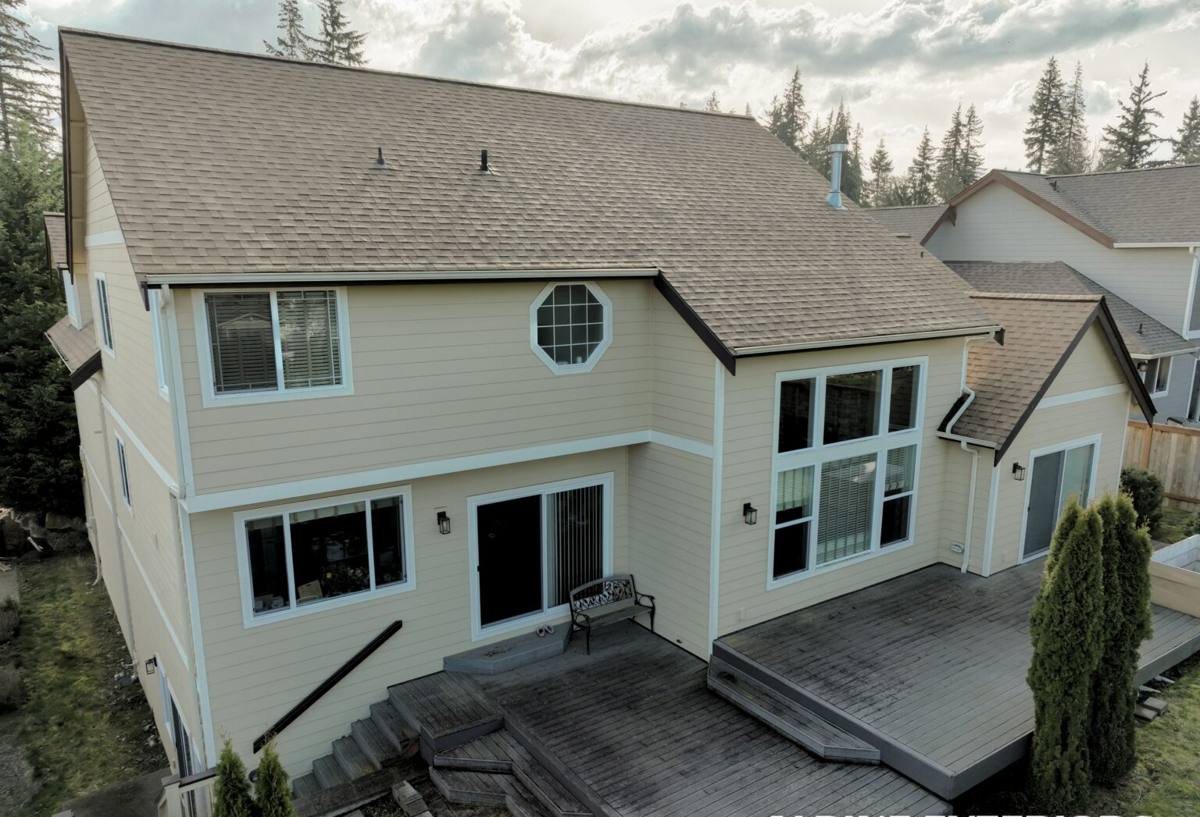
Whatcom County storms frequently come with wind, which means rain doesn't just fall on a window — it's pushed against it and up under trim and sills. A window that's rated well for air and water infiltration but installed with weak flashing detail will still leak. This is one of the most common gaps we find in homes with "good" windows that still have moisture problems: the product was fine, the installation wasn't matched to the exposure.
What "Energy-Efficient" Actually Means in This Climate
Energy efficiency for a Columbia home isn't only about winter heat loss. It's a combination of factors that all matter more here than they would in a drier, less coastal climate.
U-Factor and Solar Heat Gain
U-factor measures how well a window resists heat transfer — lower is better for our mild-but-damp winters. Solar heat gain coefficient (SHGC) matters less here than it does in sunnier climates, since Whatcom County doesn't get the intense, sustained solar load that drives cooling costs elsewhere. We help homeowners avoid over-paying for a high solar-control glass package that's built for a hot, dry climate rather than ours.
Air Infiltration and Condensation Control
Because homes near the water run a higher ambient humidity load for a large part of the year, air infiltration ratings and proper interior ventilation matter as much as the glass spec. A tight, well-sealed window paired with poor interior ventilation can actually increase condensation risk on interior surfaces. Part of doing this job right is looking at the whole opening, not just the window unit.
Signs Your Columbia Home's Windows Are Underperforming
Most homeowners don't think about their windows until something is visibly wrong. By then, moisture may already be affecting the framing around the opening. Watch for:
- Fogging or moisture trapped between panes of double- or triple-glazed units (failed seal)
- Persistent condensation on interior glass, especially on north- or water-facing walls
- Soft or discolored trim, sill, or drywall near a window
- Windows that are harder to open, close, or lock than they used to be
- Visible corrosion or pitting on hardware, hinges, or locks
- A noticeable draft or cold spot near the frame during windy weather
- Moss or dark streaking building up on the exterior sill or trim
- A jump in heating costs without any other explanation
Choosing the Right Window for a Columbia Property
Material choice matters more here than in a drier climate because it directly affects how a window handles moisture and salt exposure over 15–20+ years, not just how it performs on day one.
| Material | Moisture & Salt Air Behavior | Maintenance | Typical Lifespan Here |
|---|---|---|---|
| Vinyl (quality, welded corners) | Won't corrode; performs well against salt air | Low — occasional cleaning | 20–30 years |
| Fiberglass | Excellent stability, resists warping and corrosion | Low | 30+ years |
| Wood or wood-clad | Attractive but needs a sound exterior clad or diligent upkeep against coastal moisture | Moderate to high | Varies widely with maintenance |
| Aluminum (uncoated/older style) | Prone to corrosion and heat transfer in a wet, salt-exposed setting | Higher | Shorter without upgraded coatings |
We don't push one brand or material on every job. What we push is matching the product to the exposure — a west- or water-facing wall in Columbia gets treated differently than a sheltered opening on the same house. When we do steer a homeowner away from a lower-grade aluminum or bare wood option, it's because we've seen how that material behaves against salt air and driving rain over time, not because of any one brand's reputation.
What a Correct Window Installation Actually Involves
The window unit itself is often the easy part. The details that determine whether it stays watertight for the long haul are in the installation:
Flashing and Water Management
Proper flashing integrates the window with the wall's water-resistive barrier so any water that reaches the opening is directed back out, not into the wall cavity. This is especially critical on wind-exposed elevations near the water, where wind-driven rain tests every seam.
Sill Pan and Sealant Detail
A sloped sill pan under the window keeps standing water from sitting against the frame — a small detail that matters a lot in a climate where a window sill can stay damp for days at a time. Sealant is used to control air and water at the right joints, not as a substitute for proper flashing.
Insulation Around the Frame
Gaps around a new window need to be filled with an appropriate low-expansion foam or backer rod, not stuffed with fiberglass batting that can hold moisture. Done wrong, this step alone can undercut a window's rated efficiency.
Because we do exterior and siding work throughout Fairhaven and the surrounding Bellingham neighborhoods, we look at window replacement as part of the whole exterior envelope — not an isolated swap. That matters most right at the connection between the window and the siding, which is exactly where leaks tend to start.
Our Process for a Columbia Window Project
- On-site assessment: We look at each opening's exposure, current condition, and any signs of moisture damage before recommending anything.
- Product recommendation: We walk through material and glass options matched to each elevation's exposure and your budget — no one-size-fits-all package.
- Removal and inspection: Old windows come out carefully so we can check the framing and sheathing underneath for hidden rot or moisture before it's covered back up.
- Flashing and sealing: Each opening is flashed and integrated with the existing wall assembly to shed water correctly.
- Installation and insulation: Windows are set plumb and square, shimmed, and insulated properly around the frame.
- Final trim and cleanup: Interior and exterior trim is finished, and the site is left clean.
Cost Factors for Columbia Window Projects
Every home is different, so we don't quote firm numbers without seeing the job, but these are the factors that most often move the price up or down:
| Factor | Why It Affects Cost |
|---|---|
| Number and size of openings | More/larger windows mean more material and labor |
| Existing damage found during removal | Rotted framing or sheathing has to be repaired before the new window goes in |
| Material and glass package chosen | Vinyl, fiberglass, and wood-clad carry different upfront costs |
| Exposure and elevation | Water-facing or wind-exposed walls may call for extra flashing detail |
| Full-frame vs. insert replacement | Full-frame replacement costs more but corrects underlying flashing issues; inserts are faster but rely on sound existing framing |
Why Hire a Crew That Already Works in Columbia
A crew that works Fairhaven, Columbia, and the surrounding Bellingham waterfront regularly already knows which elevations tend to take the worst of the weather, what the moss and moisture buildup looks like on homes of a certain age here, and how to detail a window opening so it holds up against salt air and driving rain — not just against a lab test. That local pattern recognition is worth more than a generic install crew that hasn't dealt with this specific combination of coastal exposure and Pacific Northwest rain.
If you're weighing whether your Columbia home's windows need repair, replacement, or just better maintenance, we're happy to take a look and give you a straight answer — no pressure, no upsell. Reach out for a free estimate using the form below.