 Fairhaven Siding
 Decking That Has to Work in Puget's Marine Climate
Puget sits close enough to Bellingham Bay that salt air is part of daily life, not an occasional nuisance. Add Whatcom County's long wet season, heavy moss growth on anything shaded, and the freeze-thaw swings we get a handful of times each winter, and you've got a decking environment that punishes shortcuts. A deck built for inland Washington or shipped in with generic installation instructions doesn't hold up the same way out here. We install composite decking for Puget homeowners with that specific climate in mind — not as an afterthought, but as the starting point for every material choice and detail.
Composite decking earns its keep in this kind of weather. It doesn't absorb moisture the way wood does, it won't warp or cup from repeated wet-dry cycles, and it resists the rot that eventually catches up with even well-maintained cedar or pressure-treated lumber near the water. That doesn't mean every composite board or every installation is equal — it means the details matter more here than they would somewhere dry.
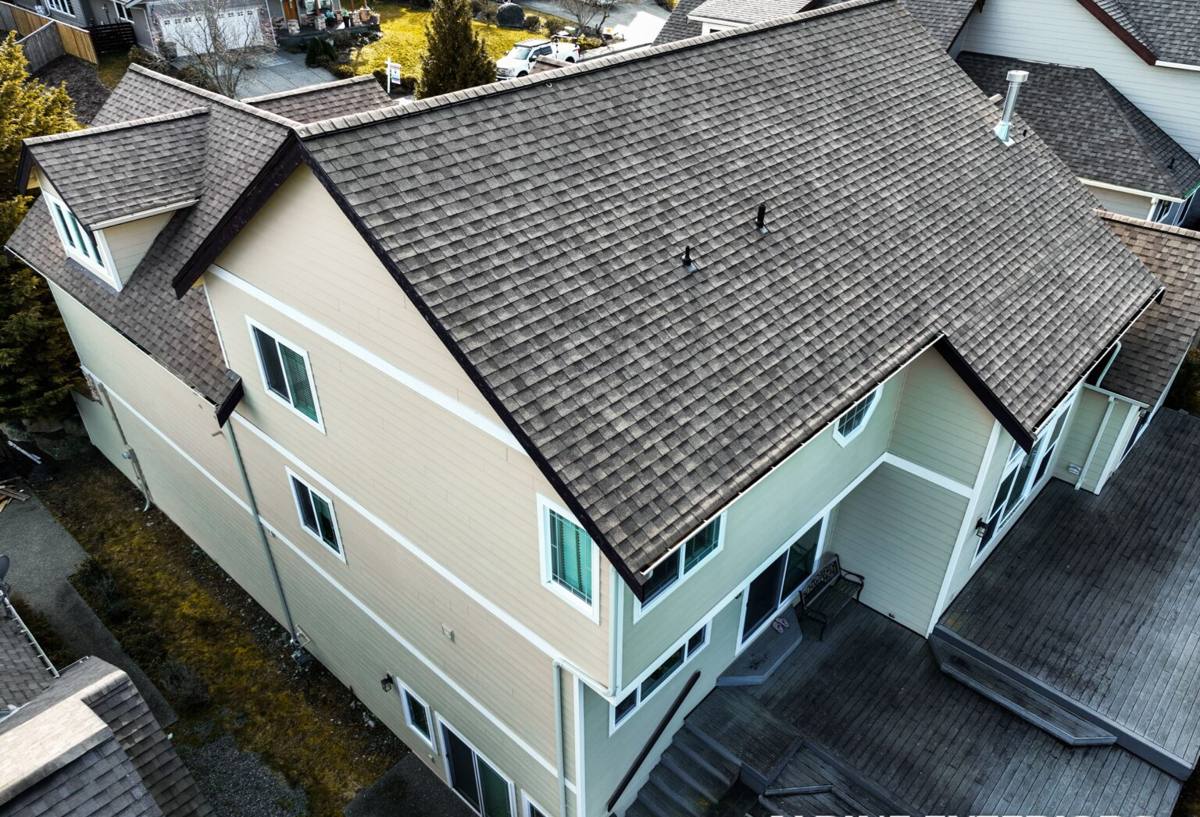
What Salt Air and Driving Rain Actually Do to a Deck
Salt Air
Airborne salt from the Sound settles on every exposed surface, including fasteners, flashing, and any metal hardware in your deck's structure. Over years, uncoated or poorly rated fasteners corrode, staining the decking around them and eventually weakening the connection. This is one of the most common reasons we get called to repair decks that are otherwise in decent shape — the boards look fine, but the screws holding them down are failing.
Driving Rain
Whatcom County doesn't just get rain, it gets rain pushed sideways by wind off the water often enough that water finds its way into gaps a calmer climate would never test. Board spacing, ledger board flashing, and how the deck ties into your siding all get real scrutiny here. A deck that's watertight in a still climate can still leak at the house connection when driving rain is the norm.
Moss Season
Shaded areas of a Puget deck — under overhangs, along the north side of a house, near mature trees — stay damp for months at a time. Moss and algae take hold fast in that kind of shade and moisture, and on the wrong surface texture they turn a deck slick and slippery well before it looks obviously dirty. Surface texture and drainage design matter as much as the material itself when moss is a near-guarantee for part of the year.
What a Correct Composite Deck Installation Involves Here
A composite deck is only as good as what's underneath it and how it's fastened. In Puget's climate, we pay particular attention to a few things that get skipped in cheaper installs:
- Corrosion-resistant fasteners and hardware rated for coastal or high-moisture exposure, not standard interior-grade hardware
- Proper joist spacing and blocking sized to the specific composite board, since composites can require tighter spacing than wood in wet climates
- Ventilation underneath the deck so moisture doesn't get trapped between the joists and the ground, which accelerates substructure rot even when the decking itself is composite
- Correct ledger board flashing where the deck attaches to your house — this is the single most common source of hidden water damage on attached decks in this climate
- Board spacing calibrated for drainage, wide enough to shed water and debris but not so wide it becomes a hazard or a maintenance headache
- Picture-frame or breaker board detailing at the perimeter, done correctly so end grain and cut edges aren't left exposed to standing water
Skip any of these and the composite boards themselves can outlast the structure holding them up — which defeats the purpose of choosing a low-maintenance material in the first place.
Composite vs. Wood vs. PVC: An Honest Comparison for This Climate
| Factor | Wood | Composite | PVC/Vinyl Decking |
|---|---|---|---|
| Moisture resistance in driving rain | Moderate — needs regular sealing | High — engineered to resist swelling and rot | High — fully synthetic |
| Moss and algae resistance | Low without frequent cleaning/treatment | Moderate to high depending on surface texture and brand | Moderate — smooth surfaces can still get slick |
| Salt air / fastener corrosion risk | Depends on hardware used | Low if installed with proper coastal-rated hardware | Low if installed with proper coastal-rated hardware |
| Upfront cost | Lowest | Mid-range | Highest |
| Long-term maintenance | Annual staining/sealing, ongoing repairs | Occasional cleaning, no sealing or staining | Minimal, but limited color/wood-look options |
| Appearance over time | Grays and weathers, can splinter | Holds color well, some fading possible over many years | Consistent color, more plastic look |
We install composite decking most often for Puget homeowners because it hits the balance point for this climate: better moisture and moss resistance than wood, more natural appearance than most PVC systems, and a maintenance routine that fits a busy household rather than a monthly chore list. That said, we'll walk you through wood and PVC honestly if your priorities are different — budget, look, or specific brand preferences all factor in.
Our Process for a Puget Composite Deck Project
1. On-Site Assessment
We look at sun and shade exposure, drainage slope, proximity to the water, existing substructure condition if it's a replacement, and how the new deck will tie into your home's siding and roofline.
2. Material and Layout Discussion
We talk through board options, colors, and layout — including where moss risk is highest on your specific lot — so the surface texture and drainage plan match the shaded and exposed areas differently if needed.
3. Substructure Build or Repair
If we're replacing an old deck, we evaluate the ledger board, joists, and footings before covering anything up. Hidden rot at the ledger connection is common enough on older Puget decks that we don't skip this step to save time.
4. Installation
Fastening, spacing, and flashing details follow the standards above — done once, done to hold up through the wet season, not just to pass a quick look.
5. Final Walkthrough
We go over care basics with you — what regular cleaning composite decking actually needs here (not much, but not zero) and what to watch for near the water.
Maintenance Realities for Composite Decking Near the Water
Composite decking is marketed as low-maintenance, and relative to wood, it is. But "low-maintenance" in a Puget County climate still means something. Here's what actually keeps a composite deck performing well year over year:
- Sweep debris and organic matter off the surface regularly, especially in fall, so it doesn't hold moisture against the boards in shaded spots
- Rinse salt residue off periodically if the deck is exposed to direct sea spray or wind off the water
- Clean shaded, moss-prone areas with a soft brush and a composite-safe cleaner before growth gets established, rather than after
- Check fastener heads and any visible hardware annually for early signs of corrosion staining
- Confirm gaps between boards stay clear so water keeps draining rather than pooling
None of this is heavy work, but skipping it entirely in this climate shortens the life of even a well-installed deck.
Why a Crew That Already Works Puget Matters
Decking installation looks similar on paper everywhere — boards, joists, fasteners. What changes by region is which details actually matter, and that only comes from working the local conditions repeatedly. A crew that's installed decks across Whatcom County knows which fastener grades hold up against salt air here, which shaded corners of a Puget lot are going to grow moss no matter what, and how driving rain off the Sound tests a ledger board connection differently than it would inland. That's not something a generic install checklist covers, and it's the difference between a deck that needs attention again in a few years and one that doesn't.
Signs Your Current Deck May Need Attention
If you already have a deck in Puget, a few warning signs are worth acting on before they become bigger repairs:
- Soft or spongy spots in wood decking, especially near the house connection
- Visible staining or rust streaks around fasteners
- Persistent slickness or moss buildup that comes back quickly after cleaning
- Gaps or separation at the ledger board where the deck meets your siding
- Boards that have cupped, warped, or developed soft edges
Any of these can be an early sign of moisture getting into the structure, and it's worth a look before it spreads.
Get a Straightforward Estimate
If you're planning a new composite deck or replacing an aging one in Puget, we're happy to take a look and give you honest, specific advice for your property — no pressure, no upsell. Fill out the form below for a free estimate.