 Fairhaven Siding
 Decks in Sudden Valley Face a Different Set of Problems
Sudden Valley sits in the trees along Lake Whatcom, and that setting is exactly what makes it a hard place to keep a deck looking good. Heavy tree canopy means a lot of the neighborhood's outdoor living space sits in partial or full shade most of the day. Combine that with Whatcom County's long, wet stretch from October through May, and you get decks that almost never fully dry out between storms. Add in the sloped, wooded lots common around the lake, and drainage under and around the deck becomes as important as anything visible on top.
Across the broader Fairhaven and Whatcom County area, salt air off Bellingham Bay and driving rain off the water are part of what ages exterior wood and hardware faster than manufacturers' charts suggest. Sudden Valley is more sheltered and inland than the waterfront neighborhoods, but the shade and moisture problem is arguably worse — a deck that's shaded by cedar and fir for most of the day can stay damp for days after a storm passes, and that's when moss, mildew, and slow wood rot get their foothold.
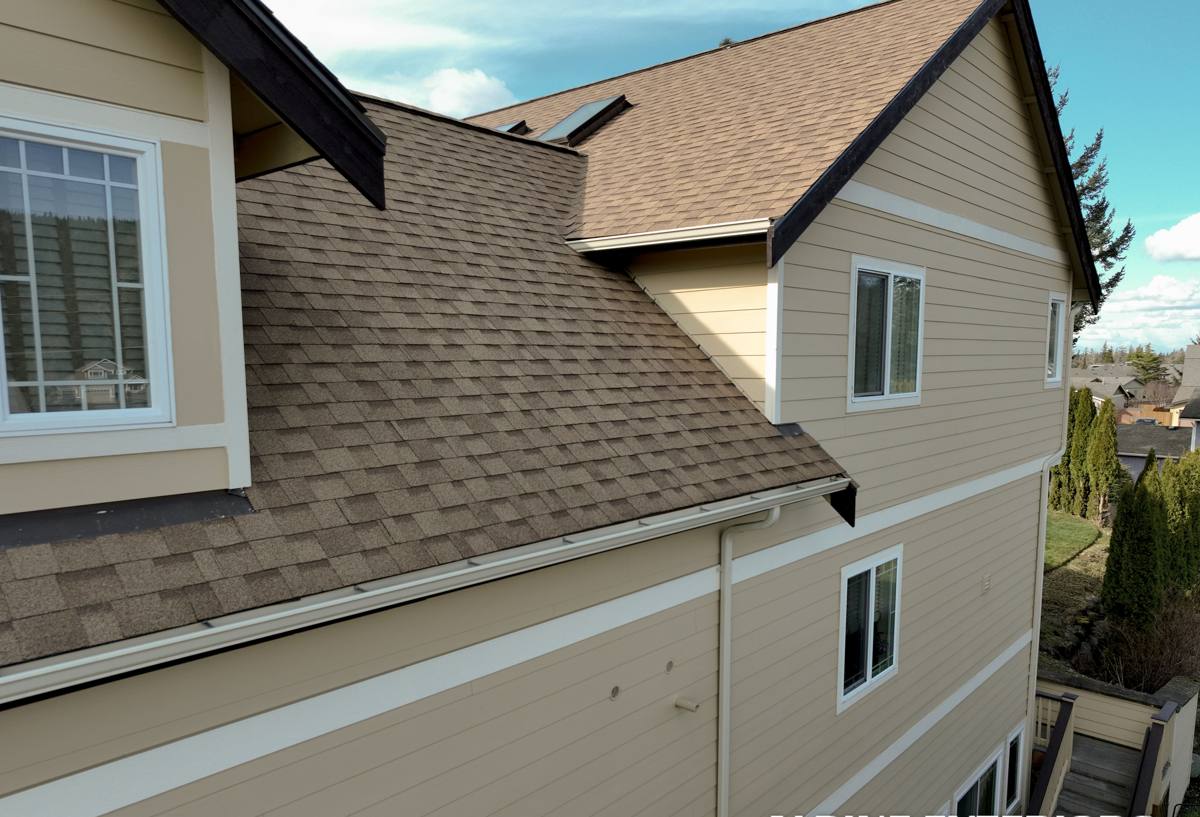
What a Deck Built for This Neighborhood Actually Needs
A deck that holds up here isn't just about picking a good-looking board. It's a handful of decisions made correctly, in the right order, before the first board ever goes down.
Airflow Under and Around the Deck
On sloped, tree-covered lots, it's tempting to build low to the ground or skirt a deck in tight against a hillside for a cleaner look. That traps moisture underneath and turns the joist bay into a place where moss, algae, and eventually rot can work undisturbed for years before anyone notices. We plan for ventilation gaps and, where grading allows, keep enough clearance underneath for air to actually move.
Drainage That Accounts for the Slope
Many Sudden Valley lots pitch toward the lake or fall away from the house. Water that isn't directed on purpose will find its own path — usually straight toward your footings or foundation. Grading, gutters, and sometimes a simple drainage channel at the base of the deck matter as much as the decking material itself.
Framing That Won't Wick Moisture
Shaded, damp framing lumber is where most deck failures start — long before the surface boards show any sign of trouble. Correct flashing at the ledger board, proper fastener choice, and either naturally durable or properly treated framing lumber are non-negotiable in this climate, not upgrades.
Choosing the Right Decking Material for a Shaded, Wet Lot
There's no single "best" decking material — there's a best material for your specific lot, your budget, and how much upkeep you actually want to do. In a shaded, moisture-heavy setting like Sudden Valley, the trade-offs matter more than they would on an open, sunny lot.
| Material | How It Handles Shade & Moss | Maintenance | Typical Lifespan Here |
|---|---|---|---|
| Cedar (natural) | Naturally rot-resistant, but shaded cedar still needs regular cleaning to stop moss and mildew staining | Annual cleaning and refinishing recommended | 15-20 years with upkeep |
| Pressure-treated pine | Treatment resists rot, but surface can hold moisture and grow moss faster than cedar if not cleaned | Regular cleaning, periodic sealing | 15-20 years with upkeep |
| Capped composite | Won't rot, but capped composite in deep shade still needs occasional washing to keep moss/algae from taking hold on the surface | Low — periodic washing, no staining or sealing | 25-30+ years, backed by manufacturer warranty |
| Uncapped composite (older style) | More porous, holds moisture, more prone to surface mold in shaded settings | Moderate — more frequent cleaning than capped composite | Shorter effective service life in shade |
We don't push one product on every job. For a deck that gets real sun for part of the day, natural wood can be the right call and a good value. For a deck buried in shade most of the year, we're usually steering homeowners toward capped composite or, at minimum, a wood species and finish schedule that's realistic about how often it will actually get cleaned and resealed.
The Framing and Substructure — the Part Nobody Sees
The visible decking gets all the attention, but the framing underneath is what determines whether a deck is safe and long-lived. This is where corners get cut on lower-cost jobs, and it's the hardest place for a homeowner to inspect after the fact.
- Ledger board properly flashed and sealed where it meets the house — the single most common source of hidden rot on older decks
- Footings sized and set to the correct frost depth and bearing conditions for the lot's soil and slope
- Joist spacing matched to the decking material's span rating, not just "what we used last time"
- Hot-dip galvanized or stainless fasteners and hardware rated for ground contact and treated lumber
- Joist tape or flashing on top of each joist to keep water out of the wood itself
None of this is visible once the decking is installed, which is exactly why it has to be done right the first time. We build framing to hold up on its own for decades, independent of whatever decking material eventually sits on top of it.
Managing Moss and Long-Term Maintenance
No decking material in a shaded Whatcom County lot is completely maintenance-free — moss and algae are a fact of life here, not a sign that something was built wrong. What changes by material and design is how much work it takes to stay ahead of it.
Design Choices That Reduce Moss Buildup
Board spacing, gap width, and surface texture all affect how much water and debris sit on a deck after rain. Grooved or heavily textured boards tend to hold more moisture and organic debris in shade than a smoother profile. We also account for nearby trees when planning gaps and drainage, since needle and leaf litter is often the real driver of moss growth, not just rainfall.
A Realistic Maintenance Schedule
For most Sudden Valley decks, that means a wash-down in spring after the wet season and again in fall before it starts, plus keeping gutters and nearby foliage from dumping extra water and debris onto the deck surface. Wood decks add a sealing or staining cycle on top of that; composite decks generally don't, but still benefit from the same seasonal cleaning.
Our Process, From First Call to Finished Deck
- Site visit and assessment — we look at slope, sun exposure, drainage, and the condition of anything existing before recommending a design or material
- Design and material selection — honest trade-offs laid out for your specific lot, not a one-size-fits-all pitch
- Permitting — we handle the paperwork with Whatcom County and, where applicable, coordinate with neighborhood design review
- Framing and inspection — substructure built and, where required, inspected before decking goes down
- Decking, railing, and finish work — installed to the manufacturer's specifications so warranties stay intact
- Final walkthrough — we go over care and maintenance specific to the material you chose before we consider the job done
Why a Crew That Already Works Sudden Valley Matters
Sudden Valley is a distinct kind of neighborhood — wooded, sloped, and part of a lake community that in many cases has its own design review or association guidelines for exterior projects. A contractor who's already built decks here knows to check on that early, rather than after materials are ordered. We're also familiar with the access challenges of hillside lots — narrow driveways, limited staging space, and the need to protect landscaping and root systems during construction — which affects how a job gets planned and scheduled, not just how it's built.
Just as important, we've seen how decks in this specific microclimate actually age over five, ten, and fifteen years — which framing details hold up, which shortcuts show up as problems, and which materials are worth the extra upfront cost for a shaded, wet lot. That's the kind of judgment that only comes from working the same conditions repeatedly, not from a generic decking catalog.
Signs Your Existing Deck Needs Attention
If you already have a deck in Sudden Valley, a few warning signs are worth checking before they become bigger problems:
- Soft or spongy spots when you walk across the surface
- Dark staining or moss buildup that returns quickly after cleaning
- Gaps or separation where the ledger board meets the house
- Rust streaking around fasteners or visible corrosion on hardware
- Railings or posts that feel loose or move under light pressure
- Standing water or slow drainage underneath the deck after rain
Any one of these is worth a look before it turns into a structural repair instead of routine maintenance.
Get a Straightforward Estimate
Whether you're planning a new deck for a shaded Sudden Valley lot or need an honest read on whether an existing one is still sound, we're happy to take a look. Use the form below to request a free, no-pressure estimate — we'll walk the site, talk through what your lot actually needs, and give you a straight answer.